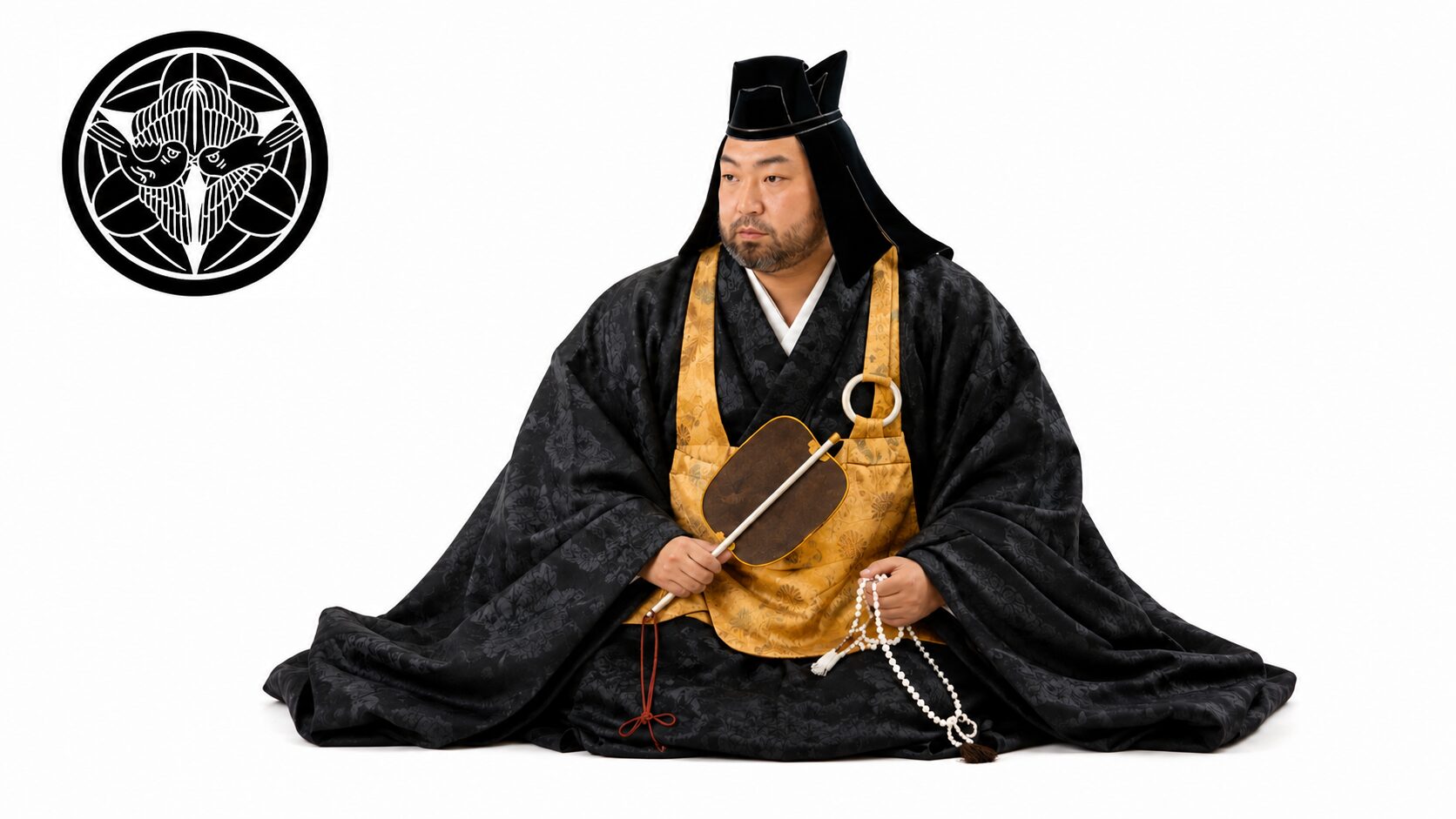
Uesugi Kenshin ― “Righteousness” and the “God of War”: The 49 Undefeated Years of the Dragon of Echigo
- This Person in Three Lines
- The Mainstream Account ― The Standard Textbook Explanation
- Various Theories ― Exploring Possibilities from Different Angles
- A Strategic Perspective
- Uesugi Kenshin: Famous Quotes and Death Poems
- Anecdotes and Episodes
- Uesugi Kenshin: Life Timeline
- Uesugi Kenshin: Family and Key Relationships
- Related Historical Sites Map & Model Travel Course
- Related Articles
- References
This Person in Three Lines
- The “Dragon of Echigo,” who, though born of the Nagao house of Echigo deputy-shugo, became the adopted son of Uesugi Norimasa and inherited the office of Kantō Kanrei (Shogunal Deputy of the Kantō)
- He fought five Battles of Kawanakajima with Takeda Shingen, carving his name into Sengoku history as a great rival
- Raising the banner of “righteousness,” he campaigned across the Kantō, Shinano, and Hokuriku, and died suddenly at 49, the year after the Battle of Tedorigawa against Oda Nobunaga
The Mainstream Account ― The Standard Textbook Explanation
The Birth of Torachiyo and His Rinsen-ji Years (1530–1542)
Uesugi Kenshin was born on the 21st day of the 1st month of Kyōroku 3 (1530) at Kasugayama Castle, as the fourth son (or second or third son) of Nagao Tamekage, the deputy-shugo of Echigo Province. His childhood name was Torachiyo, a name connected to his birth in the year of the metal tiger. His mother was Toragozen, daughter of Nagao Fusakage, lord of Suyoshi Castle in Echigo.
His father Tamekage had held strong power as deputy-shugo of Echigo, but in his later years he fell into hardship under the resistance of the provincial landed lords. In the 8th month of Tenbun 5 (1536), Tamekage retired, and the elder brother Nagao Harukage succeeded to the headship. Torachiyo was then 7. Not considered as the Nagao heir, he is said to have entered Rinsen-ji in the castle town and received the teaching of the abbot Tenshitsu Kōiku.
In the 12th month of Tenbun 11 (1542), his father Tamekage died of illness. Because hostile forces had closed in on the area below Kasugayama Castle at the time of the funeral, an anecdote remains that Torachiyo donned armor and, sword in hand, escorted his father’s coffin. Torachiyo, who showed an aptitude for valor from his boyhood, is also said to have liked to play by making models of castles (this model is said to have later been given by Uesugi Kagekatsu to Nobukatsu, the heir of Takeda Katsuyori).
Coming of Age, First Battle, and Succession (1543–1548)
On the 15th day of the 8th month of Tenbun 12 (1543), Torachiyo came of age and took the name Nagao Kagetora. He entered Tochio Castle in Koshi district and grew up under the support of the local landed lord Honjō Sanetomo.
In the spring of Tenbun 13 (1544), Echigo magnates who scorned the weak stance of his elder brother Harukage attacked Tochio Castle, but the 15-year-old Kagetora is said to have repelled them. This is the “Battle of Tochio Castle,” famous as Kagetora’s first battle. However, the historicity of this battle has come into question in recent years (discussed below in the Various Theories).
In Tenbun 14 (1545), the revolt of Kuroda Hidetada, lord of Kurotaki Castle, occurred. Kagetora led the army as supreme commander in place of his brother and forced Hidetada to surrender, and in a renewed revolt the following year is said to have destroyed the clan (the Battle of Kurotaki Castle). Through these activities Kagetora’s martial fame resounded throughout Echigo, and within the house voices rose hoping for the retirement of his brother Harukage.
On the 30th day of the 12th month of Tenbun 17 (1548), under the mediation of the Echigo shugo Uesugi Sadazane, Harukage adopted Kagetora and, ceding the headship to him, retired. Kagetora, at 19, entered Kasugayama Castle and became deputy-shugo of Echigo. Nakajō Fujisuke, Takanashi Masayori, Honjō Sanetomo, and Naoe Sanetsuna (the father of Kanetsugu’s adoptive father) formed the core of the faction supporting Kagetora; against them, Nagao Masakage, lord of Sakado Castle (husband of Kagetora’s elder sister Sentō-in), was on Harukage’s side.
Unification of Echigo and the Journey to the Capital (1550–1559)
In the 2nd month of Tenbun 19 (1550), the Echigo shugo Uesugi Sadazane died without leaving an heir. Ashikaga Yoshiteru, the 13th shogun of the Muromachi shogunate, ordered Kagetora to act as deputy-shugo of Echigo. With this, Kagetora gained the position of provincial lord of Echigo in name and reality.
From the end of that year into the following Tenbun 20 (1551), Nagao Masakage of Sakado Castle, harboring dissatisfaction with Kagetora’s succession, raised a revolt, but Kagetora suppressed it (the Battle of Sakado Castle). Because Masakage was the husband of his elder sister, his life was spared, and thereafter he continued to support Kagetora as a senior retainer. With this the internal strife of Echigo was, for the time, settled, and Kagetora achieved the unification of Echigo at 22.
In the 1st month of Tenbun 21 (1552), Uesugi Norimasa, the Kantō Kanrei who had been driven from his castle Hirai Castle by Hōjō Ujiyasu of Sagami, fled to Echigo. Kagetora protected Norimasa and newly built the “Otate” to house him. This became, in later years, the groundwork for Kagetora to inherit the Uesugi surname and the office of Kantō Kanrei.
In Tenbun 22 (1553), Kagetora achieved his long-desired first journey to the capital. He had an audience with Emperor Go-Nara and met with Shogun Ashikaga Yoshiteru. At this time he is said to have taken Buddhist vows and called himself “Sōshin.” In Eiroku 2 (1559) he again went to the capital and was granted “treatment equal to a Kanrei” (the so-called Seven Privileges of the Uesugi) by Yoshiteru. It was an act by which Kagetora, of deputy-shugo origin, sought to raise his own legitimacy by binding himself to shogunal authority.
The Fierce Struggle with Takeda Shingen ― The Battles of Kawanakajima (1553–1564)
The Shinano provincial lords Murakami Yoshikiyo, Takanashi Masayori, and others, driven out by Takeda Shingen, who was bringing northern Shinano under his control, fled to Echigo seeking Kagetora’s relief. Kagetora resolved to send troops in response to their request.
From the first battle in Tenbun 22 (1553) to the fifth in Eiroku 7 (1564), Shingen and Kagetora faced off five times at the land of Kawanakajima (present-day southern Nagano City). Of these, actual fighting at “Kawanakajima” took place only in the second (the Battle of the Saigawa) and the fourth; the others ended in standoffs or staring contests.
The Fourth Battle of Kawanakajima in particular, on the 10th day of the 9th month of Eiroku 4 (1561) (the 9th–10th of the 9th month in the old calendar), is known as one of the fiercest battles of the Sengoku period, with several thousand killed and wounded on both sides combined. Kagetora is said to have seen through the “Woodpecker Strategy” devised by the Takeda strategist Yamamoto Kansuke, and under cover of night descended from Saijo-yama to make a surprise assault on Shingen’s main force deployed at Hachimanbara. The famous legend that Kagetora himself charged into Shingen’s headquarters and engaged in single combat also arose from this battle (discussed below in the Various Theories).
Immediately after the fourth battle, Kagetora achieved the feat of cutting down Shingen’s younger brother Takeda Nobushige, while the Takeda side lost many generals when the “Kuruma-gakari” formation that charged toward Kagetora’s banner was broken. Both armies left letters claiming victory, and the outcome is not clear. Thereafter no large-scale clash occurred at Kawanakajima, and the front gradually shifted to other directions.
→ For details, see the battle article “Battles of Kawanakajima“
Becoming Kantō Kanrei and the “Etsuzan” (1560–1569)
In the 8th month of Eiroku 3 (1560), to fulfill Uesugi Norimasa’s long-cherished wish of recovering the Kantō, Kagetora crossed the Mikuni Pass and invaded the Kantō. This was the beginning of the 14 “Etsuzan” (crossings of the mountains). It was a favorable moment, right after Oda Nobunaga struck down Imagawa Yoshimoto at Okehazama.
Kagetora took the castles of the Hōjō side one after another, and in the 1st month of Eiroku 4 (1561) closed in on the Koga palace, and in the 3rd month surrounded Hōjō Ujiyasu’s stronghold Odawara Castle with a great army of 100,000. Joining this were Kantō generals such as the Utsunomiya, Satake, Oyama, Satomi, Ōta, and Narita ― the moment when the authority of the Kantō Kanrei Uesugi clan was temporarily revived.
However, Odawara Castle was sturdy and could not be taken, Takeda Shingen began to stir in Shinano, and the Kantō generals were not of one accord; so after about a month he lifted the siege and withdrew to Kamakura. On the 16th of the intercalary 3rd month, at the Tsurugaoka Hachimangū he received the headship of the Yamanouchi-Uesugi house and the office of Kantō Kanrei from Uesugi Norimasa, and changed his name to Uesugi Masatora. Later he received a character of the name (the “Teru” of “Terutora”) from Shogun Ashikaga Yoshiteru, becoming Uesugi Terutora, and in Genki 1 (1570) took Buddhist vows and named himself “Fushiki-an Kenshin.” For convenience, this article unifies on “Kenshin” hereafter.
The fighting in the Kantō continued, but the Hōjō resisted tenaciously, and the pattern repeated of the Kantō generals turning back to the Hōjō side once Kenshin returned home. In Eiroku 12 (1569), seizing the moment when Shingen invaded Suruga and broke with the Hōjō, the “Esshō Alliance” was concluded between Kenshin and Hōjō Ujiyasu, and the Kantō situation temporarily stabilized. However, when Ujiyasu died in Genki 2 (1571) and his successor Hōjō Ujimasa abrogated the alliance and re-allied with the Takeda, the Kantō situation returned to hostility.
The Pacification of Etchū and Noto, and the Battle of Tedorigawa (1570–1577)
While the Kantō situation was deadlocked, Kenshin opened a new front in the Hokuriku direction. In Etchū he fought a long war with the Ikkō-ikki, and in Genki 3 (1572) captured Shiina Yasutane’s Toyama Castle. By Tenshō 4 (1576) he had largely pacified Etchū.
That same year, Kenshin intervened in the internal strife of the Hatakeyama of Noto and began the siege of Nanao Castle. After a holdout of about a year, in the 9th month of Tenshō 5 (1577), Nanao Castle fell through an inside collaborator (the Battle of Nanao Castle). During this time, Oda Nobunaga dispatched a relief force with Shibata Katsuie as supreme commander, but the Oda army, marching north without knowing of Nanao Castle’s fall, was pursued and routed by Kenshin’s army at the Tedori River in Kaga. This is the so-called Battle of Tedorigawa (the 23rd of the 9th month of Tenshō 5).
By driving off the Oda relief force, Kenshin is said to have gained the confidence that “even in a direct confrontation with Oda Nobunaga, victory is possible,” and came to set his sights on an all-out confrontation with Nobunaga. However, regarding the Battle of Tedorigawa itself, there is no clear record in Oda-side primary sources, and there is debate about its scale and reality.
→ For details, see the battle article “Battle of Tedorigawa”
Sudden Death and the Otate Rebellion (1578–)
In Tenshō 6 (1578), Kenshin gathered a large army at Kasugayama Castle and was preparing a great expedition to either the Kantō or the capital. But on March 9 he suddenly collapsed within Kasugayama Castle. He was conscious for several days and is said to have left a will naming his adopted son Uesugi Kagekatsu as successor, but died four days later, on March 13. He was 49.
Kenshin’s sudden death brought great turmoil to the Uesugi house. Kenshin had no biological children, and there were two adopted sons: Kagekatsu (son of his elder sister Sentō-in and Nagao Masakage) and Uesugi Kagetora (son of Hōjō Ujiyasu, who had been sent as a hostage of the Esshō Alliance). While Kagekatsu secured the main keep of Kasugayama Castle, Kagetora holed up in the Otate, and it developed into a succession dispute involving Takeda Katsuyori, Hōjō Ujimasa, and others. This was the Otate Rebellion (Tenshō 6–7).
The struggle ended in Kagekatsu’s victory with Kagetora’s suicide in the 3rd month of Tenshō 7 (1579). But in the process, the domain Kenshin had built was temporarily weakened, resulting in allowing Oda Nobunaga’s invasion. Under Kagekatsu, with Naoe Kanetsugu as his assistant, the Uesugi house survived from the end of the Sengoku period into the Toyotomi regime.
Various Theories ― Exploring Possibilities from Different Angles
[Theory 1] Is the “Warrior of Righteousness” Image True? ― Was He a Saintly General Without Desire for Territory?
What always comes up when speaking of Kenshin is the image of the “warrior of righteousness,” “a saintly general without private greed.” Responding to the requests of the impoverished Kantō generals, he crossed the Mikuni Pass again and again, and even when he won, he returned home without seizing territory. This image has brought Kenshin outstanding popularity even among Sengoku warlords.
The origin of this image goes back to the Edo period. The “Kenshin-kō Onnenpu” (completed 1683, printed 1696), compiled by the Yonezawa-domain Uesugi house, emphasized the image of a righteous general from the standpoint of honoring the domain’s founder; in the 19th century Rai San’yō’s “Nihon Gaishi” (1827) spread this anecdote as a noble tale; and after the war, Kaionji Chōgorō’s novel “Ten to Chi to” (from 1962) and its NHK Taiga drama adaptation (1969) decisively fixed the popular image of “Kenshin the righteous general.”
However, in recent years the historical academic world has greatly reconsidered this image. Ike Susumu’s “Uesugi Kenshin’s True Intentions ― The Reality of the Kantō Crossings” (Yoshikawa Kōbunkan, c. 2024) and Naishi Masahiko’s “Kenshin Etsuzan” (JBpress, 2021), and others, by carefully reading the primary-source Uesugi family documents, bring into relief the figure of Kenshin as an extremely realistic, calculating Sengoku daimyo.
Points of the “real image” indicated by recent research:
- The reality of territorial expansion: He actively sought to expand his power over Etchū, northern Shinano, and Kōzuke Province; it is not that he had no desire for territory
- The motive for the Kantō expeditions: not only pure restoration of order, but accompanied by the realistic interests of securing Echigo’s trade routes and absorbing the provincial lords
- The trade in war slaves: records of human trafficking (rape and plunder, “rondori”) remain from the Kantō expedition of Eiroku 9 (1566). It is recorded that “by Kagetora’s will, during the spring, the selling and buying of people was done at about 20 mon”
- Strict military discipline: his letters also contain wording warning against plunder in camp, so rather than private greed, he was a Sengoku daimyo who coolly judged the discipline of his house and the national interest
That said, this does not mean Kenshin had no “righteousness” at all. The historian Naishi Masahiko points out that Kenshin’s principle of action did not sharply separate “righteousness” from “interest,” but lay in a unique logic integrating the great cause (righteousness) of the office of Kantō Kanrei and the restoration of the Muromachi shogunate with the practical interests of a provincial lord of Echigo. Rather than “he fought for righteousness,” the closer real image of Kenshin can be said to be that “he realized domain management and the expansion of power by making maximum use of the logic of righteousness.”
[Theory 2] Is “Sending Salt to the Enemy” Historical? ― A Noble Tale or a Later Creation?
Another anecdote symbolizing Kenshin’s character is “sending salt to the enemy.” Around Eiroku 10 (1567), when Takeda Shingen was suffering from the “salt embargo” by Imagawa Ujizane and Hōjō Ujiyasu, the rival Kenshin is said to have sent salt to Kai, saying, “Battle is fought with bow and arrow; to torment with salt is cowardly.”
However, the source reliability of this anecdote is extremely low. The story first appears in literature in the “Kenshin-kō Onnenpu” (completed 1683), more than 100 years after the event, and it became widely circulated from Rai San’yō’s “Nihon Gaishi” (1827), 260 years later. No record whatsoever has been found in contemporary correspondence of “the Uesugi side sending/selling salt” or “the Takeda side receiving/buying it.”
The historians Watanabe Daimon and Naishi Masahiko point out that this anecdote is highly likely not historical, but a noble tale crafted by the Yonezawa domain’s honoring of its founder and Edo-period Confucian moral views. In a lecture in April 2025, Naishi argued that at the time Kenshin had the capital in his sights and did not join the salt embargo that would inflame the hostility of the Takeda and the people of Kai; he had his own merchants distribute salt as usual ― and this was embellished in later ages as “sending salt.”
In other words, the truth is not that “Kenshin sent salt to Kai free of charge,” but that “Kenshin refused the request of the Imagawa and Hōjō to join the salt embargo, and Echigo merchants continued to sell salt to Takeda territory as usual” ― this is the influential current interpretation. Even so, in the sense that he did not ride the economic war amid a hostile relationship, it can be said to be an action reflecting Kenshin’s distinctive stance.
[Theory 3] Did the Fourth Kawanakajima’s Woodpecker Strategy and Kuruma-gakari Formation Really Exist?
The Fourth Battle of Kawanakajima (1561) is an especially famous battle even among Sengoku battles. “Kenshin sees through the Takeda’s Woodpecker Strategy,” “the night march from Saijo-yama,” “the surprise attack on the Takeda main force with the Kuruma-gakari formation,” “Kenshin charging into Shingen’s headquarters for single combat” ― these have been depicted again and again in ukiyo-e and storytelling from the Edo period onward, and have formed the very image of a Sengoku battle.
However, the principal source of these dramatic anecdotes is the “Kōyō Gunkan” (a Takeda-family military-studies text, completed in the early Edo period). In recent years, the “Kōyō Gunkan” has been reassessed through the research of Sakai Kenji and others, and while valued as a precious source containing Sengoku-period testimony, it is also recognized to contain much military-studies embellishment.
Points questioned by recent research:
- The Woodpecker Strategy: said to be Yamamoto Kansuke’s plan, but Yamamoto Kansuke’s very existence was long doubted; although recent discoveries confirmed his existence, the credibility of the strategy is still under debate
- The Kuruma-gakari formation: the “Kōyō Gunkan” depicts it as a “formation,” but Naishi Masahiko presents the new theory that “the Kuruma-gakari was highly likely a tactic, not a formation”
- The single combat: the anecdote of Shingen and Kenshin crossing blades directly comes from the “Kōyō Gunkan” and scarcely appears in other records of either army
- The scale of the fighting: several thousand killed and wounded on both sides combined is said, but both armies left letters claiming victory, and the reality remains unknown
Regarding the Fourth Battle of Kawanakajima, almost no high-quality primary sources of either army remain, and even now the historically confirmed reality is not clear. “Kawanakajima formed the very image of a Sengoku battle, yet is in fact one of the least understood battles” ― this is the current academic recognition.
→ For details, see the battle article “Battles of Kawanakajima“
[Theory 4] Examining the “Uesugi Kenshin Was a Woman” Theory
Among the theories about Kenshin, the one that caused the greatest stir after the war is the “Uesugi Kenshin was a woman” theory. In 1968, the novelist Yagiri Tomeo announced it in the Yomiuri Shimbun, and it has been referenced repeatedly in subsequent novels, films, and Taiga dramas. In the 2007 NHK Taiga drama “Fūrin Kazan,” it also became a topic of discussion when feminine staging was applied to the Kenshin played by GACKT.
The main grounds for the woman theory:
- He swore a vow of lifelong celibacy (shōgai fubon) and had no biological children
- An interpretation taking his cause of death, “ōmushi” (great worm), as a coded term for a women’s illness or menstruation
- A tradition that he declined to set out on campaign every month due to abdominal pain on a fixed day
- A report said to have been sent by the Spaniard González to King Philip II stating that “the Uesugi of Aizu owns the Sado gold mine developed by his aunt”
- A goze song singing of Kenshin’s setting out with the lyric “a great strength beyond even men”
- The oldest portrait has no beard and looks feminine in countenance
Rebuttals to the woman theory (now the negation is the received view):
- No usage can be confirmed of “ōmushi” as a coded term for menstruation; “ōmushi” is properly interpreted as a parasitic infection or “mushike = severe abdominal pain” (Itō Jun, Naishi Masahiko)
- The very existence of the González letter cannot be confirmed, so source criticism is impossible. Also, the Uesugi house came to own Sado only after Kenshin’s death, so it does not fit chronologically
- Yagiri Tomeo proposed many other bizarre theories, such as the “Emperor = Arab” theory and the “Tokugawa Ieyasu doppelgänger” theory, and is poor in source backing
- The “Shōrin Yawa” contains a description that he loved a woman named Ise-hime
- Sengoku-period “celibacy” can be explained as based on religious precepts. There are also theories that he favored male love, or that he deliberately did not produce a biological child to avoid succession problems
In the current historical academic world, the woman theory is, as “the grounds presented by Mr. Yagiri Tomeo are poor in source backing, while the grounds negating the woman theory have complete source backing” (Sengoku History), with negation being the received view. Even so, its popular appeal is strong, and it is passed down as one of the greatest popular myths of Sengoku history.
[Theory 5] Cause of Death ― The Stroke Theory and the Internal-Organ Disease Theory
Regarding Kenshin’s cause of death, the image of “he collapsed from a stroke in the privy (toilet)” has long been entrenched. The story that, a heavy drinker, he drank great quantities of sake with pickled plums as a side, and that excess salt and high blood pressure took their toll, is a typical one often told as the end of a Sengoku warlord.
The basis for this received account is the description in the Takeda-family military-studies text “Kōyō Gunkan”: “on the 9th of the 3rd month of the tiger year, Kenshin fell ill at the kansho, ailing for five days.” “Kansho” was interpreted as “privy,” and the image spread that he suffered a stroke (heat shock) in the toilet in the cold season. Many traditions show his fondness for sake, such as the “horseback cup” (a large cup about 12 cm in diameter holding 3 gō of sake) said to be Kenshin’s relic.
However, in recent years research questioning the stroke theory has increased. Representative is the co-authored “The Sengoku History of the Kantō and the Otate Rebellion” (Yōsensha Rekishi Shinsho y, 2011) by the historian Naishi Masahiko and the writer Itō Jun. On pages 163–165, the same book points out the following:
- Contemporary sources record “mushike”: Kagekatsu’s letter (Document No. 672 of the “Uesugi Family Documents”) clearly says “mushike.” Reading this as “chūki” (stroke) is the received view, but it should be read as “mushike” = severe abdominal pain
- He had the consciousness to leave a will: he conveyed to various parties a will with specific content, such as Kagekatsu’s entry into the inner keep and the distribution of keepsakes to retainers, on the premise that the letters’ recipients understood “he had the consciousness to leave a will”
- The possibility of acute pancreatitis, ruptured abdominal aortic aneurysm, stomach cancer, etc.: it is reasonable to see him as having fallen to an internal-organ disease
On the other hand, in findings where medical practitioners read the sources, the view that he had “hypertension, diabetes, alcohol dependence, and a manic-depressive temperament” remains strong, and many researchers support the cerebrovascular-disorder theory. The “theory that stomach or esophageal cancer and a stroke occurred together” also exists.
Kenshin’s cause of death divides in its conclusion depending on how one interprets the “mushike” of the primary sources, and it remains unsettled today. Only that the image of “a stroke from collapsing in the privy” carries a fictional coloring derived from military chronicles is becoming clear through recent research.
[Theory 6] The True Motive of the Kantō Expeditions “Etsuzan” ― Righteousness, Interest, or Famine Countermeasure?
From Eiroku 3 (1560), Kenshin sent troops over the Mikuni Pass into the Kantō 14 times. With no means of transport other than on foot at the time, what was the motive for repeating such great expeditions? This too is a point of active recent debate.
The conventional theory: “righteousness” as Kantō Kanrei
An action based on a sense of duty as Kantō Kanrei, responding to Uesugi Norimasa’s request to relieve the Kantō generals. The long-held received view from the Edo period onward.
New theory 1: binding with shogunal authority (Naishi Masahiko, “Kenshin Etsuzan”)
On his visit to the capital in Eiroku 2 (1559), the regent Konoe Sakitsugu (Sakihisa) presented a vision of “with authority granted from Kyoto and his own military strength, bringing the Kantō, Kōshin’etsu under his control, then using its great mobilization power to go up to the capital anew, and on that basis reform the shogunal government,” and with Shogun Ashikaga Yoshiteru’s backing added, the Etsuzan was carried out. Rather than a simple response to a request, it was an action based on a political vision with the restoration of the Muromachi shogunate in view.
New theory 2: securing Echigo’s trade routes and absorbing provincial lords (Ike Susumu, “Uesugi Kenshin’s True Intentions”)
It was accompanied by extremely realistic economic and political interests: securing trade routes to support Echigo’s monopoly on aoso (ramie), and absorbing the Kantō provincial lords into the Uesugi sphere. “Righteousness” and “interest” were not sharply separated within Kenshin.
New theory 3: a famine countermeasure for Echigo (Taga Yasushi, “Japanese History Read Through Climate”)
When Kenshin sent troops to the Hokuriku or northern Shinano, it was often the autumn harvest season, and the only place he wintered over on long campaigns was the temperate Kantō. There was an aspect of a “famine countermeasure” of feeding troops in the temperate Kantō to get through the winter of snowy Echigo.
These theories are not mutually exclusive. Rather, recent research grasps the Etsuzan as a motive in which “righteousness” (the cause of the Kantō Kanrei office and the vision of shogunal restoration), “interest” (economic gain and control of provincial lords), and “Echigo’s geographical constraints” (famine countermeasure) were compounded. The realism of Kenshin as a Sengoku daimyo, not captured by a simple “expedition of righteousness,” comes into relief.
A Strategic Perspective
When Kenshin is compared with other Sengoku generals, three points stand out: his “diplomatic network,” his “tactical rationality,” and his “indifference to the succession problem.”
First, the diplomatic network. From his youth Kenshin emphasized ties with Kyoto, and through two journeys to the capital obtained from Shogun Ashikaga Yoshiteru the Kanrei-level treatment called the “Seven Privileges of the Uesugi.” Further, he was skilled at accumulating political legitimacy ― building a relationship with the regent Konoe Sakitsugu, inheriting the office of Kantō Kanrei, and forging alliances with eastern generals. One could say that what Oda Nobunaga did by installing Yoshiaki, Kenshin realized on a smaller scale ten years before Nobunaga. However, that his diplomatic achievements did not necessarily connect to military achievements was a major difference from Nobunaga.
Second, tactical rationality. The byname “God of War” arose from the legend that he saw through the Woodpecker Strategy at Kawanakajima and from his defeat of the Oda army at Tedorigawa, but the latest research shows that much of the legend derives from military chronicles. Even discounting that, Kenshin’s military ability was highly valued by his contemporaries. He was especially skilled at breakthrough power in short, decisive battles and the mobile use of forces, repeating long campaigns of half a year to a year almost every year in the Kantō expeditions. Supporting this were the financial base from Echigo’s aoso monopoly and strict military discipline over his retainers.
On the other hand, Kenshin’s strategy also had a major limit: even when he won, he could not hold the territory. The Kantō generals joined as allies while Kenshin was in the field, but once he returned to Echigo, they turned back to the Hōjō side one after another. That he had to withdraw within a month even after surrounding Odawara Castle with a great army of 100,000 is the typical example. This was because Kenshin did not have the conception of “occupied-territory governance” and was bound to the position of Kantō Kanrei, which “respected the autonomy of the local provincial lords.” That he could not step into centralized control like Nobunaga or Hideyoshi is pointed out as the limit of Kenshin as a Sengoku daimyo.
Third, the succession problem. Kenshin remained single throughout his life and left no biological child. This is said to be based on a religious vow of “lifelong celibacy,” but as a result, after his sudden death, it caused a large-scale civil war, the Otate Rebellion, between his adopted sons Kagekatsu and Kagetora. In contrast to Takeda Shingen, who had his heir Katsuyori succeed to the headship, and the Hōjō, who continued stable rule through hereditary succession over generations, that Kenshin’s death immediately brought about the weakening of the Uesugi house is appraised as a strategic blunder of insufficient regard for the succession problem.
“God of War,” “Dragon of Echigo,” “warrior of righteousness” ― all these bynames are images containing later embellishment. The real image of Kenshin in light of recent research is closer to “a realist who, making maximum use of the political legitimacy of shogunal authority and the office of Kantō Kanrei, combining military rationality with the practical interests of a Sengoku daimyo, attempted wide-area control based in Echigo.” His enterprise did not reach unification of the realm, but was inherited by his adopted son Kagekatsu and Naoe Kanetsugu, surviving the Edo period as the Yonezawa domain of 300,000 koku.
Uesugi Kenshin: Famous Quotes and Death Poems
“Forty-nine years ― a dream of a single nap; the glory of a lifetime ― a single cup of sake.”
Widely passed down as Kenshin’s death poem. It means, “My life of forty-nine years has been like a single night’s dream, and the glory of a lifetime is like a single cup of sake.” Like the great sake lover Kenshin, it is a verse full of a sense of impermanence, likening life to a single cup of sake. In the “Kōyō Gunkan” it is recorded in a longer form: “The glory of a lifetime, a single cup of sake; forty-nine years, the span of a single drunkenness; I know not life, nor again death; the years and months, again, are as within a dream.”
― Source: “Kōyō Gunkan” and others
“Paradise and hell both lie ahead, yet upon the heart, clear as the dawn moon, there hangs no cloud.”
A waka said to be another death poem. It means, “Both paradise and hell lie before me, but upon a heart as clear as the dawn moon, there is no longer a single cloud.” Composed in a state of mind like a Zen monk facing death, it suggests the religious cultivation of one who from his youth received the teaching of Tenshitsu Kōiku at Rinsen-ji and later took vows and styled himself Fushiki-an Kenshin.
― Source: “Hokuetsu Gundan” and others
“I fight with bow and arrow. To torment the enemy with rice and salt is cowardly.”
Words said to have been spoken by Kenshin in the “sending salt to the enemy” anecdote. It is known as the noble tale that, seeing Takeda Shingen suffer from the Imagawa and Hōjō salt embargo, Kenshin had his own province’s salt circulate to Kai. However, recent research cannot confirm the fact that “Kenshin sent salt free of charge,” and it is held highly likely to be a later creation (see Theory 2). Even so, the stance expressed by these words is still passed down as the core of Kenshin’s character.
― Source: “Kenshin-kō Onnenpu” (a later compilation) / Rai San’yō, “Nihon Gaishi”
“Bi” (絶対的 faith in Bishamonten)
The single character written large on Kenshin’s war banner. It expresses faith in the war god Bishamonten. Kenshin believed himself to be an incarnation of Bishamonten, and is said to have set up a Bishamon hall within Kasugayama Castle and always prayed before setting out to battle. Kenshin’s combat ethic of fighting under the banner of “righteousness” was inseparable from this faith in Bishamonten. His actual banners varied among several: besides “Bi,” a “Ryū” (dragon) character, a “Kakari-midare Ryū” (charging tangled dragon) banner, and a banner depicting a black sun-disk on a white ground.
― Source: “Uesugi Family Documents” and others
“I have lost a worthy rival. Will there ever again be in the world such a heroic man as this?”
Words said to have been spoken by Kenshin, who wept on hearing of the death of his rival Takeda Shingen in Tenshō 1 (1573). When his retainers urged “now is the time to seize Shinano,” he is said to have rejected it, saying “to invade taking advantage of a death is cowardly.” However, this too is an anecdote based on later military chronicles such as the “Kōyō Gunkan,” and its historicity is not confirmed. Even so, it is a fact that after Shingen’s death Kenshin refrained from invading Takeda territory and shifted his strategy to the Hokuriku direction.
― Source: “Kōyō Gunkan,” “Hokuetsu Gundan”
Anecdotes and Episodes
Torachiyo of Rinsen-ji ― The Boy Who Played with Castle Models
His childhood name, Torachiyo, entered Rinsen-ji at age 7 and received the guidance of the abbot Tenshitsu Kōiku. Alongside his training at the temple, what he liked was a “castle model one ken square.” He played with miniatures reproducing mountain castles, flatland castles, water moats, and dry moats, and is said to have astonished those around him. In later years, Uesugi Kagekatsu is said to have given this model to Nobukatsu, the heir of Takeda Katsuyori. It is an episode showing his outstanding interest in military strategy from boyhood.
― Source: “Uesugi-ke Onnenpu” and others
Escorting His Father’s Coffin at 13 ― Drawing His Sword in Armor
In the 12th month of Tenbun 11 (1542), his father Nagao Tamekage died of illness. On the day of the funeral, because hostile forces had closed in on the area below Kasugayama Castle, the 13-year-old Torachiyo is said to have donned armor and, sword in hand, escorted his father’s coffin. The sight of a boy who should have been continuing to chant sutras at the temple instead taking on, armed, the guard of the funeral procession is an episode symbolizing the instability of the Nagao house after Tamekage’s death and Torachiyo’s precocious valor.
― Source: “Hokuetsu Gundan,” “Kenshin-kō Onnenpu”
The First Battle at Tochio Castle ― A Possible Fiction
In the spring of Tenbun 13 (1544), the 15-year-old Nagao Kagetora is said to have repelled, by splitting his small force into two for a pincer attack, the great army of a magnate who had attacked Tochio Castle ― the “Battle of Tochio Castle.” Long passed down as the first battle of the God of War Kenshin, in recent years the view that “perhaps there was no such siege” has increased.
Nagao Toshikage, said to be the ringleader of the rebel army, had already been struck down in 1512, and the revolt of the deputy-commander-class Kuroda Hidetada is properly dated to 1548–49. There is also no reliable evidence that as many as 10,000 troops attacked Tochio Castle in 1544. The Yonezawa domain lords were of the bloodline of the Ueda-Nagao house, rivals of the Suyoshi-Nagao house, and it is pointed out that they may have deliberately erased the records of the Suyoshi-Nagao house after the Otate Rebellion. It may be that the one who assisted Kagetora at Tochio Castle was Honjō Sanetomo, a meritorious figure erased in the shadow of the God-of-War legend.
― Source: “Uesugi Family Documents,” recent research
The Retirement Uproar ― Kenshin at 27 Heads for Mount Kōya
In the 3rd month of Kōji 2 (1556), the 27-year-old Kagetora suddenly declared “retirement and seclusion,” and in the 6th month set out alone for Mount Kōya. It is said to have been the result of being worn down by Echigo’s governance amid successive territorial disputes and revolts among retainers. Nagao Masakage and others hurried after him, and after desperate persuasion, Kagetora returned to Echigo.
This episode shows the fragility of Kagetora the human, different from the image of the “saintly general of righteousness.” At the same time, the existence of the retainers who held him back became the foundation that supported his later management of Echigo. The year after the retirement uproar, he subjugated the rebel Ōkuma Tomohide and largely unified Echigo.
― Source: “Uesugi-ke Onnenpu” and others
The Siege of Odawara Castle and the Succession to Kantō Kanrei at Kamakura
In the 3rd month of Eiroku 4 (1561), Kagetora led a Kantō coalition army of 100,000 and surrounded Hōjō Ujiyasu‘s stronghold Odawara Castle. The Kantō generals took the field one and all ― the very sight of Uesugi Norimasa’s long-cherished wish of Kantō Kanrei restoration about to become reality.
But Odawara Castle showed astonishing sturdiness, and the roughly one-month siege could not produce results, so Kagetora withdrew to Kamakura. On the 16th of the intercalary 3rd month, at the Tsurugaoka Hachimangū he received the headship of the Yamanouchi-Uesugi house and the office of Kantō Kanrei from Uesugi Norimasa, and changed his name to Uesugi Masatora. The staging of inheriting the office of Kantō Kanrei at the Tsurugaoka Hachimangū, a symbol of warrior government, shows Kagetora’s strong consciousness of building authority.
― Source: “Uesugi Family Documents,” “Kenshin-kō Onnenpu”
The Narita Nagayasu Striking Incident ― A “Disrespect Killing” at Kamakura
An incident said to have occurred at the ceremony of his appointment as Kantō Kanrei. Before the assembled Kantō generals, when Narita Nagayasu of Oshi Castle in Musashi looked down on Masatora’s shrine visit from horseback, Masatora was enraged, saying “is this not disrespect?”, and struck Nagayasu’s head with a fan, knocking off his eboshi cap. The Narita house claimed the family standing of “not taking the courtesy of dismounting even before a commander” since the Kamakura period, but Masatora could not forgive that.
Shamed, Nagayasu flew into a rage and withdrew to Musashi, inviting the wavering of the Kantō generals. In “Kenshin Etsuzan,” Naishi Masahiko points out the possibility that this incident was a remote cause of the early withdrawal from the siege of Odawara Castle. It is an episode that reveals a face of Kenshin other than the “warrior of righteousness” ― one quick to anger.
― Source: “Kanhasshū Kosenroku” and others
Prayer at the Bishamon Hall ― The Faith of the God of War
Kenshin built a Bishamon hall near the main keep of Kasugayama Castle and always conducted prayers for victory here before setting out to battle. Bishamonten is regarded as the war god guarding the north, and Kenshin is said to have believed himself to be an incarnation of Bishamonten. He wrote the single character “Bi” large on his war banner and had his retainers share faith in Bishamonten.
This faith was not mere superstition but the core supporting his principle of action as a Sengoku daimyo. There was also an aspect in which the consciousness of “fighting as the agent of Bishamonten” made possible the logic of “righteousness” transcending the desire for territory. On the other hand, that his religious fervor led to the vow of “lifelong celibacy” by which he remained single, inviting the turmoil of the succession problem, was also his limit.
― Source: “Uesugi Family Documents,” “Hokuetsu Gundan”
The Horseback Cup ― A Hero Who Drank Even on the Battlefield
Kenshin was a great sake lover and is said to have brought sake even onto the battlefield. At the Uesugi Shrine in Yonezawa City, Yamagata Prefecture, a “horseback cup” said to be Kenshin’s relic is handed down. About 12 cm in diameter, it is a large cup holding 3 gō of sake at once, devised so that it could be drunk while mounted.
He is said to have drunk great quantities of sake with pickled plums as a side and to have carried high salt intake and hypertension, which connected to the received cause of death of a stroke in the privy. However, the “Hokuetsu Gundan” states that “he was not a drinker who got drunk,” and no primary source suggesting alcohol dependence has been confirmed. Apart from the bold God-of-War image, he may have been a moderate drinker.
― Source: “Hokuetsu Gundan,” tradition of the Uesugi Shrine
The Battle of Tedorigawa ― His Last Victory over Nobunaga
In the 9th month of Tenshō 5 (1577), Kenshin, having captured Nanao Castle in Noto, is said to have defeated the Oda army led by Shibata Katsuie, dispatched by Nobunaga, at the Tedori River in Kaga. Comic verses are said to have been popular at the time, such as “Meeting Uesugi, even Oda is at the Tedori (te-tori) River” and “Kenshin leaps, Nobu the flier flees.”
The year after this victory, Kenshin gathered a large army at Kasugayama Castle aiming at either a journey to the capital or a Kantō expedition. It is highly likely he had a direct confrontation with Nobunaga in view, but at that very moment he died suddenly. When speaking of history’s “what ifs,” it is this victory at Tedorigawa that is the basis for the hypothesis that “had Kenshin lived long, Nobunaga might not have taken the realm.” However, regarding the Battle of Tedorigawa itself, there is no clear record in Oda-side primary sources, and there is debate about its scale and reality.
― Source: “Uesugi Family Documents,” “Shinchō Kōki” (no record)
→ For details, see the battle article “Battle of Tedorigawa”
The Truth of “Collapsing in the Privy”
On March 9 of Tenshō 6 (1578), Kenshin suddenly collapsed at Kasugayama Castle. The “Kōyō Gunkan” records “fell ill at the kansho,” and interpreting this as “collapsed in the privy (toilet)” became the received view. In the cold season, with a diet of sake and high salt, and the sudden temperature difference between indoors and outdoors ― in modern terms, a stroke from heat shock.
He kept his consciousness for four days, and after leaving a will directing the succession of the headship to his adopted son Kagekatsu, died on March 13. He was 49. Four years before the Honnō-ji Incident, it was a sudden death right after gathering a large army in anticipation of a confrontation with Nobunaga.
In recent research, it is not necessary to interpret “kansho” as “privy,” and the theory of inferring an internal-organ disease such as acute pancreatitis or ruptured abdominal aortic aneurysm from the “mushike” (severe abdominal pain) of the letters has also become influential (see Theory 5).
― Source: “Kōyō Gunkan,” letter of Uesugi Kagekatsu (Document No. 672 of the “Uesugi Family Documents”)
Uesugi Kenshin: Life Timeline
| Year | Age | Event |
|---|---|---|
| 1530 | 0 | Born at Kasugayama Castle as the son of the Echigo deputy-shugo Nagao Tamekage. Childhood name Torachiyo |
| 1536 | 7 | Father Tamekage retires; elder brother Harukage succeeds to the Nagao headship. Torachiyo enters Rinsen-ji |
| 1542 | 13 | Father Tamekage dies. Escorts his father’s coffin in armor |
| 1543 | 14 | Comes of age and takes the name Nagao Heizō Kagetora. Enters Tochio Castle |
| 1544 | 15 | Battle of Tochio Castle: first battle (※ historicity questioned in recent years) |
| 1548 | 19 | Succession: by the mediation of Uesugi Sadazane, becomes the adopted son of elder brother Harukage and lord of Kasugayama Castle, deputy-shugo of Echigo |
| 1550 | 21 | Uesugi Sadazane dies. Ordered by Shogun Ashikaga Yoshiteru to act as deputy-shugo of Echigo |
| 1551 | 22 | Suppresses Nagao Masakage’s revolt, achieves the unification of Echigo |
| 1552 | 23 | Protects Kantō Kanrei Uesugi Norimasa, builds the Otate to house him. Enters a hostile relationship with Hōjō Ujiyasu |
| 1553 | 24 | First Battle of Kawanakajima. First journey to the capital; audiences with Emperor Go-Nara and Shogun Ashikaga Yoshiteru |
| 1555 | 26 | Second Battle of Kawanakajima (Battle of the Saigawa) |
| 1556 | 27 | Declares retirement and seclusion and heads for Mount Kōya, but returns home through his retainers’ persuasion |
| 1557 | 28 | Third Battle of Kawanakajima (Battle of Uenohara) |
| 1559 | 30 | Second journey to the capital; receives the “Seven Privileges of the Uesugi” from Ashikaga Yoshiteru |
| 1560 | 31 | First Kantō Etsuzan: crosses the Mikuni Pass and invades the Kantō, taking the Hōjō-side castles |
| 1561 | 32 | Siege of Odawara Castle, appointment as Kantō Kanrei (Uesugi Masatora), Fourth Battle of Kawanakajima. A turbulent year |
| 1564 | 35 | Fifth Battle of Kawanakajima (the last standoff). Receives a name character from Shogun Yoshiteru and changes his name to Uesugi Terutora |
| 1567 | 38 | Said to be the year of the “sending salt to the enemy” anecdote (※ highly likely a later creation) |
| 1569 | 40 | Concludes the “Esshō Alliance” with Hōjō Ujiyasu. Takes Ujiyasu’s son Saburō as an adopted son (later Uesugi Kagetora) |
| 1570 | 41 | Takes Buddhist vows and styles himself with the religious name “Fushiki-an Kenshin” |
| 1571 | 42 | Hōjō Ujiyasu dies; Hōjō Ujimasa abrogates the alliance and returns to hostility |
| 1572 | 43 | Captures Shiina Yasutane’s Toyama Castle in Etchū |
| 1573 | 44 | Takeda Shingen dies; refrains from invading Shinano |
| 1576 | 47 | Pacifies Etchū. Begins the siege of Nanao Castle in Noto |
| 1577 | 48 | Fall of Nanao Castle, Battle of Tedorigawa: defeats the Oda army. Strengthens his confrontational stance toward Nobunaga |
| 1578 | 49 | Sudden death at Kasugayama Castle. Collapses on March 9, dies on March 13. The Otate Rebellion breaks out |
Uesugi Kenshin: Family and Key Relationships
Family
| Relation | Person | Summary |
|---|---|---|
| Father | Nagao Tamekage | Echigo deputy-shugo. A man of power who overwhelmed the shugo Uesugi clan and realized gekokujō |
| Mother | Toragozen | Daughter of Nagao Fusakage of the Suyoshi-Nagao house. Highly likely a concubine of Tamekage |
| Elder brother | Nagao Harukage | Succeeded to the Nagao headship but was sickly. Ceded the headship to Kagetora and retired in 1548 |
| Elder sister | Sentō-in | Married Nagao Masakage. Her son Kagekatsu became Kenshin’s adopted son and inherited the Uesugi house |
| Wife | None | Single throughout his life. Said to have sworn a vow of “lifelong celibacy” |
| Biological child | None | That he entrusted the succession problem to adopted sons became a remote cause of the Otate Rebellion |
| Adopted son 1 | Uesugi Kagekatsu | Son of elder sister Sentō-in and Nagao Masakage. Won the Otate Rebellion and inherited the Uesugi house |
| Adopted son 2 | Uesugi Kagetora | Son of Hōjō Ujiyasu. Sent as a hostage of the Esshō Alliance and became Kenshin’s adopted son. Died in defeat in the Otate Rebellion |
Key Retainers, Adoptive Father, and Adversaries
| Relation | Person | Summary |
|---|---|---|
| Adoptive father | Uesugi Norimasa | Kantō Kanrei. Driven out by Hōjō Ujiyasu, relied on Kenshin. Ceded the Yamanouchi-Uesugi headship and the office of Kantō Kanrei |
| Brother-in-law / senior retainer | Nagao Masakage | Opposed the succession and raised a revolt, but became a senior retainer after reconciliation. Drowned in Lake Nojiri in 1564 |
| Senior retainer | Naoe Kagetsuna (Sanetsuna) | Lord of Yoita Castle. A core retainer who supported Kagetora from the succession. Related to the adoptive father of Naoe Kanetsugu |
| Senior retainer | Honjō Sanetomo | Assistant in the Tochio Castle era. Possibly the actual commander of the Battle of Tochio Castle |
| Senior retainer | Kakizaki Kageie | A fierce general active at Kawanakajima and in the Kantō expeditions. At one time suspected of colluding with the Oda and said to have been purged |
| Retainer (Kenshin’s later years) | Naoe Kanetsugu | Came to prominence as Kagekatsu’s close aide. After the Otate Rebellion, became the core of the Uesugi house |
| Greatest rival | Takeda Shingen | Faced off five times at Kawanakajima. The counterpart of the “sending salt to the enemy” anecdote. Died in 1573 |
| Adversary | Hōjō Ujiyasu | Faced off many times in the Kantō expeditions. Concluded the Esshō Alliance for a time, but the alliance broke down after Ujiyasu’s death |
| Last adversary | Oda Nobunaga | At first an ally (the Nō-Etsu Alliance). Broke after Shingen’s death; Kenshin won at Tedorigawa |
| Shogun | Ashikaga Yoshiteru | The 13th shogun of the Muromachi shogunate. Granted Kenshin the “Teru” name character and recognized Kanrei-level treatment |
| Regent | Konoe Sakitsugu (Sakihisa) | Said to have presented Kenshin the vision of conquering the Kantō/Kōshin’etsu → going to the capital → reforming the shogunal government |
Related Historical Sites Map & Model Travel Course
Related Historical Sites Map ― Uesugi Kenshin
Spots on the map:
- Kasugayama Castle Ruins (castle ruins) ― Kenshin’s stronghold. Both his birthplace and the place of his end
- Rinsen-ji (family temple) ― The temple where Kenshin spent his boyhood. The family temple of the successive Nagao and Uesugi houses
- Tochio Castle Ruins (castle ruins) ― His base in the Kagetora era. Said to be the place where the “God of War” Kenshin rose up
- Otate Ruins (historic site) ― The residence built for Uesugi Norimasa. The setting of the Otate Rebellion
- Kawanakajima Battlefield Historic Park (battlefield) ― The place of the Fourth Battle of Kawanakajima. A statue of the Shingen–Kenshin single combat at Hachimanbara
- Nanao Castle Ruins (castle ruins) ― The stronghold of the Noto Hatakeyama, a mountain castle Kenshin captured
- Tedorigawa Battlefield (battlefield) ― The battlefield where he defeated the Oda army (presumed site)
- Yonezawa / Uesugi Shrine (shrine) ― Built by the Uesugi house that became lords of the Yonezawa domain. Enshrines Kenshin as a deity
- Jōetsu City / Statue of Lord Kenshin (statue) ― A statue of Kenshin standing at the foot of the Kasugayama Castle ruins
※ The map is a reference display based on modern roads. It differs from the roads and terrain of the Sengoku period.
Model Travel Course ― Tracing Kenshin’s Footsteps in Two Days
Conditions
- Time required: 2 days (by car)
- Day 1: Echigo (Kenshin’s birth and stronghold)
- Day 2: Shinano and Yonezawa (the greatest battlefield and the final family-temple ground)
Day 1: Visiting Kenshin’s Home Region of Echigo
① Kasugayama Castle Ruins (stay: about 120 min)
Kenshin’s stronghold. The trail to the summit is steep, but from the main keep site one can see all the way to the Sea of Japan. At the foot, the Kasugayama Shrine and the statue of Lord Kenshin.
– By car: about 15 min from the Jōetsu IC of the Hokuriku Expressway
② Rinsen-ji (stay: about 60 min)
The family temple where Kenshin trained from age 7. It has a plaque said to be in Kenshin’s hand and Kenshin’s gravesite.
– By car: about 10 min from Kasugayama Castle Ruins
③ Otate Ruins (stay: about 30 min)
The residence built for Uesugi Norimasa and the setting of the Otate Rebellion. Now maintained as a park.
– By car: about 10 min from Rinsen-ji
④ Tochio Castle Ruins (stay: about 90 min)
The mountain castle where Kagetora is said to have made his “first battle.” At the foot, Akiba Park, where a statue of Kenshin stands.
– By car: about 90 min from the Kasugayama area (via the Hokuriku Expressway → Kan-etsu Expressway)
Day 2: Tracing Shinano and Yonezawa
⑤ Kawanakajima Battlefield Historic Park (stay: about 90 min)
Hachimanbara, the center of the Fourth Battle of Kawanakajima. The statue of the Shingen–Kenshin single combat is a highlight. Exhibits also at the adjacent Nagano City Museum.
– By car: about 120 min from Tochio Castle Ruins
⑥ Uesugi Shrine / Yonezawa Castle Ruins (stay: about 120 min)
The symbol of the Yonezawa-domain Uesugi house. Kenshin is enshrined in the main hall, and the Keishōden exhibits many of Kenshin’s relics (the horseback cup, his sword, armor, etc.).
– By car: about 4 hours from Kawanakajima (via the Chūō and Tōhoku expressways) / Shinkansen also available
Arrangements by Type of Visitor
- For battle fans: A 3-day course also visiting the Nanao Castle Ruins (Noto) and the Tedorigawa Battlefield (Ishikawa)
- For the relaxed: Shorten Day 1 to a half-day course of Kasugayama Castle + Rinsen-ji + Otate Ruins
- For the Yonezawa-focused: A half-day course of Uesugi Shrine + Keishōden + the Yonezawa branch of Rinsen-ji + the Uesugi family mausoleum
※ This plan is a reference model based on general travel speeds and stay times. Operating hours, transport schedules, and crowding vary by season and day. When you go, please check the latest information on the official websites of each facility and transport service.
※ Admission and entry fees are reference prices as of writing. They may have changed.
※ For mountain-castle climbs, please make plans within your ability according to weather and fitness. The Kasugayama Castle ruins are a mountain castle at 180 m elevation, and the Tochio Castle ruins at 228 m.
Related Articles
- Battles of Kawanakajima (1553–1564) ― The fierce struggle with Takeda Shingen over five times
- Battle of Tedorigawa (1577) ― Kenshin’s last great victory, defeating the Oda army
- Takeda Shingen ― His greatest rival, faced five times at Kawanakajima
- Hōjō Ujiyasu ― The ruler of Sagami with whom he clashed in the Kantō
- Oda Nobunaga ― At first an ally, later his greatest enemy, the unifier of the realm
- Uesugi Kagekatsu ― The successor who became Kenshin’s adopted son and inherited the Uesugi house
- Naoe Kanetsugu ― The wise general who supported Kagekatsu and carried the Uesugi house in the late Sengoku period
- Shibata Katsuie ― The senior Oda retainer defeated by Kenshin at Tedorigawa
- Takeda Katsuyori ― Succeeded Shingen and intervened in the Otate Rebellion
References
Primary Sources
- “Uesugi Family Documents” ― A body of Uesugi-house documents including Kenshin’s own letters. Directly conveys the process of decision-making
- “Rekidai Koan” ― A source collection gathering medieval documents related to the Uesugi house
- “Uesugi Nenpu” ― The official history of the Uesugi house compiled by the Yonezawa domain
- “Kōyō Gunkan” ― Records from the Takeda side. An important source on the Battles of Kawanakajima and Kenshin’s death, but containing military-studies embellishment
Edo-Period Compilations (Containing Embellishment)
- “Kenshin-kō Onnenpu” (completed 1683, printed 1696) ― Compiled by the Yonezawa domain. Has the intent of honoring the domain’s founder
- “Hokuetsu Gundan” ― A military chronicle completed in the Edo period. Source of the death poems and anecdotes
- “Kanhasshū Kosenroku” ― A military chronicle depicting the battles in the Kantō
- Rai San’yō, “Nihon Gaishi” (1827) ― Spread the “sending salt to the enemy” anecdote
Academic Works
- Inoue Toshio, “Uesugi Kenshin,” “Kenshin and Shingen,” Nihon Rekishi Shinsho ― A classic of postwar Kenshin research
- Hanagasaki Moriaki, “Uesugi Kenshin,” Yoshikawa Kōbunkan (Jinbutsu Sōsho) ― An introductory critical biography based on primary sources
- Yata Toshifumi, “Uesugi Kenshin,” Minerva Shobō, 2005
- Naishi Masahiko, “Kenshin Etsuzan,” JBpress, 2021 ― Re-examines the true motive of the Kantō expeditions from primary sources
- Naishi Masahiko and Itō Jun, “The Sengoku History of the Kantō and the Otate Rebellion,” Yōsensha Rekishi Shinsho y, 2011 ― On the cause-of-death debate and the succession problem
- Ike Susumu, “Uesugi Kenshin’s True Intentions ― The Reality of the Kantō Crossings,” Yoshikawa Kōbunkan ― The theory of compound motives of righteousness and interest
- Maejima Satoshi (ed.), “Uesugi Kenshin,” Ebisu Kōshō Publishing (Studies of Medieval Kantō Warriors, Vol. 36), 2024 ― The latest collection of papers
Related Books (Woman Theory / Popular Works)
- Yagiri Tomeo, “Uesugi Kenshin Was Not a Man,” 1968 ― The origin of the woman theory (now negation is the received view)
- Kaionji Chōgorō, “Ten to Chi to,” 1962 ― The novel that decisively established the postwar popular “righteous general” image
Public Materials and Web
- Synchronous “Rekishi no Heya,” Naishi Masahiko series ― The Uesugi Kenshin “latest research” series
- Watanabe Daimon, “The Noble Tale That Uesugi Kenshin Sent Salt to His Enemy Takeda Shingen Is Doubtful,” Yahoo! News, 2026
- Sengoku History, “Was Uesugi Kenshin a Woman?,” “Was Uesugi Kenshin’s Cause of Death Really Sake?,” and others
※ This article is composed based on the above sources, research works, and papers, as well as multiple sources on the web. Interpretations of history differ even among researchers, and the established account may change with the discovery of new sources or the advance of research. Please note in particular that debate continues on the cause-of-death theory, the reality of the Battles of Kawanakajima, the historicity of the Battle of Tochio Castle, and the truth of the “sending salt to the enemy” anecdote.

コメント