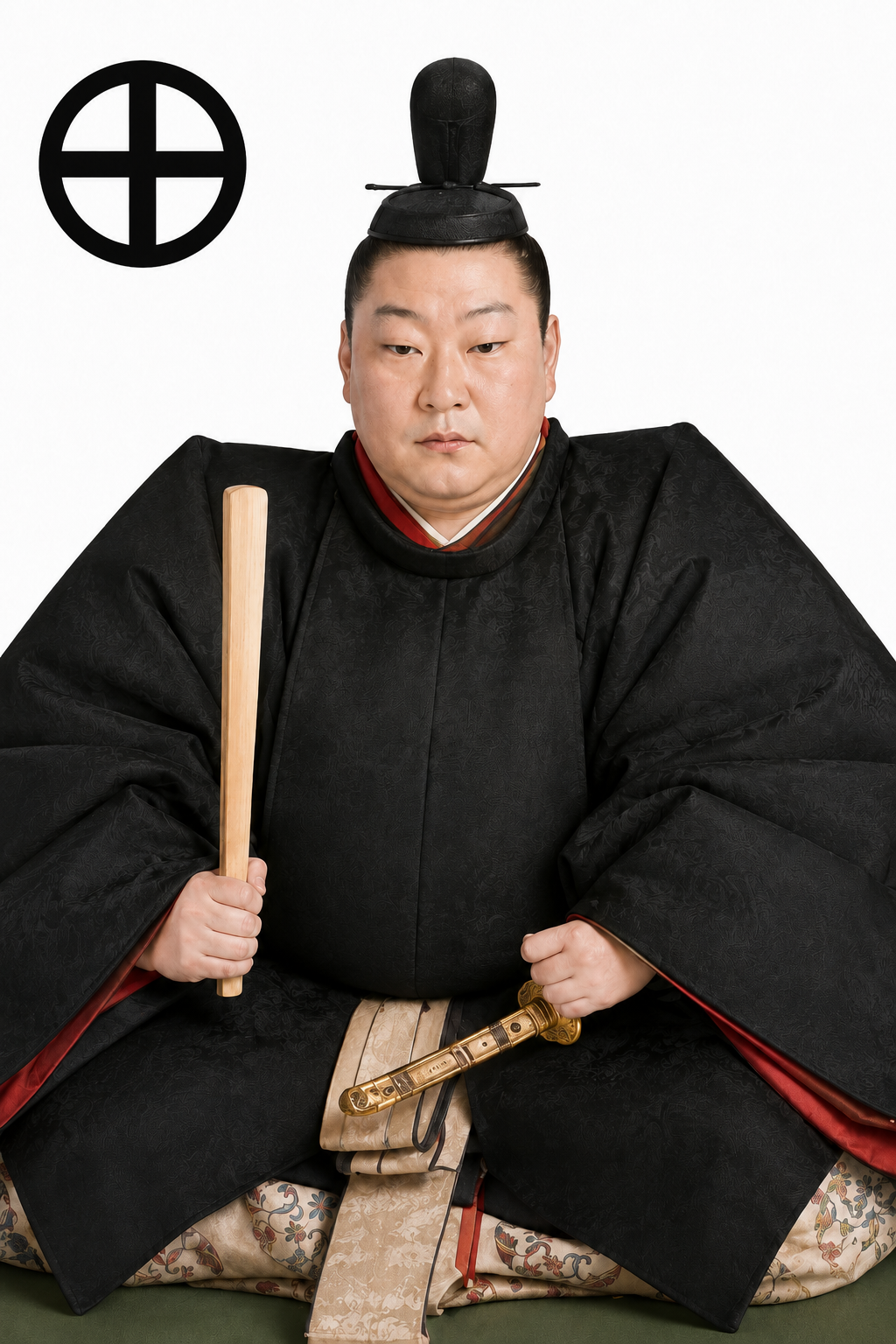
Shimazu Yoshihiro — How Did the “Demon Shimazu” Keep Defeating Great Armies with Few Troops? The Retreat and the Theories
- Three Points to Understand Shimazu Yoshihiro
- The Mainstream View — A Standard Account Based on the Established Theory
- The Multiple Theories — Exploring Possibilities from Various Angles
- Viewed Strategically — A Tactical Genius, the Foundation of Satsuma’s Independence, and the Duality of Martial and Benevolent
- Famous Words and Sayings Associated with Shimazu Yoshihiro
- A Collection of Anecdotes and Episodes
- Timeline
- Related Figures
- Related Historic Site Map and Model Travel Courses
- Related Articles
- References
Three Points to Understand Shimazu Yoshihiro
- One of the foremost fierce generals of the Sengoku period, feared as the “Demon Shimazu” (Oni-Shimazu) and “Onishimanzu.” Born in 1535 (Tenbun 4) as the second son of the Satsuma Sengoku daimyō Shimazu Takahisa, he spent his life on the battlefield and in the land of Satsuma until his death at 85 in 1619 (Genna 5). While his elder brother Shimazu Yoshihisa led the Shimazu clan as its sixteenth head, Yoshihiro fought as his right arm across Kyushu, and in his later years made his martial fame ring out on the great stages of Japanese history—the Korean Peninsula and Sekigahara.
- A tactician of the highest rank in the Sengoku period. His representative works are great victories with few troops, wielding the “tsurinobuse” (feigned-retreat ambush). At the Battle of Kizakihara in 1572 (Genki 3) he defeated an Itō army of 3,000 with 300 men, and at the Battle of Mimikawa in 1578 (Tenshō 6) he routed Ōtomo Sōrin. In 1584 (Tenshō 12), together with his younger brother Shimazu Iehisa, he struck down Ryūzōji Takanobu at the Battle of Okitanawate. At the Battle of Sacheon in 1598 (Keichō 3), a Shimazu force of about 7,000 is said to have routed the combined Ming–Korean army in the Korean campaign, and he won fame, feared as “Onishimanzu.”
- At the Battle of Sekigahara in 1600 (Keichō 5), he carried out the “Shimazu Retreat,” unparalleled in Sengoku history. On a battlefield where the Western Army had collapsed completely, he made an enemy-piercing breakthrough by advancing in retreat toward Tokugawa Ieyasu’s main camp and returned alive to Satsuma. Yoshihiro himself, at about 65, survived this retreat, returning to his home province while losing many retainers, including his nephew Shimazu Toyohisa, through the “sutegamari” sacrificial tactic. In the postwar settlement, the Shimazu house won confirmation of its domain and laid the foundation for the 260 years of the Satsuma domain. The battlefield demon, hymned as “like a war-god,” spent a calm retirement at Kajiki in his later years, and also conveys a side as a man of feeling who loved his retainers and cats.
The Mainstream View — A Standard Account Based on the Established Theory
Birth and Youth — As the Second Son of the Four Shimazu Brothers
Shimazu Yoshihiro was born on the twenty-third day of the seventh month of Tenbun 4 (August 21, 1535) at Izaku Castle in Izaku, Satsuma Province (present-day Hioki City, Kagoshima Prefecture). His father was Shimazu Takahisa, the fifteenth head of the Shimazu house; his mother was Lady Sessō, a daughter of Irikiin Shigesato. His childhood name was Matashirō. He had an elder brother, the future sixteenth head Shimazu Yoshihisa, and younger brothers, Shimazu Toshihisa and Shimazu Iehisa, who together formed the core of the clan as the “Four Shimazu Brothers.”
At first he took the name Tadahira, but later he received a character of the name from the fifteenth shogun of the Muromachi shogunate, Ashikaga Yoshiaki, and changed it to Yoshitaka, and further to Yoshihiro. His court rank was Hyōgo-no-kami, and later Jijū and Sangi. After retirement he styled himself “Ishinsai”; his Buddhist name was “Jitei,” and his sobriquet was “Kuwashihoko Izutake-o-no-Mikoto.”
The Shimazu clan was a distinguished house of southern Kyushu dating from the Kamakura period, with Shimazu Tadahisa, a vassal of Minamoto no Yoritomo, as its founder. In the Muromachi period it held the hereditary governorship of southern Kyushu, but in the Sengoku period its power had receded through internal strife within the clan and the independence of provincial lords. Yoshihiro reached his formative years in the very time of the Shimazu clan’s revival, when his father Takahisa unified the Shimazu main line and began the expansion into Satsuma, Ōsumi, and Hyūga in earnest.
First Battle and Youthful Exploits — From Iwatsurugi Castle to the Pacification of Ōsumi
In 1554 (Tenbun 23), the nineteen-year-old Yoshihiro fought together with his father Takahisa against the allied army of Kedōin Yoshishige, Irikiin Shigetsugu, Gamō Norikiyo, Hishikari Shigetoyo, and others of western Ōsumi at Iwatsurugi Castle, and made his first battle. Iwatsurugi Castle was a steep mountain castle, and Yoshihiro and the others captured it after a long siege.
In 1557 (Kōji 3), in the attack on the Gamō clan of Ōsumi, Yoshihiro took his first enemy head. But in this fight Yoshihiro himself also took five arrows and was gravely wounded, narrowly escaping with his life. The young Yoshihiro’s martial valor became a reputation within the household from early on, and from this beginning he actively took part in the Shimazu clan’s campaigns to pacify Ōsumi.
In 1564 (Eiroku 7), he was appointed jitō (land steward) of Masaki-in in Hyūga Province and entrusted with local rule. This was a personnel decision symbolizing Yoshihiro’s standing within the Shimazu house, and thereafter Yoshihiro chiefly took charge of the front in the Hyūga direction. Hyūga was a region controlled by the Itō clan, and boundary disputes with the Shimazu never ceased.
The Battle of Kizakihara — The Legend of the Tsurinobuse
In the fifth month of 1572 (Genki 3), the first representative battle of Yoshihiro’s life occurred. Itō Yoshisuke of Hyūga set out with an army of about 3,000 to attack the Shimazu-held Iino Castle. Yoshihiro went to intercept him with only about 300 men, to defend Iino Castle. The ratio of forces was a hopelessly inferior roughly one to ten.
What Yoshihiro used was the Shimazu clan’s traditional tactic, the “tsurinobuse.” In this tactic, the main force feigns flight to lure the enemy in, and ambush troops lying in wait to the left and right attack all at once to surround and annihilate. Skillfully using the terrain of Kizakihara (present-day Ebino City, Miyazaki Prefecture), Yoshihiro lured out the Itō army, caught it in a pincer from three sides, struck down many of the Itō army’s leading commanders, and won a great victory.
The Battle of Kizakihara was passed down for ages as one of the foremost great victories with few troops in the Sengoku period. Yoshihiro’s fame as a tactician was thereby made unshakable, and he also earned the assessment of being called “the Sekigahara of Kyushu.” The Itō clan of Hyūga greatly receded in power with this defeat and walked the road to being destroyed by the Shimazu clan in later years.
The War to Unify Kyushu — Mimikawa and Okitanawate
After the victory at Kizakihara, the Four Shimazu Brothers began in earnest to walk the road to unifying Kyushu. In 1577 (Tenshō 5), they completely drove out the Itō clan of Hyūga, and Yoshisuke fled into exile in Bungo, relying on the Ōtomo clan.
In the eleventh month of 1578 (Tenshō 6), Ōtomo Sōrin set out with a great army intending to relieve the Itō clan and advance south into Hyūga, but the four brothers—Shimazu Yoshihisa, Yoshihiro, and Iehisa—coordinated and routed him at the Battle of Mimikawa. Many of the Ōtomo army’s leading commanders died in battle, and the Ōtomo clan rapidly lost its hegemony in Kyushu. The Battle of Mimikawa was the decisive blow by which the Shimazu clan seized the initiative for unifying Kyushu.
In the third month of 1584 (Tenshō 12), when Ryūzōji Takanobu of Hizen attacked the Arima clan of the Shimabara Peninsula, Yoshihiro’s younger brother Shimazu Iehisa led a relief force of about 3,000 and faced a Ryūzōji army of about 25,000 at Okitanawate (present-day Shimabara City, Nagasaki Prefecture). Using the tsurinobuse, Iehisa lured the Ryūzōji army into the marshlands of Okitanawate and won a great victory, striking down Takanobu. With this, the Ryūzōji clan of Hizen was decisively weakened, and the Shimazu clan’s unification of Kyushu entered its final stage.
Yoshihiro himself did not directly take part in this battle, but as the core of the household’s tactical instruction and strategic planning, he was in the position of supporting his younger brother Iehisa’s victory. Through the successive victories at Kizakihara, Mimikawa, and Okitanawate, the Shimazu clan rode a wave of momentum, effectively controlling six of the nine provinces of Kyushu at its peak.
Toyotomi Hideyoshi’s Conquest of Kyushu — Defeat at Nejirozaka and Surrender
What blocked the Shimazu clan’s unification of Kyushu was the intervention of Toyotomi Hideyoshi. In the third month of 1587 (Tenshō 15), Hideyoshi began the conquest of Kyushu with a great army of about 150,000. In the fifth month, the Shimazu clan faced the Toyotomi army led by Toyotomi Hidenaga and Ukita Hideie at Nejirozaka in Hyūga, but was defeated before the overwhelming disparity in numbers. Yoshihiro directed the defensive battle together with his younger brother Iehisa, but resistance ultimately became impossible, and on the eighth day of the fifth month his elder brother Yoshihisa shaved his head and surrendered to Hideyoshi.
After the surrender, the Shimazu clan was confirmed in its holdings of Satsuma, Ōsumi, and Morokata District in Hyūga. Yoshihiro received the court rank of “Hyōgo-no-kami” from Hideyoshi and was positioned as a powerful daimyō under the Toyotomi regime. In the sixth month of that year, an incident occurred in which his younger brother Iehisa died suddenly under puzzling circumstances, leaving a sore spot within the household. A theory of assassination by Hideyoshi and others spread, but the truth is not clear.
The Korean Campaigns — The Bunroku and Keichō Wars and the Battle of Sacheon
In 1592 (Bunroku 1), when Hideyoshi’s invasion of Korea (the Bunroku War) began, Yoshihiro set out leading the Shimazu army of Satsuma, Ōsumi, and Hyūga. The mobilized force at the outset was about 10,000. He landed on the Korean Peninsula from Busan and fought from place to place as he advanced north.
He took part in the assault on Haengju Sanseong in 1593 (Bunroku 2) and in battles to block the southward advance of the Ming army. The Bunroku War ended in a truce, but in the Keichō War of 1597 (Keichō 2) he crossed over to the Korean Peninsula again.
Among Yoshihiro’s military exploits, the one transmitted most dramatically as tradition is the Battle of Sacheon in the tenth month of 1598 (Keichō 3). Against a Shimazu force of about 7,000 holed up in Sacheon Castle in South Gyeongsang Province, a combined Ming–Korean army led by Dong Yiyuan of the Ming attacked. The combined army’s numbers are given as “200,000” in Ming sources (the actual figure is estimated to have been on the order of tens of thousands). With a tactic combining the tsurinobuse and gunpowder, Yoshihiro repelled the combined army and won fame in the tradition of inflicting great losses on the Ming army.
From the tradition of this battle, it is said that the Ming army feared Yoshihiro, calling him “Onishimanzu” (Guishimanzi). The figure of 200,000 clearly contains exaggeration, but it is certain that it was a tactical victory in which he repelled a great army with few troops, and it became a battle that made Yoshihiro’s fame as one of the strongest in the Sengoku period unshakable. In the eleventh month of that year, in the naval Battle of Noryang as the entire army withdrew from Korea following Hideyoshi’s death, Yoshihiro also fought well against the Ming–Korean navy.
The Battle of Sekigahara — The Shimazu Retreat
At the Battle of Sekigahara in 1600 (Keichō 5), Yoshihiro had initially intended to side with Tokugawa Ieyasu and had gone up to the capital to take charge of guarding Fushimi Castle in his absence. But because the dispatch of additional troops from his home province of Satsuma was refused by his elder brother Yoshihisa, he could mobilize only a little over a thousand men. Furthermore, on the eve of Sekigahara, communication with the Eastern Army side fell into confusion in the defense of Fushimi Castle, and as a result he was incorporated into the Western Army led by Ishida Mitsunari.
On the fifteenth day of the ninth month (October 21 by the Western calendar), in the main battle of Sekigahara, the Shimazu force of about 1,500 was deployed in the center of the Western Army, but seeing the disadvantageous situation, it did not move actively. It did not respond even to repeated requests for a sortie from Mitsunari, and stood in a position close to that of a bystander on the battlefield. But after midday, when the Western Army collapsed completely through Kobayakawa Hideaki’s betrayal, the Shimazu force came to be surrounded by the great host of the Eastern Army.
It was a situation in which an ordinary commander would choose surrender or flight, but Yoshihiro’s decision was unprecedented. He ordered, “Pierce through where the enemy is fiercest,” and carried out an “advancing retreat” toward the direction of Tokugawa Ieyasu’s main camp. This is the famous “Shimazu Retreat.”
It is also transmitted that his nephew Shimazu Toyohisa, his vice-commander, desperately stopped Yoshihiro—who had spoken of charging the main camp—and turned him toward a retreat in the direction of the Ise Highway. In retreating, to hold off the pursuing Eastern Army, the Shimazu force adopted the fierce tactic of “sutegamari” (also called the seated-meditation formation). In this tactic, a small unit is left behind to the rear of the retreating main force and fights the pursuers to the death to let the main force escape.
Shimazu Toyohisa is said to have been wounded after a hard fight at Utōzaka (present-day Kamiishizu-chō, Ōgaki City, Gifu Prefecture) and to have taken his own life at Shirabyōshidani. Many retainers, including Chōjuin Moritoshi, died in battle as Yoshihiro’s stand-ins, and of the roughly 1,500 Shimazu troops, only some eighty-odd are said to have returned alive to Satsuma. Yoshihiro himself, at about 65, survived this retreat and returned to Satsuma by sea, by way of Ise and Osaka.
After the War — Confirmation of the Domain and Retirement
The Shimazu house, incorporated into the Western Army at Sekigahara, was potentially subject to confiscation of its domain (kaieki) by Ieyasu. But the Shimazu house showed an attitude of thorough resistance, and Yoshihisa, Yoshihiro, and Tadatsune (Yoshihiro’s third son, who inherited the headship) firmed up their defenses in Satsuma and confronted Ieyasu. For Ieyasu too, starting a large-scale war against the Shimazu house at the southern tip of Kyushu was a heavy burden, and he ultimately chose a resolution through negotiation.
In the fourth month of 1602 (Keichō 7), Yoshihiro’s son Tadatsune (later Iehisa) went up to the capital, met with Ieyasu, and a peace was concluded. The Shimazu house was confirmed in its domain (Satsuma, Ōsumi, and Morokata District in Hyūga), becoming one of the few Western Army daimyō to keep their domain after Sekigahara. The Shimazu house’s negotiating success in winning “confirmation of the domain despite being a loser” was possible only because of Yoshihiro’s show of military force at Sekigahara.
From this point on, Yoshihiro gradually withdrew from the front stage of the household, and in 1604 (Keichō 9) he retired to Kajiki in Ōsumi. After retirement he styled himself “Ishinsai” and led a calm life, devoting himself to cultural activities such as waka poetry, the tea ceremony, and kemari. He is also conveyed to have had a side as a man of feeling who loved his retainers like children and was fond of cats.
Old Age and Death — His Departure in the Seventh Month of 1619
Yoshihiro died at Kajiki on the twenty-first day of the seventh month of Genna 5 (August 30, 1619), at the age of 85. It was a long life spanning the three eras of the Sengoku, Azuchi-Momoyama, and early Edo periods. After his death he was deeply revered as one of the founders of the Satsuma domain, and the martial fame of the “Demon Shimazu” was passed down right up to the end of the Tokugawa period.
About 250 years after Yoshihiro’s death, the Satsuma domain became the core of the Meiji Restoration and, through the Satchō Alliance, a leading actor of the new age. Among the retainers of the Satsuma domain there were many who called themselves “those who carry on the spirit of Lord Yoshihiro,” and Yoshihiro’s legacy of having protected the domain at Sekigahara lived on as the independent spirit of late-Tokugawa Satsuma. The later political movements of Saigō Takamori, Ōkubo Toshimichi, and others are also assessed as having been nurtured within the Satsuma tradition that stemmed from Yoshihiro.
Yoshihiro was, at the same time as being one of the foremost tacticians of the Sengoku period, a warlord with a personal magnetism that bound the household together. The complex image of a man possessing both the ferocity on the battlefield hymned as “like a war-god” and the side of a man of feeling who cherished his retainers and loved cats has been widely passed down for ages as one of the archetypal examples of a Sengoku daimyō.
The Multiple Theories — Exploring Possibilities from Various Angles
Theory 1: Is the Disparity in Forces at the Battle of Kizakihara True?
The point at issue: Regarding the Battle of Kizakihara in 1572 (Genki 3), military chronicles convey a disparity of “300 Shimazu against 3,000 Itō,” but the accuracy of this disparity is debated.
The ten-to-one theory (the chronicle figure): The disparity conveyed by military chronicles such as the Intoku Taiheiki. It was passed down for ages as a classic example of a great victory with few troops. On the premise of this figure, the effect of the tsurinobuse tactic is dramatically assessed.
The theory that the actual forces were smaller: In recent research, considering the custom whereby chronicle figures include exaggeration to emphasize results, there is also a view that the actual disparity was smaller. While it is certain that the Itō mobilized 3,000, the active force actually committed to the battlefield may have been limited.
The theory assessing the mobilizing power of provincial lords: Since the Shimazu clan could nimbly mobilize the provincial lords near Iino Castle, the view holds that, in addition to the Shimazu main force the chronicles record as “300,” local provincial lords took part. In reality, the position holds, it was not a pure ten-to-one battle.
Whichever interpretation one adopts, it is certain that the Battle of Kizakihara was a strategically decisive blow for the Shimazu clan and that Yoshihiro’s tactical command was highly assessed. The story of “defeating a great army with few troops” became the starting point for the later assessment of the “Demon Shimazu” and “Onishimanzu.”
Theory 2: Is the “Tsurinobuse” a Tactic Unique to the Shimazu Clan?
The point at issue: Regarding the “tsurinobuse,” known as a traditional Shimazu tactic, there are several views on its uniqueness and origin.
The Shimazu traditional-tactic theory: The most common interpretation. The tsurinobuse is defined as a surround-and-annihilate tactic that the Shimazu clan developed independently, in which the main force feigns flight to lure the enemy in and ambush troops to the left and right attack all at once. It became the tactical foundation of the successive victories at Kizakihara, Mimikawa, and Okitanawate.
The theory of applying Chinese military science: The view that the “tsurinobuse” is an application of the tactic of “feigning flight to lure in,” shown in Chinese military treatises (such as the Art of War and the Wuzi), and that, rather than the Shimazu clan developing it independently, it was a case of practically applying traditional military science.
The terrain-adaptation theory: The position that the Shimazu clan developed traditional military science in a form adapted to the complex terrain of southern Kyushu—mountains, marshes, rivers, and so on. The interpretation holds that the topographical character of the battlefields—the mountains of Kizakihara, the marshes of Okitanawate—supported the success of the tsurinobuse.
In any case, it is certain that the tsurinobuse became the tactical foundation of the Shimazu clan’s string of victories, and it is widely studied as one of the archetypal examples of regional Sengoku tactics. Yoshihiro, as the general who used this tactic most skillfully, is assessed for ages as a “tactical genius.”
Theory 3: Is the “200,000 Ming Troops” at the Battle of Sacheon Fact?
The point at issue: The figure of “200,000” for the combined Ming–Korean army said to have been repelled by the Shimazu army at the Battle of Sacheon in 1598 (Keichō 3) has long been debated.
The 200,000 theory of the Ming sources: Ming sources record the combined army’s scale as “200,000.” If this figure is adopted, a Shimazu army of about 7,000 repelled a great army about thirty times its size, which is positioned as a great victory unparalleled in Sengoku history. It is the figure that became the basis for the “Onishimanzu” tradition.
The theory that the actual force was on the order of tens of thousands: In recent research, the view is widely supported that the Ming figure of 200,000 includes exaggeration and that the actual scale of the combined army was on the order of 30,000 to 50,000. Even so, it is certain that there was a disparity of several times the Shimazu army’s force, and the tactical significance of the victory does not change.
The theory distinguishing mobilization from combat commitment: The view that “200,000” was the total force mobilized by the Ming side, and that the frontline units that actually attacked Sacheon Castle were a portion of it. It is the position that points out the possibility that the chronicles of the time conflated the mobilized number and the number committed to combat, which a modern view distinguishes.
Even with disputes over the specific figures, it is certain that, in the defense of Sacheon Castle in the tenth month of Keichō 3, the Shimazu army led by Yoshihiro blocked the southward advance of the combined Ming–Korean army and was feared by the Ming side under the byname “Onishimanzu.” The figure of “200,000” has become a symbolic number that can also be understood as the expression used by the Ming army in reporting the Shimazu army’s results at Sacheon to its home country.
Theory 4: The Circumstances by Which the Shimazu Were Incorporated into the Western Army at Sekigahara
The point at issue: There are several interpretations of why Yoshihiro, who had initially intended to side with Tokugawa Ieyasu, was incorporated into the Western Army at the Battle of Sekigahara.
The theory of confusion in the defense of Fushimi Castle: Yoshihiro had initially planned, on Ieyasu’s intention, to join the defense of Fushimi Castle (whose castellan was Torii Mototada, guarding it in Ieyasu’s absence). But in the seventh month of 1600 (Keichō 5), when Ishida Mitsunari and others attacked Fushimi Castle, local confusion meant the Shimazu force could not enter the castle, and as a result it was incorporated into the Western besieging side.
The theory of severed communication within the Shimazu house: Yoshihiro repeatedly requested the dispatch of additional troops from his home province of Satsuma, but his elder brother Yoshihisa refused this. The view holds that, with an extremely small force at hand, it was difficult for Yoshihiro to maintain participation in the Eastern Army on his own judgment.
The theory of the Western Army’s initiative: The view that the Western Army led by Mitsunari actively sought the Shimazu force’s participation, and that Yoshihiro, unable to refuse, came to follow. Yoshihiro had intended to assess the course of the battle and ultimately side with one or the other, but as a result he came to stand on the battlefield as part of the Western Army.
The composite-factor theory: The view that Yoshihiro’s participation in the Western Army was decided as the result of several of these factors overlapping. The influence of the Shōnai Rebellion of 1599 (the turmoil within the Shimazu house), the troop shortage in Satsuma, the confusion at Fushimi Castle, the communication failure with the Ieyasu side, and other circumstances overlapped.
That the Shimazu force did not move actively in the main battle at Sekigahara can also be interpreted as evidence that Yoshihiro was not reconciled to fighting as part of the Western Army. The distinctive situation of “the Shimazu incorporated into the Western Army” became the premise that produced the later unprecedented retreat drama of the “Shimazu Retreat.”
Theory 5: Who Decided on the Advancing Retreat of the “Shimazu Retreat”?
The point at issue: There are several traditions about the circumstances by which the Shimazu force at Sekigahara chose an advancing retreat by piercing through the enemy.
The Yoshihiro-decision theory: The account conveyed by sources on the lords’ side, such as the Honpan Jinbutsushi. The theory that Yoshihiro himself ordered, “Where is the enemy fiercest? Charge into the midst of that fierce host,” and decided on the advancing retreat in the direction of Tokugawa Ieyasu’s main camp. It is a tradition emphasizing Yoshihiro’s judgment as a tactician.
The Shimazu Toyohisa remonstrance theory: The tradition that Yoshihiro at first spoke of his resolve to charge Ieyasu’s main camp and die in battle, but that his nephew and vice-commander Shimazu Toyohisa desperately remonstrated and turned him toward a retreat in the direction of the Ise Highway. As a contrast between Yoshihiro’s resolve to die and Toyohisa’s cool judgment, it is widely conveyed in the military chronicles.
The collective-judgment theory including the sutegamari tactic: The view that the final route of the retreat was the result not only of Yoshihiro’s decision but of consultation with close advisers such as Chōjuin Moritoshi, Shimazu Toyohisa, and Shimazu Tadatsune. It is the position that the sutegamari tactic itself was a retreat tactic handed down through the generations within the Shimazu house.
Whichever interpretation one adopts, the reasons the advancing retreat by piercing through the enemy was chosen are pointed out as practical judgments: (1) the ordinary retreat route (crossing the Ibuki mountains) was in the opposite direction; (2) it was easier to survive by breaking through a battlefield in confusion from fleeing soldiers; and (3) the aged Yoshihiro found a long mountain crossing difficult. The view that the advancing retreat was not a reckless charge but a choice made by cool tactical judgment is generally accepted today.
Theory 6: The Deciding Factor in the Confirmation of the Shimazu Domain after Sekigahara
The point at issue: There are several interpretations of why the Shimazu house, incorporated into the Western Army, escaped confiscation after Sekigahara and was confirmed in its domain.
The military-show-of-force theory: After Sekigahara, the Shimazu house showed an attitude of thorough resistance and firmed up its defenses in Satsuma. For Ieyasu, starting a large-scale war against the Shimazu house at the southern tip of Kyushu was a heavy burden, and he had no choice but to choose a resolution through negotiation rather than war. It is the position that this was the result of Ieyasu highly valuing the Shimazu house’s military power, shown in the “Shimazu Retreat.”
The skilled-negotiator theory: The view that the negotiating skill of Tadatsune (later Iehisa), who went up to the capital as the Shimazu house’s envoy, was decisive. It is the interpretation that the household carefully built a negotiating strategy and made Ieyasu accept the logic that “the Shimazu house was initially on Ieyasu’s side but was incorporated into the Western Army by force of circumstance.”
The theory of Ieyasu’s strategic judgment: The view that Ieyasu himself recognized the inefficiency of directly governing the remote far south of Kyushu and judged that keeping the Shimazu house in place would contribute to the stability of the shogunal system. It is the position that this was the premise for the later Shimazu house playing an important role in the shogunate’s external policy (such as control over the Ryūkyū).
The composite-factor theory: The view that the confirmation of the domain was realized as the composite result of the military show of force, the skilled negotiation, and Ieyasu’s strategic judgment. This is the most contemporary assessment.
As a result of the confirmation of the domain, the Satsuma domain maintained an independent spirit as a great domain of 770,000 koku throughout the Edo period. The view that this independence became a remote cause leading to the Satchō Alliance and the initiative of the Satsuma samurai at the end of the Tokugawa period is widely supported as a position assessing modern Japanese history in retrospect.
Viewed Strategically — A Tactical Genius, the Foundation of Satsuma’s Independence, and the Duality of Martial and Benevolent
A tactical genius — from the tsurinobuse to the advancing retreat. The strategic characteristic running through Shimazu Yoshihiro’s life is tactical flexibility according to the situation. The “tsurinobuse” he used at Kizakihara, Mimikawa, and Okitanawate was a case of perfectly applying in actual combat the classical military science of feigning flight to lure the enemy in. To defeat a great army with few troops requires the cool recognition that one cannot win in a head-on decisive battle, and the judgment to choose a tactic that uses the terrain and lures the enemy is indispensable. Yoshihiro consistently maintained this judgment from Kizakihara in his youth to Sekigahara in his later years.
At the Battle of Sacheon, with a defensive tactic combining gunpowder and castle-building technology, he kept the great Ming army at bay. This was proof not only of the application of the tsurinobuse but of the flexibility to integrate new weapons (gunpowder and firearms) with traditional tactics. Yoshihiro’s tactics were not a single fixed pattern but had a fluid character that changed according to the battlefield and the enemy’s nature.
The “advancing retreat” at Sekigahara was the scene in which Yoshihiro’s tactical flexibility was displayed to the highest degree. By ordinary tactical theory, piercing through the enemy is a reckless choice, but on a battlefield in confusion from fleeing soldiers, the paradoxical judgment holds that breaking through by using the confusion gives a higher survival probability than retreating in good order. Yoshihiro executed this paradox and, at about 65, realized his return to his home province. This is why he is called the war-god of the battlefield.
The foundation of Satsuma’s independence — the long-term significance of the confirmation of the domain after Sekigahara. The greatest strategic legacy of Yoshihiro’s life lies in winning the confirmation of the domain after Sekigahara. As one of the few examples among the Western Army daimyō who could maintain their domain, when they might have been subject to confiscation, the Shimazu house was able to keep an independent spirit as a great domain of 770,000 koku throughout the Edo period.
This confirmation of the domain was possible only because of Yoshihiro’s show of military force at Sekigahara. The combat power of the Shimazu house shown in the “Shimazu Retreat” became a fact that forced on Ieyasu the realistic judgment that “a war against the Shimazu house at the southern tip of Kyushu would not be easy.” In a negotiation without military force, it would not have been possible to make Ieyasu leave the Shimazu house its domain.
In the long term, the independent spirit of the Satsuma domain connected to the initiative in the Satchō Alliance and the movement to overthrow the shogunate at the end of the Tokugawa period, and became the historical foreshadowing of the Satsuma domain’s activity as the core of the Meiji Restoration. Yoshihiro’s decision at Sekigahara can also be assessed as having prepared, about 250 years later, the modernization of Japan. The long-term perspective that the military power of the “Demon Shimazu” came, as a result, to prepare the starting point of modern Japan, is remembered as an archetypal example of the influence an individual’s decision in the Sengoku period had on history.
The duality of martial and benevolent — the war-god of the battlefield and the man of feeling who loved cats. Another characteristic of Yoshihiro’s personal image lies in the extreme contrast between the “demon” on the battlefield and the “benevolence” in daily life. Yoshihiro, feared as the “Demon Shimazu” throughout his life—at Kizakihara, Mimikawa, Okitanawate, Sacheon, and Sekigahara—was at the same time a man of feeling who loved his retainers like children and valued the bonds of the household, gathering deep loyalty from his retainer band.
That many retainers died in battle as Yoshihiro’s stand-ins in the “sutegamari” tactic at Sekigahara is an expression of loyalty that came about only because of Yoshihiro’s love for his retainers in peacetime. That Chōjuin Moritoshi, Shimazu Toyohisa, and others threw away their lives to let Yoshihiro escape was not a mere sense of duty toward a lord but the result of deep feeling in admiration of Yoshihiro.
In his retirement at Kajiki in his later years, he is conveyed to have devoted himself to culture such as waka, the tea ceremony, and kemari, and to have spent calm days fond of cats. The complex image of a man possessing both the “demon of the battlefield” and the “benevolence of daily life” was widely passed down for ages as one of the ideal images of a Sengoku daimyō.
The essence of Yoshihiro’s control of his retainers lay not in coercion through military force but in cohesion through personal magnetism. His skill in functioning the whole retainer band as a single fighting collective, by using strictness on the battlefield and gentleness in peacetime as the occasion demanded, continues to be a subject of study as an ideal example of household control in the Sengoku period.
Famous Words and Sayings Associated with Shimazu Yoshihiro
“Charge into the midst of that fierce host” — The Advancing Retreat at Sekigahara
“Where is the enemy fiercest?” / “Charge into the midst of that fierce host”
— Yoshihiro’s order at Sekigahara, the 15th day of the 9th month of Keichō 5 (Honpan Jinbutsushi)
The order said to have been issued by Yoshihiro when the Western Army collapsed completely at the Battle of Sekigahara and the roughly 1,500 Shimazu troops were isolated amid the 80,000 of the Eastern Army. When a retainer answered, “The enemy to the east is fierce beyond measure,” Yoshihiro ordered, “Charge into the midst of that fierce host (drive in).” The decision to carry out an advancing retreat toward the direction of Tokugawa Ieyasu’s main camp became a stratagem unparalleled in Sengoku history, passed down for ages as the “Shimazu Retreat.” Surviving this retreat at about 65 and returning to his home province of Satsuma, Yoshihiro’s name was thereby made unshakable as the “war-god of the battlefield.”
“Onishimanzu” — The Byname the Ming Army Gave Yoshihiro
“Onishimanzu” (Guishimanzi)
— The byname the Ming army gave Yoshihiro
The byname the Ming army gave Yoshihiro in response to the result of a Shimazu force of about 7,000 repelling the combined Ming–Korean army at the Battle of Sacheon in 1598 (Keichō 3). It is said that they called the “Demon Shimazu” by the Chinese reading “Guishimanzi.” Ming sources record the combined army’s scale as “200,000,” but in recent research the view that it was on the order of tens of thousands is widespread. Whatever the actual figure, the tactical success of repelling a great army with few troops was passed down within the Ming army and produced Yoshihiro’s byname. If the “Demon Shimazu” was a domestic byname, “Onishimanzu” was an international one, telling that Yoshihiro’s martial fame resounded on an East Asian scale.
“The spirit of Lord Yoshihiro” — The Ideal of the Satsuma Samurai
“We are those who carry on the spirit of Lord Yoshihiro”
— The self-designation of the Satsuma samurai of the Edo period
Throughout the Edo period, among the samurai of the Satsuma domain there were many who called themselves “those who carry on the spirit of Lord Yoshihiro.” Yoshihiro’s valor and resourcefulness in winning the confirmation of the domain at Sekigahara were handed down through the generations as the ideal image of the Satsuma samurai. It is assessed that, behind the Satsuma domain’s bearing the core of the movement to overthrow the shogunate at the end of the Tokugawa period and becoming, through the Satchō Alliance, a wing of the leading actors of the Meiji Restoration, lay the independent spirit of “the spirit of Lord Yoshihiro.” The later political movements of Saigō Takamori, Ōkubo Toshimichi, and others are also historically positioned as being on the extension of Yoshihiro’s legacy.
A Collection of Anecdotes and Episodes
Recovery from grave wounds after taking five arrows. In 1557 (Kōji 3), in the attack on the Gamō clan of Ōsumi, the twenty-two-year-old Yoshihiro took his first enemy head. But in the same fight he himself also took five arrows and was gravely wounded, narrowly escaping with his life. The young Yoshihiro’s martial valor became a reputation within the household from early on, and his good fortune in surviving amid fierce fighting also became legend. Through the successive fierce battles that followed—Kizakihara, Mimikawa, Okitanawate, Sacheon, Sekigahara—Yoshihiro’s vitality in surviving without taking a fatal wound became the reason he was called “like a war-god” by his retainers.
The tsurinobuse at the Battle of Kizakihara. The Battle of Kizakihara of 1572 (Genki 3) was the battle that made Yoshihiro’s assessment as a tactician unshakable. The Shimazu army of about 300 was in a hopeless inferiority before the Itō army of about 3,000, but Yoshihiro wielded the “tsurinobuse” and won a great victory. The tactic in which the main force feigns flight to lure the enemy in and ambush troops to the left and right attack all at once is a sophisticated one that can be executed only by someone who knows the terrain thoroughly. Yoshihiro’s command, skillfully using the terrain of Kizakihara, earned the assessment of being called even “the Sekigahara of Kyushu” in later ages. The success of defeating a great army with few troops became the foundation that supported Yoshihiro’s later military career.
Ryūzōji Takanobu, struck down at Okitanawate. The battle at Okitanawate in 1584 (Tenshō 12), in which Yoshihiro’s younger brother Shimazu Iehisa struck down Ryūzōji Takanobu of Hizen—called the “Lord of Five Provinces and Two Islands”—transformed the map of power in Kyushu. The result of a Shimazu army of about 3,000 defeating a Ryūzōji army of about 25,000 was remembered within the household as a great victory surpassing Kizakihara. Yoshihiro himself did not directly take part in this battle, but as the core of the household’s tactical instruction and strategic planning, he was in the position of supporting his younger brother Iehisa’s victory. It was passed down for ages as a battle symbolizing the strength of the coordination among the Four Shimazu Brothers.
The defense of Sacheon Castle — a battle wielding gunpowder and firearms. At the Battle of Sacheon in the tenth month of 1598 (Keichō 3), Yoshihiro holed up in Sacheon Castle in southern Korea and met the great combined Ming–Korean army. He inflicted great losses on the combined army with tactics such as planting gunpowder around the castle and detonating it all at once just before the enemy attacked, and concentrated firearm fire from within the castle. Yoshihiro’s tactics, combining the traditional tsurinobuse with the new-age weapons of gunpowder and firearms, tell of Yoshihiro’s capacity for development as a Sengoku warlord. It is transmitted that the Ming army feared Yoshihiro, calling him “Onishimanzu.”
Shimazu Toyohisa and the “sutegamari” — the tragedy of the Sekigahara retreat. In the “Shimazu Retreat” at Sekigahara, Yoshihiro’s nephew Shimazu Toyohisa met a fierce death in battle to let his uncle escape. Toyohisa, Chōjuin Moritoshi, and others executed the “sutegamari” tactic, in which a small unit is left behind to the rear of Yoshihiro’s retreating main force and fights the pursuers to the death. Toyohisa is said to have been wounded after a hard fight at Utōzaka and to have taken his own life at Shirabyōshidani. Of the roughly 1,500 Shimazu troops, only some eighty-odd are said to have returned alive to Satsuma. This tactic, in which retainers threw away their lives to let Yoshihiro escape, was passed down through the generations in the Satsuma domain as one of the foremost examples of fierce, loyal death in the Sengoku period.
Yoshihiro, who loved cats at Kajiki in his later years. Yoshihiro, who retired to Kajiki in 1604 (Keichō 9), led a calm life devoted to cultural activities such as waka, the tea ceremony, and kemari—in contrast to his public image as the war-god of the battlefield. He is also conveyed to have had a side as a man of feeling who loved his retainers like children and was especially fond of cats. The duality of the ferocity on the battlefield feared as the “Demon Shimazu” and the benevolence in daily life was often taken up in later biographies as an element conveying Yoshihiro’s personal image in three dimensions. Yoshihiro’s personal magnetism, which supported the cohesion of the household, also became the background to the retainers throwing away their lives to let Yoshihiro escape in the sutegamari tactic at Sekigahara.
The origin of Satsuma ware — the bringing of Korean potters. Yoshihiro, who crossed to the Korean Peninsula in the Korean campaigns (the Bunroku and Keichō Wars), brought Korean potters to Satsuma on his withdrawal. The opening of kilns in Satsuma by this group of potters is the origin of “Satsuma ware.” Satsuma ware, born from the fusion of the Korean potters’ techniques with the climate and culture of Satsuma, became an important industry of the Satsuma domain throughout the Edo period, and in the Meiji period won high acclaim at the Paris World’s Fair and the like, becoming internationally known as a representative of Japanese ceramic art. Yoshihiro’s Korean campaigns were poor in results as warfare, but culturally and economically they left a by-product that produced the industrial foundation of Satsuma.
Timeline
| Japanese Era (Western Year) | Event |
|---|---|
| Tenbun 4, 7th month, 23rd day (1535.8.21) | Born at Izaku Castle (present-day Hioki City, Kagoshima Prefecture) as the second son of the 15th head of the Shimazu house, Shimazu Takahisa. His mother is Lady Sessō (a daughter of Irikiin Shigesato). His elder brother is Shimazu Yoshihisa; his younger brothers are Shimazu Toshihisa and Shimazu Iehisa. Childhood name Matashirō; first styled Tadahira. |
| Tenbun 23 (1554) | At 19, his first battle at Iwatsurugi Castle. Fights with his father Takahisa against the allied army of western Ōsumi. |
| Kōji 3 (1557) | At 22, his first head in the attack on the Gamō clan of Ōsumi. Himself gravely wounded, taking five arrows. |
| Eiroku 7 (1564) | Appointed jitō of Masaki-in in Hyūga Province, taking charge of the front in the Hyūga direction. |
| Genki 3 (1572), 5th month | The Battle of Kizakihara. A Shimazu army of about 300 defeats Itō Yoshisuke’s about 3,000 with the tsurinobuse—a great victory with few troops. The starting point of the “Demon Shimazu” fame. |
| Tenshō 5 (1577) | Completely drives out the Itō clan of Hyūga. Itō Yoshisuke flees into exile in Bungo, relying on the Ōtomo clan. |
| Tenshō 6 (1578), 11th month | The Battle of Mimikawa. The Four Shimazu Brothers coordinate and rout the great army of Ōtomo Sōrin. The decisive blow for seizing the initiative in unifying Kyushu. |
| Tenshō 8 (1580) | Receives the character “Yoshi” from Ashikaga Yoshiaki and renames himself Yoshitaka, later to Yoshihiro. |
| Tenshō 12 (1584), 3rd month | The Battle of Okitanawate. His younger brother Shimazu Iehisa strikes down Ryūzōji Takanobu. The Ryūzōji clan of Hizen is weakened; the Shimazu unification of Kyushu enters its final stage. |
| Tenshō 15 (1587), 5th month | Defeated at Nejirozaka by Toyotomi Hideyoshi’s Kyushu conquest army. On the 8th day of the 5th month, his elder brother Yoshihisa shaves his head and surrenders. Confirmed in the holdings of Satsuma, Ōsumi, and Morokata District in Hyūga. |
| Tenshō 15 (1587), 6th month | His younger brother Shimazu Iehisa dies suddenly under puzzling circumstances. A theory of assassination by Hideyoshi spreads, but the truth is unknown. |
| Bunroku 1 (1592) | Hideyoshi’s invasion of Korea (the Bunroku War) begins. Yoshihiro leads a Shimazu army of about 10,000 across to the Korean Peninsula. |
| Keichō 2 (1597) | Crosses again to the Korean Peninsula in the Keichō War. |
| Keichō 3 (1598), 10th month | The Battle of Sacheon. A Shimazu force of about 7,000 repels the combined Ming–Korean army (Ming sources say “200,000”; the actual force was tens of thousands). Earns the byname “Onishimanzu.” |
| Keichō 3 (1598), 11th month | The entire army withdraws from Korea following Hideyoshi’s death. Fights the Ming–Korean navy at the Battle of Noryang. |
| Keichō 4 (1599) | The “Shōnai Rebellion” breaks out within the Shimazu house. Yoshihiro’s son Tadatsune (later Iehisa) cuts down the senior retainer Ijūin Tadamune at Fushimi, and Tadamune’s son Tadazane rebels in Hyūga. The suppression takes time. |
| Keichō 5 (1600), 9th month, 15th day | The Battle of Sekigahara. A Shimazu force of about 1,500 takes part as the Western Army. Amid the total collapse, Yoshihiro carries out an “advancing retreat by piercing through the enemy.” His nephew Shimazu Toyohisa, Chōjuin Moritoshi, and many retainers die in battle in the sutegamari. The survivors number about 80. Yoshihiro returns to Satsuma at about 65. |
| Keichō 7 (1602), 4th month | His son Tadatsune goes up to the capital, meets with Ieyasu, and a peace is concluded. The Shimazu house is confirmed in its domain (Satsuma, Ōsumi, and Morokata District in Hyūga). It becomes one of the few Western Army daimyō to keep their domain. |
| Keichō 9 (1604) | Yoshihiro retires to Kajiki in Ōsumi. Styles himself “Ishinsai” and turns to a cultural life of waka, the tea ceremony, and kemari. |
| Genna 5, 7th month, 21st day (1619.8.30) | Dies at Kajiki at the age of 85. A long life spanning the three eras of the Sengoku, Azuchi-Momoyama, and early Edo periods. Deeply revered as one of the founders of the Satsuma domain. |
| End of the Tokugawa period (1850s–60s) | The Satsuma domain bears the core of the movement to overthrow the shogunate and, through the Satchō Alliance, becomes a wing of the leading actors of the Meiji Restoration. “The spirit of Lord Yoshihiro” is inherited as the ideal of the late-Tokugawa Satsuma samurai. |
Related Figures
Family
| Person | Relationship | Notes |
|---|---|---|
| Shimazu Takahisa | Father, 15th head of the Shimazu house | The reviver of the Shimazu clan. Began the expansion into Satsuma, Ōsumi, and Hyūga in earnest. Yoshihiro’s youthful military career was formed within his father’s campaigns of conquest. |
| Lady Sessō | Mother | A daughter of Irikiin Shigesato. |
| Shimazu Yoshihisa | Elder brother, 16th head of the Shimazu house | Two years older than Yoshihiro. Led the Shimazu main line and, as the core of the four brothers, directed the war to unify Kyushu. When surrendering to Hideyoshi, shaved his head and submitted. At Sekigahara, refused to dispatch additional troops to Yoshihiro. |
| Shimazu Toshihisa | Younger brother, third son | The third of the four brothers. Treated coldly after Hideyoshi’s conquest of Kyushu, and later took his own life. |
| Shimazu Iehisa | Younger brother, fourth son | Struck down Ryūzōji Takanobu at Okitanawate. Died suddenly in Tenshō 15 after Hideyoshi’s conquest of Kyushu. A renowned general ranking with the “Demon Shimazu.” Yoshihiro’s son Tadatsune later took the name “Iehisa” (a different person of the same name). |
| Shimazu Tadatsune (later Iehisa) | Third son, successor to the headship | Yoshihiro’s third son. After Sekigahara, met with Ieyasu and realized the peace. Later renamed himself “Iehisa” (the same name as his uncle). The first lord of the Satsuma domain. |
| Shimazu Toyohisa | Nephew (son of his brother Iehisa) | Executed the “sutegamari” in the Shimazu Retreat at Sekigahara, wounded after a hard fight at Utōzaka and taking his own life at Shirabyōshidani. A loyal death that let Yoshihiro escape. |
Retainers and Sworn Allies
| Person | Relationship | Notes |
|---|---|---|
| Chōjuin Moritoshi | Retainer | Executed the sutegamari in the Shimazu Retreat at Sekigahara, dying in battle to let Yoshihiro escape. His grave survives at Rinkō-ji in Kamiishizu-chō, Ōgaki City. |
| Ijūin Tadamune | Retainer, later purged | Became a direct vassal of Hideyoshi under the Toyotomi regime. Cut down by Tadatsune at Fushimi in Keichō 4, becoming the cause of his son Tadazane’s rebellion (the Shōnai Rebellion). |
Opposing Forces
| Person | Relationship | Notes |
|---|---|---|
| Itō Yoshisuke | Sengoku daimyō of Hyūga | Crushingly defeated by Yoshihiro at the Battle of Kizakihara in Genki 3. Later driven from Kyushu and relied on the Ōtomo clan. |
| Ōtomo Sōrin | Sengoku daimyō of Bungo | Crushingly defeated by the Four Shimazu Brothers at the Battle of Mimikawa in Tenshō 6. The hegemony of the Ōtomo clan in Kyushu collapsed. |
| Ryūzōji Takanobu | Sengoku daimyō of Hizen | The hero of Hizen called the “Lord of Five Provinces and Two Islands.” Struck down by Shimazu Iehisa at the Battle of Okitanawate in Tenshō 12. |
| Toyotomi Hideyoshi | Ruler of the realm | Made the Shimazu clan surrender in the conquest of Kyushu in Tenshō 15. Granted Yoshihiro the court rank of “Hyōgo-no-kami.” Ordered the invasion of Korea. |
| Tokugawa Ieyasu | First shogun of the Edo shogunate | Confronted the Western Army Shimazu at Sekigahara. After the war, recognized the confirmation of the Shimazu domain, having received the show of military force of the “Shimazu Retreat.” |
| Ishida Mitsunari | Center of the Western Army | Incorporated Yoshihiro into the Western Army at Sekigahara. His relationship with Yoshihiro was cold, and Yoshihiro did not respond to his requests for a sortie. |
| Dong Yiyuan | A general of the Ming army | Led the combined Ming–Korean army in attacking Sacheon Castle at the Battle of Sacheon in Keichō 3, but was repelled by Yoshihiro’s tactics. |
Related Historic Site Map and Model Travel Courses
The sites connected with Shimazu Yoshihiro spread across the various places of his lifelong military career, centered on his base, Satsuma (Kagoshima Prefecture). The main locations are Ebino City, Miyazaki Prefecture (the Battle of Kizakihara); Sekigahara Town and Ōgaki City, Gifu Prefecture (the Battle of Sekigahara and the “Shimazu Retreat”); and Kajiki in Ōsumi (Aira City, Kagoshima Prefecture), the place of his retirement in his later years. It becomes a wide-ranging itinerary straddling Kyushu and Honshu.
Model Course 1: A Tour of Sites Connected with Yoshihiro in Satsuma (one to two days)
A central Satsuma course touring Yoshihiro’s birthplace and place of retirement.
- Day 1: JR Kagoshima-Chūō Station → bus → Izaku Castle Ruins (Hioki City, Kagoshima Prefecture) (Yoshihiro’s birthplace) → the Reimeikan, Kagoshima Prefectural Center for History and Art (a comprehensive exhibit related to the Shimazu clan) → overnight in Kagoshima
- Day 2: JR Chōsa Station → Kajiki Castle Ruins (Aira City, Kagoshima Prefecture) (Yoshihiro’s place of retirement in his later years) → Kuwashihoko Shrine (the shrine enshrining Yoshihiro) → Yoshihiro’s grave → return
Model Course 2: The Battle of Kizakihara Old Battlefield Course (one day)
A course visiting the stage of the first representative battle of Yoshihiro’s life.
- JR Kagoshima-Chūō Station → JR Ebino Station → the Kizakihara Old Battlefield (Ebino City, Miyazaki Prefecture) (the battlefield of Genki 3) → Iino Castle Ruins (the Shimazu base) → nearby related historic sites → return
Model Course 3: A Course Tracing the Shimazu Retreat (one to two days)
A course tracing on site the Battle of Sekigahara and the route of the “Shimazu Retreat.”
- Day 1: JR Sekigahara Station → the Shimazu Yoshihiro Camp Ruins (Sekigahara Town, Fuwa District, Gifu Prefecture) → the Sekigahara Memorial Museum (an exhibit on the whole of Sekigahara) → Utōzaka (Kamiishizu-chō, Ōgaki City, Gifu Prefecture) (the place of Shimazu Toyohisa’s hard fight) → Shirabyōshidani (the place of Toyohisa’s suicide) → Ruriko-ji (Toyohisa’s family temple) → Rinkō-ji (Chōjuin Moritoshi’s grave) → overnight in Ōgaki
- Day 2: related historic sites in Ōgaki City → the local-specialty shop “Amenbo” in Kamiishizu-chō → return
Model Course 4: A Course Traversing Shimazu Yoshihiro’s Life (four to five days)
A wide-ranging course touring the main sites of Yoshihiro’s life across Kyushu and Honshu.
- Day 1: Izaku Castle Ruins in Satsuma (birthplace) → Kajiki (place of retirement) → overnight in Kagoshima
- Day 2: the Kizakihara Old Battlefield in Miyazaki → Iino Castle Ruins → overnight in Miyazaki
- Day 3: the Mimikawa Old Battlefield in Ōita → the Okitanawate Old Battlefield in Nagasaki → overnight in Fukuoka
- Day 4: Fukuoka → Osaka → overnight in Sekigahara
- Day 5: the Shimazu Yoshihiro Camp Ruins at Sekigahara → the Retreat-related historic sites at Kamiishizu, Ōgaki → return
Arrangements by Visitor Type
- History beginners: Model Course 1, the Satsuma-centered course. Studying in advance at the Reimeikan before touring the sites connected with Yoshihiro deepens understanding.
- Shimazu house fans: Combining Model Courses 1 through 3 lets you trace the main scenes of Yoshihiro’s life on site.
- Sekigahara fans: Model Course 3, tracing the “Shimazu Retreat.” From Sekigahara to Kamiishizu-chō in Ōgaki City, you can confirm on site the route of Yoshihiro’s advancing retreat.
- Researchers of the Korean campaigns: Combining with an on-site visit to Sacheon (South Gyeongsang Province, Korea) lets you experience Yoshihiro’s Korean military career internationally.
- For hot-spring lovers: Combining Ibusuki Onsen, Kirishima Onsen, Yufuin Onsen, and others lets you enjoy both historic-site touring and the hot springs.
Related Articles
Related Warlord Articles
- Shimazu Takahisa — Yoshihiro’s father. The 15th head of the Shimazu house and the unifier of Satsuma.
- Shimazu Iehisa — Yoshihiro’s younger brother. A renowned general ranking with the “Demon Shimazu,” who struck down Ryūzōji Takanobu at Okitanawate.
- Ōtomo Sōrin — The Sengoku daimyō of Bungo defeated by the Four Shimazu Brothers at the Battle of Mimikawa.
- Ryūzōji Takanobu — The hero of Hizen called the “Lord of Five Provinces and Two Islands,” struck down at Okitanawate.
Related Battle Articles
- The Battle of Mimikawa (1578) — The decisive blow for unifying Kyushu, in which the Four Shimazu Brothers routed the Ōtomo army.
- The Battle of Sacheon (1598) — The “Onishimanzu” battle in which Yoshihiro repelled the Ming army in the Korean campaign.
- The Battle of Sekigahara (1600) — The greatest decisive battle of the Sengoku period and the “Shimazu Retreat.”
References
Primary and Quasi-Primary Sources
- Honpan Jinbutsushi — A collected compilation of retainer biographies edited by the Satsuma domain. Conveys Yoshihiro’s remark at Sekigahara, “Pierce through where the enemy is fiercest,” and the like.
- Shimazu-ke Monjo (Documents of the Shimazu House) — A body of documents handed down in the Shimazu house. Contains many documents issued and received by Yoshihiro.
- Toyotomi Hideyoshi Monjo — A body of contemporary sources conveying points of contact with Yoshihiro in connection with the invasion of Korea.
- Tokugawa Ieyasu Monjo — Contemporary sources on the negotiations with the Shimazu house after Sekigahara.
- Korean sources (the Veritable Records of the Joseon Dynasty and others) — Convey Yoshihiro’s military career in the Korean campaign from the Korean viewpoint.
- Ming sources (the History of Ming and others) — Record the byname “Onishimanzu” and the Battle of Sacheon from the Ming side.
Compiled Historical Sources
- Intoku Taiheiki — A military chronicle compiled in the mid-Edo period, edited by Kagawa Sen’a. A representative source conveying Yoshihiro’s military career, including the Battle of Kizakihara.
- Sappan Kyūki Zatsuroku — A collected compilation of the old records of the Satsuma domain. Contains traditions related to Yoshihiro.
- Sekigahara Gunki, Sekigahara Kassenki, and other Sekigahara-related military chronicles — Convey the details of the “Shimazu Retreat.”
- Dai Nihon Shiryō (compiled by the Historiographical Institute of the University of Tokyo) — Collects the various sources related to Yoshihiro in chronological order.
Academic and Research Works
- Niina Kazuhito, “Fukutsu no Ryōdono” Shimazu Yoshihisa, Yoshihiro (The “Indomitable Two Lords,” Shimazu Yoshihisa and Yoshihiro), Ebisu Kōshō Publication — A recent research work reassessing the relationship between Yoshihisa and Yoshihiro.
- Kirino Sakujin, Satsuma Jinkokushi: Sengoku-Kinsei-hen (A Gazetteer of Satsuma: Sengoku and Early-Modern Volume), Nankai Nichi-Nichi Shimbunsha — A basic work treating the history of Satsuma. Includes Yoshihiro’s life and assessment.
- Miike Sumimasa, Sekigahara Shimazu Nokiguchi (The Sekigahara Shimazu Retreat), Gakken Plus — Discusses the details of the “Shimazu Retreat” with on-site investigation.
- Shiramine Jun, Shinkaishaku Sekigahara Kassen no Shinjitsu (A New Interpretation: The Truth of the Battle of Sekigahara), Miyaobi Shuppansha — A representative example of recent Sekigahara research. New views on the movements of the Shimazu force.
- Kitajima Manji, Toyotomi Hideyoshi no Chōsen Shinryaku (Toyotomi Hideyoshi’s Invasion of Korea), Yoshikawa Kōbunkan — A basic work of research on the Bunroku and Keichō Wars. Discusses Yoshihiro’s Korean military career, including the Battle of Sacheon.
Public Institutions and Museums
- The Reimeikan, Kagoshima Prefectural Center for History and Art (Kagoshima City, Kagoshima Prefecture) — A comprehensive exhibit related to the Shimazu clan. The central facility for learning about Yoshihiro’s life and the history of the Satsuma domain.
- Kuwashihoko Shrine (Kajiki-chō, Aira City, Kagoshima Prefecture) — The shrine enshrining Shimazu Yoshihiro. Named after his sobriquet “Kuwashihoko Izutake-o-no-Mikoto.”
- The Kajiki Shimazu House Villa Ruins (Aira City, Kagoshima Prefecture) — Yoshihiro’s place of retirement. The stage of his life in his later years.
- Izaku Castle Ruins (Hioki City, Kagoshima Prefecture) — Yoshihiro’s birthplace. A city-designated historic site.
- The Kizakihara Old Battlefield (Ebino City, Miyazaki Prefecture) — The battlefield of Genki 3. A city-designated historic site.
- The Sekigahara Memorial Museum (Sekigahara Town, Fuwa District, Gifu Prefecture) — An exhibit on the whole of the Battle of Sekigahara. Also explains the movements of the Shimazu force.
- Ruriko-ji and Rinkō-ji (Kamiishizu-chō, Ōgaki City, Gifu Prefecture) — The graves of Shimazu Toyohisa and Chōjuin Moritoshi.
Other References
- The entries for “Shimazu Yoshihiro,” “the Shimazu clan,” “the Battle of Sekigahara,” and “the Shimazu Retreat” in various dictionaries and databases (the Kokushi Daijiten, the Nihonshi Kōjiten, and others).
- Nihon Rekishi Chimei Taikei, the Kagoshima, Miyazaki, and Gifu Prefecture volumes — Commentary on the place names and historic sites connected with Yoshihiro.
- NHK taiga dramas Dokuganryū Masamune, Aoi Tokugawa Sandai, Sanada Maru, and others — Representative visual works in which Yoshihiro appears.
- Historical reading materials and feature articles related to Shimazu Yoshihiro and the Shimazu house.
This article is based on the state of research as of May 2026. For Shimazu Yoshihiro, recent advances in research by Niina Kazuhito, Kirino Sakujin, and others have presented new views on his relationship with Yoshihisa and on the circumstances at Sekigahara. In particular, the details of the “Shimazu Retreat,” the assessment of the forces at the Battle of Sacheon, and the circumstances by which the Shimazu were incorporated into the Western Army at Sekigahara are matters on which multiple interpretations stand side by side. Assessments may change with the discovery of new sources and the progress of scholarship.

コメント