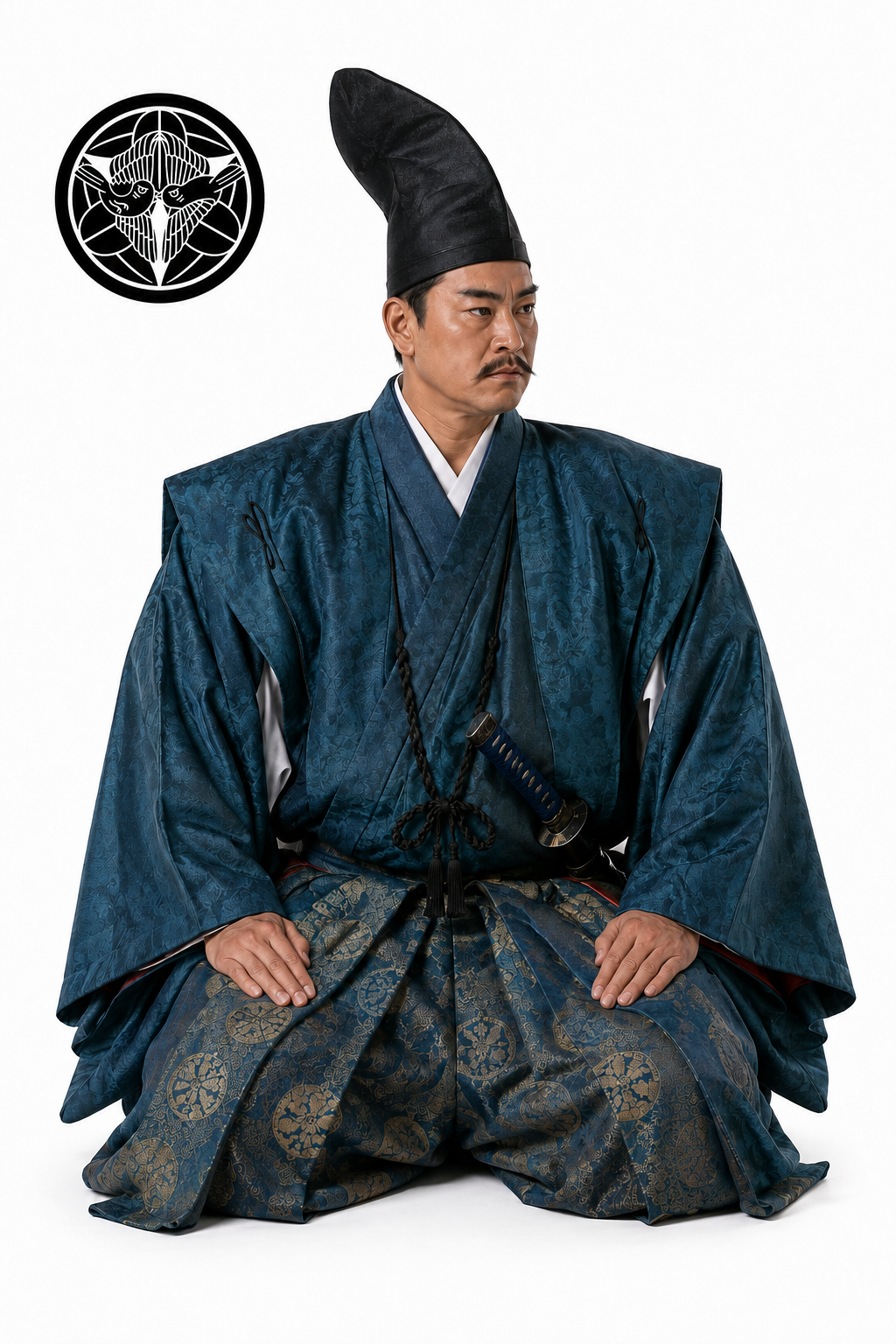
Uesugi Kagekatsu | From Kenshin’s Adopted Son to One of the Five Elders and Yonezawa’s 300,000 Koku — Bowed but Not Destroyed
Contents
- Uesugi Kagekatsu in Three Points
- The Mainstream Account — The Standard Story Found in Textbooks
- The Theories — Exploring the Possibilities from Various Angles
- A Strategic View — Kagekatsu’s Judgment, Governance, and Succession
- Famous Words and Sayings of This Warlord
- Anecdotes and Episodes
- Timeline
- Family and Personal Relationships
- Related Historic-Site Map and Travel Model Course
- Related Articles
- Reference Information
- Uesugi Kagekatsu in Three Points
- The Mainstream Account — The Standard Story Found in Textbooks
- The Theories — Exploring the Possibilities from Various Angles
- A Strategic View — Kagekatsu's Judgment, Governance, and Succession
- Famous Words and Sayings of This Warlord
- Anecdotes and Episodes
- Timeline
- Family and Personal Relationships
- Related Historic-Site Map and Travel Model Course
- Related Articles
- Reference Information
Uesugi Kagekatsu in Three Points
- A scion of the distinguished Uesugi house of Echigo, who succeeded as Kenshin’s adopted son. Born the son of Nagao Masakage, he became the adopted son of his uncle Uesugi Kenshin. After Kenshin’s sudden death, he won the succession dispute (the Ōtate Rebellion) against the other adopted son, Kagetora, and became head of the Uesugi house.
- One of the Five Elders of the Toyotomi regime, raised to a great daimyō of 1,200,000 koku. He submitted to Toyotomi Hideyoshi and cooperated in his unification of the realm. Bearing a part as one of the Five Elders, he was transferred in Keichō 3 (1598) from Echigo to Aizu with 1,200,000 koku, becoming a powerful daimyō of the eastern provinces.
- Sided with the Western Army at Sekigahara and, after the war, suffered a great reduction to Yonezawa’s 300,000 koku. Together with his senior retainer Naoe Kanetsugu, he opposed Tokugawa Ieyasu and acted with the Western Army at the Battle of Sekigahara and the Keichō Dewa Campaign. After his postwar apology and journey to the capital, his domain was greatly reduced from Aizu’s 1,200,000 koku to Yonezawa’s 300,000 koku, but he rebuilt the domain and became the founder of the Yonezawa Uesugi house.
The Mainstream Account — The Standard Story Found in Textbooks
Origins in the Echigo Ueda Nagao House and Adoption by Kenshin
Uesugi Kagekatsu was born in the 11th month of Kōji 1 (1555) as the second son of Nagao Masakage, head of the Ueda Nagao house of Uonuma District, Echigo Province. His mother was Sentōin, the elder sister of Uesugi Kenshin. His original name was Akikage, his childhood name Umatsu, and later he was called Kiheiji. As his birthplace, Sakado Castle (present-day Minamiuonuma City, Niigata Prefecture), the home base of the Ueda Nagao house, is widely known, but there is also a tradition giving nearby Kabanosawa Castle as his birthplace, and accounts differ among the sources.
In Eiroku 7 (1564), when his father Masakage drowned in an accident while boating, Kagekatsu was taken in by his uncle Kenshin and was raised at Kasugayama Castle, the home base of Echigo. Kenshin, who had no natural son, soon welcomed Kagekatsu as his adopted son. Around the same time, Kagetora, a son of the distinguished Kantō house of Hōjō Ujiyasu, had also entered the Uesugi house as another adopted son, and the Uesugi house came to have two candidates to bear the house after Kenshin’s death standing side by side. Kagetora was a political adoption aimed at strengthening the alliance with the Hōjō house, while Kagekatsu had the stronger aspect of being Kenshin’s blood relative.
The Ōtate Rebellion — A Succession Dispute over Echigo
In the 3rd month of Tenshō 6 (1578), when Uesugi Kenshin died suddenly within Kasugayama Castle, the struggle between Kagekatsu and Kagetora over the headship of the Uesugi house began in earnest. Kenshin is said to have died without clearly designating a successor, and the house split into two factions. Kagekatsu first secured the gold storehouse in the main keep of Kasugayama Castle and, having secured the war funds, resorted to force. Kagetora escaped Kasugayama Castle and took up position at the Ōtate (the old residence from Kenshin’s days as former Kantō Deputy), resisting with the support of part of the influential retainers within the house and of the Hōjō clan of the Kantō. This is called the Ōtate Rebellion.
The fighting reached nearly the whole of Echigo Province and became a large-scale civil war in which even Hōjō Ujimasa of the Kantō and Takeda Katsuyori of Sagami and Kai intervened, each with his own designs. Though at a disadvantage at first, Kagekatsu succeeded in making peace with Takeda Katsuyori (the Kō-Etsu Alliance) and gradually established the upper hand. In the 3rd month of Tenshō 7 (1579), Kagetora took his own life at Samegao Castle, and the Ōtate Rebellion ended in Kagekatsu’s victory. By this, Kagekatsu established his position as legitimate head of the Uesugi house and settled on the name Uesugi Kagekatsu.
The Ōtate Rebellion opened the way for the headship of the Uesugi house to pass to the blood relative Kagekatsu, but the long civil war greatly exhausted the house. In the process of settling the rebellion, a reorganization of the house — including even defectors from the victors’ side — became necessary, and the one who took charge of these practical affairs was Naoe Kanetsugu, who would later become Kagekatsu’s lifelong senior retainer. Kanetsugu served as Kagekatsu’s close aide from his youth and would come to direct, in effect, the postwar reconstruction of Echigo.
The Shibata Shigeie Rebellion and Oda Nobunaga’s Invasion
In connection with the settlement of the Ōtate Rebellion, Shibata Shigeie, an influential kokujin of the Agakita group, raised the banner of revolt against Kagekatsu out of dissatisfaction with the rewards for merit and the like. The Shibata Shigeie Rebellion began in earnest in Tenshō 9 (1581) and long destabilized northern Echigo. Shibata sought a backer by getting in contact with Oda Nobunaga, and the Uesugi house faced a severe situation in which internal unrest and external threat were linked.
Around the same time, Oda Nobunaga was strengthening pressure on the Uesugi domain on the Hokuriku front as well. The Hokuriku regional army of the Oda, with Shibata Katsuie as chief commander, advanced through Noto and Etchū to the Echigo border, and in Tenshō 10 (1582) Uozu Castle in Etchū fell to the Oda side. Kagekatsu was driven into a corner, but at exactly this moment the Honnō-ji Incident occurred in Kyoto, and Oda Nobunaga met an unnatural death. By this, the Oda army’s Hokuriku invasion came to an abrupt halt, and Kagekatsu escaped the crisis. The Shibata Shigeie Rebellion continued even after the Honnō-ji Incident but was finally suppressed in Tenshō 15 (1587), and the domain of Echigo at last regained stability.
Submission to Toyotomi Hideyoshi and the Five Elders
After the Honnō-ji Incident, it was Toyotomi Hideyoshi who seized supremacy over the realm. At first Kagekatsu did not deeply involve himself in the Oda succession dispute, but in the flow of Hideyoshi’s unification of the realm, he chose the path of coming under his wing. In the 6th month of Tenshō 14 (1586), Kagekatsu came to the capital, had an audience with Hideyoshi, and formally became a daimyō under the Toyotomi regime. Naoe Kanetsugu was at the same time appointed to Junior Fifth Rank, Lower Grade, and bore negotiations with the Toyotomi regime as the Uesugi house’s representative.
Afterward, Kagekatsu actively cooperated in Hideyoshi’s unification of the realm. He took the field in the Kyūshū campaign of Tenshō 15 (1587), the Odawara campaign of Tenshō 18 (1590), and others, and in the Odawara campaign in particular he bore the role of capturing Hōjō-side castles throughout the Kantō. The Uesugi house under Hideyoshi’s regime was positioned as an important military force in the eastern direction of the Toyotomi regime, and Kagekatsu himself joined the center of the regime as one of the Five Elders.
In the 1st month of Keichō 3 (1598), by Hideyoshi’s order, Kagekatsu was transferred from the domain he had long ruled — Echigo, Sado, the Dewa Shōnai region, and so on — to Aizu as a great daimyō of 1,200,000 koku combining Aizu, Yonezawa, and Shōnai. This transfer was part of the reorganization of the Toyotomi regime’s system of control over the eastern provinces, and was also a strategic placement situating the Uesugi house in a position to keep Date Masamune and Tokugawa Ieyasu in check. Moving his home base to Aizu-Wakamatsu Castle, Kagekatsu gained a new position as a powerful daimyō of the eastern provinces.
The Battle of Sekigahara and the Keichō Dewa Campaign
After Hideyoshi’s death in the 8th month of Keichō 3 (1598), the internal conflicts of the Toyotomi regime surfaced rapidly. In Keichō 5 (1600), Ieyasu, taking issue with the Uesugi house of Aizu over unauthorized castle-building (the construction works of Aizu Kōzashi Castle) and refusal to come to the capital, issued an order to subjugate the Uesugi. What is said to have been the trigger was the “Naoe Letter,” held to be a reply from the Uesugi house. It is handed down as a content boldly refuting Ieyasu’s reproaches, but many of the surviving manuscripts have later additions and alterations pointed out, and as to whether the original reached Ieyasu with its content intact, views differ even among researchers.
In the 6th month of that year, Ieyasu began his march east to subjugate the Uesugi, but in the 7th month, receiving word of the rising in arms of Ishida Mitsunari and others, he turned about and headed for the main battle of Sekigahara. The Uesugi house, remaining in Aizu, would unfold its own strategy in the eastern provinces in Ieyasu’s absence. In the 9th month, a Uesugi army of about 25,000 led by Naoe Kanetsugu invaded Dewa Province, the territory of Mogami Yoshiaki, who had sided with Ieyasu (the Keichō Dewa Campaign). After a fierce battle over Hasedō Castle, when word that the Western Army had been defeated at the main battle of Sekigahara on the 15th of the 9th month reached the front about two weeks late, Naoe resolved to withdraw. In the 10th month, the Uesugi army pulled back in good order to Yonezawa Castle.
Kagekatsu himself did not take part in the main battle of Sekigahara, and even on the front of the Dewa campaign the supreme commander remained in Aizu. But the fact that the Uesugi house had opposed Ieyasu as part of the Western Army was hard to undo, and postwar punishment became unavoidable.
The Reduction to Yonezawa’s 300,000 Koku and the Establishment of Domain Government
In the 7th month of Keichō 6 (1601), Kagekatsu, accompanied by his heir Tamamaru (the later Uesugi Sadakatsu), came to the capital and had an audience with Ieyasu at Fushimi Castle. The Tokugawa side’s judgment was a severe one: confiscating most of the Uesugi domain of 1,200,000 koku across Aizu, Yonezawa, Shōnai, and elsewhere, and leaving only Yonezawa’s 300,000 koku. It was a great reduction to about one-quarter. Aizu-Wakamatsu Castle was granted to Gamō Hideyuki, and the Uesugi house came to make Yonezawa — which had been Naoe Kanetsugu’s own holding at the time of Sekigahara — its new home base.
After entering Yonezawa, Kagekatsu, to cope with the sudden contraction of the domain, advanced the reorganization of the retainer corps and the review of the stipend system together with Naoe Kanetsugu and others. At the time, the Uesugi house retained nearly the same retainers as in the Aizu 1,200,000-koku era, and a nominal yield of 300,000 koku could by no means support them. Many retainers remained with the Uesugi house even as their stipends were greatly cut, and a distinctive retainer-corps structure was formed in which they supported the domain in a half-farmer, half-warrior status. The Yonezawa domain, though its nominal yield became small, would unfold its own distinctive domain government throughout the later Edo period through the great number of its retainers and the strong solidarity of its domain samurai.
The Siege of Osaka and His Late Years
In the Siege of Osaka of Keichō 19–20 (1614–15), Kagekatsu took the field on the Tokugawa side. In the Winter Campaign he encamped in Kyoto, and in the Summer Campaign he advanced toward Osaka. Already 60 years old, Kagekatsu took the field less in the role of a front line of battle than in one of demonstrating loyalty to Ieyasu. After the Siege of Osaka, when the system of the Tokugawa shogunate was established, the Uesugi house, as a tozama daimyō, would devote itself to the government of the Yonezawa domain.
On the 20th day of the 3rd month, Genna 9 (1623), Kagekatsu died of illness at Yonezawa Castle. He died at age 69. Through the upheavals of the Warring States, Oda–Toyotomi, and early Edo periods, he would be handed down to later generations as the head of the house who transmitted the Uesugi bloodline and the family ethos of “honor” into the Edo period. The headship was inherited by his heir Uesugi Sadakatsu, and the Yonezawa Uesugi house survived to the end of the shogunate.
The Theories — Exploring the Possibilities from Various Angles
Uesugi Kagekatsu was a daimyō who lived through the turbulent era from the end of the Warring States period into the early Edo period, and his life contains many points on which accounts differ among the sources. The circumstances surrounding the succession, his strategic intent in the Sekigahara period, the evaluation of his character — reexamination continues with the advance of research. Below, six points of particular dispute are taken up.
※ The following are “theories” based on researchers’ observations and differences among sources. They are not established facts, but are organized as points on which views are divided.
【Theory 1】Theories on the Origin of the Ōtate Rebellion and Kenshin’s Designation of a Successor
That Kenshin died suddenly without clearly designating a successor is held to have been the direct trigger of the Ōtate Rebellion. But as to whether there was a designation, and whom he regarded as successor, accounts differ among the sources.
[No Successor Designation (the conventional view)]: The view that, because Kenshin had no natural son and fell without clearly designating a successor, the succession dispute between Kagekatsu and Kagetora was unavoidable. This is the widely known organization of the matter.
[Kagekatsu-Designation Theory]: The view that Kenshin, in his late years, had inwardly decided on Kagekatsu as successor, valuing blood ties. It is grounded in Kagekatsu’s swift move of securing the gold storehouse of Kasugayama Castle and the main keep immediately after Kenshin’s sudden death.
[Kagetora-Designation Theory]: The view that, valuing the alliance with the Hōjō, Kenshin regarded Kagetora as successor. It is grounded in Kagetora’s having been granted the “Uesugi” surname and Kenshin’s old name “Kagetora.”
[Prior House-Split Theory]: A structural view that, even during Kenshin’s lifetime, the conflict between the Kantō faction (Kagetora’s side) and the Echigo hereditary vassals (Kagekatsu’s side) was already in progress, and the succession problem was no more than its surfacing.
【Theory 2】Theories on the Legitimacy of Kagekatsu’s Adoption
As to the legitimacy of Kagekatsu’s standing in the Uesugi house, several views stand side by side in later times.
[Blood-Tie Superiority Theory]: The view that Kagekatsu was the son of Kenshin’s elder sister Sentōin and was the successor candidate who most thickly carried the blood of the Uesugi (Nagao) house.
[Political-Adoption Theory (Kagetora superiority)]: The view that Kagetora was a “political adoption” who bore the diplomatic relationship with the Hōjō clan, and that, in the Uesugi house’s external strategy, it was rational to place Kagetora as successor.
[Dual-Adoption Theory]: The view that Kenshin welcomed both Kagekatsu and Kagetora as adopted sons and sought to keep the balance within the house without making clear which he would make successor. The organization that this, as a result, gave rise to the succession dispute.
[Postwar Formation of Legitimacy Theory]: The view that the legitimacy of Kagekatsu’s adoption was, in strong part, arranged after victory in the Ōtate Rebellion by the Uesugi house’s official records (the Uesugi-ke Onenpu and the like), and does not necessarily match the perception within the house at the time.
【Theory 3】Theories on the “Naoe Letter”
The “Naoe Letter,” said to be a reply dated the 4th month of Keichō 5 (1600) from Naoe Kanetsugu to Tokugawa Ieyasu, has also been said to have been the direct trigger of the Battle of Sekigahara. But there are still many points of contention regarding the “Naoe Letter.”
[Genuine-Letter / Traditional Theory]: The traditional view that Kanetsugu actually sent a letter strongly provoking Ieyasu, and that it became the direct motive of Ieyasu’s decision to subjugate the Uesugi.
[Manuscript Addition-and-Alteration Theory]: Many of the surviving manuscripts have later additions and alterations pointed out, and as to whether the original reached Ieyasu with its content intact, views differ even among researchers.
[Motive-Limitation Denial Theory]: The simple frame of attributing Ieyasu’s decision to subjugate the Uesugi to the single Naoe Letter is being reexamined. The view of grasping it anew as the totality of multiple factors — the tension over the construction works of Aizu Kōzashi Castle, the political situation of the Five Elders and the commissioners, and so on — is strong.
[Kagekatsu–Kanetsugu Agreement Theory]: The view that the letter was sent not by Naoe’s judgment alone but as the official position of the Uesugi house reflecting Kagekatsu’s will. It is discussed as one clue for reading the inner reality of the reputedly taciturn Kagekatsu.
【Theory 4】Theories on Kagekatsu’s Strategic Intent in the Sekigahara Period
As to Kagekatsu’s strategic intent in the main battle of Sekigahara and the Keichō Dewa Campaign, several views stand side by side.
[Pincer-Attack-on-Ieyasu Plan Theory]: The view that the original design of Kagekatsu and Kanetsugu was, in response to Ishida Mitsunari’s rising in arms, to strike Ieyasu’s rear and catch him in a pincer from east and west.
[Territorial-Expansion Priority Theory]: The view that, rather than a pincer attack on Ieyasu, the priority goal was to annex the Mogami and Date territories in the eastern provinces in Ieyasu’s absence and expand the Uesugi domain from southern Ōu to northern Kantō. The Mogami invasion in the Keichō Dewa Campaign is understood as an independent territorial-expansion action rather than a response to the main battle.
[The Meaning of the Kōzashi Castle Construction]: Evaluations divide over whether to see Kagekatsu’s advancing the construction of Kōzashi Castle as a new home base in place of Aizu-Wakamatsu Castle as a provocation to Ieyasu or as a necessity of domain management.
[Passive Western-Army Theory]: The view that Kagekatsu was a passive figure who stood with the Western Army purely out of the debt of gratitude received from Hideyoshi, and did not hold an active design to seize the realm.
In recent research (the studies of Abe Akito and others), a perspective has been presented of reevaluating the war situation of the fifth year of Keichō not merely as a shadow of the main battle of Sekigahara but as an independent front of the eastern provinces.
【Theory 5】Theories on the Validity of the “Silent and Taciturn” Evaluation
Uesugi Kagekatsu has long been spoken of through a taciturn image — “he laughed only once in his whole life,” “he scarcely opened his mouth,” and so on. But there is recent debate reexamining this image too.
[Taciturnity Tradition Theory]: The view that it is a character description repeatedly recorded in the traditions of the Uesugi house and the Yonezawa domain and in Edo-period compilations, and was recognized as a characteristic of Kagekatsu from the time itself.
[Later Embellishment Theory]: The view that, within the image of the head of the house arranged in the Edo period, the silent and taciturn character had an aspect of being emphasized in connection with the “honor” family ethos.
[Reevaluation from Issued Documents Theory]: The view that, looking at the documents and vermilion-seal letters Kagekatsu issued, one can sense that he paid fine attention to domain management, diplomacy, and personnel matters, and that he was not a mere taciturn figurehead lord.
[Governance-Style Theory]: The organization that his fewness of words was less a matter of character than a governance style as head of the house — standing up able close aides such as Naoe Kanetsugu while he himself held back as the decision-maker.
【Theory 6】Theories on the Postwar Evaluation of Kagekatsu
As to Kagekatsu’s postwar course as a loser at Sekigahara, evaluations divide.
[Endurance of Humiliation Theory]: The view that positively evaluates, as “bowed but not destroyed,” his nonetheless preserving the house amid the humiliation of a great reduction from 1,200,000 to 300,000 koku. It is the image of the head of the house repeatedly told within the Uesugi house in the Edo period.
[Domain-Government Rebuilding Evaluation Theory]: The view that highly evaluates the postwar reorganization of the retainer corps and the reform of the stipend system as the collaboration of Kagekatsu and Kanetsugu. It is held to have laid the foundation of the distinctive half-farmer, half-warrior structure of the Yonezawa domain samurai.
[Passive Lord Theory]: The view that takes a low view of Kagekatsu’s own initiative, holding that many of the important postwar decisions were led by Naoe Kanetsugu.
[Late-Years Cold-Treatment Theory]: The view that discusses the postwar Uesugi house as an example of cold treatment, on the grounds that even in the Siege of Osaka he was not permitted to stand at the front, and the Yonezawa domain was placed in an economically hard position throughout the Edo period.
How to separate and evaluate the merit of leaving the Uesugi house behind into the Edo period without destroying it from the responsibility of being the starting point of the impoverished post-reduction government of the Yonezawa domain still varies among researchers.
A Strategic View — Kagekatsu’s Judgment, Governance, and Succession
An Administrator Inheriting a Distinguished House — The Unification and Internal Government of Echigo
Uesugi Kagekatsu’s strength as a warlord lay, above all, in his standing as the “inheritor of a distinguished house.” As Kenshin’s adopted son, inheriting the tradition and retainer corps of the Uesugi and Nagao intact, and fighting through the Ōtate Rebellion to become the legitimate head of Echigo, Kagekatsu was not a founding daimyō who carved out a domain in a single generation but a consolidating head succeeding to the line of a great house long rooted. The dozen-odd years from the Ōtate Rebellion to the suppression of the Shibata Shigeie Rebellion, and on to the management of the domains of Echigo, Sado, and the Dewa Shōnai region, were a period devoted to the aftermath of civil war and the reorganization of the domain. Advancing the reorganization of the house with Naoe Kanetsugu as his right arm, and carrying out land surveys and a review of the stipend system, the Uesugi house came to aim at the coexistence of the dignity of a distinguished house and practical management.
His Standing as One of the Five Elders and the Inherited Tradition of “Honor”
After submitting to Toyotomi Hideyoshi, Kagekatsu was listed at the center of the Toyotomi regime as one of the Five Elders. Hideyoshi positioned five men — Tokugawa Ieyasu, Maeda Toshiie, Ukita Hideie, Mōri Terumoto, and Uesugi Kagekatsu — as daimyō who would be the ballast of the regime, and among them Kagekatsu was expected to be the linchpin of the eastern direction. The transfer to Aizu’s 1,200,000 koku clearly gave the Uesugi house the role of keeping Date Masamune and Tokugawa Ieyasu in check in the Tōhoku and Kantō. The “honor” family ethos Kagekatsu chose became the axis transmitting the ethics inherited from Kenshin into the Edo period, leaving a distinctive image of the Uesugi house to later generations. Kagekatsu’s posture of respecting the system of the Toyotomi regime and valuing his public standing as one of the Five Elders led, as a result, to his choice of siding with the Western Army at Sekigahara.
Strategic Judgment in the Sekigahara Period — An Independent Front in the Eastern Provinces
Kagekatsu’s movements surrounding the Battle of Sekigahara are one of the most debated cases even among the strategic judgments of daimyō from the Warring States period into the early Edo period. His response to Ieyasu’s subjugation of the Uesugi, the construction of Kōzashi Castle, the Mogami invasion in the Keichō Dewa Campaign — Kagekatsu’s evaluation swings greatly depending on how far one sees these as a coordinated design. The main battle of Sekigahara was decided in about a day, and the Dewa campaign too turned to withdrawal upon word of the Sekigahara defeat. Looking back from the result, it could be said that Kagekatsu’s strategic design ended without being sufficiently unfolded. But apart from the outcome of the main battle, the very fact that the Uesugi house could hold an independent front in the eastern provinces is being reevaluated in recent research.
The Rebuilding of Domain Government After the Reduction and the Founder of the Yonezawa Uesugi
The Uesugi house after Sekigahara, even while suffering a great reduction from 1,200,000 to 300,000 koku, survived into the Edo period without the house being destroyed. For the house of a loser at the end of the Warring States period, this was by no means a matter of course. Behind the Uesugi house’s being able to secure Yonezawa’s 300,000 koku while many Western-Army daimyō were dispossessed lay Kagekatsu and Kanetsugu’s apology and journey to the capital, and a thoroughgoing posture of submission to the Tokugawa side. The post-reduction Kagekatsu advanced the reorganization of the retainer corps and the review of the stipend system together with Naoe Kanetsugu, and built the foundation of the Yonezawa domain with its half-farmer, half-warrior structure of domain samurai. In that, even losing its nominal yield, he kept the solidarity of the house and left the Uesugi bloodline and family ethos to the Edo period, Kagekatsu became, beyond doubt, the founder of the Yonezawa Uesugi house. The figure of Kagekatsu as an administrator who endured the humiliating reduction and left the house behind would be handed down within the Uesugi house throughout the Edo period.
Famous Words and Sayings of This Warlord
※ Uesugi Kagekatsu is known as a taciturn figure, and reliable records of his own words are scant. The following are introduced as words that tell of his character and life. Please note that they are not necessarily statements based on established primary sources.
The Taciturnity Handed Down as “He Laughed Only Once in His Whole Life”
The taciturnity handed down as “he laughed only once in his whole life.”
A representative tradition symbolizing Kagekatsu’s character. It is a character description repeatedly recorded in the traditions of the Uesugi house and the Yonezawa domain, and he is said to have scarcely opened his mouth even before his retainers and close attendants. It has a strong aspect of an image formed by Edo-period compilations and is hard to call historical fact as it stands, but it is a tradition that tells how strongly Kagekatsu’s taciturnity remained in people’s impressions from the time itself.
“Keep Honor and Leave the House Behind” — The Family Ethos from Sekigahara Onward
“Keep honor and leave the house behind” — the family ethos from Sekigahara onward.
It is not something reliably handed down as Kagekatsu’s own statement, but is known as a phrase summarizing the family ethos repeatedly told within the Uesugi house after Sekigahara. To keep the “honor” family ethos his father Kenshin had raised, and even while suffering a humiliating reduction, to transmit the true line of the martial house into the Edo period without destroying the house — this posture was positioned by later generations as the axis of the choices that ran through Kagekatsu’s life.
A General Comment on Kagekatsu and “Words”
The words that tell of Kagekatsu’s life are found more in the words his retainers and later generations spoke about his silence than in his own statements. The configuration of a taciturn head of the house with the eloquent strategist Naoe Kanetsugu standing beside him paradoxically heightened the presence of the figure that was Uesugi Kagekatsu. Without speaking his decisions, yet in action piling up unwavering choices — the instant decision of the Ōtate Rebellion, his standing as one of the Five Elders, his siding with the Western Army at Sekigahara, the postwar apology and endurance — the very way Kagekatsu lived was, it could be said, his “words” for later generations.
The weight of Kagekatsu’s silence has been remembered in connection with the “honor” family ethos of the Uesugi house. The figure of the head of the house who left the house behind even amid the hardships after the reduction and transmitted the Yonezawa Uesugi house into the Edo period is engraved on later generations with a distinctive presence — that of protecting a distinguished house without speaking.
Anecdotes and Episodes
The Early Death of His Father Nagao Masakage and His Adoption by Kenshin
In Eiroku 7 (1564), when Kagekatsu was ten, his father Nagao Masakage drowned in an accident while boating. Kagekatsu was then still a young child, in no position to bear the management of the domain, so he was taken in by his maternal uncle Uesugi Kenshin and raised at Kasugayama Castle. There is also a view suspecting that Masakage’s death may have been a political assassination, but there is no firm corroboration by reliable sources, and it still does not go beyond the realm of tradition. In any case, it is certain that this accident greatly directed the course of Kagekatsu’s life and opened the way to his later succession of the Uesugi house.
The Gold Storehouse of Kasugayama Castle — The Starting Point of the Ōtate Rebellion
Immediately after Kenshin’s sudden death within Kasugayama Castle, Kagekatsu first secured the main keep and the gold storehouse within the castle. The swift action of securing the war funds and the castle’s core before the succession dispute had yet surfaced supported Kagekatsu’s advantage in the Ōtate Rebellion. As an anecdote showing the swiftness of his decision and execution, it is a particularly striking scene even within Kagekatsu’s life. It is often cited by later generations as an event that tells of Kagekatsu’s initiative as head of the house.
Peace with Takeda Katsuyori (the Kō-Etsu Alliance)
In the midst of the Ōtate Rebellion, Kagekatsu set about peace negotiations with Takeda Katsuyori. At the time, the Takeda house had room to intervene in the Echigo succession dispute, and had Katsuyori been set on Kagetora’s side, Kagekatsu would have fallen into dire straits. By sending his younger sister as Katsuyori’s second wife, Kagekatsu concluded the Kō-Etsu Alliance and succeeded in bringing the Takeda house to his side. This diplomatic skill became one of the decisive factors that led the Ōtate Rebellion to Kagekatsu’s victory.
Marriage to Kikuhime, Daughter of Takeda Shingen
In Tenshō 7 (1579), just after the end of the Ōtate Rebellion, Kagekatsu took Kikuhime, daughter of Takeda Shingen, as his principal wife. It was a marriage symbolizing the reconciliation of the Takeda and Uesugi houses, long in conflict, and Kikuhime supported the Uesugi house as Kagekatsu’s principal wife all her life. Though the couple endured hardship in not being blessed with a natural child, Kikuhime remained at Kagekatsu’s side even after the destruction of the Takeda house and became a figure who embodied the weight of the tie between the two houses throughout her life.
A Narrow Escape from Death Through the Honnō-ji Incident
In Tenshō 10 (1582), Oda Nobunaga’s subjugation of the Uesugi was approaching its final phase. Just as the Hokuriku regional army led by Shibata Katsuie had taken Uozu Castle in Etchū and was pressing as far as the Echigo border, the Honnō-ji Incident occurred in Kyoto. Upon Nobunaga’s unnatural death, the Oda army’s Hokuriku invasion came to an abrupt halt, and Kagekatsu gained a narrow escape from death. The fate of the Uesugi house at the end of the Warring States period would highly likely have differed greatly had Nobunaga lived, and the Honnō-ji Incident is told as one of the greatest chance occurrences in Kagekatsu’s life.
A Lifelong Partnership with Naoe Kanetsugu
Kagekatsu’s life cannot be told apart from his relationship with his senior retainer Naoe Kanetsugu. Serving as Kagekatsu’s close aide from his childhood, Kanetsugu’s presence was ever there at the major junctures of Kagekatsu’s life — the Ōtate Rebellion, the Shibata Shigeie Rebellion, the negotiations under the Toyotomi regime, Sekigahara and the Keichō Dewa Campaign, and the postwar rebuilding of domain government. The relationship in which two men of contrasting character — a taciturn head of the house and an eloquent strategist — supported the Uesugi house bound by firm trust is known as a noteworthy case even among the lord-vassal relationships at the end of the Warring States period.
The High Official’s Garments Bestowed by the Ming Dynasty
Kagekatsu was bestowed a military-officer appointment document (a Ministry-of-War warrant) and Ming-dynasty crown-and-robes by the Ming. These are now handed down at the Uesugi Shrine in Yonezawa City, the Yamagata Prefectural Museum, and elsewhere, and are designated Important Cultural Properties. They are relics that tell how, within the East Asian diplomacy after Toyotomi Hideyoshi’s invasion of Korea, Uesugi Kagekatsu was positioned as a daimyō with a certain presence. They are treated in detail in recent research as well, such as Shingū Manabu’s Uesugi Kagekatsu and the Crown-and-Robes of the Ming (Yoshikawa Kōbunkan, 2025).
From Aizu to Yonezawa — The Great Reduction to 300,000 Koku
In Keichō 6 (1601), Kagekatsu, accompanied by his heir Tamamaru (the later Uesugi Sadakatsu), came to the capital and had an audience with Ieyasu at Fushimi Castle. The punishment handed down from the Tokugawa side was to confiscate most of the Uesugi domain of 1,200,000 koku across Aizu, Yonezawa, Shōnai, and elsewhere, and leave only Yonezawa’s 300,000 koku. It was a great reduction to about one-quarter, but in the sense that the Uesugi house was left to the Edo period without the house being destroyed, it was, for Kagekatsu, a choice that embodied “bowed but not destroyed.” The reorganization of the domain after entering Yonezawa would turn the historical milestone of the reduction into the starting point of the Yonezawa Uesugi house.
Timeline
| Japanese era (CE) | Age | Event |
|---|---|---|
| Kōji 1 (1555) | 1 | In the 11th month, born in Echigo as the second son of Nagao Masakage. His mother is Sentōin (Kenshin’s elder sister). Original name Akikage. |
| Eiroku 7 (1564) | 10 | His father Masakage drowns in an accident while boating. Kagekatsu is taken in by his uncle Uesugi Kenshin and raised at Kasugayama Castle. |
| Tenshō 6 (1578) | 24 | In the 3rd month, Uesugi Kenshin dies suddenly at Kasugayama Castle. Kagekatsu secures the main keep and gold storehouse and plunges into the succession dispute (the Ōtate Rebellion). |
| Tenshō 7 (1579) | 25 | In the 3rd month, Kagetora takes his own life at Samegao Castle, ending the Ōtate Rebellion. Takes Kikuhime, daughter of Takeda Shingen, as his principal wife (the Kō-Etsu Alliance). |
| Tenshō 9 (1581) | 27 | Shibata Shigeie raises the banner of revolt (the Shibata Shigeie Rebellion, continuing until Tenshō 15). |
| Tenshō 10 (1582) | 28 | The Oda Hokuriku regional army takes Uozu Castle in Etchū and presses on the Echigo border. He escapes the crisis through the Honnō-ji Incident. |
| Tenshō 14 (1586) | 32 | In the 6th month, comes to the capital and has an audience with Toyotomi Hideyoshi. Naoe Kanetsugu is also appointed to Junior Fifth Rank, Lower Grade. |
| Tenshō 15 (1587) | 33 | Suppresses the Shibata Shigeie Rebellion. Also takes part in the Kyūshū campaign. |
| Tenshō 18 (1590) | 36 | Takes part in the Odawara campaign and captures Hōjō-side castles in the Kantō. |
| Keichō 3 (1598) | 44 | In the 1st month, transferred to Aizu, Yonezawa, Shōnai, and elsewhere with 1,200,000 koku. In the 8th month, Toyotomi Hideyoshi dies. Participates in government as one of the Five Elders. |
| Keichō 5 (1600) | 46 | In the 4th month, the letter said to be the “Naoe Letter” becomes the occasion for Ieyasu’s order to subjugate the Uesugi. In the 9th month, the Keichō Dewa Campaign and the main battle of Sekigahara. |
| Keichō 6 (1601) | 47 | In the 7th month, accompanied by his heir Tamamaru (the later Sadakatsu), comes to the capital and has an audience with Ieyasu at Fushimi Castle. Greatly reduced to Yonezawa’s 300,000 koku. |
| Keichō 19 (1614) | 60 | Takes the field on the Tokugawa side in the Winter Campaign of Osaka; encamps in Kyoto. |
| Keichō 20 (1615) | 61 | Takes part on the Tokugawa side in the Summer Campaign of Osaka. |
| Genna 9 (1623) | 69 | On the 20th day of the 3rd month, dies of illness at Yonezawa Castle. Died at age 69. His heir Uesugi Sadakatsu inherits the headship and becomes the second lord of the Yonezawa domain. |
Family and Personal Relationships
The Uesugi House and Family
| Person | Relation | Connection |
|---|---|---|
| Nagao Masakage | Natural father | Head of the Echigo Ueda Nagao house and lord of Sakado Castle. Drowned in an accident while boating in Eiroku 7 (1564). |
| Sentōin | Natural mother | Elder sister of Uesugi Kenshin. The tie by which Kagekatsu was taken in by Kenshin. Long at Kagekatsu’s side, she supported the Uesugi house. |
| Uesugi Kenshin | Adoptive father (uncle) | A famed general of Echigo. Welcomed Kagekatsu as adopted son and raised him at Kasugayama Castle. Having no natural son, his death brought on the Ōtate Rebellion. |
| Uesugi Kagetora | Adoptive brother (the other adopted son) | Son of Hōjō Ujiyasu. Entered the Uesugi house as Kenshin’s adopted son; contested the headship with Kagekatsu in the Ōtate Rebellion, was defeated, and took his own life. |
| Kikuhime | Principal wife | Daughter of Takeda Shingen. Married Kagekatsu just after the end of the Ōtate Rebellion. A marriage symbolizing the Kō-Etsu Alliance. |
| Uesugi Sadakatsu | Heir | Son of the Yotsutsuji clan. The later second lord of the Yonezawa domain. Inherited Kagekatsu’s headship and the line of the Yonezawa Uesugi house. |
Senior Retainers and Retainers
| Person | Position | Connection |
|---|---|---|
| Naoe Kanetsugu | Chief senior retainer | Beginning as Kagekatsu’s close aide under the name Higuchi Yoshichi, he inherited the Naoe house name and became Kagekatsu’s lifelong right arm. He supported Kagekatsu in every juncture — the Ōtate Rebellion, the Shibata Shigeie Rebellion, Sekigahara and the Keichō Dewa Campaign, and the rebuilding of the Yonezawa domain government. |
| Honjō Shigenaga | Agakita group | An influential kokujin of northern Echigo. In the Ōtate Rebellion he at first sided with Kagetora but later came to Kagekatsu’s side. In the Keichō Dewa Campaign he was active on the Shōnai front. |
| Suda Mitsuchika | Retainer | One of the retainers active on Kagekatsu’s side in the Ōtate Rebellion and the Shibata Shigeie Rebellion. |
| Irobe Nagazane | Agakita group | An Agakita-group man who fought on Kagekatsu’s side in the Shibata Shigeie Rebellion. |
| Maeda Keiji (Maeda Toshimasu) | Guest general | A fierce warrior who took refuge with the Uesugi house. He fought hard at the front in the withdrawal battle of the Keichō Dewa Campaign, and is also said to have remonstrated with Kanetsugu. |
| Suibara Chikanori | Retainer | Skilled in gunnery, he showed work in repelling the pursuit in the withdrawal battle of the Keichō Dewa Campaign. |
Lords and Master Houses
| Person | Position | Connection |
|---|---|---|
| Toyotomi Hideyoshi | Ruler of the realm / lord | Kagekatsu submitted to him in Tenshō 14 (1586). He treated Kagekatsu as one of the Five Elders and, in Keichō 3 (1598), ordered the transfer to Aizu’s 1,200,000 koku. |
| Tokugawa Ieyasu | Ruler of the realm (later lord) | Opposed Kagekatsu at Sekigahara. After the war he reduced the Uesugi house to Yonezawa’s 300,000 koku but permitted the house to remain. In the Siege of Osaka, Kagekatsu too took the field on the Tokugawa side. |
Allied and Adversarial Powers
| Person | Position | Connection |
|---|---|---|
| Takeda Katsuyori | Ally | Made peace with Kagekatsu in the Ōtate Rebellion (the Kō-Etsu Alliance). Kagekatsu sent his sister as Katsuyori’s second wife, and it became a decisive factor in his victory. |
| Hōjō Ujimasa | Adversary (Ōtate Rebellion) | Supported his real younger brother Kagetora in the Ōtate Rebellion. For Kagekatsu he was the greatest external threat. |
| Oda Nobunaga | Adversary (Hokuriku front) | Pressed as far as the Echigo border with the Hokuriku regional army led by Shibata Katsuie. The invasion came to an abrupt halt through the Honnō-ji Incident, and Kagekatsu escaped the crisis. |
| Ishida Mitsunari | Sworn friend (Western Army) | Led the Western Army at Sekigahara. He is held to have been in a deep relationship of coordination with Kagekatsu and Naoe Kanetsugu under the Toyotomi regime. |
| Mogami Yoshiaki | Adversary (Keichō Dewa Campaign) | Fought the Uesugi army led by Naoe Kanetsugu in the Keichō Dewa Campaign and held Hasedō Castle to the last. In the postwar reward for merit, increased from 240,000 to 570,000 koku. |
| Date Masamune | Adversary (Sekigahara period) | In the Sekigahara period he sent reinforcements to the Mogami side and carried out an offensive against Shiroishi in the Uesugi domain. |
| Sanada Masayuki | Related (Western Army) | In the Sekigahara period he held up the Eastern Army at Ueda. As an influential Western-Army daimyō, he had deep ties to the Uesugi house as well. |
Related Historic-Site Map and Travel Model Course
The places associated with Uesugi Kagekatsu spread from his birthplace in Echigo (Minamiuonuma City and Jōetsu City, Niigata Prefecture), through Kasugayama where he was raised, the Aizu of his days as one of the Five Elders, and on to Yonezawa, which he made his home base after the war. He is one of the warlords whose historic-site tour has a wide range, where one can trace the very trajectory of Kagekatsu’s life — “from Echigo to Aizu, and then to Yonezawa.”
Model Course ①: The Echigo Birth-and-Upbringing Course (1 night, 2 days)
A course touring from Kagekatsu’s birthplace to Kasugayama Castle, where he was raised as Kenshin’s adopted son.
- Day 1: JR Jōetsu-Myōkō Station or Naoetsu Station → Kasugayama Castle Ruins (the home base of Kenshin and Kagekatsu; the stage of the Ōtate Rebellion) → Ōtate Ruins (the origin of the name of the Ōtate Rebellion) → overnight in Jōetsu City.
- Day 2: Toward the Minamiuonuma area → Sakado Castle Ruins (the residence of Nagao Masakage; the birthplace monument of Kagekatsu and Naoe Kanetsugu) → Kabanosawa Castle Ruins (a strong traditional site of Kagekatsu’s birth) → Ryūzawa-ji (the monument to Lord Kagekatsu’s birthplace) → return.
Model Course ②: The Footsteps of Aizu’s 1,200,000 Koku Course (1 day)
A course touring Aizu, which the Uesugi house made its home base in the days of the Five Elders under the Toyotomi regime.
- JR Aizu-Wakamatsu Station → Aizu-Wakamatsu Castle (Tsuruga Castle) (the home base in the days of the Five Elders) → Kōzashi Castle Ruins (the ruins of the new home base Kagekatsu and Kanetsugu attempted to build) → a rest within Aizu-Wakamatsu City → return.
Model Course ③: The Home Base of the Yonezawa Uesugi House Course (1 night, 2 days)
A course centered on Yonezawa, which Kagekatsu made his home base after Sekigahara, to feel the flow of the Uesugi house into the Edo period.
- Day 1: JR Yonezawa Station → Yonezawa Castle Ruins (Matsugasaki Park) (the government seat of the Yonezawa domain) → Uesugi Shrine (enshrining Kenshin and Kagekatsu) → Matsugasaki Shrine (enshrining Kagekatsu and Kanetsugu) → overnight in Yonezawa City.
- Day 2: Rinsen-ji (the family temple of the Uesugi and Naoe houses; Kagekatsu’s grave) → Yonezawa City Uesugi Museum (Denkoku-no-Mori) (Important Cultural Properties such as the Ming crown-and-robes) → return.
Model Course ④: From Echigo to Yonezawa, Kagekatsu’s Life Course (2 nights, 3 days)
A wide-area course tracing the trajectory of Kagekatsu’s life just as it was, from Niigata to Yamagata.
- Day 1: The Minamiuonuma area (Sakado Castle Ruins, Kabanosawa Castle Ruins, Ryūzawa-ji) → Jōetsu (Kasugayama Castle Ruins, Ōtate Ruins) → overnight in Jōetsu City.
- Day 2: Toward the Aizu area → Aizu-Wakamatsu Castle, Kōzashi Castle Ruins → overnight in Aizu-Wakamatsu City.
- Day 3: Toward the Yonezawa area → Yonezawa Castle Ruins, Uesugi Shrine, Matsugasaki Shrine, Rinsen-ji, the Uesugi Museum → return.
Arrangements by Type of Visitor
- History beginners: Day 1 of Model Course ③ (Yonezawa Castle Ruins, Uesugi Shrine). The castle town of Yonezawa has historic sites close together and is easy to go around.
- Fans of the taiga drama and novels: As places associated with Tenchijin, touring the Sakado Castle Ruins (Kanetsugu’s birthplace), the Kasugayama Castle Ruins, and the various shrines and temples of Yonezawa is recommended.
- Castle fans: A combination of Courses ① + ② touring the three castle ruins of Kasugayama, Sakado, and Kōzashi lets one experience both the Warring States mountain castles and the Oda–Toyotomi-period castle.
- Enthusiasts of the Edo-period Yonezawa domain: Seeing the Ming crown-and-robes in person at the Uesugi Museum and touring the graves of the successive domain lords at Rinsen-ji makes the lineage of the Yonezawa Uesugi house come into three-dimensional clarity.
- The hot-spring inclined: Combining Yonezawa Onsen, Onogawa Onsen, Akayu Onsen, and the like lets one balance historic-site touring with a hot-spring cure.
Choose a Base for Exploring Sites Connected with Uesugi Kagekatsu
Select accommodation and a rental car for three major stages of Kagekatsu’s life: his birth and upbringing in Echigo, his years as a Five Elder ruling Aizu’s 1.2 million koku, and the rebuilding of the Uesugi house in Yonezawa.
Stay near Kasugayama Castle and Jōetsu
Use Jōetsu as the main base for Kasugayama Castle and the Ōtate ruins, then continue to Sakado Castle, Kabanosawa Castle, and Ryūzawa-ji in Minamiuonuma.
Key historic sites
- Kasugayama Castle ruins
- Ōtate ruins
- Sakado Castle and Kagekatsu’s birthplace monument
- Kabanosawa Castle and Ryūzawa-ji
Stay near Tsuruga Castle in Aizu-Wakamatsu
Explore Aizu-Wakamatsu Castle, the Uesugi home base during Kagekatsu’s Five Elder period, together with the unfinished Kōzashi Castle that helped trigger the confrontation with Ieyasu.
Key historic sites
- Aizu-Wakamatsu Castle (Tsuruga Castle)
- Kōzashi Castle ruins
- Aizu-Wakamatsu castle town
- Uesugi-related sites in the Aizu region
Stay near Uesugi Shrine and Yonezawa Castle
Use Yonezawa as the base for the castle Kagekatsu ruled after Sekigahara, the shrines honoring the Uesugi leaders, his grave at Rinsen-ji, and the Uesugi Museum.
Key historic sites
- Yonezawa Castle ruins and Uesugi Shrine
- Matsugasaki Shrine
- Rinsen-ji and Kagekatsu’s grave
- Yonezawa City Uesugi Museum
Jōetsu and Minamiuonuma, Aizu-Wakamatsu, and Yonezawa cover a wide region. The article’s three-day life-course route is the most practical structure, with an overnight base in each area. Kasugayama, Sakado, and Kabanosawa are mountain castles, so allow sufficient time and wear suitable footwear. Yonezawa Onsen, Onogawa Onsen, and Akayu Onsen can be added for a hot-spring-focused extension. Check current accommodation prices, availability, rental-car rates, and conditions on the linked Rakuten Travel pages.
Related Articles
Related Warlord Articles
- Uesugi Kenshin — Kagekatsu’s adoptive father and uncle. A famed general of Echigo, whose sudden death brought on the Ōtate Rebellion.
- Naoe Kanetsugu — Kagekatsu’s lifelong senior retainer. He supported the house in partnership from the Ōtate Rebellion to the rebuilding of the Yonezawa domain government.
- Takeda Shingen — The father of the principal wife Kikuhime. The reconciliation with the Takeda house was an important tie in Kagekatsu’s life.
- Takeda Katsuyori — Concluded the Kō-Etsu Alliance with Kagekatsu in the Ōtate Rebellion and became a decisive factor in his victory.
- Hōjō Ujimasa — Supported his real younger brother Kagetora in the Ōtate Rebellion. For Kagekatsu, the greatest external threat.
- Toyotomi Hideyoshi — The ruler of the realm to whom Kagekatsu submitted. Ordered the transfer to Aizu’s 1,200,000 koku.
- Tokugawa Ieyasu — Opposed Kagekatsu at Sekigahara; after the war adjudicated the reduction to Yonezawa’s 300,000 koku.
- Ishida Mitsunari — The leader of the Western Army. He was in a deep relationship of coordination with Kagekatsu and Kanetsugu under the Toyotomi regime.
- Mogami Yoshiaki — Held Hasedō to the last in the Keichō Dewa Campaign. For Kagekatsu, a principal enemy of the eastern provinces.
- Date Masamune — A powerful daimyō of the Tōhoku who sent reinforcements to the Mogami side in the Sekigahara period.
- Maeda Keiji — A fierce warrior who took refuge with the Uesugi. He fought hard at the front in the withdrawal battle of the Keichō Dewa Campaign.
Related Battle Articles
- The Keichō Dewa Campaign (1600) — The battle between the Uesugi army led by Naoe Kanetsugu and the combined Mogami–Date forces. The core front of Kagekatsu’s strategy in the Sekigahara period.
- The Battle of Sekigahara (1600) — The realm-deciding main battle. Kagekatsu opposed Ieyasu as part of the Western Army.
- The Siege of Osaka (1614–15) — The battle of his late years, in which Kagekatsu took the field on the Tokugawa side.
Reference Information
Primary Sources
- The body of documents issued by Uesugi Kagekatsu — letters, vermilion-seal documents, grant documents, and the like handed down in the Yonezawa domain and the Uesugi house. Held at the Yonezawa City Uesugi Museum (Denkoku-no-Mori), the Historiographical Institute of the University of Tokyo, and elsewhere; fundamental sources that directly convey Kagekatsu’s judgment and domain management.
- The “Naoe Letter” (various manuscripts) — A document said to be a reply from Naoe Kanetsugu to Tokugawa Ieyasu dated the 4th month of Keichō 5. There are variants among the manuscripts, and debate over the original form continues.
- The Ming warrant (addressed to Uesugi Kagekatsu) and the Ming crown-and-robes — Held at the Uesugi Shrine in Yonezawa; Important Cultural Properties. The military-officer appointment document and crown-and-robes bestowed on Kagekatsu by the Ming.
Compiled Sources
- Uesugi-ke Onenpu — A house chronicle compiled by the Yonezawa domain. A basic source conveying Kagekatsu’s life and the successive generations of the Uesugi house.
- Uesugi-ke Monjo and Uesugi-ke Ki — A body of house-chronicle records handed down in the Yonezawa domain.
- History of Yonezawa City, Vol. 2 (Early-Modern Section 1) (ed. Yonezawa City History Compilation Committee, 1991) — A compiled source of early-modern history that forms the foundation of the Yonezawa domain government.
- Dai Nihon Shiryō (compiled by the Historiographical Institute of the University of Tokyo) — Collects various sources related to Uesugi Kagekatsu in chronological order.
- Sengoku Ibun, various volumes (Tōkyōdō Publishing) — Systematically collects issued documents of the Warring States period.
Academic and Research Works
- Abe Akito (ed.), Uesugi Kagekatsu (Ebisu Kōshō Publication, Studies in Oda–Toyotomi Daimyō series 16, May 2025) — A representative recent research work collecting 16 important papers on five themes: Kagekatsu and the Toyotomi regime, domain control, the retainer corps, Sekigahara, and issued documents.
- Imafuku Tadashi, “The Hero of the Eastern Provinces” Uesugi Kagekatsu — Kenshin’s Successor, Bowed but Not Destroyed (Kadokawa Shinsho) — A general-readership biography summarizing Kagekatsu’s life.
- Shingū Manabu, Uesugi Kagekatsu and the Crown-and-Robes of the Ming — High Official’s Garments Bestowed from China (Yoshikawa Kōbunkan, 2025) — Discusses Uesugi Kagekatsu within East Asian diplomacy, taking the crown-and-robes and warrant bestowed on Kagekatsu by the Ming as its subject.
- Fukuhara Keiichi and Maejima Satoshi (eds.), Uesugi Kenshin (Kōshi Shoin, 2017) — A compilation of Kenshin scholarship. Treats the prehistory of the succession to Kagekatsu.
- Various individual studies on the Uesugi clan in the Ōtate Rebellion and Sekigahara periods (Yata Toshifumi, Yabe Kentarō, Hori Shin, Abe Akito, and others).
Public-Institution Materials and Museums
- Yonezawa City Uesugi Museum (Denkoku-no-Mori) (Yonezawa City, Yamagata Prefecture) — Holds and exhibits Important Cultural Properties such as documents, relics, and Ming crown-and-robes handed down in the Uesugi house.
- Uesugi Shrine and Matsugasaki Shrine (Yonezawa Castle Ruins) — Shrines enshrining Kenshin, Kagekatsu, and Kanetsugu. They convey the history of the Yonezawa domain and the Uesugi house.
- Rinsen-ji (Yonezawa City, Yamagata Prefecture) — The family temple of the Uesugi and Naoe houses. The graves of Kagekatsu, Kanetsugu, and other successive generations.
- Yamagata Prefectural Museum and Niigata Prefectural Museum of History — Comprehensive materials and exhibits related to the Uesugi house and the Echigo Uesugi clan.
- Historic-site explanations of each municipality, such as the Kasugayama Castle Ruins, Sakado Castle Ruins, Kabanosawa Castle Ruins, and Kōzashi Castle Ruins — Information on historic sites associated with the Uesugi house remaining in Echigo and Aizu.
Other Reference Materials
- The entries for “Uesugi Kagekatsu,” “the Ōtate Rebellion,” “the Naoe Letter,” and “the Yonezawa domain” in various encyclopedias and databases (the Kokushi Daijiten, the Nihonshi Kōjiten, and others).
- The Niigata, Fukushima, and Yamagata Prefecture volumes of the Nihon Rekishi Chimei Taikei — Explanations of the place-names and historic sites associated with Uesugi Kagekatsu.
- The NHK taiga drama Tenchijin (2009) — A filmed work depicting the life of Uesugi Kagekatsu, with Naoe Kanetsugu as protagonist.
- Hisaka Masashi, Tenchijin (the novel version) — A historical novel depicting the lives of Naoe Kanetsugu and Uesugi Kagekatsu.
※ This article is based on the state of research as of May 2026. Concerning Uesugi Kagekatsu, the circumstances of the Ōtate Rebellion, the authenticity of the Naoe Letter, the strategic intent of the Sekigahara period, and the reexamination of the reputedly silent and taciturn character are fields in which research is being actively advanced in recent years as well. Evaluations may change with the discovery of new sources and the advance of studies.
コメント