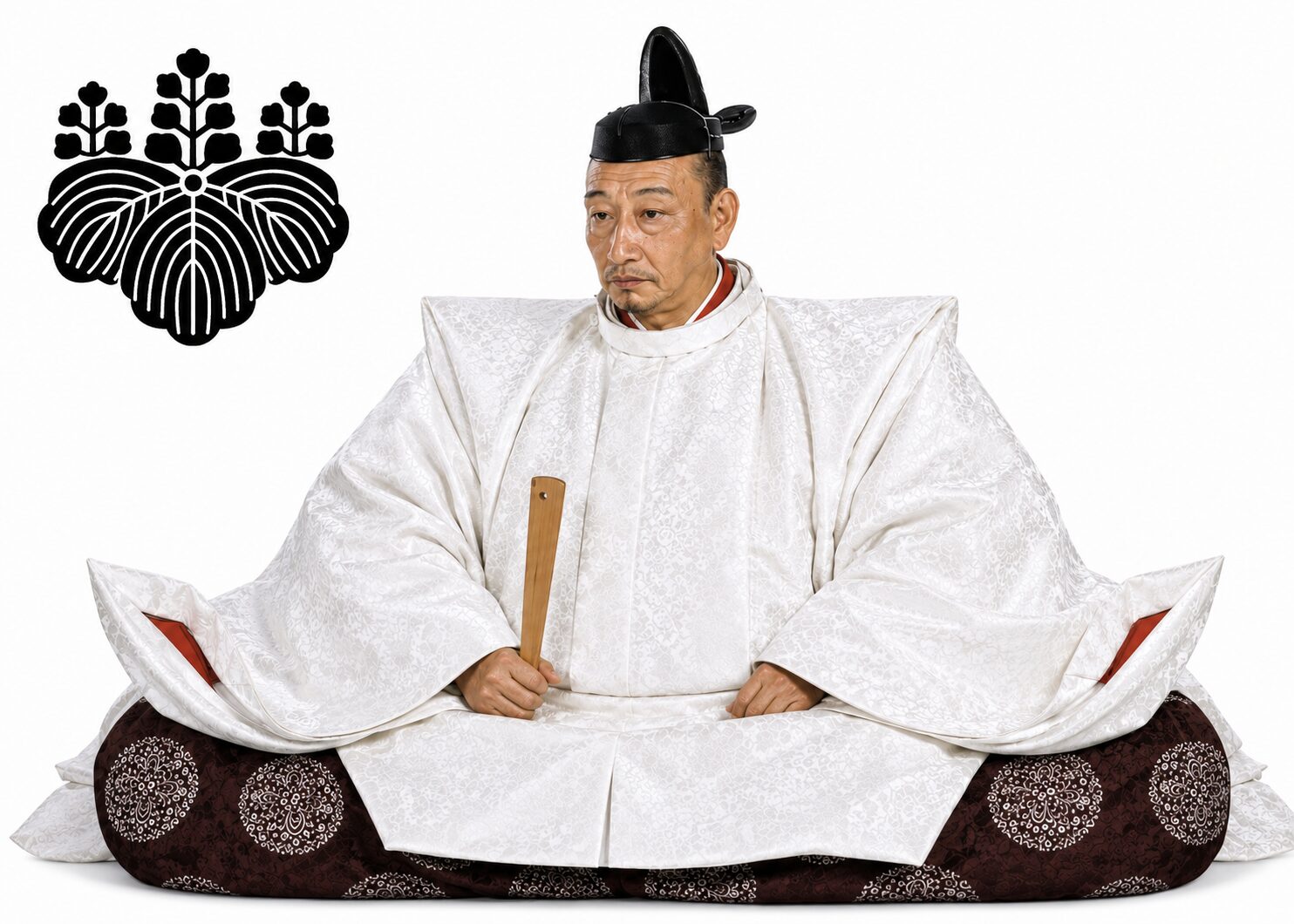
Toyotomi Hideyoshi — From a Peasant’s Son to Ruler of the Realm, Japan’s Greatest Rise in Station
The 6th day of the 2nd month, Tenbun 6 (1537) – the 18th day of the 8th month, Keichō 3 (1598) | died at age 62
Contents
- The Figure in Three Lines
- The Mainstream Account — The Standard Story Found in Textbooks
- The Theories — Exploring the Possibilities from Various Angles
- A Strategic View
- Toyotomi Hideyoshi — Notable Sayings and Death Poem
- Anecdotes and Episodes
- Toyotomi Hideyoshi — Life Timeline
- Toyotomi Hideyoshi — Family and Personal Relationships
- Related Historic-Site Map and Travel Model Course
- Related Articles
- Reference Information
- The Figure in Three Lines
- The Mainstream Account — The Standard Story Found in Textbooks
- The Theories — Exploring the Possibilities from Various Angles
- A Strategic View
- Toyotomi Hideyoshi — Notable Sayings and Death Poem
- Anecdotes and Episodes
- Toyotomi Hideyoshi — Life Timeline
- Toyotomi Hideyoshi — Family and Personal Relationships
- Related Historic-Site Map and Travel Model Course
- Related Articles
- Reference Information
The Figure in Three Lines
- One of the Three Great Unifiers of the Warring States period, who rose from the son of a foot soldier of Owari to achieve the highest rise in station in Japanese history.
- After the Honnō-ji Incident, he struck down Akechi Mitsuhide in the “Great Return from Chūgoku” and, as Nobunaga’s successor, completed the unification of the realm.
- He established the Toyotomi regime as Kanpaku (Imperial Regent) and Daijō-daijin (Chancellor of the Realm). In his late years he forced through the invasions of Korea, and after his death the Toyotomi house declined rapidly.
The Mainstream Account — The Standard Story Found in Textbooks
A Birth Shrouded in Mystery and His Childhood (1537–1554)
Toyotomi Hideyoshi was born on the 6th day of the 2nd month, Tenbun 6 (1537), in Nakamura, Aichi District, Owari Province (present-day Nakamura Ward, Nagoya City). His childhood name is handed down as Hiyoshimaru (according to various works). His father was Kinoshita Yaemon, and his mother was Naka (the later Ōmandokoro). He had an elder sister, Tomo (Zuiryū-in Nisshū), a younger brother, Hashiba Hidenaga, and a younger sister, Asahihime.
There are various theories about his father Yaemon’s status, but the common view is that he was a foot soldier serving Oda Nobuhide (Nobunaga’s father). When Hideyoshi was about seven, his father died of illness. His mother remarried Chikuami, a dōbōshū of the Oda house (a close attendant of the lord responsible for menial tasks and the arts). The relationship between Hideyoshi and Chikuami is said to have been poor, and this is said to have become one of his motives for later leaving home.
An image of Hideyoshi as “the son of a peasant” has long been fixed. Recent scholarship, however, reveals a more complex figure. In Kawara-no-mono, Hinin, Hideyoshi (2012), the historian Hattori Hideo pointed out that Hideyoshi’s lineage contained many blood ties to merchants and artisans. Hideyoshi’s uncle “Matauemon” made and sold unglazed earthen pots; another relative, “Shichirōzaemon,” was a peddler; and his sister’s husband, “Yasuke,” is said to have been a lower-class urban artisan. From this information, it is held highly likely that Hideyoshi’s lineage was not a simple “peasant” one but had a character closer to that of “in-village vassals” (people of warrior status who lived in villages) who moved back and forth between village and town.
In later works such as the Taikōki, there are many accounts emphasizing Hideyoshi’s origins as “lowly birth,” but this also has an aspect of dramatization to depict his “exceptional rise.” The currently prevailing view is that the real Hideyoshi was not of wholly peasant origin but of a lineage positioned at the boundary of village and town, belonging to an intermediate stratum between warrior and merchant/artisan.
Entering Nobunaga’s Service and His Early Activity (1554–1570)
Around Tenbun 23 (1554), the 16-year-old Hideyoshi left home and served Matsushita Yukitsuna (lord of Zudaji Castle) in Tōtōmi. But, meeting with jealousy from his peers, he fled and soon entered the service of Oda Nobunaga of Owari. Naming himself “Kinoshita Tōkichirō,” he began to walk the path of a Nobunaga vassal from the status of a foot soldier.
Concerning Hideyoshi in his days as a Nobunaga vassal, there is the famous anecdote of “warming the sandals.” On a snowy night, when Nobunaga went out, Hideyoshi warmed his straw sandals in his bosom and presented them. The story that Nobunaga, impressed by this, promoted Hideyoshi is widely known, but it is an Edo-period invention found in works such as the Taikōki and is not historical fact. Likewise, the “one-night castle of Sunomata” is a later tradition, and its historicity has been called into question.
It is fact, however, that Hideyoshi steadily distinguished himself within the Nobunaga house. From around Eiroku 9 (1566) he began to appear in records as “Kinoshita Tōkichirō Hideyoshi” and gained Nobunaga’s trust. Those who supported Hideyoshi in this period were veteran retainers such as Hachisuka Masakatsu (Koroku) and Maeno Nagayasu. They would, along with Hideyoshi’s rise, come to form the core of the Toyotomi regime.
After the capture of Inabayama Castle in Eiroku 10 (1567), Hideyoshi took part in Nobunaga’s campaign to march on the capital. At the Retreat from Kanegasaki in Genki 1 (1570), when the Nobunaga army fell into a crisis of annihilation owing to the betrayal of Azai Nagamasa, Hideyoshi served as the rear guard and rescued Nobunaga. For this achievement Hideyoshi was highly valued by Nobunaga.
Lord of Nagahama Castle and the Chūgoku Campaign (1573–1582)
In Genki 4 / Tenshō 1 (1573), when the Azai clan was destroyed, Hideyoshi was granted 120,000 koku in northern Ōmi and became lord of Nagahama Castle. This was an epochal event in which Hideyoshi became master of a province and a castle, and he changed his surname from “Kinoshita” to “Hashiba” (said to be taken one character each from the names of Nobunaga’s senior retainers Shibata Katsuie and Niwa Nagahide).
In Tenshō 5 (1577), Hideyoshi was appointed commander of the regional army for the conquest of the Mōri clan in the Chūgoku region. This was a top-class post even among Nobunaga’s vassals, and it established Hideyoshi’s standing within the Nobunaga house. Welcoming Kuroda Kanbei (Yoshitaka) as his strategist, Hideyoshi advanced his conquests into Harima, Tajima, Bizen, Bitchū, and elsewhere.
With tactics that skillfully used “starvation sieges” — such as the starvation siege of Miki Castle in Tenshō 8 (1580) and that of Tottori Castle in Tenshō 9 (1581) — Hideyoshi made castle after castle fall. These were a strategy characteristic of Hideyoshi, “winning without killing,” and they show a flexibility differing from Nobunaga’s “thorough destruction.”
In the 4th month of Tenshō 10 (1582), Hideyoshi began the conquest of Takamatsu Castle in Bitchū. Carrying out large-scale works to flood Takamatsu Castle, which stood on low wetland, he isolated the castle. At this time, because Mōri Terumoto came to the rescue at the head of a great army, Hideyoshi requested reinforcements from Nobunaga.
The Honnō-ji Incident and the Great Return from Chūgoku (1582)
On the 2nd day of the 6th month, Tenshō 10 (1582), the Honnō-ji Incident occurred in Kyoto. Akechi Mitsuhide struck down Nobunaga. Hideyoshi is said to have received the report of Nobunaga’s death in Bitchū from late on the 3rd into the 4th of the 6th month.
Hideyoshi’s response was astonishingly swift. On the 4th of the 6th month, he immediately began peace negotiations with the Mōri and, in exchange for ceding part of his territory, brought about their withdrawal. At the time, the Mōri side did not yet know of Nobunaga’s death and could not fathom Hideyoshi’s true intent in hastening the peace. Concluding the peace while keeping Nobunaga’s death concealed, Hideyoshi immediately began his great return eastward.
The Hideyoshi army, which set out from Takamatsu Castle on the 6th of the 6th month, covered a route of about 230 km in roughly 7 to 10 days. Passing through Himeji and Amagasaki along the way, it arrived in Settsu on the 13th of the 6th month. This “Great Return from Chūgoku” has left its name in history as one of the foremost maneuver operations of the Warring States period. Whether Hideyoshi had sensed Nobunaga’s death in advance, or whether the intelligence network of Kanbei and others functioned, there are various theories about the background; but in any case it could not have been accomplished without Hideyoshi’s judgment and powers of command.
On the 13th of the 6th month, at the Battle of Yamazaki, the Hideyoshi army crushed Akechi Mitsuhide’s army. Mitsuhide was killed by peasants while fleeing in defeat. Having accomplished vengeance for Nobunaga, Hideyoshi gained overwhelming influence within the Oda house.
→ For details, see the battle article “The Battle of Yamazaki.”
The Kiyosu Conference and Supremacy within the Oda House (1582–1584)
On the 27th of the 6th month, the “Kiyosu Conference,” which decided Nobunaga’s successor and the division of his domains, was held at Kiyosu Castle in Owari. The four elders — Hideyoshi, Shibata Katsuie, Niwa Nagahide, and Ikeda Tsuneoki — attended. Hideyoshi recommended Nobunaga’s eldest grandson Sanbōshi (the son of Nobutada, the later Oda Hidenobu) as successor and had this adopted.
The Kiyosu Conference was a victory of Hideyoshi’s political power. Against the faction recommending the second son Nobukatsu (Shibata Katsuie) and the faction recommending the third son Nobutaka, Hideyoshi seized the initiative by putting forward the just cause that “the legitimate successor is Nobunaga’s eldest grandson.”
Afterward, conflict with Nobutaka, Shibata Katsuie, and others deepened, and in the 4th month of Tenshō 11 (1583), at the Battle of Shizugatake, Hideyoshi defeated Katsuie. Katsuie took his own life at Kita-no-shō Castle in Echizen together with his wife Lady Oichi (Nobunaga’s younger sister). Nobutaka too was driven to suicide. By this, Hideyoshi established his supremacy within the Oda house.
→ For details, see the battle article “The Battle of Shizugatake.”
In Tenshō 12 (1584), Nobunaga’s second son Oda Nobukatsu and Tokugawa Ieyasu rose in arms against Hideyoshi. The Komaki–Nagakute Campaign ensued. Ieyasu won the local battle at Nagakute, but strategically Hideyoshi won over Nobukatsu, concluded a separate peace, and isolated Ieyasu. Without settling matters directly with Ieyasu, Hideyoshi won a political victory.
→ For details, see the battle article “The Komaki–Nagakute Campaign.”
Appointment as Kanpaku and Establishment of the Toyotomi Regime (1585–1590)
In the 7th month of Tenshō 13 (1585), Hideyoshi was appointed Kanpaku (Imperial Regent). For a man of warrior status to be appointed Kanpaku was an unprecedented and exceptional appointment, and to realize it he took the Fujiwara surname by becoming the adopted son of Konoe Sakihisa. The following year, Tenshō 14 (1586), he was promoted to Daijō-daijin and, granted the surname “Toyotomi” by Emperor Go-Yōzei, formally became “Toyotomi Hideyoshi.”
In the same year, to bring Tokugawa Ieyasu to submission, Hideyoshi took the exceptional measures of sending his own younger sister Asahihime as Ieyasu’s principal wife, and further sending his birth mother, the Ōmandokoro, to Ieyasu as a hostage. Ieyasu accepted this generous treatment, came to the capital, and submitted to Hideyoshi. By this, Ieyasu, the greatest potential enemy, was incorporated into Hideyoshi’s order.
In Tenshō 15 (1587), Hideyoshi carried out the conquest of Kyūshū. Forcing Shimazu Yoshihisa to surrender, he pacified Kyūshū. In the same year, at Hakata, he issued the Edict Expelling the Padres, ordering the expulsion of Christian missionaries.
In Tenshō 18 (1590), Hideyoshi besieged Odawara Castle, the home base of the Hōjō clan, with a great army of about 200,000. After a three-month siege, Hōjō Ujimasa and his son Ujinao surrendered. By this, the unification of the realm was completed. Hideyoshi was 54. Eight years after Nobunaga’s death, he had inherited and completed Nobunaga’s work.
The Taikō Land Survey and the Separation of Warrior and Peasant (1582–1591)
Hideyoshi’s unification of the realm brought epochal change not only in military terms but also in the institutional dimensions of economy and society.
The Taikō Land Survey: Carried out on a nationwide scale from 1582. It established a system of evaluating land by “koku yield” (kokudaka) and made this the basis of land-tax collection. Dismantling the complex medieval system of shōen estates and public lands, it created the foundation of the early-modern village system.
The Sword Hunt Edict: Issued in Tenshō 16 (1588). Taking weapons from the peasantry, it fixed the statuses of warrior and peasant. By clarifying the distinction between “warrior” and “peasant,” it laid the foundation of the early-modern social status system.
The Status Control Edict: Tenshō 19 (1591). It prohibited movement among the statuses of warrior, peasant, and townsman. It is ironic that Hideyoshi, who himself had risen from peasant to warrior, prohibited status mobility after his own time, but it became the foundation of the stability of early-modern society.
Through these policies, Hideyoshi completed the transition from medieval to early-modern that Nobunaga had begun. Many of the institutions of the Edo shogunate inherited frameworks established in Hideyoshi’s time.
The Suicide of Sen no Rikyū and the Death of Hidenaga (1591)
Tenshō 19 (1591) became a decisive turning point for Hideyoshi and the Toyotomi regime. On the 22nd day of the 1st month, Hideyoshi’s younger brother Hashiba Hidenaga died of illness. Hidenaga was Hideyoshi’s greatest sympathizer, functioning as a mediator between the civil-administration and military factions within the regime and as a buffer restraining Hideyoshi’s autocratic tendencies. His death greatly upset the balance of the Toyotomi regime.
About a month after Hidenaga’s death, on the 13th day of the 2nd month, Sen no Rikyū, Hideyoshi’s tea master, was ordered into confinement at his home in Sakai. Then, on the 28th day of the 2nd month, Rikyū was ordered to commit seppuku in Kyoto and took his own life. He died at age 70.
The ostensible reasons were said to be that he had “placed a wooden statue of himself at the gate of Daitoku-ji” and had “unjustly inflated the prices of tea utensils,” but there are still various theories about the real reason. This will be discussed in the theories. What is certain is the fact that, having lost in succession the important close aides of Hidenaga and Rikyū, the autocratization and reckless conduct of the Toyotomi regime accelerated.
The Invasions of Korea (1592–1598)
In the 3rd month of Bunroku 1 (1592), the year after completing the unification of the realm, Hideyoshi began the invasion of Korea (the Bunroku Campaign). It was a grandiose plan to dispatch a great army of about 160,000 to the Korean Peninsula and aim at the conquest of Ming China. Generals such as Katō Kiyomasa, Fukushima Masanori, Konishi Yukinaga, and Ukita Hideie crossed the sea.
At first the advance was with overwhelming momentum. In a mere three months they occupied the capital, Hanseong (Seoul), then Pyongyang, and advanced to the vicinity of the Ming border. But with the entry of the Ming army into the war, the rising of righteous-army militias, and the cutting of supply lines by Yi Sun-sin, who led the navy, the war situation worsened. It took on the aspect of a prolonged war of attrition.
In Bunroku 2 (1593), peace negotiations with the Ming began, but they broke down owing to discrepancies in the demands of both sides. In Keichō 2 (1597), Hideyoshi ordered a second dispatch of troops (the Keichō Campaign). A great army of about 140,000 was again sent to the Korean Peninsula, but the war situation became even more of a quagmire than before.
In the invasions of Korea, atrocities by the Japanese army are also recorded. In particular, the practice called “nose-cutting” — cutting off the noses of Koreans and pickling them in salt as proof of battle merit — was, from a modern viewpoint, a grave war crime. These noses were carried to Kyoto and buried near Hōkō-ji as the “Ear Mound” (in reality a nose mound).
The invasions of Korea brought no benefit whatsoever to the Toyotomi house. Vast war expenses and lives were lost, the retainer corps was exhausted, and the conflict between the civil-administration faction (Ishida Mitsunari and others) and the military faction (Katō Kiyomasa, Fukushima Masanori, and others) became decisive. This became a direct cause of the Battle of Sekigahara after Hideyoshi’s death.
The Hidetsugu Affair and the Succession Problem (1591–1595)
Hideyoshi long had no legitimate heir. In Tenshō 17 (1589), his concubine Yodo-dono (Chacha, daughter of Azai Nagamasa) bore his eldest son Tsurumatsu, but in Tenshō 19 (1591) the boy died of illness at only three years old. Hideyoshi grieved deeply.
After Tsurumatsu’s death, Hideyoshi adopted his sister’s son Toyotomi Hidetsugu and ceded to him the position of Kanpaku. Hidetsugu became in effect the heir of the Toyotomi house and made Jurakudai his base.
In Bunroku 2 (1593), however, Yodo-dono bore a second son, Toyotomi Hideyori (the later lord of Osaka Castle, who took his own life at the Siege of Osaka). Hideyoshi doted on the natural son obtained in his late years and came to wish to shift the Toyotomi succession to Hideyori. This worsened his relationship with Hidetsugu.
In the 7th month of Bunroku 4 (1595), Hidetsugu was suddenly banished to Mount Kōya on “suspicion of rebellion” and, a mere eight days later, on the 20th day of the 8th month, ordered to commit seppuku. He died at age 28. Furthermore, it became a grisly affair in which 39 of Hidetsugu’s wives, concubines, and children were executed at Sanjō-gawara.
The truth of the Hidetsugu affair is still debated today. There are several interpretations: the theory of Hideyoshi’s madness and reckless conduct, the theory of a rational decision to secure the succession for Hideyori, the theory of the inevitable end of the conflict between the two, and others. This will be discussed in the theories.
His Death and the Collapse of the Toyotomi Regime (1598–)
In the summer of Keichō 3 (1598), Hideyoshi’s health rapidly worsened. Sensing his approaching death, Hideyoshi set in place a system of council by the Five Elders (Tokugawa Ieyasu, Maeda Toshiie, Mōri Terumoto, Ukita Hideie, Uesugi Kagekatsu) and the Five Commissioners (Ishida Mitsunari, Asano Nagamasa, Maeda Gen’i, Mashita Nagamori, Natsuka Masaie). Anxious about the future of Hideyori (then six years old), he is said to have repeatedly entreated Ieyasu in particular: “I entrust the realm to you until Hideyori comes of age.”
Hideyoshi had the various daimyō write oath-pledges swearing loyalty to Hideyori many times over. His famous last words — entreating that Hideyori be looked after, again and again, on this occasion — convey Hideyoshi’s desperate pleading. But even Hideyoshi, who held absolute authority, could not surely protect the fate of the Toyotomi house after his death.
On the 18th day of the 8th month, Keichō 3 (1598), Hideyoshi died at Fushimi Castle. He died at age 62. Hideyoshi’s death was concealed for the time being and was not announced until the withdrawal from Korea was complete.
After Hideyoshi’s death, the Toyotomi regime crumbled rapidly. Tokugawa Ieyasu, foremost of the Five Elders, began to make independent moves, and at the Battle of Sekigahara in Keichō 5 (1600) he defeated the Western Army of Ishida Mitsunari and others. By this, Ieyasu gained real power over the realm and, in Keichō 8 (1603), opened the Edo shogunate. At the Summer Campaign of Osaka in Keichō 20 (1615), Toyotomi Hideyori and Yodo-dono took their own lives, and the Toyotomi house was destroyed. It was a mere 17 years after Hideyoshi’s death.
→ For details, see the battle articles “The Battle of Sekigahara” and “The Summer Campaign of Osaka.”
The Theories — Exploring the Possibilities from Various Angles
【Theory 1】Were Hideyoshi’s Origins Really Those of a “Peasant”?
The success story of “from a peasant’s son to ruler of the realm” is one of the most famous tales of advancement in Japanese history. Since the Edo-period Taikōki, through modern novels, dramas, and textbooks, Hideyoshi has been depicted in this frame.
In recent scholarship, however, Hideyoshi’s origins are held to have been more complex. In Kawara-no-mono, Hinin, Hideyoshi (2012), the historian Hattori Hideo organizes the characteristics of Hideyoshi’s lineage as follows:
- His father, Kinoshita Yaemon, was highly likely a foot soldier of the Oda house (not a pure peasant).
- Hideyoshi’s uncle “Matauemon” was an artisan who made and sold unglazed earthen pots.
- His relative “Shichirōzaemon” was a peddler who carried goods on his back and sold them.
- His sister’s husband “Yasuke” was a lower-class urban artisan.
- Hideyoshi himself wandered various regions from a young age and engaged in commerce and odd jobs.
From this information, Hideyoshi’s lineage is thought to have been one positioned at the boundary of village and town, in which “peasant,” “artisan,” “merchant,” and “lower warrior” were intermixed. In part of the historical world, the theory has also been advanced of grasping Hideyoshi’s lineage as “in-village vassals” (people of warrior status who lived in villages).
Then why did the image of “the son of a peasant” become fixed? There are several reasons:
- Hideyoshi himself, to dramatize his success story, left accounts emphasizing his origins.
- Edo-period war chronicles such as the Taikōki, to depict his “exceptional rise” dramatically, emphasized his lowly birth.
- The image of “an upstart who stood at the summit of the status system” satisfied the status-consciousness of Edo-period people.
Hideyoshi’s true origins were neither wholly peasant nor purely warrior, but an intermediate, fluid stratum. This is also held to be the background that produced Hideyoshi’s flexible human relationships and political skill.
【Theory 2】Are “Warming the Sandals” and the “One-Night Castle of Sunomata” Historical Fact?
Among the famous anecdotes of Hideyoshi’s days as a Nobunaga vassal are “warming the sandals” and the “one-night castle of Sunomata.” These are episodes symbolizing Hideyoshi’s quick wit and ability, frequently introduced even today in textbooks and historical manga.
Warming the Sandals
On a snowy night, when Nobunaga went out, Hideyoshi warmed his straw sandals in his bosom and presented them. When Nobunaga grew angry, saying “Did you sit on my sandals?”, Hideyoshi replied, “No, I put them in my bosom to warm them,” and impressed Nobunaga — so the story goes.
This anecdote appears in Edo-period war chronicles such as the Taikōki and is not recorded in primary sources. It is reasonable to regard it as an invention to emphasize Hideyoshi’s quick wit.
The One-Night Castle of Sunomata
The tradition that, while the Oda army struggled to build a castle in the enemy territory of Sunomata for the conquest of Mino, Hideyoshi completed a castle in a single night. It is a dramatic tale that the materials were cut and prepared upstream of the planned site, floated down the river, and assembled in one night.
In recent scholarship, however, the one-night castle of Sunomata is held to be an Edo-period invention. It is not recorded in the contemporary source Shinchō Kōki, and the “Kawanami-shū” group said to have supported Hideyoshi is also held to be a later invention.
These anecdotes were created as tales emphasizing Hideyoshi’s “quick wit,” “improvisational nature,” and “charisma.” The real Hideyoshi was not incompetent, but the common understanding in today’s historical world is that these should not be taught as historical fact. It is fact that Hideyoshi steadily distinguished himself within the Nobunaga house, but that process was more steady and long-term.
【Theory 3】Why Was the Great Return from Chūgoku Possible?
The “Great Return from Chūgoku” immediately after the Honnō-ji Incident is one of the most dramatic military actions in the history of the Warring States period. The speed of covering about 230 km in 7 to 10 days exceeded the common sense of the time. There are several theories as to why Hideyoshi achieved this godlike speed.
The First Theory: A Tightrope Walk That Succeeded by Chance
The view that the peace with the Mōri came about by chance, the bad-condition weather was comparatively mild, and it was a result of being blessed by luck. It holds that Hideyoshi’s personal quick wit and command were decisive.
The Second Theory: Kuroda Kanbei’s Advance Intelligence
The theory that Hideyoshi’s strategist Kuroda Kanbei had sensed the Honnō-ji Incident in advance, or had been in contact with Mitsuhide. There is a famous anecdote that, just after Honnō-ji, Kanbei advised Hideyoshi, “With this, you can take the realm,” and this is used as grounds. However, this anecdote itself may also be a later embellishment.
The Third Theory: Thorough Preparation
In the course of the Chūgoku campaign, Hideyoshi had developed provisions, encampment sites, horse-exchange stations, and the like along the highways. The theory that, by this, the physical foundation to realize the great return had been prepared in advance. This is one of the prevailing views in today’s historical world.
The Fourth Theory: The Mastermind Argument
The conspiracy theory that Hideyoshi was the mastermind behind the Honnō-ji Incident. It arose from the suspicion that a great return so smooth must have been planned in advance. But there is no decisive evidence, and the documentary grounds are scant.
The mainstream of the historical world holds it to be a combination of the third theory (thorough preparation) and the first theory (chance good fortune). Hideyoshi’s capacity for maneuver warfare was indeed extraordinary, but the physical foundation supporting it and the element of luck were also large. It is reasonable to evaluate it not as a “miraculous return” but as a “prepared swiftness.”
【Theory 4】The True Reason for Sen no Rikyū’s Suicide
On the 28th day of the 2nd month, Tenshō 19 (1591), Hideyoshi’s tea master Sen no Rikyū committed seppuku. The ostensible reason was said to be the “self-statue at the gate of Daitoku-ji,” but there are still various theories about the real reason.
The First Theory: Conflict over Political Line
The theory that Rikyū opposed the invasion of Korea, or was critical of Hideyoshi’s autocratization. Rikyū’s cultural influence extended to politics as well, and he was in a position to send out objections to Hideyoshi’s policies. The view that Hideyoshi, by removing Rikyū, sealed off objections to the invasion of Korea.
The Second Theory: Wariness of Growing Power
Rikyū was an influential figure among the Sakai merchants and possessed his own cultural and economic network. The theory that Hideyoshi feared Rikyū’s influence intervening in politics and removed him as a warning to others.
The Third Theory: A Connection to Hidenaga’s Death
Hidenaga died on the 22nd day of the 1st month, 1591; Rikyū’s confinement was on the 13th day of the 2nd month, and his seppuku on the 28th. It was an affair about a month after Hidenaga’s death. Because Hidenaga had been a buffer restraining Hideyoshi’s autocratic tendencies, the theory that, with his death, Hideyoshi ran amok and removed Rikyū. This is favored in recent scholarship.
The Fourth Theory: The Ostensible Reason as Stated
The theory that the problem of the self-statue at the gate of Daitoku-ji was the true reason. Rikyū’s placing of a wooden statue of himself atop the gate was interpreted as “disrespect toward Hideyoshi.” However, to order seppuku for this alone is extreme, and it is reasonable to consider it one of several compound factors.
In recent scholarship, the mainstream view is that the result arose from a complex interplay of these multiple factors. The most persuasive interpretation is that, with Hidenaga’s death accelerating Hideyoshi’s autocratization, Rikyū — who could send out “objections” to Hideyoshi in the political, cultural, and economic spheres — became the target.
【Theory 5】Was the Hidetsugu Affair Hideyoshi’s Madness?
The Hidetsugu affair of Bunroku 4 (1595) is known as an affair symbolizing the dark side of the Toyotomi regime. The seppuku of the Kanpaku Hidetsugu and the execution of 39 of his wives, concubines, and children are, even by modern sensibilities, an extremely grisly event.
The First Theory: Hideyoshi’s Madness and Reckless Conduct (the traditional interpretation)
The theory that, after Hideyori’s birth (1593), Hideyoshi came to wish to pass the succession to Hideyori and removed Hidetsugu, who had become an obstacle. Joined with the contemporary reputation that Hidetsugu carried out atrocities to the point of being called the “Killing Kanpaku,” it has been depicted as a symbolic affair of Hideyoshi’s autocratization and madness.
The Second Theory: A Rational Political Judgment
The theory that Hidetsugu, sensing that his position was endangered by Hideyori’s existence, had begun to make independent moves. Hideyoshi’s removal of Hidetsugu is held to have been a calculated judgment to secure the Toyotomi succession for Hideyori. This is favored in recent scholarship.
The Third Theory: The Inevitable End of the Conflict Between the Two
There had been conflict between Hideyoshi and Hidetsugu from early on, and it surfaced with Hideyori’s birth as a trigger. The view that it was neither Hideyoshi’s madness nor a rational judgment, but that the deep-rooted conflict between the two reached a violent resolution.
The Execution of 39 Wives, Concubines, and Children
This appears abnormal by modern sensibilities, but by the conventions of the Warring States period, “severing the bloodline of an enemy” was held to be a rational political judgment. It is reasonable to interpret that Hideyoshi, by thoroughly cutting off Hidetsugu’s bloodline, wished to seal off objections to the Toyotomi succession.
The image of “Hideyoshi’s madness” is highly likely no more than an evaluation reckoned backward from later sensibilities. In recent years the view has grown stronger that, by the logic of the Warring States period at the time, it fell within the range of a rational political judgment. Even so, the severity of the affair stands out, and there is no doubt it is an affair showing Hideyoshi’s cold-blooded side.
【Theory 6】What Was the Motive for the Invasion of Korea?
The invasion of Korea (1592–1598) is one of the greatest mysteries of Warring States history, becoming a remote cause of the collapse of the Toyotomi regime. Why did Hideyoshi, who had just achieved unification of the realm, embark on overseas invasion?
The First Theory: Inheritance of Nobunaga’s Vision
The theory that Oda Nobunaga held, in his lifetime, a vision of “conquering Ming China,” and that Hideyoshi merely inherited this vision. However, reliable sources supporting Nobunaga’s Ming-conquest vision are few, and it may be a later embellishment.
The Second Theory: A Domestic Countermeasure
With the unification of the realm complete, there was no new land to grant. The theory that, to divert the discontent of the retainers and turn their energy abroad, the invasion of Korea was carried out. Hideyoshi’s conception — “if there is no land at home to grant, then take a foreign country and grant that” — was also rational.
The Third Theory: Personal Ambition
The theory that Hideyoshi, having achieved unification of the realm, aimed at the “conquest of Ming China” out of further ambition. There is also a psychological interpretation that, from the sense of loss after Tsurumatsu’s death, he ran toward an ambition divorced from reality.
The Fourth Theory: Hideyoshi’s Senility
The theory that the decline of Hideyoshi’s judgment in his late years drove him to embark on a reckless invasion. It arose from interpreting the abnormal conduct seen in the late Hideyoshi — the death of Tsurumatsu, the death of Hidenaga, the disposal of Rikyū. However, Hideyoshi was 56 at the start of the invasion, and the grounds for calling it “senility” medically are scant.
The Fifth Theory: Compound Factors
The prevailing recent view that it was a result of a complex interplay of these factors. While inheriting Nobunaga’s vision, the need for a domestic countermeasure, Hideyoshi’s own ambition, and the decline of his judgment overlapped, and the invasion of Korea was carried out.
Whatever the motive for the invasion of Korea, its result was tragic. The Japanese army produced tens of thousands of war dead, and in Korea hundreds of thousands of dead and immense destruction arose. The Toyotomi house exhausted its finances, deepened the conflict in the retainer corps, and brought on a remote cause of the regime’s collapse. The “Hideyoshi who completed the unification of the realm” and the “Hideyoshi who forced through the invasion of Korea” show a decisive gap, as though they were entirely different men.
A Strategic View
When comparing Hideyoshi with Nobunaga and Ieyasu, three points stand out: his “art of winning hearts,” his “economic sense,” and his “political skill.”
First, the art of winning hearts. Hideyoshi’s greatest weapon was his ability to capture people’s hearts. In the course of his rise within the Nobunaga house, Hideyoshi skillfully drew in a diverse array of talent, from veteran retainers (Hachisuka Masakatsu, Maeno Nagayasu) to newcomers (Kuroda Kanbei, Takenaka Hanbei). In the course of the Chūgoku campaign he turned enemy generals one after another, and in the chaos after Honnō-ji he won over the influential figures of the Oda house. Toward Tokugawa Ieyasu he took the exceptional measure of sending his own sister and mother, incorporating his greatest potential enemy into his order. Hideyoshi’s ability, called “the man-charmer,” was the highest peak of the Warring States period. His demand for Ieyasu’s submission was an approach not of “fighting head-on and winning” but of “thoroughly granting honor and convenience to draw him in” — a feat Nobunaga could not have imitated.
Second, economic sense. Hideyoshi skillfully used “starvation sieges,” “water sieges,” and “stratagems of gold and silver.” The starvation siege of Tottori Castle and the water siege of Bitchū Takamatsu Castle were tactics of forcing the enemy to submit through economic pressure rather than killing soldiers in combat. This was an approach characteristic of Hideyoshi, “winning without killing,” and it also had the effect of preserving the fighting strength consumed in combat. The Taikō Land Survey and the Sword Hunt after unification were also epochal policies of centrally managing land and weapons as “economic and social resources.” Hideyoshi’s economic sense was a conception of “measurement and control,” differing from Nobunaga’s “destruction and reconstruction.”
Third, political skill. Hideyoshi’s greatest achievement was to end the upheaval of the Warring States not by “subjugating it with military force” but by “concluding it as a political system.” By being appointed Kanpaku, the highest office of the imperial court, he realized nationwide rule with the authority of the court as his backing, despite being of warrior status. After learning that “he could not defeat Ieyasu by military force,” his strategy following Komaki–Nagakute was to force Ieyasu to submit through political maneuver rather than combat. The institutional design of the Toyotomi regime (the system of Five Elders and Five Commissioners, the Sōbuji Decree, the combined use of Jurakudai in Kyoto and Osaka Castle) aimed at building a regime as a system, differing from Nobunaga’s “personal autocracy.”
Hideyoshi too, however, had a fatal weakness. It was that it was a “regime overdependent on the ability of one individual.” The Toyotomi regime, operated even more than under Nobunaga by Hideyoshi’s personal charisma and command, crumbled rapidly after Hideyoshi’s death. He lacked Ieyasu’s conception of “leaving it behind as a system for later generations.” In contrast to Ieyasu’s judgment of ceding the shogunal office to Hidetada after two years in 1605, Hideyoshi did not let go of power until his late years and met death with the succession system insufficiently prepared.
Also, the late Hideyoshi was beset by a succession of misjudgments. The seppuku of Sen no Rikyū, the Hidetsugu affair, the invasion of Korea — he made one decision after another that weakened the regime. Compound factors are pointed to in these judgments: “losing the buffer with the death of his brother Hidenaga,” “an excessive psychological reaction to the succession problem,” “the loss of a goal after achieving unification of the realm,” and so on.
Hideyoshi displayed rare ability as a “warlord in the rising phase,” but as a “builder of a system to maintain the realm” he was inferior to Nobunaga and Ieyasu. His work would, in the end, be completed by Ieyasu. The famous comic verse — “Oda pounded it, Hashiba kneaded it, the realm-rice cake; and the one who, sitting still, ate it was Tokugawa” — succinctly expresses the division of roles among the Three Great Unifiers.
And yet, the influence Hideyoshi left on Japanese history is immeasurable. The fact that a mere foot soldier rose all the way to ruler of the realm gave later generations the hope that “with effort and luck, anyone can rise.” Hideyoshi was not a mere “warlord” but, as a “byword for the upstart,” continues to resonate in the hearts of the Japanese to the present day.
Toyotomi Hideyoshi — Notable Sayings and Death Poem
Death Poem
“Like a dewdrop I fell, like a dewdrop I fade away; and all of Naniwa, too, is but a dream within a dream.”
A death poem said to have been composed by Hideyoshi just before his death at Fushimi Castle in Keichō 3 (1598). It means: “How like a dewdrop is this body of mine, falling and fading away. The splendor of being ruler of the realm at Osaka (Naniwa), too, was like a dream within a dream.” Having risen from a mere foot soldier to ruler of the realm, it shows a deep resignation that even that splendor, in the face of death, is as fleeting as dew. One of the most famous death poems in Japanese history.
— Source: various works
“If the cuckoo will not sing, I shall make it sing.”
A line from the famous verse likening the Three Great Unifiers — Nobunaga, Hideyoshi, Ieyasu — to a cuckoo. Against Nobunaga’s “If it will not sing, kill it” and Ieyasu’s “If it will not sing, wait until it does,” Hideyoshi is given “I shall make it sing.” It succinctly expresses the essence of Hideyoshi’s “ability to move people,” his “man-charming.” Though an invention of the late Edo period, it is widely loved as an apt verse that captures the differences in the characters of the Three Great Unifiers.
— Source: a late-Edo-period invention
“I entrust Hideyori to you — by all means, by all means, on this occasion I beg you.”
A line from the oath-pledge Hideyoshi wrote to Tokugawa Ieyasu just before his death. It means: “Concerning Hideyori — by all means, by all means, on this occasion I humbly beg your care.” The fact that Hideyoshi, who had been an absolute power-holder, pleaded with Ieyasu in so humble a posture in the face of death shows his grief and powerlessness. Hideyoshi’s desperation reached Ieyasu, but as a result he could not protect Hideyori.
— Source: Taikō Hideyoshi Yuigon Oboegaki (Memorandum of the Last Will of Taikō Hideyoshi)
“Oda pounded it, Hashiba kneaded it, the realm-rice cake; and the one who, sitting still, ate it was Tokugawa.”
A famous comic verse made in the Edo period. It means: “Oda Nobunaga pounded the rice cake, Hashiba Hideyoshi kneaded it, and the one who ate it while sitting still was Tokugawa Ieyasu,” and it succinctly expresses the division of roles among the Three Great Unifiers. It is also a valuable source showing that the people of the time understood Hideyoshi’s role to have been “inheriting Nobunaga’s work and giving it form.”
— Source: an Edo-period comic verse
Anecdotes and Episodes
Hiyoshimaru — His Father’s Death and Discord with His Stepfather
Hideyoshi was born in Nakamura, Aichi District, Owari Province, in Tenbun 6 (1537). His childhood name is handed down as Hiyoshimaru. When he was seven, his father Kinoshita Yaemon died of illness, and his mother Naka remarried Chikuami, a dōbōshū of Oda Nobuhide. The relationship between Hideyoshi and his stepfather Chikuami is said to have been poor, and this is highly likely to have become the cause of his later leaving home.
In later years, Hideyoshi treasured his mother Naka all her life as the “Ōmandokoro.” That he sent his mother as a hostage when demanding Ieyasu’s submission was an exceptional measure for a warlord. This was also an expression of Hideyoshi’s deep affection for his mother. On the other hand, almost no sources showing his relationship with his stepfather Chikuami survive.
— Source: various works
Warming the Sandals — An Invented Success Episode
On a snowy night, when Nobunaga went out, Hideyoshi warmed his straw sandals in his bosom and presented them — this is the famous “warming the sandals” anecdote. When Nobunaga asked, “Did you sit on my sandals?”, Hideyoshi replied, “No, I put them in my bosom to warm them,” and impressed Nobunaga, so it is handed down.
This anecdote appears in Edo-period war chronicles such as the Taikōki and is not recorded in primary sources. It is reasonable to regard it as an invention to emphasize Hideyoshi’s quick wit and attentiveness. Likewise, the “one-night castle of Sunomata” is a later tradition whose historicity has been called into question.
That said, these anecdotes hit the mark in symbolically expressing Hideyoshi’s essence — the ability to capture people’s hearts through attentiveness and quick wit. Considering, even granting they are inventions, why this kind of anecdote came to be concentrated on Hideyoshi reveals the core of his character.
— Source: Taikōki (early Edo period)
The Retreat from Kanegasaki — The Man Who Served as Rear Guard
In Genki 1 (1570), Oda Nobunaga set out to attack Asakura Yoshikage of Echizen. But because his ally Azai Nagamasa betrayed him along the way, the Nobunaga army had its rear cut off and fell into a crisis of annihilation. At this time, Hideyoshi served as the rear guard (the rearmost position in a retreat) and put up a desperate defensive fight against the pursuing Asakura–Azai armies.
The rear guard is the most dangerous duty in a retreat, with an extremely high possibility of being killed. That Hideyoshi volunteered for the rear guard was a gamble both to show his loyalty to Nobunaga and to seize a chance for advancement. Hideyoshi fulfilled the rear-guard duty safely and was highly valued by Nobunaga. This “Retreat from Kanegasaki” was a decisive event that raised Hideyoshi’s standing within the Nobunaga house at a stroke.
→ For details, see the battle article “The Retreat from Kanegasaki.”
— Source: Shinchō Kōki and others
The Great Return from Chūgoku — The Fastest Maneuver Operation in Warring States History
In the 6th month of Tenshō 10 (1582), when Nobunaga died in the Honnō-ji Incident, Hideyoshi, who had been water-besieging Takamatsu Castle in Bitchū, turned back to Kyoto at astonishing speed. Setting out from Takamatsu Castle on the 6th of the 6th month, he arrived in Settsu on the 13th. This “Great Return from Chūgoku,” covering about 230 km in 7 to 10 days, has left its name in history as one of the foremost maneuver operations of the Warring States period.
To realize the great return, Hideyoshi is said to have arranged provisions and horses along the highways in advance. Kuroda Kanbei took charge of intelligence-gathering and advanced the peace negotiations with the Mōri at lightning speed. There is also a conspiracy theory that “Hideyoshi may have sensed Nobunaga’s death in advance,” but there is no firm evidence. Rather, it is reasonable to consider that his usual thorough preparation and his powers of instant decision made the miraculous great return possible.
At the Battle of Yamazaki that followed the great return, Hideyoshi crushed Akechi Mitsuhide. Achieving vengeance for Nobunaga, he gained overwhelming influence within the Oda house. The Great Return from Chūgoku was the decisive moment at which Hideyoshi began to walk the path to ruler of the realm.
— Source: Shinchō Kōki, Taikōki, and others
The Man-Charmer — Exceptional Hospitality Toward Ieyasu
In Tenshō 14 (1586), to bring Tokugawa Ieyasu to submission, Hideyoshi took exceptional measures. First he sent his own younger sister Asahihime as Ieyasu’s principal wife, and further sent his birth mother, the Ōmandokoro, to Ieyasu as a hostage. For a daimyō to “send his own real mother as a hostage” was, even in the Warring States period, extremely exceptional, and it shows Hideyoshi’s thoroughgoing policy of winning Ieyasu over.
Ieyasu accepted this generous treatment, came to the capital, and submitted to Hideyoshi. With an approach not of “forcing Ieyasu to submit by military force” but of “thoroughly granting honor and convenience to draw him in,” Hideyoshi incorporated his greatest potential enemy into his order. This was the true mark of the “man-charmer” Hideyoshi, which Nobunaga could not have imitated.
Yet Ieyasu, after Hideyoshi’s death, would destroy the Toyotomi house at Sekigahara and the Siege of Osaka. Hideyoshi’s man-charming realized Ieyasu’s personal submission, but it could not suppress Ieyasu’s ambition to seize the realm.
— Source: Taikōki and others
The Deaths of His Brother Hidenaga and of Rikyū — Hideyoshi, Having Lost His Buffer
Tenshō 19 (1591) became a year of destiny for Hideyoshi and the Toyotomi regime. On the 22nd day of the 1st month, Hideyoshi’s younger brother Hashiba Hidenaga died of illness. Hidenaga was Hideyoshi’s greatest sympathizer, functioning as a mediator between the civil-administration and military factions within the regime and as a buffer restraining Hideyoshi’s autocratic tendencies. The death of Hidenaga, who had continued to support Hideyoshi, calling him “elder brother,” greatly upset the balance of the Toyotomi regime.
About a month after Hidenaga’s death, on the 28th day of the 2nd month, Hideyoshi ordered Sen no Rikyū to commit seppuku. Rikyū was Hideyoshi’s tea master and the central figure of his cultural policy. The ostensible reason was said to be that he had “placed a self-statue at the gate of Daitoku-ji,” but in reality there are held to have been compound factors such as conflict over political line and wariness of Rikyū’s growing power.
That “Hideyoshi, having lost his buffer with Hidenaga’s death, turned to autocratization and reckless conduct” is the mainstream view of the recent historical world. In fact, from this point on Hideyoshi made one decision after another that weakened the regime — the invasion of Korea, the Hidetsugu affair, and so on. The deaths of Hidenaga and Rikyū were a turning point for the Toyotomi regime.
— Source: various works, recent scholarship
The Hidetsugu Affair — The Execution of 39 Wives, Concubines, and Children
In the 7th month of Bunroku 4 (1595), Hideyoshi’s adopted son, the Kanpaku Toyotomi Hidetsugu, was banished to Mount Kōya on “suspicion of rebellion” and, a mere eight days later, ordered to commit seppuku. He died at age 28. Furthermore, it became a grisly affair in which 39 of Hidetsugu’s wives, concubines, and children were executed at Sanjō-gawara.
On the day of the execution, a great crowd is said to have gathered to watch at Sanjō-gawara. The sight of Hidetsugu’s concubines, ladies-in-waiting, and children being beheaded one after another shocked even the people of the time. The graves of the 39 executed remain to this day at Zuisen-ji in Kyoto, conveying the tragedy.
There are still various theories about the truth of the Hidetsugu affair, but it is highly likely it was a calculated judgment by Hideyoshi to completely sever Hidetsugu’s bloodline in order to secure the succession for Hideyori. By the logic of the Warring States period, “severing the bloodline of an enemy” was rational, but even so the severity of the affair stands out.
Ironically, Hideyori, whom Hideyoshi desperately tried to protect, would also take his own life at the Siege of Osaka a mere 17 years after Hideyoshi’s death. The Toyotomi house, which he tried to protect even by severing Hidetsugu’s blood, was destroyed in the end. The Hidetsugu affair is a symbol of Hideyoshi’s cold-bloodedness and, at the same time, a tragedy showing his desperation and powerlessness.
— Source: Taikōki, various studies
Just Before His Death — His Desperate Pleading with Ieyasu
In the summer of Keichō 3 (1598), Hideyoshi lay ill at Fushimi Castle. Sensing his approaching death, he set in place a system of council by the Five Elders (Ieyasu, Toshiie, Terumoto, Hideie, Kagekatsu) and the Five Commissioners (Mitsunari, Nagamasa, and others). Anxious about the future of Hideyori (then six years old), he repeatedly entreated Ieyasu in particular: “I entrust the realm to you until Hideyori comes of age.”
His famous last words — entreating that Hideyori be looked after, again and again, on this occasion — convey Hideyoshi’s desperate pleading. The fact that Hideyoshi, who had been an absolute power-holder, begged Ieyasu in so humble a posture in the face of death shows his grief and powerlessness. Hideyoshi had the various daimyō write oath-pledges swearing loyalty to Hideyori many times over, but in his heart there was likely an anxiety that “even this is not enough.”
On the 18th day of the 8th month, Keichō 3 (1598), Hideyoshi died at Fushimi Castle. He died at age 62. The invasion of Korea was continuing right up until his death, and Hideyoshi’s death was concealed for the time being. It was not announced until the withdrawal from Korea was complete.
After Hideyoshi’s death, the Toyotomi regime he desperately tried to protect crumbled rapidly. Ieyasu betrayed Hideyoshi’s last will and, through Sekigahara and the Siege of Osaka, destroyed the Toyotomi house. Hideyoshi’s desperate pleading, in the end, held no power at all.
— Source: Taikō Hideyoshi Yuigon Oboegaki, Tamon-in Nikki
Toyotomi Hideyoshi — Life Timeline
| Year | Age | Event |
|---|---|---|
| 1537 | 0 | Born in Nakamura, Aichi District, Owari Province. Childhood name Hiyoshimaru. |
| 1543 | 7 | His father Kinoshita Yaemon dies of illness. His mother remarries Chikuami. |
| Around 1554 | 17 | Enters the service of Oda Nobunaga. Names himself Kinoshita Tōkichirō. |
| 1570 (4th month) | 33 | Serves as rear guard at the Retreat from Kanegasaki and is highly valued by Nobunaga. |
| 1573 | 36 | After the destruction of the Azai clan, granted 120,000 koku at Nagahama Castle in Ōmi. Changes his surname to Hashiba. |
| 1577 | 40 | Appointed commander of the regional army for the Chūgoku campaign. |
| 1582 (6th month) | 45 | The Honnō-ji Incident, the Great Return from Chūgoku, and the crushing of Akechi Mitsuhide at the Battle of Yamazaki. |
| 1582, 27th day of the 6th month | 45 | The Kiyosu Conference. Recommends Sanbōshi as successor and seizes supremacy within the Oda house. |
| 1583 (4th month) | 46 | Defeats Shibata Katsuie at the Battle of Shizugatake. Begins construction of Osaka Castle. |
| 1584 | 47 | The Komaki–Nagakute Campaign. Faces Ieyasu in a local battle, then makes peace. |
| 1585 (7th month) | 48 | Appointed Kanpaku. An unprecedented appointment, from warrior status to Kanpaku. |
| 1586 | 49 | Promoted to Daijō-daijin. Granted the surname “Toyotomi.” Ieyasu comes to the capital and submits. |
| 1587 | 50 | Conquest of Kyūshū; Shimazu Yoshihisa surrenders. Issues the Edict Expelling the Padres. |
| 1588 | 51 | Issues the Sword Hunt Edict. Jurakudai is completed; an imperial visit by Emperor Go-Yōzei. |
| 1590 | 53 | Destroys the Hōjō clan in the Odawara campaign. The unification of the realm is completed. |
| 1591 (1st month) | 54 | His brother Hashiba Hidenaga dies of illness. |
| 1591 (2nd month) | 54 | Orders Sen no Rikyū to commit seppuku. His eldest son Tsurumatsu dies of illness; adopts Hidetsugu. |
| 1592 | 55 | Begins the invasion of Korea (the Bunroku Campaign). Dispatches a great army of 160,000. |
| 1593 | 56 | His second son Hideyori is born. The succession problem emerges. |
| 1595 (7th–8th months) | 58 | The Hidetsugu affair. Hidetsugu’s seppuku; 39 wives, concubines, and children executed at Sanjō-gawara. |
| 1597 | 60 | Begins the invasion of Korea (the Keichō Campaign). Dispatches a great army of 140,000. |
| 1598, 18th day of the 8th month | 62 | Dies at Fushimi Castle. Died at age 62. |
| 1600 | — | The Battle of Sekigahara; the Eastern Army (Ieyasu) wins. |
| 1615 | — | At the Summer Campaign of Osaka, Hideyori and Yodo-dono take their own lives. The Toyotomi house is destroyed (17 years after Hideyoshi’s death). |
※ Ages are by the traditional count. Background color: yellow = major turning points; red = events related to his end.
Toyotomi Hideyoshi — Family and Personal Relationships
Family
| Relation | Person | Summary |
|---|---|---|
| Father | Kinoshita Yaemon | A foot soldier of Oda Nobuhide (various theories). Died of illness when Hideyoshi was seven. |
| Mother | Ōmandokoro (Naka) | The mother Hideyoshi treasured all his life. Sent to Ieyasu as a hostage. |
| Elder sister | Zuiryū-in Nisshū | Mother of Hidetsugu and Hidekatsu. Later took the tonsure. |
| Younger brother | Hashiba Hidenaga | Hideyoshi’s greatest sympathizer and mediator. Died of illness in 1591. |
| Younger sister | Asahihime | Sent as Ieyasu’s principal wife. |
| Principal wife | Kita-no-mandokoro (One, Nene) | Hideyoshi’s lifelong companion. Active in Osaka even after Hideyoshi’s death. |
| Concubine | Yodo-dono (Chacha) | Eldest daughter of Azai Nagamasa and Lady Oichi. Mother of Tsurumatsu and Hideyori. Took her own life at the Siege of Osaka. |
| Eldest son | Tsurumatsu | Yodo-dono’s eldest son. Born 1589; died of illness at three. |
| Second son | Toyotomi Hideyori | Yodo-dono’s second son. Born 1593; took his own life at 23 at the Summer Campaign of Osaka. |
| Adopted son (nephew) | Toyotomi Hidetsugu | His elder sister’s eldest son. Inherited the office of Kanpaku but committed seppuku in the Hidetsugu affair, at 28. |
Principal Retainers, Sworn Friends, and Adversaries
| Relationship | Person | Summary |
|---|---|---|
| Veteran retainer | Hachisuka Masakatsu (Koroku) | A close aide from Hideyoshi’s founding days. Said to be the chief of the “Kawanami-shū.” |
| Strategist | Takenaka Hanbei | Hideyoshi’s strategist. Active in the conquest of Mino; died of illness in camp in Harima. |
| Strategist | Kuroda Kanbei (Yoshitaka) | The leading figure of the Great Return from Chūgoku. Hideyoshi’s greatest strategist in seizing the realm. |
| Military faction | Katō Kiyomasa | A fierce general raised by Hideyoshi. Active in the invasion of Korea; later on the Eastern Army at Sekigahara. |
| Military faction | Fukushima Masanori | A warrior raised by Hideyoshi. One of the Seven Spears of Shizugatake. Later on the Eastern Army at Sekigahara. |
| Civil-administration faction | Ishida Mitsunari | Hideyoshi’s close aide and chief commissioner. Led the Western Army at Sekigahara and was defeated. |
| Tea master | Sen no Rikyū | The perfecter of the tea ceremony. Ordered by Hideyoshi to commit seppuku in 1591. |
| Lord | Oda Nobunaga | The lord Hideyoshi long served. Died in the Honnō-ji Incident. |
| Ally → successor | Tokugawa Ieyasu | Submitted after facing Hideyoshi at Komaki–Nagakute. Inherited the realm after Hideyoshi’s death. |
| Enemy | Akechi Mitsuhide | The perpetrator of the Honnō-ji Incident. Defeated by Hideyoshi at the Battle of Yamazaki and died. |
| Enemy | Shibata Katsuie | Chief senior retainer of the Oda house. Defeated by Hideyoshi at the Battle of Shizugatake and took his own life. |
Related Historic-Site Map and Travel Model Course
Related Historic-Site Map — Toyotomi Hideyoshi
Spots on the map:
- Hōkoku Shrine (Nakamura) (birthplace) — Nakamura Ward, Nagoya City; the place of Hideyoshi’s birth.
- Nagahama Castle (castle) — the place where Hideyoshi first became a castle lord.
- Himeji Castle (castle) — a famed castle greatly renovated in Hideyoshi’s time.
- Bitchū Takamatsu Castle Ruins (castle) — the stage of the water siege.
- Osaka Castle (castle) — the home base of the Toyotomi regime.
- Jurakudai Ruins (ruins) — Hideyoshi’s government office that stood in Kyoto.
- Fushimi Castle (Fushimi-Momoyama) (castle / place of death) — the place of Hideyoshi’s end.
- Hōkoku-byō (Amidagamine) (mausoleum) — Hideyoshi’s tomb.
- Ear Mound (Nose Mound) (ruins) — a negative legacy of the invasion of Korea.
※ The map is a reference display based on modern roads. It differs from the roads and terrain of the Warring States period.
Travel Model Course — Two Days Tracing Hideyoshi’s Footsteps
Premises
- Time required: 2 days (car / public transport)
- Day 1: Owari and Ōmi (Hideyoshi’s starting point and Nagahama Castle)
- Day 2: Kyoto and Osaka (the summit of the ruler of the realm, and his end)
Day 1: Owari and Ōmi — From the Starting Point to Nagahama Castle
① Hōkoku Shrine (Nakamura) (stay: about 30 min.)
A shrine in Nakamura Ward, Nagoya City, the place of Hideyoshi’s birth.
– By car: about 5 min. from the Nakamura exit of the Nagoya Expressway.
② Nagahama Castle (stay: about 90 min.)
The castle in Ōmi where Hideyoshi first became a castle lord. The place-name Nagahama was given by Hideyoshi.
– By car: about 2 hours from Hōkoku Shrine.
Day 2: Kyoto and Osaka — The Summit and the End
③ Jurakudai Ruins (stay: about 30 min.)
Hideyoshi’s government office that stood in Kyoto. A stone monument now remains as a site.
– Public transport: by bus from Kyoto Station.
④ Fushimi Castle (Fushimi-Momoyama) (stay: about 90 min.)
The place of Hideyoshi’s end. A base in the final years of the Toyotomi regime.
– Public transport: Kyoto Municipal Subway.
⑤ Hōkoku-byō (Amidagamine) (stay: about 60 min.)
Hideyoshi’s tomb. One climbs more than 500 steps from the foot.
– Public transport: by bus from Kyoto Station.
⑥ Ear Mound (Nose Mound) (stay: about 20 min.)
A negative legacy of the invasion of Korea, near Hōkō-ji.
– Public transport: on foot from Hōkō-ji.
⑦ Osaka Castle (stay: about 120 min.)
The home base of the Toyotomi regime. The present keep is a Shōwa-era reconstruction, but some of the stone walls and the like remain from Hideyoshi’s time.
– Public transport: on foot from JR Osakajō-kōen Station.
Arrangements by Type of Visitor
- For the strong of leg: a 4-day course also visiting Himeji Castle and the Bitchū Takamatsu Castle Ruins (Okayama).
- For the leisurely: a half-day course of Osaka Castle + Hōkoku Shrine (within Osaka City).
- For history enthusiasts: add the Shizugatake old battlefield (Shiga) and the Yamazaki old battlefield (on the Kyoto–Osaka border).
※ This plan is a reference model created on the basis of general travel speeds and stay times. Facility hours, transport schedules, and crowding vary by season and day of the week. When setting out, please confirm the latest information on the official websites of each facility and transport operator.
※ Mountain-entry fees, admission fees, and the like are reference prices as of the time of writing. They may have changed.
※ For climbing mountain-castle ruins, please make a plan within your limits according to weather and physical strength.
Related Articles
Related Battle Articles
- The Retreat from Kanegasaki (1570) — The battle where Hideyoshi made his name as rear guard.
- The Honnō-ji Incident (1582) — The trigger of the Great Return from Chūgoku.
- The Battle of Yamazaki (1582) — The crushing of Akechi Mitsuhide.
- The Battle of Shizugatake (1583) — The defeat of Shibata Katsuie.
- The Komaki–Nagakute Campaign (1584) — The confrontation with Ieyasu.
- The Battle of Sekigahara (1600) — The realm-deciding battle after Hideyoshi’s death.
- The Summer Campaign of Osaka (1615) — The destruction of the Toyotomi house.
Related Warlord Articles
- Oda Nobunaga — Hideyoshi’s lord.
- Tokugawa Ieyasu — Inheritor of the realm after Hideyoshi’s death.
- Hashiba Hidenaga — Hideyoshi’s brother and greatest sympathizer.
- Toyotomi Hidetsugu — Hideyoshi’s adopted son, who committed seppuku in the Hidetsugu affair.
- Toyotomi Hideyori — Hideyoshi’s second son, who took his own life at the Siege of Osaka.
- Sen no Rikyū — Hideyoshi’s tea master, ordered to commit seppuku.
- Shibata Katsuie — Enemy at the Battle of Shizugatake.
- Kuroda Kanbei — Hideyoshi’s strategist.
- Takenaka Hanbei — Hideyoshi’s strategist.
- Katō Kiyomasa — A military-faction man raised by Hideyoshi.
- Fukushima Masanori — A military-faction man raised by Hideyoshi.
- Hachisuka Masakatsu — A veteran close aide of Hideyoshi.
- Ishida Mitsunari — Hideyoshi’s close aide, of the Western Army at Sekigahara.
Reference Information
Primary and Semi-Primary Sources
- Ōta Gyūichi, Shinchō Kōki — A record of Hideyoshi’s days as a Nobunaga vassal.
- Oze Hoan, Taikōki — Composed in the early Edo period; contains invented elements.
- Ōmura Yūko, Tenshōki — Hideyoshi’s official record.
- Tamon-in Nikki — The diary of the head of Tamon-in at Kōfuku-ji.
- Luís Fróis, História de Japam (History of Japan) — A contemporary record by a missionary.
Academic Works
- Hori Shin and Inoue Yasushi (eds.), The False Image and True Image of Hideyoshi (Kasama Shoin, 2016) — A contrast of false and true images; a compilation of the latest scholarship.
- Atobe Makoto, The Power Structure of the Toyotomi Regime and the Emperor (Ebisu Kōshō Publication, 2016).
- Hattori Hideo, Kawara-no-mono, Hinin, Hideyoshi (Yamakawa Publishing, 2012).
- Hirai Kazusa, Hideyoshi and the Toyotomi Regime (Yoshikawa Kōbunkan, 2018).
- Shiba Hiroyuki, The Kiyosu Conference (Ebisu Kōshō Publication, 2018).
- Kuroda Motoki, The House of Hashiba Hideyoshi (Ebisu Kōshō Publication, Studies in Oda–Toyotomi Daimyō series).
- Owada Tetsuo, Toyotomi Hideyoshi (Chūōkōron-Shinsha, 2013).
- Kasaya Kazuhiko, Toyotomi Hideyoshi’s Personnel Strategy (PHP Institute, 2017).
Public Materials
- Nagoya City Museum “Hideyoshi-Kiyomasa Memorial Museum.”
- Nagahama Castle History Museum.
- Osaka Castle Keep.
- Hōkoku Shrine, Kyoto.
※ This article is composed on the basis of the above sources, research works, papers, and multiple sources on the web. Historical interpretation includes points on which views differ even among researchers, and accepted theories may change with the future discovery of new sources or the advance of research.
コメント