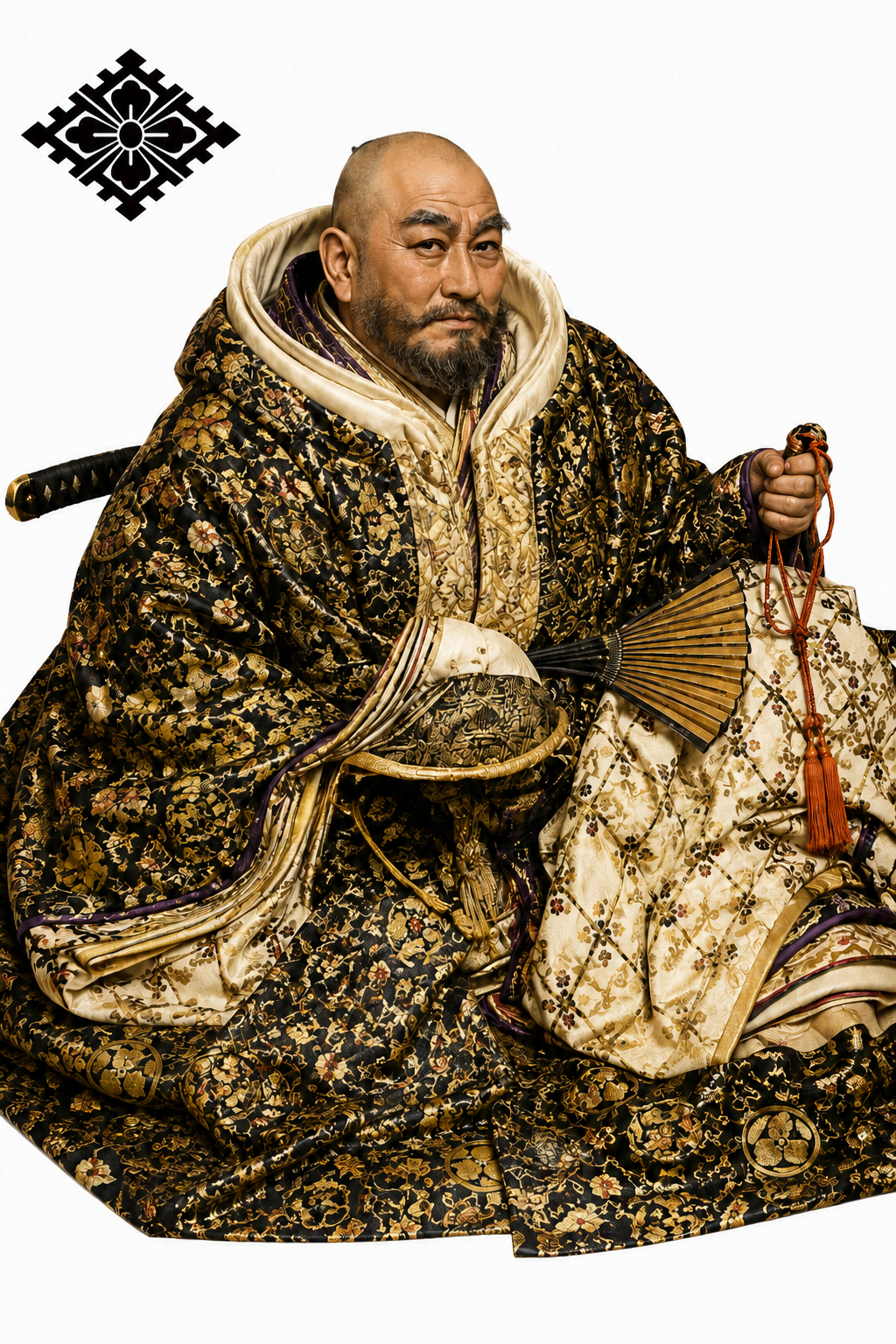
Sue Harukata — Why Did the Peerless Samurai General of the Western Provinces Strike Down His Lord and Fall at Itsukushima? The Daineiji Incident and the Theories
Contents
- Sue Harukata in Three Points
- The Mainstream Account — The Standard Story Found in Textbooks
- The Theories — Exploring the Possibilities from Various Angles
- A Strategic View — Sue Harukata’s Martial Valor, Statecraft, and Limits
- Famous Words and Sayings of This Warlord
- Anecdotes and Episodes
- Timeline
- Family and Personal Relationships
- Related Historic-Site Map and Travel Model Course
- Related Articles
- Reference Information
- Sue Harukata in Three Points
- The Mainstream Account — The Standard Story Found in Textbooks
- The Theories — Exploring the Possibilities from Various Angles
- A Strategic View — Sue Harukata's Martial Valor, Statecraft, and Limits
- Famous Words and Sayings of This Warlord
- Anecdotes and Episodes
- Timeline
- Family and Personal Relationships
- Related Historic-Site Map and Travel Model Course
- Related Articles
- Reference Information
Sue Harukata in Three Points
- The Suō deputy military governor of the Ōuchi house, called “the peerless samurai general of the Western Provinces.” Succeeding to the line of Sue Okifusa, a senior retainer of the Ōuchi clan, he inherited the headship of the Sue clan at 19. As the foremost of the military faction, he supported Ōuchi Yoshitaka militarily and bore the defense of the Ōuchi domain in the wars against the Amago and the Ōtomo. His original name was Takafusa, and after striking down Yoshitaka he received the character “Haru” from Ōuchi Haruhide and changed his name to Harukata.
- A representative figure of “gekokujō,” who struck down his lord Ōuchi Yoshitaka and in effect ruled the Ōuchi house. Taking the great defeat at the First Battle of Gassan-Toda Castle as the occasion, his rift with Yoshitaka deepened, and his conflict with the civil-administration man Sagara Taketō also intensified. In the 9th month of Tenbun 20 (1551), he raised arms at Tomida-Wakayama Castle, subjugated Yamaguchi, and forced Yoshitaka to take his own life at Daineiji in Nagato. As Yoshitaka’s successor he welcomed Ōtomo Haruhide, the half-brother of Ōtomo Sōrin, and set him up as Ōuchi Yoshinaga.
- Suffered a great defeat against Mōri Motonari at the Battle of Itsukushima and took his own life. In the 10th month of Tenbun 24 (1555), he crossed to Itsukushima and attacked the Mōri-side Miyao Castle, but on a night of storm he was struck by a surprise attack of the Mōri army and annihilated. Harukata took his own life on the island, closing his life at 35. The Battle of Itsukushima is counted, alongside the Night Battle of Kawagoe and Okehazama, as one of Japan’s three great surprise attacks, and was the decisive blow in the destruction of the Ōuchi clan.
The Mainstream Account — The Standard Story Found in Textbooks
Succession to the Sue Headship — As Suō Deputy Military Governor
Sue Harukata was born in Suō Province around Daiei 1 (1521). His original name was Takafusa, and his childhood name was Gorō. The Sue clan was a branch house of the Migita clan, a collateral line of the Suō Ōuchi clan, and was a house of one of the foremost senior retainers of the Ōuchi clan, hereditarily holding the post of deputy military governor of Suō Province. From of old there was a custom of receiving a character of the name from the head of the main-line Ōuchi clan, and Takafusa too, at his coming of age, received the character “Taka” from Ōuchi Yoshitaka and settled his name.
Takafusa has long been held to have been born the second son of his father Sue Okifusa. In recent research, however, the account in the “Bōshū Gekōki” — recorded when Yoshida Kaneyuki went down to Suō Province in Tenbun 11 (1542), within Kaneyuki’s diary the Kaneyuki-kyō Ki — has been reexamined, and it has come to be pointed out that Takafusa was the full younger brother of Toida Takamori (the later Toida Okimori), deputy military governor of Iwami Province. Following this, it is highly likely that Takafusa’s natural father was Toida Okiyuki, and his natural mother a daughter of Sue Hiromori and a half-sister of Sue Okifusa. Sue Okifusa had a natural son, Sue Okimasa, but he died in the 4th month of Kyōroku 2 (1529), and it is thought that after Okimasa’s death Takafusa, who was his sister’s son, was welcomed as Okifusa’s adopted son.
When his father Okifusa died of illness in Tenbun 8 (1539), Takafusa, at 19, succeeded to the headship of the Sue clan and took over the post of Suō deputy military governor. Having distinguished himself as a close aide of Ōuchi Yoshitaka from boyhood, Takafusa, after succeeding to the headship, came to carry still greater weight as a central figure within the Ōuchi house. Later war chronicles convey that Takafusa was favored as Yoshitaka’s catamite, but the accounts of war tales contain much embellishment, and caution is required in discussing their reality as historical fact.
The Battle of Yoshida-Kōriyama Castle — Coordination with the Mōri and Repelling the Amago
The year after his succession, in Tenbun 9 (1540), Amago Haruhisa of Izumo attacked Yoshida-Kōriyama Castle, the residence of the Aki Mōri Motonari who was under the Ōuchi clan, with a great army of 30,000. Against this, Ōuchi Yoshitaka dispatched a relief army of 10,000 with Sue Takafusa as supreme commander. Takafusa went down to Aki and, in cooperation with Mōri Motonari, repelled the Amago army. Serving as supreme commander of a great battle of the Western Provinces at the young age of 20, Takafusa raised his fame as a warrior at a stroke through this victory.
In this battle he came to form an alliance with Mōri Motonari, and the two — who would in later years come to a showdown at Itsukushima — were at this point rather sworn friends under the Ōuchi order. The relationship between Motonari and Takafusa is often spoken of in contrast in later interpretations surrounding the two men’s characters, but they originally set out as men who supported the Ōuchi order together.
The First Battle of Gassan-Toda Castle — The Rift with Yoshitaka
From Tenbun 11 (1542) to Tenbun 13 (1544), Ōuchi Yoshitaka embarked on an Izumo expedition as the final reckoning of the war against the Amago. This was the First Battle of Gassan-Toda Castle. Takafusa, together with Tago Hyōgo and others, advocated frontal-assault tactics, rejected the protracted-war plan urged by Mōri Motonari, and Yoshitaka agreed to this. But they could not make the impregnably renowned Gassan-Toda Castle fall, and after a long siege the Ōuchi army was driven to withdrawal.
In the confusion of the rout, Ōuchi Harumochi (son of Ichijō Fusafuyu of Tosa), who had been Yoshitaka’s adopted son, died in a shipwreck at sea. Having lost his most beloved successor, Yoshitaka rapidly lost his enthusiasm for military affairs from this point. Immersing himself in society with the court nobles who had gone down to Yamaguchi to escape the warfare after the Ōnin War in Kyoto, Yoshitaka shifted his focus to the promotion of waka, renga, and religious culture, and widened the distance from military-faction retainers such as Takafusa.
Yoshitaka came to give heavy use to Sagara Taketō as a new civil-administration deputy, and political tension arose between him and the military-faction Takafusa. Takafusa himself was also in a position of bearing a part of the responsibility for the defeat at the Battle of Gassan-Toda Castle, and needed to recover from it. The worsening of his relationship with Yoshitaka, with the Battle of Gassan-Toda Castle as the dividing point, became the foreshadowing of the later Daineiji Incident.
The Daineiji Incident — Lord-Killing and de facto Control of the House
In the 2nd month of Tenbun 19 (1550), the Nikai-kuzure Incident occurred in the Ōtomo clan of Bungo, and Ōtomo Yoshishige (the later Ōtomo Sōrin) succeeded to the headship. Takafusa took note of this and, as a measure to break the situation of conflict with the civil-administration faction within the Ōuchi house, advanced a plan to remove Yoshitaka and welcome Yoshishige’s half-brother Ōtomo Haruhide (whose birth mother was a daughter of Ōuchi Yoshioki, making him Yoshitaka’s nephew) as the new head of the Ōuchi house. The various works convey that he also obtained Yoshishige’s consent.
In the 1st month of Tenbun 20 (1551), Sagara Taketō, who had been the central figure of the civil-administration faction, submitted the “Sagara Taketō Mōshijō” to Yoshitaka and is transmitted to have slandered, saying, “Sue Takafusa and Naitō Okimori are plotting rebellion. The responsibility for the conflict lies with Sugi Shigenori.” By this, the conflict between Yoshitaka and Takafusa became decisive, and in the 8th month of that year, Taketō, sensing danger to himself, fled Yamaguchi.
On the 28th day of the 8th month of that year, Takafusa raised arms at his residence Tomida-Wakayama Castle and advanced on Yamaguchi. Despite the persuasion of Naitō Okimori and others, Yoshitaka did not attempt to hole up in a castle, and on the 1st day of the 9th month he was driven to take his own life at Daineiji in Fukawa, Nagato Province (present-day Nagato City, Yamaguchi Prefecture). This is the Daineiji Incident. Yoshitaka’s legitimate son Ōuchi Yoshitaka (a different person, written differently) was also killed by pursuers the next day. The daughter of Madenokōji Hidefusa, Yoshitaka’s principal wife, and others are also transmitted to have been unable to escape harm.
After the incident, Takafusa subjugated Yamaguchi and became the de facto ruler of the Ōuchi house. But he did not take the seat of head of the Ōuchi house himself, and chose the road of welcoming Haruhide from the Ōtomo house and setting him up as the legitimate successor of the Ōuchi clan.
The Setting-Up of Ōuchi Yoshinaga and the Renaming to “Harukata”
In the 1st month of Tenbun 21 (1552), the ceremony of marriage tie between the Ōtomo and Ōuchi clans was held at the Ōtomo residence in Bungo Province. It is recorded that Ōtomo Yoshishige (Sōrin), Tagita Akinari, Ōki Haruchika, Yoshioka Nagamasu, Usuki Akitsugu, Obara Akimoto, Shiga Chikamori, and others awaited, and Ōtomo Haruhide, Ōtomo Seikan, Ise Rokurō, Takafusa, Sugi Takasuke, Iida Okinaga, and others went up to the Ōtomo residence. In the 2nd month of that year, Haruhide entered Suō Province accompanied by Hashizume Akizane and Yoshihiro Tayū.
In welcoming Haruhide as the new head of the Ōuchi house, Takafusa, following the custom of the Sue house, received the character “Haru” from Haruhide and, combining it with “kata,” the hereditary name of his forefathers, renamed himself Harukata. Haruhide too, the following year, Tenbun 22 (1553), renamed himself “Ōuchi Yoshinaga.” By this, the Ōuchi clan, while outwardly crowning a legitimate head, became a system in which all real power was held in Harukata’s hands.
Harukata purged Sugi Shigenori, a comrade of the Daineiji Incident, as “the one responsible for the incident,” and further consolidated his initiative within the house. Shigenori’s son Sugi Shigesuke came to harbor a grudge over this, and in later years, after Harukata’s death, became a factor in destroying the main line of the Sue clan.
Mōri Motonari’s “Bōgei Severance” and the Rupture
Against Harukata, who had seized real power in the Ōuchi house through the Daineiji Incident, Mōri Motonari of Aki at first kept an outwardly subordinate posture while advancing his own moves. In the 5th month of Tenbun 23 (1554), Motonari at last declared his break with the Sue clan, captured at a stroke four Sue-side bases in western Aki Province such as Sakurao Castle, and occupied Itsukushima. This is the Mōri clan’s declaration of independence, called the “Bōgei Severance.”
In the 6th month of that year, Harukata urgently dispatched to Aki an army with Miyagawa Fusanaga as supreme commander, but it suffered a great defeat at the hands of Motonari at the Battle of Oshikibata. Having taken a blow in the opening engagement, Harukata came to advance preparations for a full-scale subjugation of the Mōri.
The following year, Tenbun 24 (1555), in the 3rd month, the day after Harukata’s senior retainer Era Fusahide led 140 guard ships in raids on Satō District and Itsukushima in Aki and returned to camp, he was put to death by the hand of Hironaka Takakane at the Kohaku-in in Iwakuni. Fusahide, as the patron of a lord of Saisai District of Aki Province, was well versed in the affairs of Aki and had advocated caution toward a showdown with the Mōri. Whether the stratagem said to have been Mōri Motonari’s spreading of a rumor of Fusahide’s collusion took effect is scant in firmly corroborated sources, but as a result Harukata lost, by his own hand, the senior retainer most versed in the affairs of Aki.
The Battle of Itsukushima — The Death in Defeat of the Peerless of the Western Provinces
On the 21st day of the 9th month of Tenbun 24 (1555), Harukata organized a great fleet of 500 ships and landed on Itsukushima with an army of about 20,000. It was an operation to attack the Mōri-side Miyao Castle and draw Motonari out, but in reality it is held to have been a trap in which Mōri Motonari turned the cramped terrain of Itsukushima to his advantage and lured the great army in. At the start of the campaign, Hironaka Takakane remonstrated, “Motonari’s aim is to lure the Ōuchi army into the narrow Itsukushima and annihilate it,” but Harukata did not heed this, as the Intoku Taiheiki and other works convey.
On the 1st day of the 10th month (October 16, 1555 by the Western calendar), before dawn, Mōri Motonari led about 4,000 troops and reinforcements from the Murakami navy and, taking advantage of the dark of a stormy night, crossed to Itsukushima. Against Tō-no-oka, where the Sue army’s headquarters lay, the Mōri main body landed at Tsutsumigaura, crossed the Bakuchi Ridge, and launched a surprise attack from the rear. At the same time, the Kobayakawa Takakage unit and the defenders of Miyao Castle attacked from the front, and the Murakami navy offshore burned the ships of the Sue navy — in a pincer from three directions, the Sue army was annihilated.
Harukata abandoned his headquarters and fled as far as Ōe-no-ura, but the ships to escape the island were already lost. Having resolved on his end, Harukata left a death poem — “What is there to begrudge, what to resent? From the very first, this body of mine was destined to this end” — and took his own life. He died at age 35. His senior retainers Hironaka Takakane, Miura Fusakiyo, and others also died in battle.
After his remains underwent a head inspection at Sakurao Castle, they were buried at Tōun-ji in Hatsukaichi. At that temple there still remains a hōkyōin pagoda called “the head-mound of Sue Harukata,” conveying a style of strong local color seen in the Yamaguchi–Hiroshima region from the Warring States period into the early Edo period.
The Destruction of the Main Sue Line and the End of the Ōuchi Clan
After Harukata’s death, his residence Tomida-Wakayama Castle was stormed and taken by the hand of Sugi Shigesuke, whose father Harukata had killed. Harukata’s heir Sue Nagafusa and second son Sue Sadaaki took their own lives, and the main line of the Sue clan was here extinguished. By one account, Nagafusa left Tomida-Wakayama Castle and holed up in the stronghold of Ryūmon-ji, but was attacked and destroyed by Shigesuke’s troops, who slipped into the temple grounds mingling with a nenbutsu dance.
With the report of the Itsukushima defeat as the occasion, the Ōuchi domain rapidly collapsed. In Kōji 3 (1557), through Mōri Motonari’s conquest of Suō and Nagato, Ōuchi Yoshinaga was driven to take his own life without a child, and the legitimate line of the Ōuchi clan was completely cut off. Sue Tsurujumaru, transmitted as Nagafusa’s eldest son (or Harukata’s youngest son), is also said to have died with Yoshinaga. The Suō Ōuchi clan, which had reigned as a great daimyō of the Western Provinces since the medieval period, and the Sue clan, which hereditarily held its deputy military governorship, vanished from the main stage of history two years after Harukata’s death.
The Theories — Exploring the Possibilities from Various Angles
【Theory 1】Was His Natural Father Sue Okifusa or Toida Okiyuki?
The point at issue: as for Harukata’s natural father, he has long been held to be Sue Okifusa, but this conventional view is being reexamined through recent source research.
[Natural Son of Sue Okifusa Theory (the traditional conventional view)]: A theory consistently conveyed by genealogies since the Edo period. He was born the second son of Sue Okifusa and inherited the headship following the early death of his elder brother Okimasa. Many war chronicles and pre-modern biographies also rely on this theory.
[Son of Toida Okiyuki / Adopted Son of Sue Okifusa Theory]: A theory based on the account in the “Bōshū Gekōki” — recorded when Yoshida Kaneyuki went down to Suō Province in Tenbun 11 (1542), within his diary the Kaneyuki-kyō Ki. It records that Takafusa was the full younger brother of Toida Takamori (the later Toida Okimori), deputy military governor of Iwami Province, and following this it is highly likely that Takafusa’s natural father was Toida Okiyuki and his natural mother a daughter of Sue Hiromori and a half-sister of Sue Okifusa.
[Interpretation as Adoption as a Sister’s Son]: Sue Okifusa had a natural son, Okimasa, but he died in the 4th month of Kyōroku 2 (1529). The core of the new theory is to consider that after Okimasa’s death, Takafusa — Okifusa’s sister’s son — was welcomed as Okifusa’s adopted son. By this, the position of Suō deputy military governor of the Sue house was inherited by Takafusa not through Okifusa’s bloodline but by way of a marriage relationship.
The “Bōshū Gekōki” is not a compiled source of the early-modern period and after, but a passage of a contemporary court noble’s diary, and its source value is high. In future Ōuchi-clan research, there is room for the origins of Takafusa (Harukata) to be examined still more precisely.
【Theory 2】What Was the Motive for the Daineiji Incident?
The point at issue: as for the motive that led Sue Takafusa to strike down his lord Yoshitaka, several interpretations stand side by side.
[Military-Faction vs. Civil-Administration-Faction Conflict Theory]: The most widely adopted interpretation. After the First Battle of Gassan-Toda Castle, Yoshitaka lost his enthusiasm for military affairs and gave heavy use to the civil-administration faction such as Sagara Taketō, by which Takafusa, who had been the center of the military faction, lost his place within the house. The view that the breakdown of the political balance within the house was the root cause of the incident.
[Breakdown of the Favored Relationship Theory]: A theory that attaches importance to the transformation of the relationship — conveyed by war tales such as the Ōuchi Yoshitaka-ki — in which Takafusa was favored as Yoshitaka’s catamite in his youth. The view that, with Yoshitaka shifting his interest away from Takafusa, a sense of emotional betrayal sprouted on Takafusa’s side. However, the accounts of war tales contain much embellishment, and there is debate over how far they can be discussed as historical fact.
[Caused by Sagara Taketō’s Slander Theory]: The theory that the slander recorded in the “Sagara Taketō Mōshijō” of Tenbun 20 (1551) — “Takafusa and Naitō Okimori are plotting rebellion,” “the responsibility for the conflict lies with Sugi Shigenori” — made the conflict between Yoshitaka and Takafusa irreversible. A position that attaches importance to Taketō’s moves as the direct trigger.
[Judgment of Domain-Management Strategy Theory]: The view that Yoshitaka’s avoidance of war and his leaning toward court-noble culture had become fatal for the management of the Ōuchi domain, reevaluating Takafusa’s raising of arms as “a self-purifying action of the house.” The tradition that propaganda criticizing Yoshitaka’s misrule was carried out within the domain also overlaps with this view.
[Prior Coordination with the Ōtomo House Theory]: The theory that, anticipating Ōtomo Yoshishige’s (Sōrin’s) succession, a plan to remove Yoshitaka and welcome Ōtomo Haruhide into the Ōuchi house was advancing from before the incident. A position that sees the incident not as a mere clash but as a carefully prepared statecraft.
None of these theories alone explains everything, and the modern mainstream is to see multiple factors as having acted in compound.
【Theory 3】Why Did Harukata Not Become Head of the Ōuchi House Himself?
The point at issue: Takafusa (Harukata), who seized real power in the Ōuchi house through the Daineiji Incident, chose the road of welcoming and setting up Haruhide from the Ōtomo house rather than taking the seat of head of the Ōuchi house himself. The reason for this choice has a peculiar character even within the gekokujō of the Warring States period.
[Securing Legitimacy Theory]: The most influential interpretation. The Ōuchi clan, a distinguished house since the medieval period, was an existence for which strict legitimacy was demanded regarding succession. The view that Takafusa judged that the standing of the Sue house lacked the legitimacy to take the seat of head of the Ōuchi clan, and sought to secure persuasiveness toward the house and surrounding provinces by setting up Haruhide (Yoshitaka’s nephew), who carried the blood of Ōuchi Yoshioki.
[Avoidance of Domain Division Theory]: The Ōuchi domain spanned many provinces — Suō, Nagato, Buzen, Chikuzen, and others — and the deputy military governors and kokujin of each had their own interests. Had Takafusa claimed the headship himself, there was a danger of losing the support of the house and of the domain dividing. The view that the road of setting up a legitimate head was a realistic choice to maintain unified control of the domain.
[Emphasis on Coordination with the Ōtomo Theory]: Haruhide was the half-brother of Ōtomo Yoshishige (Sōrin), and setting up Haruhide meant institutionalizing coordination with the Ōtomo clan. To ally with the Ōtomo clan of Kyūshū was important in opposing the Mōri and Amago, and the view that setting up Haruhide was a stepping-stone to make this coordination firm.
[Self-Restraint, Not the “Akechi Mitsuhide” Type Theory]: A theory often pointed out from the Edo period and after. The interpretation that, unlike Akechi Mitsuhide after the Honnō-ji Incident, he did not try to command the realm himself, but rather sought to remain in the position of “a retainer who snapped at his lord.” There is also a critical perspective that, as gekokujō conduct, it was half-hearted, and as a result caused the loss of the house’s centripetal force.
【Theory 4】Was the Killing of Era Fusahide the Result of Mōri Motonari’s Stratagem?
The point at issue: the affair in which Harukata’s senior retainer Era Fusahide was put to death at the Kohaku-in in Iwakuni on the 16th day of the 3rd month of Tenbun 24 (1555), just before the Battle of Itsukushima, is widely spoken of in connection with Mōri Motonari’s stratagem, but there are several interpretations of its historicity.
[Mōri Motonari’s Defection-Inducement / Rumor-Spreading Theory]: The most widely circulated theory. Motonari at first directly proposed defection to Era Fusahide but failed, so this time he kept spreading to the Sue side the rumor that “Fusahide is plotting rebellion,” fanning Harukata’s suspicion. The interpretation that Harukata, manipulated by this, had Fusahide put to death by Hironaka Takakane. It is told as a typical episode raising Motonari’s evaluation as a strategist.
[Line Conflict Within the Sue Clan Theory]: Fusahide, as the patron of a lord of Saisai District of Aki Province, was well versed in the affairs of Aki and had advocated caution toward a showdown with the Mōri. The view that Harukata’s aggressive-attack line and Fusahide’s cautious line conflicted, and as a consequence Fusahide was removed. A position that, regardless of whether Motonari’s stratagem existed, sees the line conflict within the Sue clan as the principal cause.
[Both Theories Standing Together]: The interpretation that Motonari’s stratagem and the line conflict within the Sue clan acted in compound. That Fusahide, advocating caution, deepened his isolation still further through the external rumor-mongering, and as a result reached his killing.
In any case, there is no doubt that Harukata’s losing, by his own hand, the senior retainer most versed in the affairs of Aki became a fatal foreshadowing of the Battle of Itsukushima.
【Theory 5】The Judgment to March on Itsukushima and Hironaka Takakane’s Remonstrance
The point at issue: Harukata’s judgment of crossing to the cramped Itsukushima at the head of a great army of about 20,000 has often been criticized after the war as a “fatal error,” but there are various theories about the background of that judgment.
[Overconfidence in Naval Power Theory]: The view that Harukata had confidence in the naval power under the Sue clan and judged that he could maintain an overwhelming advantage over the Mōri side’s poor navy. In fact, the Sue side had navies such as that of Shirai Katatane, and in the initial stage had an advantage in naval forces. But the unforeseen element of the Murakami navy’s joining the Mōri side broke this premise.
[Lured into Miyao Castle Theory]: The view that Mōri Motonari deliberately built Miyao Castle thinly and set a trap to lure Harukata onto the island. The Intoku Taiheiki and others take this theory, emphasizing the strategist side of Motonari. However, there is also debate as to whether the building of Miyao Castle was a complete luring-in.
[Ignoring Hironaka Takakane’s Remonstrance Theory]: At the start of the campaign, Hironaka Takakane remonstrated, “Motonari’s aim is to lure the Ōuchi army into the narrow Itsukushima and annihilate it,” but Harukata did not heed this, as the various works convey. The view that, alongside the killing of Era Fusahide, Harukata’s rejection of cautious opinion within the house led directly to the defeat at Itsukushima.
[Expectation of Ending the Total War Theory]: The view that Harukata positioned the Battle of Itsukushima as an opportunity to dispose of the anti-Sue forces of Aki at a stroke, and expected a short-term settlement through a decisive battle. The position that interprets it as having had no choice but to take a gamble in a situation where prolongation would advance the collapse of the domain.
In the paradox that Harukata, while called “the peerless samurai general of the Western Provinces,” exhausted his fortunes at Itsukushima, there is also research that reads a turning point in the nature of Warring States warfare — that the limit of military success by martial valor alone was exposed.
【Theory 6】Where Was Harukata’s Place of Suicide?
The point at issue: as for Harukata’s place of suicide, several spots on the island of Itsukushima are handed down.
[Ōe-no-ura Theory]: The general tradition adopted by the Miyajima Tourism Association and others. That after abandoning his headquarters, Harukata fled as far as Ōe-no-ura and took his own life. A spot located along the southwestern coast of Itsukushima.
[Ōeo Theory]: A tradition making the spot of the ridge in the mountainous part of Ōe-no-ura the place of suicide.
[Takayasugahara Theory]: The place of suicide recorded in the Geishū Itsukushima Zue. Held to be a spot still further inland than Ōe-no-ura.
[Coexistence of Multiple-Spot Traditions]: These places are comparatively close together on the island of Itsukushima, and he is held to have ended his life at one of the spots in the course of a series of movements from rout to suicide. As for the specific spot, there is wavering between the local traditions of the early-modern period and after and the recognition of place-names on the ground.
After Harukata’s remains underwent a head inspection at Sakurao Castle, they were buried at Tōun-ji in Hatsukaichi. The grave is at that temple, but the possibility of a later relocation is also pointed out in the circumstances of Harukata’s remains being buried here. Because Miyajima, as a sacred precinct, shuns defilement and has a tradition of not placing graves, the circumstances by which no grave was built at a place near the suicide site and, after the head inspection, the remains were placed at Tōun-ji near Sakurao Castle on the opposite shore are reasonable.
A Strategic View — Sue Harukata’s Martial Valor, Statecraft, and Limits
Martial Valor — The True Figure of “the Peerless Samurai General of the Western Provinces”
Sue Harukata was a warrior called “the peerless samurai general of the Western Provinces” from the time itself. The achievement of being entrusted with the supreme command of the war against the Amago at the young age of 20 and repelling Amago Haruhisa at the Battle of Yoshida-Kōriyama Castle was an early maturity outstanding for a young man within a regional daimyō house of the Warring States period.
Harukata’s martial valor was not mere spear-work on the battlefield but was accompanied by the ability of a supreme commander who bore the entire military system of the Ōuchi domain. With both the public position of Suō deputy military governor and the family standing of commanding a hereditary retainer corps as his background, Harukata continued to bear the mainstay of the Ōuchi clan’s external wars. The defeat at the First Battle of Gassan-Toda Castle also had an aspect of being brought on by Harukata’s own counsel, but even at this point Harukata continued to be the main commander of the Ōuchi army.
Statecraft — The Structure of the Daineiji Incident and the Setting-Up of Ōuchi Yoshinaga
The Daineiji Incident must be understood not as a single act of rebellion but as the culmination of a series of statecraft. The flow from the Nikai-kuzure Incident of the Bungo Ōtomo house (1550), through Ōtomo Yoshishige’s succession, to the marriage-tie ceremony with the Ōuchi house (the 1st month of 1552) and the granting of a character to Ōuchi Yoshinaga (1553), was a structural movement in which the handling of conflict within the house and diplomatic statecraft were unified.
Harukata sought not to destroy the Ōuchi house but to remove Yoshitaka, who had been under the influence of the civil-administration faction, and to rebuild the Ōuchi house under a new head. The statecraft of carefully arranging the conditions — a marriage tie with the Ōtomo house, and the Haruhide who inherited the bloodline of Ōuchi Yoshioki — to secure Yoshinaga’s legitimacy was a move that thoroughly knew the logic of controlling a house in the Warring States period.
But that statecraft was also a logic that limited Harukata’s power. Yoshinaga was the formal head, and real power lay with Harukata, but this at the same time made permanent a structure in which Harukata could not bear the legitimate authority of the Ōuchi house. Mōri Motonari’s “Bōgei Severance” and declaration of independence could be said to have struck at this structural weak point.
Limits — The Structure by Which the Peerless of the Western Provinces Was Defeated
Harukata’s greatest strategic limit appears in his continually rejecting cautious opinion within the house. The two — the killing of Era Fusahide (whether stratagem or conflict, in either case the removal of a man of caution) and the ignoring of Hironaka Takakane’s remonstrance (at the march on Itsukushima) — show that Harukata’s decision-making had become single-tracked and had lost the room to absorb dissent.
In the Warring States period, the concentration of martial valor and power strengthens the domain in the short term, but an arbitrary decision that excludes cautious opinion deprives one of the opportunity to correct a fatal error. That Harukata, while possessing the martial valor praised as “the peerless of the Western Provinces,” himself destroyed the in-house opinion-gathering system that supported that martial valor led directly to his death in defeat at 35.
That Mōri Motonari is often spoken of as a “strategist” is based on the fact that he calmly observed this structural weak point of Harukata and seized victory not by military force but by an information war and a psychological war. Harukata’s life is positioned at the turning point from an age of martial valor to an age of strategy.
Famous Words and Sayings of This Warlord
Death Poem at Itsukushima, Before His Suicide
“What is there to begrudge, what to resent? From the very first, this body of mine was destined to this end.”
— the death poem before his suicide at the Battle of Itsukushima
The death poem of Sue Harukata, said to have been composed just before he took his own life in defeat at the Battle of Itsukushima. It sings the state of mind of resignation: there is nothing to begrudge, nothing to resent — this very condition was the lot of his body, settled from the very first. As the state of mind of a warrior facing death in defeat at 35, it has been handed down to later times. As a poem in which the “peerless samurai general of the Western Provinces,” who had boasted of martial valor, accepted his own life as “a body destined to this end,” it is counted among the representative examples of Warring States death poems.
Hironaka Takakane’s Remonstrance — “Motonari’s aim is to lure the Ōuchi army into the narrow Itsukushima and annihilate it”
“Motonari’s aim is to lure the Ōuchi army into the narrow Itsukushima and annihilate it.”
— Hironaka Takakane’s remonstrance (based on the accounts of the various works)
The remonstrance said to have been spoken by Harukata’s veteran retainer Hironaka Takakane just before the march on Itsukushima. It is the observation that Motonari’s deliberately building the Mōri-side Miyao Castle thinly was a trap to lure the Ōuchi army into the cramped terrain of Itsukushima and annihilate it. The Intoku Taiheiki and others convey that Harukata did not heed this and set out. Takakane himself supported the rear guard at the Battle of Itsukushima and died in battle, proving the error of his lord’s judgment with his own life. It is a scene often spoken of in later times as a contrast between a lord of martial valor and a veteran retainer who held to cautious opinion to the last.
Sue House Precept — “To be loyal to the house is not necessarily to do as the lord says”
“To serve the Lord of Ōuchi with loyalty is our duty. Yet to be loyal to the house is not necessarily to do as the lord says. To remonstrate at times, and to guide at times, is also a form of loyalty.”
— a tradition held to be the teaching from his father Sue Okifusa to Takafusa
A house precept transmitted as having been expounded by his father Okifusa to the young Takafusa. It shows a dual-structured ethic: that, while serving the Ōuchi clan as a deputy-military-governor house, loyalty to the house differs from blind obedience to the lord. It is often cited in later years in overlap with the decision that led Harukata to strike down Yoshitaka and raise the Daineiji Incident. However, this kind of didactic tradition strongly bears a character arranged in the early-modern period and after, and its source as historical fact is not clear.
Anecdotes and Episodes
His Boyhood as Ōuchi Yoshitaka’s Catamite
In the war tale Ōuchi Yoshitaka-ki, several anecdotes are recorded that the young Takafusa was favored as Ōuchi Yoshitaka’s catamite. By one account, Takafusa’s elder brother Okimasa was favored by Yoshitaka’s father Ōuchi Yoshioki, but, wishing to be recognized as a warrior, disliked the male-love relationship and was killed by his father Okifusa. Against this, Takafusa is said to have chosen the very opposite road from his brother’s assertion, showing excellent work as a warrior while receiving Yoshitaka’s favor. However, the accounts of war tales contain much embellishment, and there is debate over how far they can be discussed as historical fact.
Rejected a Marriage with Taketō’s Daughter as “a Difference of Family Standing”
To ease the conflict between Yoshitaka and Takafusa, a marriage between the daughter of the civil-administration man Sagara Taketō and Takafusa’s heir Nagafusa is transmitted to have been proposed. But Takafusa rejected this as “a difference of family standing.” The difference in family-standing consciousness between the hereditary distinguished house of the Sue clan and the newly risen civil-administration Sagara clan is held to have become a factor blocking reconciliation. This judgment of cutting off the opportunity for reconciliation by his own hand has often been pointed out by later historians as a foreshadowing of the later Daineiji Incident.
Purged His Comrade Sugi Shigenori as “the One Responsible for the Incident”
In the Daineiji Incident, Sugi Shigenori also took part with Takafusa in striking down Yoshitaka, but after the incident Harukata purged Shigenori as “the one responsible for the incident.” This is held to have been a political measure to concentrate the house’s discontent on Shigenori and preserve Harukata’s own authority, but Shigenori’s son Sugi Shigesuke harbored a grudge over this treatment and, in later years after Harukata’s death, would storm and take Tomida-Wakayama Castle and destroy the main line of the Sue clan. It is symbolic as an episode in which the purge of a comrade led directly to the destruction of his own house.
The Meaning of the “Harukata” Renaming
After the Daineiji Incident, Takafusa received the character “Haru” from the new head of the Ōuchi house, Ōuchi Haruhide, and renamed himself “Harukata.” The Sue house had a custom by which successive heads received a character from the head of the Ōuchi clan, and it was a ceremonial renaming to show within and without that he welcomed Haruhide as lord. The renaming — casting off the character “Taka” received from the former lord Yoshitaka and receiving the character “Haru” of the new lord Haruhide — held the important significance, for Harukata, of emphasizing the legitimacy of the new system, but as a result it also became a symbol of the system that accelerated the collapse of the Ōuchi clan.
Harukata Depicted in Utagawa Kuniyoshi’s “Mitate-e”
The Edo-period ukiyo-e artist Utagawa Kuniyoshi’s “Sue Harukata of Yabuhara, from the Sixty-Nine Stations of the Kiso Highway” is known as a mitate-e (analogue picture). The picture reads “Sue Harukata” (written differently), but from elements such as “yabu” (thicket), the “bellflower crest,” and “rebel,” it is thought to have originally been an analogue for Akechi Mitsuhide. It is circumstantial evidence showing that in the Edo period, Akechi Mitsuhide and Sue Harukata were spoken of side by side as representatives of lord-killing, and a material conveying the character of Harukata’s evaluation in later times.
The Hōkyōin Pagoda of Tōun-ji and the Locally Styled Grave
After Harukata’s remains underwent a head inspection at Sakurao Castle, they were buried at Tōun-ji in Hatsukaichi. At that temple there still stands a hōkyōin pagoda called “the head-mound of Sue Harukata,” conveying a style of strong local color seen in the Yamaguchi–Hiroshima region from the Warring States period into the early Edo period. Because Miyajima has a tradition of shunning defilement as a sacred precinct and not placing graves, the circumstances by which no grave was built at a place near the suicide site and the remains were placed at Tōun-ji near Sakurao Castle on the opposite shore are reasonable.
Timeline
※ Ages are by the traditional count. The year of birth follows the Daiei 1 (1521) theory, estimated from the “Bōshū Gekōki” collected in the Kaneyuki-kyō Ki and other sources.
| Japanese era (CE) | Age | Event |
|---|---|---|
| Around Daiei 1 (1521) | 1 | Born in Suō Province. Original name Takafusa, childhood name Gorō. The theory that his natural father was Toida Okiyuki and his natural mother a daughter of Sue Hiromori is influential in recent years. Thought to have been welcomed as Sue Okifusa’s adopted son. |
| Kyōroku 2 (1529) | 9 | Sue Okifusa’s natural son Okimasa dies. By this, Takafusa comes to be regarded as the successor of the Sue house. |
| Tenbun 8 (1539) | 19 | His father Sue Okifusa dies of illness. Takafusa inherits the Sue headship and becomes Suō deputy military governor. |
| Tenbun 9 (1540) | 20 | At the Battle of Yoshida-Kōriyama Castle, repels Amago Haruhisa as a relief army for Mōri Motonari. Serves as supreme commander of the Ōuchi army at 20. |
| Tenbun 11–13 (1542–44) | 22–24 | The First Battle of Gassan-Toda Castle. Takafusa advocated a frontal assault but failed to capture it. Ōuchi Harumochi dies in a shipwreck, and Yoshitaka loses his will to fight. The conflict between the military and civil-administration factions begins to sprout. |
| 2nd month of Tenbun 19 (1550) | 30 | The Nikai-kuzure Incident in the Bungo Ōtomo house. Ōtomo Yoshishige succeeds to the headship. Following this, Takafusa is held to have advanced the plan to set up Haruhide. |
| 1st month of Tenbun 20 (1551) | 31 | Sagara Taketō submits the “Sagara Taketō Mōshijō” to Yoshitaka. Slanders Takafusa and Naitō Okimori with rebellion, and the conflict with Yoshitaka becomes decisive. |
| 8th month of Tenbun 20 (1551) | 31 | Taketō flees Suō. On the 28th of the 8th month, Takafusa raises arms at Tomida-Wakayama Castle. |
| 1st day of the 9th month of Tenbun 20 (1551) | 31 | The Daineiji Incident. Through Takafusa’s raising of arms, Ōuchi Yoshitaka takes his own life at Daineiji in Nagato. The next day, his legitimate son Ōuchi Yoshitaka (written differently) is also killed. |
| 1st month of Tenbun 21 (1552) | 32 | The Ōtomo–Ōuchi marriage-tie ceremony at the Bungo Ōtomo residence. Ōtomo Sōrin and others await, and Haruhide and others go up. |
| 2nd month of Tenbun 21 (1552) | 32 | Ōtomo Haruhide enters Suō Province. He is set up as the new head of the Ōuchi house. Takafusa receives the character “Haru” from Haruhide and renames himself “Harukata.” Around the same time, purges his comrade Sugi Shigenori as “the one responsible for the incident.” |
| Tenbun 22 (1553) | 33 | Haruhide renames himself “Ōuchi Yoshinaga.” The outward rebuilding of the Ōuchi system is completed. |
| 5th month of Tenbun 23 (1554) | 34 | Mōri Motonari declares the “Bōgei Severance,” captures four castles in western Aki such as Sakurao Castle, and occupies Itsukushima. |
| 6th month of Tenbun 23 (1554) | 34 | At the Battle of Oshikibata, the Miyagawa Fusanaga army Harukata dispatched is defeated by Motonari. |
| 16th day of the 3rd month of Tenbun 24 (1555) | 35 | Harukata’s senior retainer Era Fusahide is put to death by the hand of Hironaka Takakane at the Kohaku-in in Iwakuni. Said to be over suspicion of collusion with the Mōri side, but a connection to Mōri Motonari’s stratagem is conveyed in the various works. |
| 21st day of the 9th month of Tenbun 24 (1555) | 35 | Harukata lands on Itsukushima at the head of a great fleet of 500 ships and an army of about 20,000. Attacks Miyao Castle. |
| 1st day of the 10th month of Tenbun 24 (1555) | 35 | The Battle of Itsukushima. Struck by Mōri Motonari’s surprise attack, the Sue army is annihilated. Harukata takes his own life near Ōe-no-ura. His senior retainers Hironaka Takakane and Miura Fusakiyo also die in battle. |
| 10th month of Tenbun 24 (1555) | — | Harukata’s remains, after a head inspection at Sakurao Castle, are buried at Tōun-ji in Hatsukaichi. |
| Kōji 2–3 (1556–57) | — | Through Sugi Shigesuke’s attack, Tomida-Wakayama Castle falls. Harukata’s heir Sue Nagafusa and second son Sue Sadaaki take their own lives. The main line of the Sue clan is extinguished. |
| Kōji 3 (1557) | — | Through Mōri Motonari’s conquest of Suō and Nagato, Ōuchi Yoshinaga takes his own life. The Ōuchi clan is destroyed. Sue Tsurujumaru also dies with his lord. |
Family and Personal Relationships
Family
| Person | Relation | Connection |
|---|---|---|
| Sue Okifusa | Adoptive father (natural father by the conventional view) | Suō deputy military governor who served Ōuchi Yoshioki and Yoshitaka. Died of illness in Tenbun 8 (1539), and Takafusa inherited the headship. |
| Toida Okiyuki | Natural father (recent new theory) | The natural father estimated from the account of the “Bōshū Gekōki.” Said to have taken a daughter of Sue Hiromori as wife and fathered the brothers Takafusa and Takamori (Okimori). |
| Daughter of Sue Hiromori | Natural mother (recent new theory) | Held to be a half-sister of Sue Okifusa. The key figure in the circumstances of Takafusa being welcomed as Okifusa’s adopted son. |
| Sue Okimasa | Adoptive elder brother | Sue Okifusa’s natural son. By his death in the 4th month of Kyōroku 2 (1529), Takafusa was welcomed as Okifusa’s successor. |
| Toida Takamori (Okimori) | Full elder brother | Deputy military governor of Iwami Province. Recorded in the “Bōshū Gekōki” as Takafusa’s full elder brother. |
| Ōkata (daughter of Naitō Takatoki) | Principal wife | A daughter of the Naitō clan and Harukata’s principal wife. Bore children. |
| Sue Nagafusa | Heir | Lord of Tomida-Wakayama Castle. After his father’s death, took his own life under Sugi Shigesuke’s attack, and the main Sue line was extinguished. |
| Sue Sadaaki | Second son | Took his own life together with his elder brother Nagafusa at the fall of Tomida-Wakayama Castle. |
| Sue Tsurujumaru | Youngest son (also said to be Nagafusa’s eldest son) | Died with his lord at the time of Ōuchi Yoshinaga’s conquest of Suō and Nagato. Held to be the last bloodline of the main Sue line. |
Lords
| Person | Position | Connection |
|---|---|---|
| Ōuchi Yoshitaka | Former lord | The Ōuchi clan head whom the Sue clan served as hereditary deputy military governors. He favored and gave heavy use to Takafusa, but the relationship worsened after the First Battle of Gassan-Toda Castle, and he was forced to take his own life in the Daineiji Incident. |
| Ōuchi Yoshinaga (Ōtomo Haruhide) | Later lord | Half-brother of Ōtomo Yoshishige (Sōrin). His birth mother was a daughter of Ōuchi Yoshioki, making him Yoshitaka’s nephew. The new head of the Ōuchi house whom Harukata set up after the Daineiji Incident. After Harukata’s death, forced to take his own life in Mōri Motonari’s conquest of Suō and Nagato, and the Ōuchi clan was destroyed. |
Allied and Adversarial Powers
| Person / Power | Position | Connection |
|---|---|---|
| Ōtomo Sōrin (Yoshishige) | Sworn friend / relative by marriage | Head of the Bungo Ōtomo clan. The ally who provided Harukata with Haruhide, Yoshitaka’s nephew. Hosted the Ōuchi–Ōtomo marriage-tie ceremony in Bungo. |
| Mōri Motonari | Adversary | Originally a sworn friend under the Ōuchi order. At the Battle of Yoshida-Kōriyama Castle he repelled the Amago army together with Takafusa. Later became independent through the “Bōgei Severance” and defeated Harukata at the Battle of Itsukushima. |
| Amago Haruhisa | Adversary | A warlord of Izumo. Repelled by Takafusa at the Battle of Yoshida-Kōriyama Castle, and repelled the Ōuchi army at the First Battle of Gassan-Toda Castle — a principal military opponent of Harukata’s life. |
| Sagara Taketō | Political enemy in the house | The central figure of the civil-administration faction given heavy use by Yoshitaka. His conflict with Takafusa became decisive through the slander of the “Sagara Taketō Mōshijō,” becoming the trigger of the Daineiji Incident. |
| Naitō Okimori | Comrade / supporter | A senior retainer of the Ōuchi house who supported Harukata’s raising of arms. In Taketō’s slander, named side by side as “plotting rebellion with Takafusa.” |
| Sugi Shigenori | Comrade / object of purge | A comrade who took part in the Daineiji Incident but was purged by Harukata after the incident as “the one responsible.” That his son Shigesuke later destroyed the main Sue line was a remote cause. |
| Hironaka Takakane | Veteran retainer / loyal subject | Harukata’s veteran retainer who carried out the killing of Era Fusahide. He remonstrated against the march on Itsukushima but was not heeded, and supported the rear guard on the battlefield and died. |
| Era Fusahide | Senior retainer (killed) | A senior retainer versed in the affairs of Aki as the patron of a lord of Saisai District of Aki Province. Advocated caution toward a showdown with the Mōri and was put to death by Harukata’s order. |
| Sugi Shigesuke | Avenging enemy | The bereaved son of the Sugi clan, whose father Sugi Shigenori was killed by Harukata. After Harukata’s death, stormed and took Tomida-Wakayama Castle and destroyed the main Sue line. |
Related Historic-Site Map and Travel Model Course
The places associated with Sue Harukata spread from Tomida in Tsuno District of Suō Province, his home base (present-day Tomida, Shūnan City, Yamaguchi Prefecture), through Fukawa in Nagato Province, the stage of the Daineiji Incident (present-day Nagato City, Yamaguchi Prefecture), Itsukushima in Aki Province, where he died in defeat (present-day Miyajima Town, Hatsukaichi City, Hiroshima Prefecture), and Tōun-ji in Hatsukaichi, where his grave lies — from the east of Yamaguchi Prefecture to the west of Hiroshima Prefecture. In particular, at the old battlefield of the Battle of Itsukushima, several spots of suicide-site tradition still remain, and one can visit the stage of the decisive battle of the Warring States period on the ground.
Model Course ①: The Sue Clan Home Base, Suō Tomida Course (half day to 1 day)
A course visiting the home base of the Sue clan, centered on Tomida-Wakayama Castle, Harukata’s residence.
- JR Shin-Nan’yō Station → Sue Clan Residence Ruins (Tomida, Shūnan City, Yamaguchi Prefecture) (the residence ruins of successive Sue heads; maintained as a park) → Tomida-Wakayama Castle Ruins (the Sue clan’s redoubt mountain castle; the stage of Harukata’s raising of arms) → Ryūmon-ji (the Sue family temple; also transmitted as Nagafusa’s place of suicide) → return.
Model Course ②: The Daineiji Incident, Nagato Fukawa Course (half day to 1 day)
A course visiting Nagato Fukawa, where Ōuchi Yoshitaka took his own life in the Daineiji Incident, touring the stage of the incident on the ground.
- JR Nagato-shi Station → Daineiji (Fukawa-Yumoto, Nagato City, Yamaguchi Prefecture) (the place of Ōuchi Yoshitaka’s suicide; the graves of Yoshitaka and his son remain) → Yumoto Onsen (a hot-spring area around the stage of the incident) → return.
Model Course ③: The Itsukushima Old Battlefield and Sue Harukata’s Grave Course (1 day)
A course touring the old battlefield of the Battle of Itsukushima and Tōun-ji, where Harukata’s grave lies.
- JR Miyajimaguchi Station → Miyajima ferry → Itsukushima Shrine (the sacred precinct that became the battlefield) → Tō-no-oka (the Sue army headquarters ruins) → Tsutsumigaura (the Mōri army landing site) → Ōe-no-ura / the alleged site of Harukata’s death in defeat (a place of suicide-site tradition) → return to Miyajimaguchi → Tōun-ji (Hatsukaichi City, Hiroshima Prefecture) (Harukata’s head-mound and hōkyōin pagoda) → Sakurao Castle Ruins (the place where Harukata’s head inspection was held) → return.
Model Course ④: The Wide-Area Course Crossing Sue Harukata’s Life (2 nights, 3 days and up)
A wide-area course crossing Harukata’s life, from the Sue clan home base of Suō Tomida, through Nagato Fukawa of the Daineiji Incident, to his end at Itsukushima.
- Day 1: Shūnan City, Yamaguchi Prefecture → Tomida-Wakayama Castle Ruins, Sue Clan Residence Ruins, Ryūmon-ji → overnight within Yamaguchi City (a stroll through the group of Ōuchi-culture ruins).
- Day 2: Yamaguchi City → Nagato City → Daineiji (the place of Yoshitaka’s suicide) → overnight within Hagi City.
- Day 3: Hagi City → Hatsukaichi City, Hiroshima Prefecture → Tōun-ji, Sakurao Castle Ruins → cross to Itsukushima → a tour of the old battlefield → return.
Arrangements by Type of Visitor
- History beginners: The Itsukushima–Tōun-ji course of Model Course ③. One can tour the most famous stage of the Battle of Itsukushima and Harukata’s grave in a day.
- Ōuchi house fans: The crossing course of Model Course ④. From the Sue clan home base to Daineiji and Itsukushima, one can trace the flow of the Ōuchi house’s decline and fall on the ground.
- Castle fans: Combining the Tomida-Wakayama Castle Ruins (mountain castle) and the Sakurao Castle Ruins (hilltop castle) lets one feel the relationship between the Sue clan’s home base and front-line base.
- Old-battlefield enthusiasts: A thorough tour of the Itsukushima old battlefield. Confirming the positional relationship of Tō-no-oka, Tsutsumigaura, the Bakuchi Ridge, and Ōe-no-ura on the ground lets one understand the terrain conditions of the surprise attack.
- The hot-spring inclined: Combining Nagato-Yumoto Onsen, Yuda Onsen, Miyahama Onsen, and the like lets one balance historic-site touring with a hot-spring cure.
Related Articles
Related Warlord Articles
- Ōuchi Yoshitaka — The Ōuchi house head whom the Sue clan served for generations. The former lord struck down by Harukata in the Daineiji Incident.
- Ōtomo Sōrin (Yoshishige) — Head of the Bungo Ōtomo clan, who provided Harukata with his half-brother Ōtomo Haruhide. An ally of the Ōuchi system after the Daineiji Incident.
- Mōri Motonari — Originally a sworn friend under the Ōuchi order. Defeated Harukata at the Battle of Itsukushima and later destroyed the Ōuchi clan.
Related Battle Articles
- The Battle of Itsukushima (1555) — One of Japan’s three great surprise attacks, where Harukata died in defeat against Mōri Motonari.
Reference Information
Primary and Semi-Primary Sources
- Kaneyuki-kyō Ki (the diary of Yoshida Kaneyuki) — A contemporary diary of a court noble of the Warring States period. In the record of his descent to Suō in Tenbun 11 (1542), the “Bōshū Gekōki,” it records that Sue Takafusa (Harukata) was the full younger brother of Toida Takamori. An important primary source for reexamining Takafusa’s natural father and mother.
- “Sagara Taketō Mōshijō” (Tenbun 20) — A letter Taketō submitted to Yoshitaka. A document slandering Takafusa and Naitō Okimori with rebellion, which became the direct trigger of the Daineiji Incident.
- The body of documents issued and received by the Ōuchi clan — A body of contemporary sources conveying the movements of the Ōuchi system before and after the Daineiji Incident. Held at the Yamaguchi Prefectural Archives and elsewhere.
- Ōtomo house documents (the body of letters related to the Daineiji Incident) — Convey the circumstances of the Ōtomo–Ōuchi marriage-tie ceremony. Handed down at the Kyushu National Museum, the Historiographical Institute of the University of Tokyo, and elsewhere.
Compiled Sources
- Ōuchi Yoshitaka-ki — A war tale treating the life of Ōuchi Yoshitaka. It records the relationship between Takafusa (Harukata) and Yoshitaka, the Battle of Gassan-Toda Castle, the Daineiji Incident, and the like, but contains embellishment as a war chronicle.
- Intoku Taiheiki — A war chronicle composed in the mid-Edo period. It records the movements of the Warring States period in the Chūgoku region — especially of the Mōri, Ōuchi, and Amago clans — and the circumstances of the Battle of Itsukushima. Compiled by Kagawa Sen’a.
- Dai Nihon Shiryō (compiled by the Historiographical Institute of the University of Tokyo) — Collects various sources related to the Daineiji Incident and the Battle of Itsukushima in chronological order.
- Mōri-ke Monjo — A body of documents handed down in the Mōri house. Conveys the movements of the Mōri clan before and after the “Bōgei Severance” and the circumstances leading to the Battle of Itsukushima.
Academic and Research Works
- Fukuo Takeichirō, Ōuchi Yoshitaka (Jinbutsu Sōsho, Yoshikawa Kōbunkan, 1989 revised edition) — A basic biography of Ōuchi Yoshitaka research. A representative research work discussing the relationship with Sue Harukata from the lord’s side.
- Fujii Takashi, Ōuchi Yoshitaka (Minerva Japanese Biography Selection) — A biography founded on the latest research results, including the relationship between Yoshitaka and Harukata.
- Hasegawa Hiroshi, The Rise and Fall of the Ōuchi Clan and Western Japanese Society (The Warring States History of the Archipelago 3, Yoshikawa Kōbunkan) — Structurally discusses the domain management of the Ōuchi clan and the positioning of the Sue clan.
- Kinoshita Satoshi (ed.), Studies in the Muromachi Shogunate, Vol. 1: The Shiba Clan, the Kanrei (Ebisu Kōshō Publication) — Research on the medieval Western-Provinces deputy-military-governor system. A foundational reference for understanding the family standing and positioning of the Sue clan.
- Yamada Takashi (ed.), The Rise and Fall of the Warlord Ōuchi Clan (Ebisu Kōshō Publication, Studies in Medieval Western Warriors series) — A compilation of papers of Ōuchi-clan research. Includes studies on the Sue clan.
- A body of research works on the Battle of Itsukushima — Several works have been published reexamining the tactical development of the Battle of Itsukushima, Harukata’s judgment, and the true picture of Mōri Motonari’s stratagem.
Public-Institution Materials and Museums
- Yamaguchi Prefectural Archives (Yamaguchi City, Yamaguchi Prefecture) — A public holding institution for Ōuchi-clan documents and Sue-clan-related sources.
- Yamaguchi Prefectural Yamaguchi Museum (Yamaguchi City, Yamaguchi Prefecture) — Comprehensive exhibits on Ōuchi culture and the Sue clan.
- Shūnan City Museum of Art and History (Shūnan City, Yamaguchi Prefecture) — Holds and exhibits local materials of Tomida, the Sue clan’s home base.
- Daineiji (Fukawa-Yumoto, Nagato City, Yamaguchi Prefecture) — Holds the graves of Ōuchi Yoshitaka and his son, and is maintained as a historic site of the Daineiji Incident.
- Tōun-ji (Hatsukaichi City, Hiroshima Prefecture) — Holds Sue Harukata’s head-mound (hōkyōin pagoda) and Sue-clan-related graves.
- Hatsukaichi City Local Museum (Hatsukaichi City, Hiroshima Prefecture) — Provides materials related to the Battle of Itsukushima and an explanation of the Sakurao Castle Ruins.
- Miyajima Tourism Association and Itsukushima Shrine — Bear the maintenance and explanation of the sacred precinct that became the battlefield of the Battle of Itsukushima.
Other Reference Materials
- The entries for “Sue Harukata,” “Sue Takafusa,” “the Daineiji Incident,” “the Battle of Itsukushima,” “Ōuchi Yoshitaka,” and “Ōuchi Yoshinaga” in various encyclopedias and databases (the Kokushi Daijiten, the Nihonshi Kōjiten, and others).
- The Yamaguchi and Hiroshima Prefecture volumes of the Nihon Rekishi Chimei Taikei — Explanations of the place-names and historic sites associated with the Sue and Ōuchi clans.
- Utagawa Kuniyoshi, “Sue Harukata of Yabuhara, from the Sixty-Nine Stations of the Kiso Highway” — An Edo-period ukiyo-e mitate-e. Held to be an analogue for Akechi Mitsuhide, conveying the character of Harukata’s evaluation in the Edo period.
- NHK taiga drama Mōri Motonari (1997, with Jinnai Takanori in the role) — A representative filmed work depicting Sue Harukata.
- Historical popular reading and feature articles on the Battle of Itsukushima and the Sue clan.
※ This article is based on the state of research as of May 2026. Concerning Sue Harukata, this is a field in which research is being actively advanced — the reexamination of his origins through recent Kaneyuki-kyō Ki research, the multifaceted reexamination surrounding the motive of the Daineiji Incident, the tactical reevaluation of the Battle of Itsukushima, and the like. In particular, the reexamination of his natural father and mother based on the account of the “Bōshū Gekōki” has become an occasion to structurally reexamine the relationship between the Sue and Ōuchi clans. Evaluations may change with the discovery of new sources and the advance of studies.
コメント