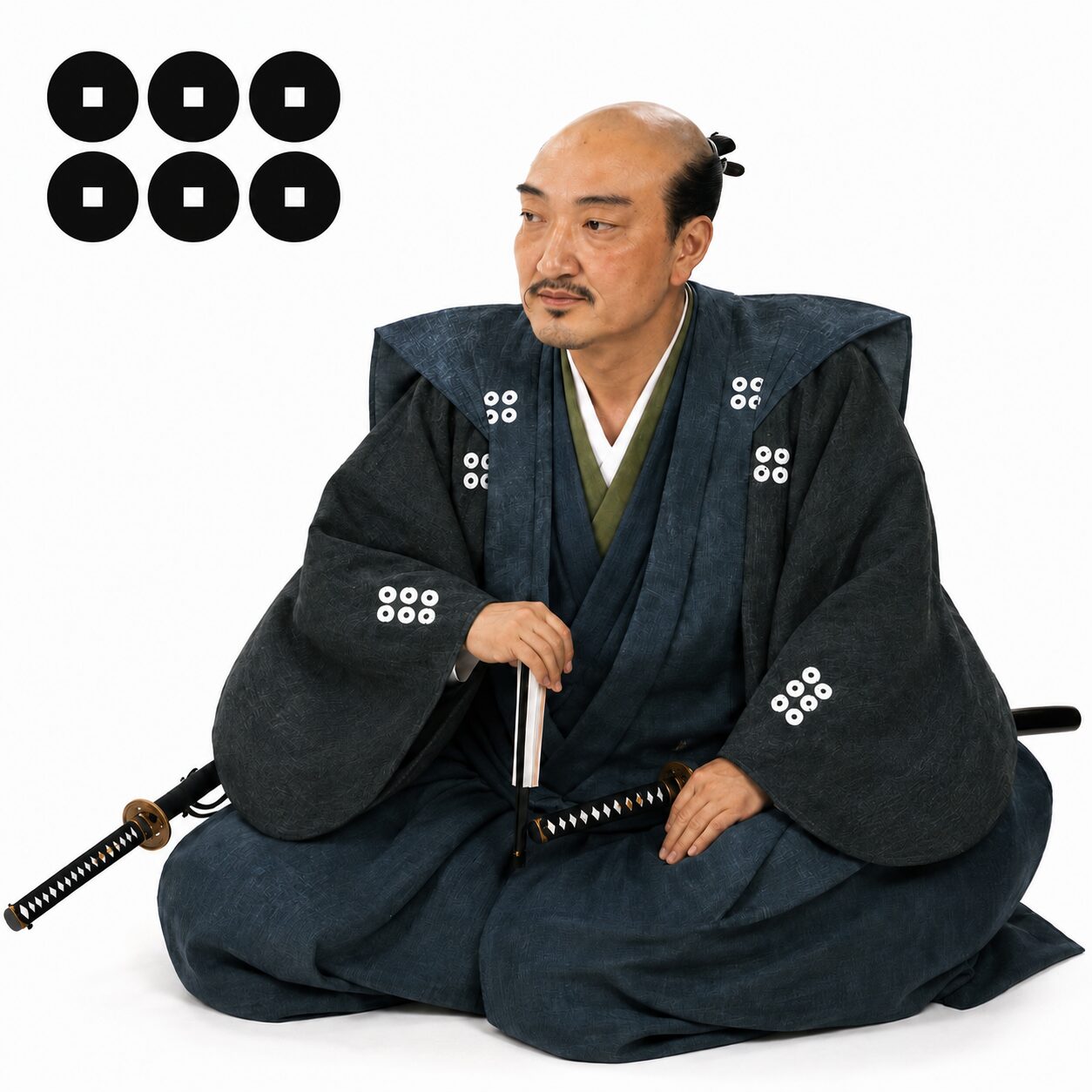
Sanada Yukimura (Nobushige) — The Greatest Warrior in Japan, the Hero Who Cornered Ieyasu at the Siege of Osaka
- Sanada Yukimura in 3 Points
- The Mainstream View — The Established Account Found in Textbooks
- Multiple Theories — Exploring Possibilities from Various Angles
- Viewed Strategically
- Famous Words and Sayings of This Warlord
- Anecdotes and Episodes
- Timeline
- Family and Personal Relationships
- Related Historic Site Map / Model Travel Courses
- Related Articles
- References
Sanada Yukimura in 3 Points
- Born the second son of Sanada Masayuki, he sided with the Western Army together with his father at Sekigahara and was confined for 14 years at Kudoyama.
- At the Siege of Osaka he served the Toyotomi side, charging Ieyasu’s command post three times and earning the praise of being the “greatest warrior in Japan.”
- His real name was “Nobushige.” The name “Yukimura” was not used in actual history; it spread from Edo-period war chronicles and storytellers’ tales.
The Mainstream View — The Established Account Found in Textbooks
Birth and Years as a Hostage (1567–1585)
Sanada Nobushige (Yukimura) was born in Eiroku 10 (1567) as the second son of the Sanada house, whose base was Chiisagata District in Shinano Province (around present-day Ueda, Nagano Prefecture). His father was Sanada Masayuki, and his mother was Yamate-dono. His childhood name was Obenmaru, and he later styled himself Genjirō. The name “Nobushige” is said to have been taken after Takeda Nobushige — the younger brother of Takeda Shingen, whom his father Masayuki served, a warrior of outstanding valor who fell at the Battle of Kawanakajima.
The Sanada house had originally been no more than a minor lord of Shinano, but by serving Shingen it came to the fore and grew into a power straddling both Shinano and Kōzuke. However, after the fall of Takeda Katsuyori in Tenshō 10 (1582), it fell to Nobushige’s father Masayuki to chart a course of survival as a “double-dealing schemer” amid the giant powers of Oda Nobunaga, Hōjō Ujimasa, Tokugawa Ieyasu, and Uesugi Kagekatsu.
In Tenshō 13 (1585), with the conflict against Tokugawa Ieyasu, Masayuki sent his second son Nobushige to Echigo as a hostage to Uesugi Kagekatsu. The 19-year-old Nobushige received an education as a Sengoku daimyō under Kagekatsu and Naoe Kanetsugu in Echigo, learning the house style and politics of the Uesugi.
Submission to Toyotomi Hideyoshi and Life as a Hostage (1585–1600)
In Tenshō 14 (1586), when Masayuki submitted to Toyotomi Hideyoshi, Nobushige’s place of hostage shifted to Osaka Castle. Taken into Hideyoshi’s favor, Nobushige spent his days as a warrior attending closely at Osaka Castle under the Toyotomi regime. Nobushige’s later skill in battlefield command and his political sense can be said to have been cultivated at the heart of the Toyotomi regime during this Osaka period.
Through Hideyoshi’s mediation, Nobushige took as his legal wife Chikurin-in, daughter of Ōtani Yoshitsugu. Ōtani Yoshitsugu was the lord of Tsuruga in Ōmi at 50,000 koku and one of the core figures of the Toyotomi regime, known also as the sworn friend of Ishida Mitsunari. By this Nobushige became deeply tied to the central network of the Toyotomi regime.
Meanwhile, his elder brother Sanada Nobuyuki (Nobuyuki) took as his wife Komatsuhime, the adopted daughter of Tokugawa Ieyasu (the natural daughter of Honda Tadakatsu). The structure of the elder brother on the Tokugawa side and the younger brother on the Toyotomi side became the foreshadowing of the Sanada house’s split at the later Sekigahara and Siege of Osaka.
Sekigahara and the Parting at Inubushi (1600)
When Hideyoshi died in Keichō 3 (1598), the Toyotomi regime was shaken by the conflict between Tokugawa Ieyasu and the faction of Ishida Mitsunari. In Keichō 5 (1600), while Ieyasu was campaigning in the east to subdue Uesugi Kagekatsu of Aizu, Ishida Mitsunari raised his army. The curtain rose on the Battle of Sekigahara.
The three Sanada — father and sons — who were heading toward Aizu in Ieyasu’s train received Mitsunari’s secret letter on the 21st day of the 7th month of Keichō 5, at Inubushi in Shimotsuke Province (present-day Inubushi-machi, Sano, Tochigi Prefecture). The three — father Masayuki, eldest son Nobuyuki, and second son Nobushige — held a secret council, and as a result decided that Masayuki and Nobushige would join the Western Army, and Nobuyuki the Eastern Army. This is the “Parting at Inubushi.”
There is a view that it was “a dispersal strategy to preserve the Sanada house,” and also a theory that “Masayuki simply sympathized with Ishida Mitsunari, who aimed to capture Ueda.” In any case, from this moment the Sanada house came to fight literally divided in two (see Theory 5).
The Second Battle of Ueda — Pinning Down Hidetada’s Army (1600)
Masayuki and Nobushige returned to their base, Ueda Castle in Shinano, and began resistance against the Tokugawa side. Ieyasu’s heir Tokugawa Hidetada, leading an army of 38,000, was advancing west along the Nakasendō, intending to join the main battle at Sekigahara. But along the way he met the resistance of the Sanada father and son at Ueda Castle, and Hidetada’s army, taking too long over the assault, failed to make it to the main battle. This is the Second Battle of Ueda (9th month of 1600).
The good fight of the Sanada father and son was dramatic. With only about 2,500 castle troops, against Hidetada’s army of 38,000 bearing down on them, they inflicted great losses through skillful ambush and luring tactics. The Tokugawa retainer Honda Masanobu advised Hidetada that “Ueda Castle should be left aside and the march hastened,” but Hidetada, out of obstinacy, continued the assault. As a result, he committed the fatal blunder of arriving late at the main battle of Sekigahara.
The main battle ended in a single day in an Eastern Army victory, and Sekigahara was settled on the 15th day of the 9th month. The good fight of the father and son could not overturn the larger situation, and Masayuki and Nobushige surrendered. Though they escaped the death penalty, through the pleas for clemency of the elder brother Nobuyuki and the father-in-law Honda Tadakatsu, they were sentenced to confinement at Kudoyama at the foot of Mount Kōya in Kii Province (present-day Kudoyama-chō, Ito District, Wakayama Prefecture).
→ For details, see the battle article “Battle of Ueda.”
The Fourteen Years at Kudoyama (1600–1614)
In the winter of Keichō 5 (1600), Nobushige was 34, his father Masayuki 55. The two were exiled to Kudoyama. The 14 years of confined life that began here became the harshest period of Nobushige’s life.
Kudoyama was a poor village at the foot of Mount Kōya. The Sanada father and son went on waiting in belief of a pardon, but Ieyasu’s wariness never relaxed. Many retainers withdrew to Shinano, and only a few followers such as Takanashi Naiki and Aoyagi Seian remained around Nobushige. They depended for living expenses on remittances from the elder brother Nobuyuki, who had become lord of the Matsushiro Domain in Shinshū, passing their days in poverty.
During this time Nobushige shaved his head and took the name “Kōhaku.” His father Masayuki continued his campaign for pardon to Ieyasu in belief of clemency, but died at the Sanada residence in Kudoyama on the 4th day of the 6th month of Keichō 16 (1611), at age 65. He is said to have left the will, “My one regret is that my remains cannot be buried in the land of Shinshū.” The father’s death cast a deep shadow over Nobushige’s heart.
A tradition also survives that during the Kudoyama period Nobushige began the manufacture of a braid called the “Sanada braid” through his exchanges with local residents. This is said to have become an economic support for the Sanada house, and to have spread to Kishū and Shikoku. After his father’s death, Nobushige frequently wrote letters to relatives and acquaintances in Shinshū, with lines lamenting his own aging also to be seen.
Entry into Osaka and the Construction of the “Sanada-maru” (1614)
In Keichō 19 (1614), the relations between Ieyasu and the Toyotomi house finally ruptured. Beginning with the Hōkō-ji Bell Inscription Incident (the affair in which Ieyasu took issue with the bell inscriptions “Kokka Ankō” and “Kunshin Hōraku”), the Toyotomi house was forced into all-out confrontation with the Tokugawa. Toyotomi Hideyori called upon the masterless warriors who had once been beholden to Toyotomi, scattered across the land, to enter Osaka Castle.
That invitation reached Nobushige as well. In the 9th month of the same year, Nobushige, accompanied by his heir Daisuke and leading his retainers, escaped Kudoyama and entered Osaka Castle. The Toyotomi side is said to have given him a preparation grant of 200 pieces of gold and 30 kan of silver. Nobushige was 48. It was a return to the battlefield after 14 years.
Among the renowned masterless warriors gathered at Osaka Castle were, besides Nobushige, Gotō Matabei Mototsugu (a former chief retainer of the Kuroda house), Mōri Katsunaga (son of Mōri Yoshinari), Chōsokabe Morichika (the former lord of Tosa), and Akashi Teruzumi (a Ukita retainer), who were styled the “Five Men of Osaka.”
In the 11th month of Keichō 19 (1614), the Winter Siege of Osaka opened. Nobushige built an outwork, the “Sanada-maru,” at the weak point on the southern side of Osaka Castle (south of the Tamatsukuri Gate). It was an independent crescent-shaped redoubt, a fortress equipped with a dry moat, earthworks, and gun-ports.
On the 19th day of the 11th month, the Tokugawa side’s Maeda Toshitsune, Ii Naotaka, Matsudaira Tadanao, and others launched an attack on the Sanada-maru, but Nobushige drew the enemy in fully before adding a volley of fire, said to have inflicted close to 10,000 casualties on the Tokugawa side (the actual figures are debated). The Battle of Sanada-maru was a feat of arms that made Nobushige’s name resound at a stroke.
The Winter Siege of Osaka ended in the 12th month through a peace agreement. But as a condition of the peace, Ieyasu filled in not only the outer moat but also the inner moat of Osaka Castle, and the Sanada-maru too was destroyed. Osaka Castle, become a “naked castle,” was now in a state that could no longer withstand a siege defense.
The Summer Siege of Osaka — The Charge on Ieyasu’s Command Post (1615)
In the 4th month of Keichō 20 (1615), the Tokugawa and Toyotomi sides ruptured once more. The Summer Siege of Osaka opened. The Toyotomi side numbered about 50,000, the Tokugawa side 155,000. With a siege defense now impossible, the Toyotomi side had no chance of victory other than to aim for Ieyasu’s head in a field battle.
On the 6th day of the 5th month, Nobushige suffered the blow of Gotō Matabei being isolated and falling in the Battle of Dōmyōji–Konda. Nobushige, who had set out to relieve Matabei, arrived late because of fog, said to have reached the battlefield after the Gotō force had been annihilated.
On the 7th day of the 5th month came the Osaka side’s last decisive battle, the Battle of Tennōji–Okayama. Nobushige placed his command post at Chausuyama in Tennōji. This was the very ground where, in the previous year’s Winter Siege, Ieyasu himself had set up his own command post — a place of fateful connection. Nobushige’s force was about 3,500, against Echizen Matsudaira Tadanao’s force of 15,000.
With the resolve of certain death, Nobushige made three charges toward Ieyasu’s command post. The Sanada force broke through the Tokugawa defenses one after another, pressing close enough to knock down the standard of Ieyasu’s command post. Ieyasu is said to have twice let slip the words “I shall commit seppuku” (there is a record in the Mikawa Monogatari). The standard of Ieyasu, never toppled since Mikatagahara, lay rolling on the ground — a scene rarely seen in Sengoku history.
But outnumbered, the Sanada force was gradually driven into a corner. Nobushige withdrew to Yasui Shrine near Shitennō-ji (present-day Tennōji Ward, Osaka City), and while resting at the foot of a pine within the precincts, he was discovered by Nishio Nizaemon (Sōji) of the Echizen Matsudaira corps and slain. He was 49.
Regarding Nobushige’s end, besides the theory of being attacked while resting at Yasui Shrine, several theories survive — a theory of self-immolation, a theory of being attacked while tending to soldiers, and a theory that Ieyasu was killed (the legend of Ieyasu’s grave at Nansō-ji in Sakai) (see Theory 2).
On the same day, Nobushige’s eldest son Daisuke also took his own life within Osaka Castle, following Hideyori in death. He was 16.
→ For details, see the battle article “Siege of Osaka.”
The “Greatest Warrior in Japan” Evaluation and the Fall of the Toyotomi House
The next day, the 8th day of the 5th month, Osaka Castle went up in flames, and Toyotomi Hideyori and his mother Yodo-dono took their own lives. The main Toyotomi house was destroyed. The Sengoku age of war, which had lasted about 150 years since the Ōnin War, ended here. The era name was changed in the 7th month from “Keichō” to “Genna,” and the Edo shogunate proclaimed at home and abroad the “Genna Embu” — that is, the pacification of the realm.
Nobushige’s manner of fighting was praised by friend and foe alike. The most famous is the letter of Shimazu Iehisa of Satsuma, who had not taken part in the Siege of Osaka. “Sanada, the greatest warrior in Japan, a feat of arms unmatched in past or present” — this single line became the occasion for handing Nobushige down to later ages as an imperishable hero (see Theory 3). It is said that after the inspection of Nobushige’s head, Ieyasu said, “Take after Yukimura’s valor,” and divided his remaining hair among his retainers.
After Nobushige’s death, his valor was amplified throughout the Edo period by storytelling, war chronicles, and woodblock prints, and he became established as a popular hero together with the name “Yukimura.” That he came to be called “Yukimura” rather than by his real name “Nobushige” was likewise an event amid this Edo-period popularity (see Theory 1).
Multiple Theories — Exploring Possibilities from Various Angles
Theory 1: “Yukimura” Is a Name Not Used in Actual History — His Real Name Was Nobushige
The name “Sanada Yukimura” is widely known as the representative heroic name of a Sengoku warlord. However, recent research has made clear that “Yukimura” is a name not used in actual history.
Confirmation in contemporary sources:
Beginning with Nobushige’s autograph letters, not a single reliable source from his lifetime uses the name “Yukimura.” Just before the Battle of Dōmyōji, Nobushige granted to six retainers who had fought bravely certificates of commendation, recording their war merits on shogi-piece-shaped pieces of wood. These certificates bear the cipher signature of “Nobushige,” confirming that Nobushige styled himself “Nobushige” down to the day before his death. Because of Nobushige’s distinctive writing habit of overwriting his cipher onto the lower half of the character “shige,” later transcriptions miscopied it as “Nobuyori” or “Nobutae,” but it has been determined that the form of the cipher is Nobushige’s own.
Two transcribed documents signed “Yukimura” survive, but the originals do not, and from contradictions in their contents both have been found to be forgeries.
The origin of the name “Yukimura”:
The oldest text in which the name “Yukimura” appears is the war chronicle Nanba Senki, published in Kanbun 12 (1672). It was a work 57 years after Nobushige’s death, in an age when most of the parties involved had already passed away. The author, conscious of the censorship of the Tokugawa shogunate, likely avoided using Nobushige’s real name as it was and adopted “Yukimura” as a fictional name.
Thereafter, in the Sanada Sandaiki (late Edo period) and in popular performing arts such as storytelling and jōruri, the name “Yukimura” spread explosively. For the common people of Edo, the exploits of the Sanada, who had cornered the Tokugawa twice, was a refreshing anti-authority hero tale, and “Yukimura” became established as a heroic name carrying more reality than his real name.
In time, even the official sources of the shogunate and the Shinshū Matsushiro Domain came to adopt the name “Yukimura.” This was the result of “Yukimura” having already become established as a common name, and it was only after the verification of modern historiography that the original real name “Nobushige” was recovered.
This article, following custom, uses both the common appellation “Yukimura” and, where actual history is emphasized, “Nobushige.” The NHK Taiga drama Sanada Maru (2016) consistently adopted “Nobushige,” and in recent years the “Nobushige” notation has become academically mainstream.
Theory 2: The End at the Summer Siege of Osaka — Multiple Traditions
On the 7th day of the 5th month of Keichō 20 (1615), Nobushige fell in the Battle of Tennōji–Okayama at the Summer Siege of Osaka. Regarding his end, several traditions survive besides the common account.
Common account: the theory of being slain while resting at Yasui Shrine
The Sanada force, having charged Ieyasu’s command post three times, was gradually worn down and withdrew to Yasui Shrine near Shitennō-ji (present-day Ōsaka, Tennōji Ward, Osaka City). While the exhausted Nobushige was resting at the foot of a pine within the precincts, he was discovered by Nishio Nizaemon (Sōji) of the Echizen Matsudaira Tadanao corps and slain. Nobushige is said to have left the words, “Take my head as your trophy of merit.” This is the common account widely circulated in books related to the Osaka Castle keep and in the tradition of Yasui Shrine.
Variant 1: the self-immolation theory
The theory that the deeply wounded Nobushige, realizing that continued combat was impossible, took his own life within the precincts of Yasui Shrine. It is a tradition emphasizing the pride of a warrior, in choosing self-decision over having his head taken by the Tokugawa side.
Variant 2: the theory of being attacked while tending soldiers
The theory that Nobushige was discovered and slain by the Echizen Matsudaira corps while tending to wounded retainers beside the shrine. It is a tradition emphasizing a personality that cared for his retainers, rather than the strictness of a warrior.
Variant 3: the theory that Ieyasu was killed (the legend of Ieyasu’s grave at Nansō-ji in Sakai)
The tradition that, at the Summer Siege of Osaka, Ieyasu himself was mortally wounded by Nobushige and died. Ieyasu is said to have died secretly at Nansō-ji in Sakai, and his grave is said to survive within the temple precincts. The substance of this legend is that the later Ieyasu was a body double.
At Nansō-ji there does in fact exist a nameless egg-shaped pagoda handed down as “Ieyasu’s grave,” which has become a tourist attraction. A local oral tradition from the Edo period onward survives, and it was repeatedly taken up in postwar novels and history readers. However, there is no primary source to corroborate it, and it is reliably recorded that Ieyasu afterward continued his politics at Sunpu and died in Genna 2 (1616). The theory of Ieyasu’s death is not recognized as historical fact, but it holds a deep-rooted popularity as a legend conveying the ferocity of Nobushige’s fighting.
These various theories can all be said to reflect the later desire to “close out Nobushige’s end dramatically.” The most reliable from the standpoint of primary sources is the common account, recorded in works such as the Tōdaiki as the war merit of Nishio Nizaemon taking Nobushige’s head.
Theory 3: The “Greatest Warrior in Japan” Evaluation — Contemporary Praise or Later Embellishment
“The greatest warrior in Japan” — this appellation is repeatedly quoted even today as the evaluation that symbolizes Nobushige. Its source is the letter of Shimazu Iehisa (the third son of the Satsuma lord Shimazu Yoshihiro). Iehisa did not take part in the Siege of Osaka, and his evaluation is by hearsay, but it is an important source plainly showing the view of Sanada Nobushige held by the warlords of the time.
The text of Shimazu Iehisa’s letter (partial, in modern paraphrase):
“Sanada, the greatest warrior in Japan, a feat of arms unmatched in past or present.
Sanada’s surprise stratagems numbered in the thousands. Indeed, ever since his Shinano days, he opposed the Tokugawa several times and never once suffered a reverse.
If Sanada is not to be called a hero, then whom shall we so call?
Women and children alike, hearing his name, know his splendor.
He appeared there and hid here, fighting as he turned like fire.
Thought to be in front, he was behind.
Sanada raised a red banner on Chausuyama, his armor all in red, like azaleas in bloom.
He died in battle on the field. A feat of arms unmatched in past or present.”
The significance of this evaluation:
Iehisa was not a person personally acquainted with Nobushige, nor did he take part in the Siege of Osaka. That he nevertheless set down such fervent praise in a letter shows that Nobushige’s manner of fighting had already become legendary at the time. The expression “the greatest warrior in Japan” is exceptional as an evaluation by a contemporary.
There is also a tradition that Ieyasu’s close aide Honda Masazumi evaluated Nobushige as “the finest bowman in Japan,” and Ieyasu himself, after the inspection of Nobushige’s head, is said to have said, “Take after Yukimura’s valor,” and divided his remaining hair among his retainers. This praise, regardless of friend or foe, powerfully drove forward Nobushige’s heroization.
Relation to later embellishment:
However, the splendor of the scene of the charge on Ieyasu’s command post — “Ieyasu twice resolved on seppuku,” “the standard was toppled,” “an event unseen since Mikatagahara” — contains much later embellishment by war chronicles. The Mikawa Monogatari has a record that Ieyasu said, “Here I shall cut my belly,” but the more detailed anecdotes rely on Edo-period war chronicles such as the Nanba Senki.
As reality, that Nobushige pressed close to Ieyasu’s command post can be confirmed from several contemporary sources. But the concrete depictions contain much that reflects the later desire to view Nobushige as a hero. To distinguish the fact of the “charge on Ieyasu’s command post” from the legend of “Ieyasu’s resolve on seppuku” is the stance of modern research.
Theory 4: The Sanada Ten Braves Are a Complete Fabrication — The Meiji-Era Tachikawa Bunko
“Sarutobi Sasuke,” “Kirigakure Saizō,” “Miyoshi Seikai Nyūdō,” “Miyoshi Isa Nyūdō,” “Anayama Kosuke,” “Unno Rokurō,” “Mochizuki Rokurō,” “Nezu Jinpachi,” “Yuri Kamanosuke,” “Kakei Jūzō” — the “Sanada Ten Braves,” said to have served Sanada Nobushige, are a representative cast of characters of Japanese Sengoku entertainment. However, they are all fictional figures and not retainers of the historical Nobushige.
Creation by the Tachikawa Bunko:
The framework of the Sanada Ten Braves became established in the Tachikawa Bunko (1911–1924), published by the Osaka publisher Tachikawa Bunmeidō from the end of Meiji into the Taishō period. It was a series of storytelling booklets for boys that became an explosive craze among the boys of the time. Sarutobi Sasuke and Kirigakure Saizō in particular gained popularity, becoming the prototype of the image of Iga and Kōga ninja that connects to later children’s literature, boys’ manga, anime, and games.
The Edo-period prehistory:
That said, the Tachikawa Bunko did not create entirely from nothing. The late-Edo war chronicle Sanada Sandaiki has several fictional figures appear as Nobushige’s retainers. These became the prototype of the Tachikawa Bunko and developed into the character designs of the Ten Braves handed down to the present.
For example, the model for “Anayama Kosuke” is thought to be the real retainer Anayama Kozaemon. “Miyoshi Seikai Nyūdō and Isa Nyūdō” may have been modeled on the real Miyoshi Masayasu, Masakatsu, and others. But there is no historical fact that they performed brilliantly as Nobushige’s close aides at the Siege of Osaka.
The historical Nobushige’s close aides:
The figures that can be confirmed as Nobushige’s close aides in his own time are a very few, such as Takanashi Naiki, who followed him from the Kudoyama period, Aoyagi Seian, Kawara Tsunaie, and Yazawa Yoriyuki. At the Siege of Osaka too, these few chief retainers and the masterless warriors gathered at Osaka were the core of Nobushige’s strength. There is no fact that a “ninja band” like the Ten Braves supported Nobushige.
Even so, the Sanada Ten Braves are one of the most successful character groups that Japanese fiction has produced, and they continue to be loved to the present as material for novels, films, manga, and games. The premise of modern understanding is to “enjoy them as legendary beings separate from actual history.“
Theory 5: The Parting at Inubushi — The Motive for the Sanada House’s Division
The secret council of the three Sanada — father and sons — held at Inubushi in Shimotsuke Province in the 7th month of Keichō 5 (1600), just before Sekigahara. The “Parting at Inubushi,” in which father Masayuki and second son Nobushige decided to join the Western Army while eldest son Nobuyuki joined the Eastern Army, is known as the moment that determined the fate of the Sanada house. There are still several interpretations of the motive for this decision.
Theory A: the “dispersal strategy to preserve the house” theory
The most commonly told interpretation. The father and sons split east and west so that, whichever won, the Sanada bloodline and house name would survive. In fact, after Masayuki and Nobushige were punished following Sekigahara, the elder brother Nobuyuki preserved the headship and main territory of the Sanada house, continuing until the Meiji era as lord of the Matsushiro Domain at 100,000 koku under the Tokugawa shogunate. As a matter of outcome, this strategy can be said to have succeeded splendidly.
This interpretation has been the established view ever since the Edo-period war chronicle Sanada Sandaiki, and has been repeatedly adopted in modern historical novels and Taiga dramas. As wisdom for surviving the reality of the Sengoku age while keeping the bonds of family, it is a storyline that appeals to modern sensibilities as well.
Theory B: the “simple judgment of interest” theory
In recent research, the view pointing to a more realistic motive has also increased. Masayuki was close to Ishida Mitsunari, and decided on participation in the Western Army upon receiving Mitsunari’s secret letter. Nobuyuki was the husband of Komatsuhime, Ieyasu’s adopted daughter, and from his relationship with his father-in-law Honda Tadakatsu had no choice but to choose the Eastern Army. Rather than a “strategy to preserve the house,” the reality is closer to each naturally splitting according to the position and network in which he was placed.
There are signs that Masayuki himself, after the Sekigahara campaign, did not doubt that he would be pardoned and restored to his former territory. Even after being confined at Kudoyama, he died while still continuing his campaign for pardon to Ieyasu. This suggests not so much a conviction of the “success of a dispersal strategy” as a belief that his own choice had been correct.
Theory C: the “father Masayuki’s private grudge against Ieyasu” theory
The view that Masayuki, who had a record of repelling Ieyasu’s army at the First Battle of Ueda (1585), held a deep-rooted spirit of rivalry against Ieyasu. After Hideyoshi’s death, his strong revulsion against Ieyasu’s drift toward autocracy was the main cause of his joining the Western Army.
These theories are not mutually exclusive, and they likely acted in compound. “Preserving the house,” “personal networks,” “loyalty to his lord Hideyoshi,” and “antipathy toward Ieyasu” intertwined, and as a result led to the dramatic decision of the Sanada house’s division — this is the point reached by modern historiography.
Theory 6: The Fourteen Years at Kudoyama and the Motive for Entering Osaka
For the 14 years after Sekigahara, Nobushige lived in confinement at Kudoyama in Kishū. The death of his father Masayuki in Keichō 16 (1611), and then his entry into Osaka in Keichō 19 (1614) — regarding Nobushige’s state of mind and his decision in this interval, there are several interpretations.
The privation of the Kudoyama period:
That Nobushige’s Kudoyama period was a very hard life is corroborated by sources as well. He depended on remittances from his elder brother Nobuyuki, most of his retainers withdrew to Shinshū, and only a few retainers remained around Nobushige. In the letters Nobushige sent to relatives and acquaintances in Shinshū, lines lamenting his aging are to be seen, such as “My teeth have fallen out, my beard has gone white; I have become a pitiable old man” (Documents of the Sanada Family).
Children were also born between him and a local woman, and besides the heir Daisuke who accompanied him into Osaka in later years, several sons and daughters were born in this period. It can be inferred that there was a certain degree of family life, modest though it was.
The motive for entering Osaka:
- (1) Breaking out of financial privation: the view that a real economic problem was one motive, with the Toyotomi side said to have given a preparation grant of 200 pieces of gold and 30 kan of silver.
- (2) Restoring the honor of the Sanada house: the interpretation that Nobushige, who had nearly lost his name as a warrior through 14 years of confinement, wished to leave a martial name on a last battlefield.
- (3) Duty as a warrior: the loyalty argument that, having served Toyotomi Hideyoshi and received an invitation from his heir Hideyori, to answer it was the way of a warrior.
- (4) Inheriting father Masayuki’s will: the interpretation that it was to carry on the will of his father, who had bequeathed opposition to Ieyasu.
The letter to his sister’s husband:
About a month before the opening of the Summer Siege of Osaka, Nobushige sent a letter to his sister’s husband Oyamada Shigemasa (a retainer of his elder brother Nobuyuki). “I am surely resolved to die in battle” — it sets down his resolve to face a battle from which he could never return alive. It is also said that after the Winter Siege he was solicited by Ieyasu with the offer of a whole province of Shinano if he would defect to the Tokugawa side, but Nobushige refused this.
If he had moved by the realistic calculation of “preserving the house,” he could have relied on his brother Nobuyuki and surrendered to the Tokugawa side. Nobushige’s choice to instead fight and die as a member of the Toyotomi side can be said, from a modern viewpoint, to be an action that upheld to the last the aesthetic of a warrior.
The view that the long period of biding his time at Kudoyama tempered the spirit of the man Nobushige and made possible the brilliant battlefield command of his last years is a shared interpretation in modern historical novels and Taiga dramas. As the warlord who best fits the Japanese aesthetic of “rising again after a fall,” Nobushige continues to be loved even now.
Viewed Strategically
When Sanada Nobushige is compared with other famed Sengoku generals, three points stand out: his “genius for the use of terrain,” his “tactics of reversal from inferiority,” and his “power of symbolic stagecraft.“
First, the use of terrain. The characteristic of Nobushige’s tactics lies in making the maximum use of terrain. At the Second Battle of Ueda, he toyed with Hidetada’s army by skillfully using the castle town, fields, and rivers around Ueda Castle. The Sanada-maru of the Winter Siege of Osaka was a conception of deliberately building an independent outwork at the weak southern side of Osaka Castle, drawing the Tokugawa side in and annihilating them. This was a tactical talent inherited from his father Masayuki, and it also carried on the tradition of the Shinshū warlords since Takeda Shingen.
Second, tactics of reversal from inferiority. Nearly all of Nobushige’s battles were from overwhelming inferiority. The Second Battle of Ueda, 2,500 against 38,000; the Battle of Sanada-maru, 5,000 against the Tokugawa main force; the Battle of Tennōji–Okayama, 3,500 against 15,000. Even so, Nobushige continued to deal fatal blows to the enemy. This was not mere bravery but was based on a cool calculation that read the enemy’s psychology. The very conception of aiming at Ieyasu’s command post at the Summer Siege of Osaka is a rational judgment that saw through the sole chance of victory making up for the difference in strength.
Third, the power of symbolic stagecraft. The bright-red armor, banners, and flags called the “Sanada Red Regiment” emitted a presence obvious to every eye on the battlefield. This carried on the tradition of the red-armored corps of Takeda Shingen’s retainers Obu Toramasa and Yamagata Masakage, and shows that Nobushige inherited Takeda-style military learning through his father Masayuki. The figure of Nobushige raising a red banner at Chausuyama and charging in a guise like blooming azaleas was an impressive sight specially noted even in Shimazu Iehisa’s letter.
On the other hand, Nobushige’s strategy also had a great limit. He did not possess the power to overturn the larger situation. His good fight at the Second Battle of Ueda delayed Hidetada’s army, but did not change the outcome of the main battle at Sekigahara. The Battle of Sanada-maru too remained a local victory, and could not overturn the siege of Osaka Castle itself. The charge on Ieyasu’s command post, too, pressed close to the very brink, but could not take Ieyasu’s head.
This was less a limit of Nobushige as an individual than a limit of the scale of the Sanada house. From his father Masayuki’s generation, they had been no more than a minor lord of one province, Shinano, with no power to organize a great army of their own. The force Nobushige led at the Siege of Osaka was likewise nothing more than the subordinates given to him and several thousand masterless warriors. Nobushige could never, to the last, possess the base to deploy strategy as a daimyō like Takeda Shingen or Uesugi Kenshin.
Even so, the reason Nobushige has kept overwhelming popularity to the present is surely that his way of life embodies not the mere tale of a victor but the “aesthetic of choosing to lose.” Though he could have become a daimyō of a whole province of Shinano by surrendering to the Tokugawa side, he did not choose it and chose to die as a member of the Toyotomi side. The 14 years of biding his time at Kudoyama, and the brilliant battle death at the last. As the warlord who most embodies the Japanese aesthetic of “dying for righteousness, dying beautifully,” Nobushige has become, alongside Date Masamune, Ishida Mitsunari, and Kusunoki Masashige, a symbol of the “hero of the defeated” in Sengoku history.
Famous Words and Sayings of This Warlord
“I am surely resolved to die in battle.”
A passage from a letter sent about a month before the opening of the Summer Siege of Osaka to his sister’s husband Oyamada Shigemasa (a retainer of his elder brother Nobuyuki). Meaning “I am resolved that I shall certainly die in battle,” it is a precious autograph word showing that Nobushige foresaw his own death and had hardened his resolve. The state of mind of a warrior facing a battle from which he could not return alive seeps from the calm prose.
— Source: Documents of the Sanada Family (Nobushige’s autograph letter)
“Take my head as your trophy of merit.”
Handed down as the words of the exhausted Nobushige when, after the charge on Ieyasu’s command post at the Summer Siege of Osaka on the 7th day of the 5th month of Keichō 20 (1615), he was discovered within the precincts of Yasui Shrine by the enemy soldier Nishio Nizaemon (Sōji). Realizing that he was wounded and could no longer continue the fight, Nobushige is said to have shown a warrior’s courtesy even to a nameless enemy soldier and offered his head with dignity. It is widely known as an anecdote showing the pride of a warrior’s last moments. However, the source is an Edo-period war chronicle, and its historicity is not confirmed.
— Source: Nanba Senki, Sanada Sandaiki, etc. (later war chronicles)
“My teeth have fallen out, my beard has gone white; I have become a pitiable old man.”
A passage from a letter that Nobushige, during his confinement at Kudoyama, sent to relatives and acquaintances in Shinshū. It is a word lamenting that Nobushige, in his late 40s, had grown old over 14 years of confined life kept away from the battlefield. It is impressive as an autograph word conveying the sorrow and humanity of a Sengoku warlord, and is one of the few primary sources conveying Nobushige’s state of mind in the Kudoyama period.
— Source: Documents of the Sanada Family (Nobushige’s autograph letter)
“Though the Kantō host is said to number a million, it seems there is not one true man among them.”
Said to be the words with which Nobushige sneered, after clashing with the army of Date Masamune at the Battle of Dōmyōji in the Summer Siege of Osaka, at Masamune withdrawing without pressing the pursuit. It means “the Tokugawa side calls itself a million, but there is not one true man among them.” It is a Sengoku-warlord-like piece of bravado in which a warrior’s pride and a caustic evaluation of the opponent coexist. However, the source is a later war chronicle such as the Nanba Senki, and its historicity is not confirmed. In the actual Battle of Dōmyōji, both Nobushige and Masamune took losses and it ended in a draw.
— Source: Nanba Senki, etc. (later war chronicles)
No death poem survives.
Though death poems survive for many Sengoku warlords, no reliable death poem for Sanada Nobushige (Yukimura) remains in the sources. There is a tradition that he left the words “Take my head as your trophy of merit” when slain at Yasui Shrine, but this cannot be called a death poem. Edo-period war chronicles contain several poems styled as Nobushige’s “death poems,” but all are thought to be later fabrications. For Nobushige, who continued fighting on the battlefield down to that day while resolved on death, perhaps there was no leisure to compose a death poem.
— Source: Documents of the Sanada Family, Tōdaiki, etc.
Anecdotes and Episodes
The Name “Nobushige” — Taking After Takeda Shingen’s Brother
The name Nobushige is said to have been given in honor of Takeda Nobushige (Tenkyū Nobushige), the younger brother of Takeda Shingen, whom his father Masayuki served. Takeda Nobushige was a warrior of outstanding valor who fell at the Fourth Battle of Kawanakajima in Eiroku 4 (1561), protecting his elder brother Shingen — known for the anecdote that made Shingen lament that he had “lost his right arm.” At the time of Nobushige’s birth, Masayuki was in Kōfu as a close aide of Shingen, and gave the name of the revered Tenkyū Nobushige to his second son. Within the name Nobushige itself were placed the father’s loyalty to Shingen and his attachment to the Takeda house. Ironically, the Nobushige given this name would, after the fall of the Takeda, fight the Tokugawa twice and finally scatter brilliantly at Osaka.
— Source: Documents of the Sanada Family, traditions of the Shinshū line
Life as a Hostage at 19 — Under Uesugi Kagekatsu
In Tenshō 13 (1585), the father Masayuki, driven into conflict with Tokugawa Ieyasu, sent his second son Nobushige to Echigo as a hostage to Uesugi Kagekatsu. The young Nobushige, at 19, learned the house style and politics of the Uesugi below Kasugayama Castle. Kagekatsu was known as a taciturn and conscientious figure, and became for Nobushige a model of an upright lord. Naoe Kanetsugu too gave Nobushige a strong impression, and the Uesugi spirit of “righteousness” is said to have influenced Nobushige throughout his life. That Nobushige later chose death as a member of the Osaka side, upholding loyalty to Toyotomi Hideyori, is also said to have had his youthful Echigo experience as a background.
— Source: Letters of Nobushige, materials around the Naoe Letter
The Osaka Period in Hideyoshi’s Favor
The next year, Tenshō 14 (1586), when Masayuki submitted to Hideyoshi, Nobushige’s place of hostage shifted from the Uesugi house to Osaka Castle. Hideyoshi took a liking to Nobushige and had him serve as his own close attendant. Through Hideyoshi’s mediation, Nobushige took as his legal wife Chikurin-in, daughter of Ōtani Yoshitsugu, and became deeply tied to the central network of the Toyotomi regime. The Nobushige of the Osaka period is inferred to have come into contact with the culture of Kyoto and Osaka and acquired the cultivation of waka and the tea ceremony. That he could leave behind many waka and letters in the later Kudoyama period was precisely thanks to this cultivation at Osaka. When Nobushige later fought as a member of the Osaka side, that Osaka Castle was also the ground of his own youth.
— Source: Documents of the Sanada Family, materials related to Toyotomi retainers
The Parting at Inubushi — A Night’s Secret Council with Father and Brother
On the 21st day of the 7th month of Keichō 5 (1600), at Inubushi in Shimotsuke Province along the way to Aizu in Ieyasu’s train, the three Sanada received Ishida Mitsunari’s secret letter. That night, the three — Masayuki, Nobuyuki, and Nobushige — held a council behind closed doors. The father Masayuki argued for joining the Western Army; the eldest son Nobuyuki argued for remaining with the Eastern Army. The debate is said to have continued into the dead of night. In the end, Masayuki and Nobushige joined the Western Army, and Nobuyuki the Eastern Army. The father and second son turned back toward Ueda Castle in Shinano, and the eldest son remained with the army subduing Aizu. This is the “Parting at Inubushi.” The next morning, the scene of parting is said to have been dramatic. A parting in which father, sons, and brothers would never fight together again — at this moment the fate of the Sanada house split in two. In later ages this scene became a representative famous scene of the Sanada house, repeatedly depicted in woodblock prints and historical novels.
— Source: Genealogy of the Sanada Family, Sanada Sandaiki
The Second Battle of Ueda — Father and Son’s Tactics That Toyed with Hidetada’s Army
In the 9th month of Keichō 5 (1600), Hidetada’s army of 38,000 attacked Ueda Castle. Within the castle were only the father and son Masayuki and Nobushige and 2,500 castle troops. Amid overwhelming inferiority, the Sanada father and son countered with tactics that toyed with the Tokugawa side. They lay soldiers disguised as peasants in the castle town, and when the Tokugawa side approached the castle, they attacked all at once. The lured Tokugawa side, in confusion, became mired in the waterways of the fields, and a detached force led by Nobushige fell on them from behind. The terrain use and psychological warfare of the Sanada father and son were such that even the Tokugawa retainer Honda Masanobu advised, “Ueda Castle should be left aside and the march hastened.” But Hidetada, out of obstinacy, continued the assault. As a result he failed to make the main battle of Sekigahara by the 15th day of the 9th month, and greatly lost Ieyasu’s trust. In later years, it is said that even as Hidetada, the 2nd shogun, headed for the Siege of Osaka, his face would change color merely at hearing Nobushige’s name.
— Source: Genealogy of the Sanada Family, Tōdaiki
The Fourteen Years at Kudoyama — The Tradition of the Sanada Braid
For the 14 years from 1600 to 1614, Nobushige lived in confinement at Kudoyama in Kishū. Amid an impoverished life with family and retainers, Nobushige is said in tradition to have deepened his exchanges with local residents and begun the manufacture of a woven braid called the Sanada braid. The Sanada braid was a sturdy cord used for the hilts and scabbards of swords, the paulownia boxes of tea utensils, and the like; it developed around Kudoyama under Nobushige’s guidance and is said to have later spread to Kishū and Shikoku. Beyond becoming an economic support for the Sanada house, it is a cultural legacy symbolizing Nobushige’s Kudoyama period, and the tradition of the “Sanada braid” is carried on even now in Kudoyama-chō. However, primary sources showing the connection of the Sanada braid to the Sanada house are scarce, and it likely rests on a tradition from early-modern times onward. Even so, as a concrete episode telling of Nobushige’s confinement period, it is a pride of the local residents.
— Source: tradition of Kudoyama-chō
The Battle of Sanada-maru — The Outwork South of Osaka Castle
In the 11th month of Keichō 19 (1614), the Sanada-maru that Nobushige built at the Winter Siege of Osaka was an independent outwork reinforcing the weak point on the south side of Osaka Castle. Of a semicircular (crescent) structure, equipped with a dry moat, earthworks, and gun-ports, it appeared from the Tokugawa side like a protruding independent fortress. On the 19th day of the 11th month, the Tokugawa side’s Maeda Toshitsune, Ii Naotaka, Matsudaira Tadanao, and others launched an attack on the Sanada-maru. Nobushige drew the enemy in fully before adding a volley of fire, inflicting great losses on the Tokugawa side. There are various theories about the number of casualties, with the Tokugawa side’s losses said to be from several thousand to close to 10,000. This was the largest local battle of the Winter Siege of Osaka. Recent excavation surveys have made clear that the Sanada-maru was a fortification of considerably larger scale than previously thought. The location and scale of the Sanada-maru, long unclear, are gradually being made clear by modern urban archaeology.
— Source: Folding Screen of the Winter Siege of Osaka, recent excavation surveys
Refusing Ieyasu’s Solicitation of a Whole Province of Shinano
After the peace of the Winter Siege of Osaka, Ieyasu is said to have solicited Nobushige to defect to the Tokugawa side, offering to grant him a whole province of Shinano (about 400,000 koku). With the plea for clemency of his brother Nobuyuki as well, had Nobushige surrendered, the Sanada house should have been able to return once more as a daimyō of Shinano. But Nobushige refused this. Loyalty to Toyotomi Hideyori, the will of his father Masayuki, the pride of a warrior — which was the main cause is not clear, but Nobushige did not choose the path of becoming a daimyō of 400,000 koku, and chose to remain at Osaka Castle resolved on death in battle. This anecdote of refusing the solicitation, as an episode that fixed Nobushige’s image of a “warlord of righteousness,” has been repeatedly told from the Edo period onward. Nobushige’s choice to dare to cast aside the realistic calculation of “preserving the house,” which he could have acted on, is deeply impressive even from a modern viewpoint.
— Source: Nanba Senki, Sanada Sandaiki
The Battle of Tennōji–Okayama — Three Charges on Ieyasu’s Command Post
On the 7th day of the 5th month of Keichō 20 (1615), the last decisive battle of the Summer Siege of Osaka, the Battle of Tennōji–Okayama. Nobushige placed his command post at Chausuyama in Tennōji and, with the resolve of certain death, aimed at Ieyasu’s command post. The Sanada force of about 3,500, raising armor and banners all in red, began its charge in a guise like blooming azaleas. Mounting a three-stage wave attack — first, second, and third — they broke through the Tokugawa defenses one after another. The Sanada force, pressing close to Ieyasu’s command post, came to the point of toppling Ieyasu’s standard. Ieyasu is said to have twice let slip “I shall commit seppuku” (Mikawa Monogatari). The sight of the standard of Ieyasu, never toppled since the Battle of Mikatagahara, rolling on the ground was a thing rarely seen in Sengoku history. But outnumbered, Nobushige was gradually driven into a corner.
— Source: Mikawa Monogatari, Nanba Senki, the letter of Shimazu Iehisa
The Death in Loyalty of the Heir Daisuke — The End at 16
Nobushige’s eldest son Daisuke (Nobumasa, Yukimasa) left Kudoyama together with his father at the time of the entry into Osaka, and attended closely on Toyotomi Hideyori within the castle. Through the Winter and Summer Sieges he served at Hideyori’s side, and even in the final phase of the Summer Siege he did not leave Hideyori. On the 7th day of the 5th month of Keichō 20 (1615), the same day his father Nobushige fell at Tennōji, Daisuke took his own life within Osaka Castle, following Hideyori in death. He was 16. It is also said that, because his father continued to be suspected of defection, Daisuke was placed at Hideyori’s side as something of a hostage. Daisuke’s grave is built beside his father Nobushige’s at Shingan-ji in Osaka City (near the site of the Sanada-maru). The end of father and son alike dying as members of the Osaka side is handed down to later ages as a tragedy of a Sengoku warlord’s family.
— Source: Tōdaiki, Record of the Origins of Shingan-ji
Timeline
| Year | Age | Event |
|---|---|---|
| 1567 | 0 | Born the second son of Sanada Masayuki. Childhood name Obenmaru, later Genjirō; real name Nobushige. |
| 1582 | 16 | Fall of Takeda Katsuyori. The Sanada house enters an age of staking survival amid the Oda, Hōjō, Tokugawa, and Uesugi. |
| 1585 | 19 | First Battle of Ueda: father Masayuki repels the Tokugawa army. Nobushige goes to Echigo as a hostage to Uesugi Kagekatsu. |
| 1586 | 20 | Father Masayuki submits to Toyotomi Hideyoshi. Nobushige moves to Osaka Castle and becomes Hideyoshi’s close attendant. |
| c. 1594 | 28 | Takes Chikurin-in, daughter of Ōtani Yoshitsugu, as his legal wife (date debated). |
| 7th month, 1600 | 34 | Parting at Inubushi: father Masayuki and Nobushige decide on the Western Army, elder brother Nobuyuki on the Eastern Army. |
| 9th month, 1600 | 34 | Second Battle of Ueda: pins down Tokugawa Hidetada’s army of 38,000 at Ueda Castle, making it late for the main battle at Sekigahara. |
| Winter 1600 | 34 | Confinement at Kudoyama: exiled to Kudoyama in Kishū with father Masayuki. Shaves his head and takes the name “Kōhaku.” |
| 1611 | 45 | Father Masayuki dies at Kudoyama at age 65. |
| 9th month, 1614 | 48 | Entry into Osaka: escapes Kudoyama accompanied by his heir Daisuke; joins Osaka Castle as a member of the Toyotomi side. |
| 11th month, 1614 | 48 | Winter Siege of Osaka / Battle of Sanada-maru: inflicts great losses on the Tokugawa side at the outwork “Sanada-maru.” |
| 12th month, 1614 | 48 | The Winter Siege ends in a peace agreement. The filling-in of Osaka Castle’s moats proceeds. |
| 4th month, 1615 | 49 | Refuses Ieyasu’s solicitation of a whole province of Shinano. Writes “surely resolved to die in battle” in a letter to his sister’s husband. |
| 5th month 6, 1615 | 49 | Battle of Dōmyōji–Konda: sets out to relieve but arrives late. Gotō Matabei is isolated and falls. |
| 5th month 7, 1615 | 49 | Battle of Tennōji–Okayama: charges Ieyasu’s command post three times. Falls at Yasui Shrine. The same day, the heir Daisuke also takes his life following Hideyori. |
| 5th month 8, 1615 | — | Osaka Castle falls. Toyotomi Hideyori and Yodo-dono take their lives. The main Toyotomi house is destroyed. |
| 1672 | — | Nanba Senki is published. From this point the name “Yukimura” spreads. |
| 1911– | — | The cast of the “Sanada Ten Braves” is established by the Tachikawa Bunko and becomes an explosive craze. |
Family and Personal Relationships
Family
| Relation | Person | Overview |
|---|---|---|
| Father | Sanada Masayuki | A schemer called “the double-dealing one.” Repelled the Tokugawa at the First and Second Battles of Ueda. Died at Kudoyama in 1611. |
| Mother | Yamate-dono (Kanshō-in) | Masayuki’s legal wife. Her origins are debated. After Sekigahara, relied on Nobuyuki and went to Matsushiro. |
| Elder brother | Sanada Nobuyuki | Sided with the Eastern Army at Sekigahara; after the war succeeded the Sanada house and became first lord of the Shinshū Matsushiro Domain at 100,000 koku. Died at 93. |
| Sister-in-law | Komatsuhime | Daughter of Honda Tadakatsu, adopted daughter of Ieyasu. Nobuyuki’s legal wife. Spirited and skilled in stratagem, she supported the Sanada house. |
| Legal wife | Chikurin-in | Daughter of Ōtani Yoshitsugu. Survived after Nobushige’s death, wandering various places with her children. |
| Heir | Sanada Daisuke (Yukimasa) | Accompanied the entry into Osaka. On the 7th day of the 5th month of 1615, took his life following Hideyori at Osaka Castle. Age 16. |
| Second daughter | Oume | After the Siege of Osaka, protected by the Date retainer Katakura Shigenaga and later became his wife. She conveys the Sanada bloodline to Sendai. |
| Father-in-law | Ōtani Yoshitsugu | Tsuruga in Ōmi, 50,000 koku. Fought as a member of the Western Army at Sekigahara and took his own life. Known as a blind famed general. |
Lords, Sworn Friends, and Adversaries
| Relation | Person | Overview |
|---|---|---|
| Lord (early) | Toyotomi Hideyoshi | His lord during the hostage period. Took a liking to Nobushige and placed him at Osaka Castle as a close attendant. |
| Lord (place of hostage) | Uesugi Kagekatsu | Sengoku daimyō of Echigo. The place of the 19-year-old Nobushige’s hostage, where he gave him an education as a Sengoku daimyō. |
| Lord (late) | Toyotomi Hideyori | Hideyoshi’s heir. Invited Nobushige at the time of the entry into Osaka. Took his life with Yodo-dono on the 8th day of the 5th month of 1615. |
| Sworn friend | Ishida Mitsunari | The central figure of the Western Army at Sekigahara. Close to father Masayuki; influenced the decision to join the Western Army at Inubushi. |
| Osaka-side ally | Mōri Katsunaga | One of the Five Men of Osaka. A famed general of the Osaka side ranking with Nobushige at the Battle of Tennōji–Okayama. At the last he served as Hideyori’s second. |
| Osaka-side ally | Gotō Matabei Mototsugu | A former chief retainer of the Kuroda house. Isolated and fell at the Battle of Dōmyōji. One of the Five Men of Osaka. |
| Osaka-side ally | Chōsokabe Morichika | The former lord of Tosa. Attainted at Sekigahara, he entered Osaka. One of the Five Men of Osaka. |
| Greatest enemy | Tokugawa Ieyasu | Supreme commander of the Siege of Osaka. Charged three times at his command post, he is said to have twice resolved on seppuku. |
| Enemy at Ueda | Tokugawa Hidetada | 2nd shogun of the Tokugawa shogunate. Toyed with by the Sanada father and son at the Second Battle of Ueda, he arrived late at the main battle of Sekigahara. |
| Enemy at Osaka | Date Masamune | Clashed with Nobushige at the Battle of Dōmyōji in the Summer Siege of Osaka. In later years protected Nobushige’s daughter Oume. |
| Opponent at the end | Nishio Nizaemon (Sōji) | A retainer of Echizen Matsudaira Tadanao. Discovered the resting Nobushige at Yasui Shrine and slew him. |
Related Historic Site Map / Model Travel Courses
Related Historic Site Map — Sanada Nobushige (Yukimura)
Spots on the map:
- Ueda Castle ruins (castle ruins) — Father Masayuki’s base. The stage of the First and Second Battles of Ueda. Ueda, Nagano Prefecture.
- Sanada Clan History Museum (museum) — A museum in Sanada-machi (Ueda), the birthplace of the Sanada clan.
- Sanada Clan Residence ruins (Oyashiki Park) (historic site) — The center of Sanada-gō, the base of the Sanada clan. Sanada-machi, Ueda, Nagano Prefecture.
- Sanada-an (Zenmyōshō-in) (temple) — The site of the Sanada father and son’s confinement at Kudoyama. Kudoyama-chō, Wakayama Prefecture.
- Sankō Shrine (shrine) — The traditional site of the Sanada-maru ruins. In the precincts, the “Sanada escape tunnel” and a bronze statue of Yukimura. Tennōji Ward, Osaka City.
- Chausuyama (Tennōji Park) (old battlefield) — The place where Nobushige set his command post at the Summer Siege of Osaka. Tennōji Ward, Osaka City.
- Yasui Shrine (shrine) — The place of Nobushige’s end. In the precincts, the “Sanada pine” and a bronze statue of Yukimura. Tennōji Ward, Osaka City.
- Shingan-ji (temple) — The memorial pagodas of Nobushige and Daisuke. A temple connected to the Sanada house. Tennōji Ward, Osaka City.
- Enju-an (Kamahachiman) (temple) — The temple where Nobushige is said by tradition to have prayed for victory. Tennōji Ward, Osaka City.
* The map is a reference display based on present-day roads. It differs from the roads and terrain of the Sengoku period.
Model Travel Course — Two Days Tracing Nobushige’s Footsteps
Premises
- Time required: 2 days (car + on foot)
- Day 1: Shinshū / Ueda (the base of the Sanada house and the stage of the Battle of Ueda)
- Day 2: Wakayama / Osaka (the place of confinement at Kudoyama and the end at the Siege of Osaka)
Day 1: Shinshū / Ueda — Homeland of the Sanada House
(1) Sanada Clan Residence ruins (Oyashiki Park) (stay: about 45 min.)
The center of Sanada-gō, the birthplace of the Sanada clan. The earthworks and dry moat are well preserved, and you can feel the residence ruins of the Sengoku period.
– By car: about 20 min. from the Ueda-Sugadaira I.C. on the Jōshin-etsu Expressway.
(2) Sanada Clan History Museum (stay: about 60 min.)
A museum where you can systematically learn the history of the Sanada clan. Precious exhibits of armor, letters, genealogies, and the like.
– By car: within walking distance of the Sanada Clan Residence ruins.
(3) Ueda Castle ruins (stay: about 90 min.)
The famed castle that Masayuki built and that became the stage of the Second Battle of Ueda. Today the restored turrets and the city museum can be visited. One of Japan’s Top 100 Castles.
– By car: about 25 min. from the Sanada Clan History Museum.
Day 2: Wakayama / Osaka — The Place of Confinement and the End
(4) Sanada-an (Zenmyōshō-in) (stay: about 60 min.)
A temple built on the site of the Sanada father and son’s confinement in the Kudoyama period. In the precincts, Masayuki’s grave and relics connected to Nobushige.
– By car: from Ueda to Osaka is about 4 hours by Shinkansen + limited express. By rental car to Kudoyama Station on the Nankai Kōya Line.
(5) Sankō Shrine / Sanada-maru ruins (stay: about 45 min.)
The traditional site of the Sanada-maru ruins. The remains called the “Sanada escape tunnel” and the bronze statue of Yukimura are highlights.
– By car: about 2 hours from Kudoyama to central Osaka. 2 min. on foot from “Tamatsukuri Station” on the Osaka Metro.
(6) Chausuyama (within Tennōji Park) (stay: about 45 min.)
The place where Nobushige set his command post at the Summer Siege. Today it is maintained as a park, with a battle-array diagram and information boards.
– 5 min. on foot from “Tennōji Station” on the Osaka Metro.
(7) Yasui Shrine (stay: about 30 min.)
Handed down as the place of Nobushige’s end. The “Sanada pine” (2nd generation) and the bronze statue in the precincts are highlights.
– 6 min. on foot from “Shitennōji-mae Yūhigaoka Station” on the Osaka Metro.
(8) Shingan-ji (stay: about 30 min.)
The memorial pagodas of Nobushige and Daisuke. A temple built in the Edo period by the Shigeno clan, the ancestors of the Sanada house.
– 6 min. on foot from “Tamatsukuri Station” on the Osaka Metro.
Arrangements by Type of Visitor
- For history fans: a 3-day course also visiting Inubushi-juku (Sano, Tochigi Prefecture), the site of the Parting at Inubushi.
- For the leisurely: a course touring the Sanada-related historic sites of Osaka at a relaxed pace in one day (Sankō Shrine → Sanada-maru → Chausuyama → Yasui Shrine → Shingan-ji).
- For Kudoyama-focused: a half-day to one-day course of Sanada-an + the Sanada Museum of Kudoyama-chō + a Mount Kōya pilgrimage.
- The Sendai route: visiting Shiroishi Castle in Shiroishi, Miyagi Prefecture, connected to the Katakura house of Sendai, into which Nobushige’s daughter Oume married.
* This plan is a reference model created on the basis of general travel speeds and stay times. Facility opening hours, transport timetables, and congestion vary by season and day of the week. When you go out, please confirm the latest information on the official sites of each facility and transport operator.
* Entry and admission fees and the like are reference prices at the time of writing. They may have been changed.
* Because the historic sites of the Siege of Osaka are concentrated within Osaka City, touring on foot and by subway is convenient. Yasui Shrine, Chausuyama, Sankō Shrine, and Shingan-ji are within walking range of one another.
Related Articles
- Battle of Ueda (1585 / 1600) — The battles in which the Sanada father and son repelled the Tokugawa army twice.
- Battle of Sekigahara (1600) — The occasion of the Parting at Inubushi and the Sanada house’s division.
- Siege of Osaka (1614–1615) — The last battle in which Nobushige became the “greatest warrior in Japan.”
- Sanada Masayuki — Nobushige’s father. A schemer called “the double-dealing one.”
- Sanada Nobuyuki — Nobushige’s elder brother. Preserved the Sanada house as a member of the Tokugawa side, becoming first lord of the Matsushiro Domain at 100,000 koku.
- Ōtani Yoshitsugu — Nobushige’s father-in-law. A famed general who took his own life as a member of the Western Army at Sekigahara.
- Mōri Katsunaga — A famed general of the Osaka side ranking with Nobushige at the Siege of Osaka.
- Gotō Matabei Mototsugu — One of the Five Men of Osaka, who fell at the Battle of Dōmyōji.
- Tokugawa Hidetada — The 2nd shogun, toyed with by Nobushige at Ueda and late for Sekigahara.
- Date Masamune — Clashed with Nobushige at the Battle of Dōmyōji in the Summer Siege of Osaka.
- Ishida Mitsunari — Father Masayuki’s sworn friend. Created the occasion of the Parting at Inubushi.
References
Primary Sources
- Documents of the Sanada Family — The body of Sanada-house documents including Nobushige’s autograph letters. Conveys his state of mind in the Kudoyama period.
- Tōdaiki — A chronological source compiled in the early Edo period. Conveys the course of the Siege of Osaka.
- Mikawa Monogatari — A record of the Tokugawa house by Ōkubo Hikozaemon. Mentions the scene of the charge on Ieyasu’s command post.
- The letter of Shimazu Iehisa — The contemporary letter that evaluated Nobushige as “the greatest warrior in Japan.”
Edo-Period Compilations (Including Embellishment)
- Nanba Senki (1672) — The oldest text of the name “Yukimura.” A war chronicle of the Siege of Osaka.
- Sanada Sandaiki — Compiled in the late Edo period. The tale of three Sanada generations: Yukitaka, Masayuki, and Nobushige.
- Genealogy of the Sanada Family — The official history of the Sanada house compiled in the Shinshū Matsushiro Domain.
Academic Works
- Hirayama Yū, Sanada Nobushige: The Truth of the Man Called Yukimura, KADOKAWA, 2015 — The latest biography based on primary sources.
- Marushima Kazuhiro, Four Generations of the Sanada and Nobushige, Heibonsha Shinsho, 2015 — A general history of the Sanada house.
- Shibatsuji Shunroku, Sanada Nobushige, Shin-Jinbutsu Ōraisha — A specialist work treating Nobushige’s life.
- Sasamoto Shōji, Three Generations of the Sanada Clan, Minerva Shobō — The Sanada clan as Sengoku daimyō of Shinshū.
- Kawai Atsushi, The Life of Sanada Yukimura — A plain biography for the general reader.
Related Books (Novels and Popular Works)
- Ikenami Shōtarō, Sanada Taiheiki, Shinchōsha — The representative postwar Sanada-house novel.
- Shiba Ryōtarō, Jōsai, Shinchōsha — A historical novel depicting the Siege of Osaka.
- NHK Taiga drama Sanada Maru (2016) — Screenplay by Mitani Kōki, starring Sakai Masato. Unified on the real name “Nobushige.”
- Tachikawa Bunko, Sarutobi Sasuke, Kirigakure Saizō, and others (1911–) — The prototype of the Sanada Ten Braves tales.
Public Materials and Web
- Ueda City Museum — Exhibits of materials related to the Sanada clan.
- Kudoyama-chō / Sanada Museum — Materials related to Nobushige in the Kudoyama period.
- Osaka Castle keep — Holds the Folding Screen of the Winter Siege of Osaka and the Folding Screen of the Summer Siege of Osaka.
* This article is composed on the basis of the above sources, research works, and papers, and multiple information sources on the Web. There are parts in the interpretation of history on which views differ even among researchers, and established views may change with the discovery of new sources and the progress of research in the future. In particular, please note that debate continues even now on the origin of the name “Yukimura,” the aspect of his end at the Summer Siege of Osaka, the true motive of the Parting at Inubushi, and the fictional nature of the Sanada Ten Braves.
コメント