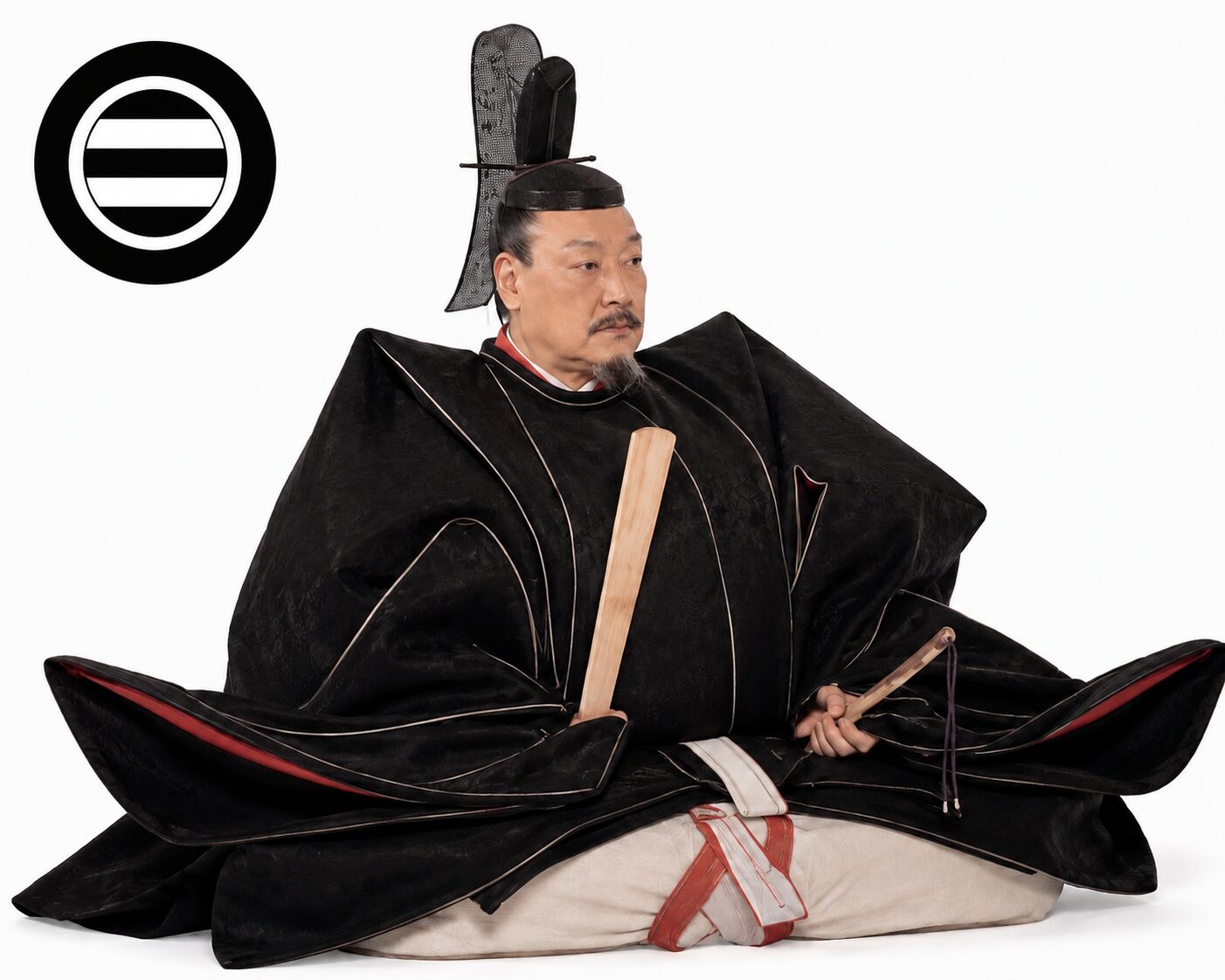
Ashikaga Yoshiaki — The Last Shogun of the Muromachi Shogunate, Banished by Nobunaga: The Gonaisho Diplomacy He Never Gave Up and the Twenty Years of the Tomo Shogunate
- Three Points to Understand Ashikaga Yoshiaki
- The Mainstream View — A Standard Account Based on the Established Theory
- The Multiple Theories — Exploring Possibilities from Various Angles
- Viewed Strategically — Yoshiaki’s Politics, Military Affairs, and Diplomacy
- Famous Words and Sayings Associated with This Warlord
- A Collection of Anecdotes and Episodes
- Timeline
- Lineage and Personal Relationships
- Related Historic Site Map and Model Travel Courses
- Related Articles
- References
Three Points to Understand Ashikaga Yoshiaki
- The fifteenth (and last) Sei-i Taishōgun of the Muromachi shogunate. Originally he had entered the priesthood as the abbot of the Ichijōin cloister at Kōfuku-ji, but when his elder brother Ashikaga Yoshiteru was assassinated in the Eiroku Incident, he returned to secular life and, raising the banner of restoring the shogunate, lobbied the various daimyō.
- Backed by Oda Nobunaga, he entered Kyoto in 1568 and took office as shogun, but before long he came into conflict with Nobunaga. Coordinating with Takeda Shingen, Asakura Yoshikage, Azai Nagamasa, and others, he built the encirclement of Nobunaga and for a time drove Nobunaga into a corner.
- In 1573 he raised troops at Makishima Castle but was defeated and banished from Kyoto, and the Muromachi shogunate effectively fell. Yet he retained the office of shogun thereafter and, under the protection of Mōri Terumoto, established the “Tomo Shogunate” at Tomo in Bingo Province. Until his formal resignation of the shogunate in 1588, he continued for about twenty years to resist Nobunaga and Toyotomi Hideyoshi.
The Mainstream View — A Standard Account Based on the Established Theory
From Birth to the Priesthood — Raised as the Shogun House’s “Spare”
Ashikaga Yoshiaki was born in Kyoto on the third day of the eleventh month of 1537 (Tenbun 6), the second son of Ashikaga Yoshiharu, the twelfth shogun of the Muromachi shogunate. His mother was Keijuin, a daughter of Konoe Hisamichi; his childhood name was Chitosemaru. He had an elder brother, the future thirteenth shogun Ashikaga Yoshiteru.
In the Ashikaga shogunal house of the Sengoku period, it was customary for male children other than the heir to enter the priesthood. It was decided that Yoshiaki too, at around the age of three, would enter the Ichijōin cloister of Kōfuku-ji in Yamato Province. He formally entered the temple in 1550 (Tenbun 19), took the name Kakukei, and became abbot of Ichijōin. Yoshiaki built up a steady career as a monk, receiving such ranks as Gon-shōsōzu, and ordinarily he would have ended his life as a priest.
The Eiroku Incident and Return to Secular Life — Championed as a “Shogun Candidate”
His fate changed utterly with the “Eiroku Incident” of the nineteenth day of the fifth month of 1565 (Eiroku 8), when his elder brother Yoshiteru was attacked and killed at the Nijō Palace in Kyoto by the Miyoshi Three and Matsunaga Hisamichi (the son of Matsunaga Hisahide) and their men. His mother Keijuin also took her own life, and Yoshiteru’s next younger brother Shūkō was killed. As the second son, Yoshiaki (Kakukei) was at Kōfuku-ji in Nara at the time and so escaped harm, but he was placed under confinement there by the Miyoshi side.
In the seventh month of that year, the shogunal retainers Hosokawa Fujitaka, Mitsubuchi Fujihide, and others helped Kakukei escape from Nara and sheltered him with Wada Koremasa at Wada in Kōka District, Ōmi Province. In the eleventh month, Kakukei moved to Yajima in Ōmi (present-day Moriyama City, Shiga Prefecture) and, using this as a base, began lobbying the various daimyō for the restoration of the shogunate. In the second month of 1566 (Eiroku 9), he returned to secular life and took the name Yoshiaki (written 義秋); in the fourth month, he received from the imperial court the rank of Junior Fifth Rank, Lower Grade, and the title of Sama-no-kami. This was the customary appointment that preceded a shogunal investiture.
Yoshiaki initially looked for support for entering Kyoto from Rokkaku Yoshikata, Miyoshi Yoshitsugu, and Oda Nobunaga, but owing to the change of heart of the Rokkaku and others, he moved from Yajima to Echizen. In the ninth month of 1566 (Eiroku 9), he took refuge with Asakura Yoshikage at Ichijōdani in Echizen. In the fourth month of 1568 (Eiroku 11), he held his coming-of-age ceremony at the Asakura clan’s base and changed his name to “Yoshiaki” (written 義昭).
The Entry into Kyoto with Nobunaga — Becoming the Fifteenth Shogun
Because Asakura Yoshikage showed no sign of moving to enter Kyoto, Yoshiaki sought support from Oda Nobunaga, who had pacified Mino. In the seventh month of 1568 (Eiroku 11), Yoshiaki moved from Echizen to Risshō-ji in Mino and came under Nobunaga’s protection.
In the ninth month of that year, Nobunaga, leading a great army said to number about fifty thousand, championed Yoshiaki, defeated Rokkaku Yoshikata of Ōmi, and entered Kyoto. On the thirtieth day of the ninth month, Yoshiaki entered Kiyomizu-dera in Kyoto. Although there was resistance from the Miyoshi Three and others, Nobunaga’s army drove them off, and on the eighteenth day of the tenth month Yoshiaki received the shogunal investiture from the imperial court and took office as the fifteenth Sei-i Taishōgun.
Yoshiaki praised Nobunaga as “First in Martial Valor Under Heaven,” granted him permission to use the Ashikaga house crests—the paulownia crest and the futatsu-hikiryō crest—and further bestowed on him the title of “Father of the Muromachi Lord.” Yoshiaki left a letter in which he addressed Nobunaga as “Father,” and the relationship between the two was good at first. Yoshiaki offered Nobunaga extraordinary rewards—appointment as vice-shogun or kanrei (or deputy kanrei), and the domain of the Five Home Provinces—but Nobunaga declined most of these.
Conflict with Nobunaga — The Palace Regulations and the Seventeen Articles of Remonstrance
The honeymoon did not last long. On the fourteenth day of the first month of 1569 (Eiroku 12), Nobunaga enacted the nine-article “Denchū On’okite” (Palace Regulations) and had Yoshiaki approve it. This included requiring Nobunaga’s countersignature on shogunal directives (gonaisho) issued to the daimyō of the provinces, and provisions on litigation procedures, placing certain limits on shogunal authority. On the sixteenth day of the same month, seven additional articles were issued, further restricting Yoshiaki’s independent political action.
In recent research, there is also a strong view that the Palace Regulations were not a one-sided imposition by Nobunaga but “matters of confirmation” agreed upon by both Nobunaga and Yoshiaki. Still, the more Yoshiaki wished to exercise free authority as shogun, the more his interests inevitably clashed with Nobunaga’s.
In the ninth month of 1572 (Genki 3), Nobunaga thrust upon Yoshiaki the “Seventeen Articles of Remonstrance.” This was a document of opinion sharply criticizing Yoshiaki’s conduct, denouncing him on a wide range of points: neglecting to attend the court, failing to grant sufficient rewards to retainers who served loyally, and attempting to remove treasures from the palace. The first article even invoked the name of his brother Yoshiteru, criticizing him by stating that “Yoshiteru met an unexpected end because he neglected to attend the court,” which was unbearable for Yoshiaki.
The Formation of the Encirclement of Nobunaga — The “Letter-Writing Shogun” in His Element
Anticipating his conflict with Nobunaga, Yoshiaki had already been sending gonaisho (directives in the shogun’s own hand) to the daimyō of the provinces, advancing the construction of an anti-Nobunaga encirclement. After the Battle of Anegawa in 1570 (Genki 1), the first encirclement of Nobunaga—with Azai Nagamasa, Asakura Yoshikage, Hongan-ji Kennyo, and the Miyoshi Three—was formed, and Nobunaga was forced into difficult fighting at the Battle of Noda and Fukushima in Settsu, the Shiga Campaign, and elsewhere.
In the tenth month of 1572 (Genki 3), Takeda Shingen, on whom Yoshiaki had placed his greatest hope, at last began his westward advance. At the Battle of Mikatagahara in the twelfth month of that year, Shingen routed Tokugawa Ieyasu, and Nobunaga faced a desperate crisis. Not letting this opportunity slip, Yoshiaki at last raised troops at Nijō Castle in the second month of 1573 (Genki 4). Nobunaga hastily proposed reconciliation, but Yoshiaki refused.
The Battle of Makishima Castle and Banishment from Kyoto
However, in the fourth month of 1573 (Genki 4), Takeda Shingen died of illness in Shinano in the midst of his westward advance. The core pillar of the encirclement collapsed. In the same month, on the recommendation of the imperial court, Nobunaga and Yoshiaki concluded a temporary peace, but on the third day of the seventh month Yoshiaki left Kyoto, fortified himself in Makishima Castle in Uji (present-day Uji City, Kyoto Prefecture), and raised troops again.
Nobunaga entered Kyoto on the ninth day of the seventh month, and on the sixteenth he sent a great army said to total seventy thousand against Makishima Castle. Makishima Castle was a water-castle floating on Lake Ogura and a natural fastness, but Yoshiaki was forced to surrender the castle after only a single day. On the eighteenth day of the seventh month, Yoshiaki capitulated. Nobunaga granted him his life, and Yoshiaki handed over his young son (his heir, Gijin) as a hostage and withdrew to Wakae Castle in Kawachi Province (present-day Higashiōsaka City, Osaka Prefecture). It is generally held that, at this point, the Muromachi shogunate effectively fell. Note that immediately after this battle, on the twenty-eighth day of the seventh month, the era name was changed from “Genki” to “Tenshō.”
Wandering and the “Tomo Shogunate” — The Shogun Who Did Not Give Up
Even after his banishment from Kyoto, Yoshiaki continued to hold the office of Sei-i Taishōgun. After moving from place to place—Wakae in Kawachi, Yura in Kii, Kōkoku-ji in Kii—he moved in the second month of 1576 (Tenshō 4) to Tomo in Bingo Province (present-day Fukuyama City, Hiroshima Prefecture), which was under the control of Mōri Terumoto. Tomo was a land tied to the Ashikaga: the place where Ashikaga Takauji had received from Retired Emperor Kōgon the edict to subjugate Nitta Yoshisada, and also the place where the tenth shogun, Ashikaga Yoshitane, had achieved his return to the shogunate.
Using Tomo as his base, Yoshiaki treated Mōri Terumoto as a figure of “vice-shogun” rank and continued to issue gonaisho to anti-Nobunaga forces in various regions. He schemed to coordinate with Uesugi Kenshin, Hongan-ji Kennyo, Chōsokabe Motochika, Takeda Katsuyori, and others, and is said to have been involved in brokering the Gei-Do alliance (the Mōri–Chōsokabe alliance). The scholar Fujita Tatsuo of Mie University and others call this system the “Tomo Shogunate,” arguing that even after the banishment from Kyoto the Muromachi shogunate continued in altered form.
In the sixth month of 1582 (Tenshō 10), Nobunaga died a sudden death in the Honnō-ji Incident. Immediately afterward, on the thirteenth day of the sixth month, Yoshiaki issued a gonaisho to Nomi Munekatsu of the Mōri side, rejoicing at the subjugation of Nobunaga and asking him to exert himself toward an entry into Kyoto (this gonaisho survives). Ironically, however, this thirteenth day of the sixth month was also the day Akechi Mitsuhide was defeated and killed at the Battle of Yamazaki, and Yoshiaki’s entry into Kyoto was not realized.
His Remaining Years under the Hideyoshi Regime
After the Honnō-ji Incident, Yoshiaki still watched for an opportunity to return to the shogunate, but as Toyotomi Hideyoshi advanced the unification of the realm, the reality was harsh. At the time of the Kyushu campaign of 1587 (Tenshō 15), Hideyoshi and Yoshiaki are said to have made contact, and a mending of relations was pursued.
In the first month of 1588 (Tenshō 16), Yoshiaki formally resigned the office of shogun, took the tonsure, and styled himself “Shōzan Dōkyū.” With this, the Muromachi shogunate formally came to a complete end. Hideyoshi granted him a domain of ten thousand koku at Makishima in Yamashina Province, and thereafter he was treated as one of Hideyoshi’s otogishū (companions). Receiving the treatment of a great-daimyō rank, he continued to be shown a certain respect by the imperial court as a former shogun.
On the twenty-eighth day of the eighth month of 1597 (Keichō 2), he died in Osaka at the age of 61. When Hideyoshi set out for Nagoya Castle in Hizen for the invasion of Korea, Yoshiaki too was encamped in the outer works, and the fatigue from that is transmitted as a contributing cause of his death. His cause of death is given as a “tumor.” He was buried at Reiyō-in of Shōkoku-ji in Kyoto, and a lock of his hair was placed in the Ashikaga shogunal hair-relic pagoda at Tōji-in.
Thus the life of Shogun Ashikaga Yoshiaki closed, and the political history of the Ashikaga shogunal house that had led the Muromachi shogunate quietly came to an end.
The Multiple Theories — Exploring Possibilities from Various Angles
Theory 1: Reconsidering the “Foolish Shogun” Image — Yoshiaki Was a Capable Diplomat
Yoshiaki has long been assessed as an “incompetent shogun toyed with by Nobunaga” and a “Letter-Writing Shogun who wrote only letters rather than fighting himself.” Partly under the influence of the Shinchō Kōki, compiled in the Edo period, and of military chronicles, there was a strong tendency to depict Yoshiaki as a foolish figure in an inferior position, a foil to set off Nobunaga.
In recent research, however, this view is being greatly revised. Yoshiaki is increasingly assessed as anything but a mediocre figure, in points such as:
- the political skill to gather the support of the various daimyō and take office as shogun only three years after returning from the priesthood to secular life;
- the encirclement-building power to bind together forces of differing religion, region, and interest—Uesugi Kenshin, Takeda Shingen, Mōri Terumoto, and others—under the single banner of “anti-Nobunaga”;
- the persistence to maintain shogunal authority for nearly twenty years and continue gonaisho diplomacy even after his banishment from Kyoto;
- the negotiating power not to abandon his ambition for entering Kyoto even after the Honnō-ji Incident, ultimately securing ten thousand koku from Hideyoshi.
The very diligence in letter-writing that earned him the derisive nickname “Letter-Writing Shogun” is, viewed differently, a sophisticated diplomatic activity making full use of information networks and personal connections. The historian Fujita Tatsuo positions Yoshiaki as “the central figure of a political movement that sought to maintain the Muromachi order,” reassessing him as a strategist who held his own against Nobunaga.
Theory 2: The Theory of the “Tomo Shogunate’s” Continuation — The Muromachi Shogunate Lasted Until 1588
Conventionally, the date of the Muromachi shogunate’s fall has been taken to be Yoshiaki’s banishment from Kyoto by the Battle of Makishima Castle in 1573 (Genki 4). Textbooks describe it that way.
Fujita Tatsuo, however, on the basis of sources such as the Kugyō Bunin, points out that Yoshiaki remained Sei-i Taishōgun until his formal resignation of the shogunate in 1588 (Tenshō 16), and that at Tomo the shogunal apparatus (the presence of the hōkōshū and bugyōnin, the issuance of gonaisho, and the authority to appoint the Five Mountains’ priests) was functioning. He calls this the “Tomo Shogunate” and argues that a shogunate as a real entity continued from 1576 to 1588.
The features of the Tomo Shogunate are as follows:
- Mōri Terumoto provided military force as, in effect, a figure of vice-shogun rank.
- Yoshiaki’s gonaisho still carried authority toward the various daimyō, maintaining a communication network with the Chōsokabe, Uesugi, Hongan-ji, and others.
- Part of the religious authority, such as the power to appoint the Zen priests of the Five Mountains, remained at Tomo.
- The imperial court in Kyoto also continued to treat Yoshiaki as the “sitting shogun.”
This theory has gained support in recent years, and the Tomonoura Museum of History and Folklore in Fukuyama City has held a special exhibition on the theme of the “Tomo Shogunate.” On the other hand, since the shogunal functions centered on Kyoto had been lost, the traditional view that “the substantive fall of the shogunate was in 1573” also remains firmly rooted.
Theory 3: The Debate over the Date of the Muromachi Shogunate’s Fall — 1573 or 1588?
Linked to Theory 2, the question of when to date the end of the Muromachi shogunate has become an important controversy in historical scholarship. The main theories are as follows.
The 1573 theory (the traditional received view): The view that, at the point when Yoshiaki was banished from Kyoto by the Battle of Makishima Castle and the Ashikaga shogun was absent from the capital, the shogunate substantively collapsed. Many textbooks and surveys take this position. The idea is that the “Muromachi shogunate” as a political apparatus based in Kyoto and Muromachi ended in 1573.
The 1588 theory (the Tomo Shogunate proponents): The theory that dates the fall of the shogunate to 1588 (Tenshō 16), when Yoshiaki formally resigned as Sei-i Taishōgun, took the tonsure, and styled himself “Shōzan Dōkyū.” Advocated by Fujita Tatsuo and others. As a matter of formal logic, the day the office of shogun was resigned is the end of the shogunate.
The 1582 theory: An eclectic view holding that, until Nobunaga’s sudden death in the Honnō-ji Incident, “Yoshiaki may have been maintaining a government-in-exile, the significance of which was lost after Nobunaga’s death.” It is the position of taking the point at which Yoshiaki’s hope of entering Kyoto was effectively cut off as the end of the shogunate’s historical role.
Which point one takes as the “fall” depends on how one defines the existence of a “shogunate.” The answer differs according to whether one sees it as a political apparatus based in Kyoto, as a political system centered on the person of the shogun, or as the authority of a warrior government. Yoshiaki’s life keeps the controversy over this “time of the end” lively even into the twenty-first century.
Theory 4: The Theory That Yoshiaki Was the Mastermind of the Honnō-ji Incident — A Plot from Tomo?
Regarding the motive of Akechi Mitsuhide, who caused the “Honnō-ji Incident,” there are various theories—the grudge theory, the ambition theory, the Shikoku theory, and others—but the one that has attracted particular attention in recent years is the “Ashikaga Yoshiaki mastermind theory.”
The one who strongly advocates this theory is also Fujita Tatsuo, the proponent of the Tomo Shogunate theory. Fujita interprets a phrase in a letter that Mitsuhide sent immediately after the Honnō-ji Incident to Tsuchihashi Shigeharu of Kishū (held by the Minokamo City Citizens’ Museum)—a phrase that can be read as a request to serve faithfully in accordance with a superior’s will—as referring, by “superior’s will,” to the shogun Yoshiaki.
The grounds cited for the Yoshiaki mastermind theory include the following:
- Yoshiaki was the one who most hated Nobunaga and had consistently maintained the motive of overthrowing him.
- Eleven days after the Honnō-ji Incident, Yoshiaki issued a gonaisho to Nomi Munekatsu, urging the Mōri to “exert themselves toward an entry into Kyoto, now that Nobunaga has been struck down” (a source held by the Tomonoura Museum of History and Folklore, Fukuyama City).
- The discovery of the Ishigai-ke Monjo (Documents of the Ishigai House) revealed that Ishigai Yoritoki, a relative of Mitsuhide’s senior retainer Saitō Toshimitsu, had gone down to Chōsokabe Motochika from early in 1582. Motochika and Yoshiaki were in communication, so information transmission was possible along the line Yoshiaki–Chōsokabe–Mitsuhide.
- Yoshiaki, at Tomo, had been calling on the daimyō to “restore the Muromachi shogunate,” and this movement may have influenced Mitsuhide’s decision to rise.
On the other hand, this theory has many critics. The historian Watanabe Daimon and others counter as follows:
- If Mitsuhide and Yoshiaki had colluded in advance, Yoshiaki should have immediately entered Kyoto together with the Mōri and joined Mitsuhide; yet the Mōri had not even obtained accurate information about the Honnō-ji Incident.
- The interpretation identifying the “superior’s will” in Mitsuhide’s letter with Yoshiaki involves a leap in source interpretation.
- It would mean Yoshiaki had not conveyed the plan of the incident to the Mōri, his greatest protector, which lacks strategic consistency.
Fujita himself says, “I do not call it a mastermind theory,” but it spread as a “mastermind theory” through his followers. It is certain that Yoshiaki consistently aimed at overthrowing Nobunaga, and the possibility of some contact with Mitsuhide around the time of the Honnō-ji Incident cannot be completely denied; but there is no decisive source, and nothing definitive can be said even now.
Theory 5: Theories on the Cause of the Conflict with Nobunaga — Why Did the Cooperative Relationship Break Down?
Although Yoshiaki and Nobunaga were initially close enough to call each other “father and son,” they reached all-out confrontation within only a few years. Several theories have been offered for the cause of this conflict.
The theory of fundamental conflict over the power structure: The most influential view. Whereas Yoshiaki aimed at the “restoration of the traditional Muromachi order with the shogun at its apex,” Nobunaga sought a system in which “he himself exercised substantive unifying power while respecting shogunal authority.” The two men’s political visions were fundamentally incompatible.
The theory of direct conflict over the Palace Regulations and the Seventeen Articles of Remonstrance: The theory that the concrete “binding by document”—the Palace Regulations of 1569 (Eiroku 12) and the Seventeen Articles of Remonstrance of 1572 (Genki 3)—restricted Yoshiaki’s exercise of power and provoked his emotional backlash. In recent research, however, the strong view is that the Palace Regulations were “matters of confirmation” agreed upon by both sides and did not immediately produce conflict.
The theory of Yoshiaki’s aspiration to restore the shogun’s prestige: Yoshiaki grew up witnessing his brother Yoshiteru’s assassination and his father Yoshiharu’s wanderings, and held a strong yearning for the image of an “authoritative shogun.” Even in a position of having been championed by Nobunaga, his aspiration to an autonomous politics as shogun made a clash with Nobunaga inevitable.
The theory of wariness toward Nobunaga’s territorial expansion: As Nobunaga’s domain expanded into the Home Provinces and nearby provinces, Yoshiaki came to see Nobunaga as a “threat to the Muromachi system.” The theory holds that he sought to check Nobunaga’s growth and secure shogunal power by rallying the various forces opposed to Nobunaga—the Hongan-ji, the Azai, the Asakura, the Takeda, and others.
These are not mutually exclusive; the current shared understanding is that multiple factors intertwined and deepened the conflict. In particular, the greatest rift was that, while Yoshiaki never abandoned the consciousness that “the shogun is Nobunaga’s superior,” Nobunaga strengthened his realistic recognition that “Yoshiaki is no more than a shogun I championed.”
Theory 6: Assessing the Strategic Character of the Makishima Uprising — Recklessness, or a Rational Judgment?
In the seventh month of 1573 (Genki 4), Yoshiaki left Nijō Castle, holed up in Makishima Castle in Uji, and raised troops again against Nobunaga. Takeda Shingen had already died in the fourth month, and the greatest pillar of the encirclement of Nobunaga had been lost. That Yoshiaki nonetheless went through with raising troops has often been assessed in later ages as a “reckless act” or a “folly committed in ignorance of Shingen’s death.”
The recklessness theory: The theory that, since information of Shingen’s death had not been fully transmitted given the communications of the time, Yoshiaki raised troops believing Shingen to be alive. Based on the account of the Shinchō Kōki and the interpretations of later military chronicles. Yoshiaki is held to have been an amateur in warfare who overestimated the topographical advantage of the water-castle Makishima.
The rational-judgment theory: The view that Yoshiaki had obtained information of Shingen’s death but that there was still rationality enough to raise troops. Specifically, grounds such as the following are pointed out:
- Anti-Nobunaga forces—the Asakura, Azai, Hongan-ji, Takeda Katsuyori, the Miyoshi, and others—still existed, and if these acted in concert, there was a possibility of driving Nobunaga into a corner once again.
- As a defensive strategy for the uprising, there was military planning, such as building Ishiyama Castle and Imakatata Castle at the strategic point of Seta that led to the capital, in order to block the path of the Oda army.
- The possibility that it was not Yoshiaki’s judgment alone, but that there was advice from the staff officers of the Hongan-ji and the Miyoshi house.
- There was political significance in showing a last resistance, rather than entering into subordination to Nobunaga while remaining at peace.
As a result, Makishima Castle was forced to surrender in a single day, and Yoshiaki capitulated. Yet considering that Yoshiaki preserved his life and the office of shogun in the form of “handing over a hostage and withdrawing from Kyoto” rather than an “unconditional surrender,” and continued anti-Nobunaga activity for nearly twenty years thereafter, this uprising can also be interpreted as having had the strategic meaning of “shifting to a long-term struggle while maintaining a minimum of dignity.”
The assessment of whether it was reckless or rational depends greatly on how one views Yoshiaki as a person. Whether one disdains him as a “Letter-Writing Shogun” or reassesses him as a “tenacious politician,” the meaning of the uprising changes greatly.
Viewed Strategically — Yoshiaki’s Politics, Military Affairs, and Diplomacy
Gonaisho Diplomacy — Making the Fullest Use of Shogunal Authority
The greatest feature of Yoshiaki’s politics was a diplomacy that wielded the gonaisho. The gonaisho was a directive or letter issued personally by the Muromachi shogun; formally a private document, it carried strong authority as a direct expression of the shogun’s will.
From immediately after his return to secular life through his Tomo years after the banishment from Kyoto, Yoshiaki issued an enormous number of gonaisho to the various daimyō throughout his life. Their recipients extended even to those of utterly different positions and interests—Shingen, Kenshin, Terumoto, Motochika, Kennyo, the Azai, the Asakura, the Miyoshi—and they served to rally diverse forces on the single point of “anti-Nobunaga.”
That Yoshiaki, possessing almost no military force, could drive Nobunaga into a corner, however temporarily, was due to the power of this “coalition of daimyō” formed through gonaisho diplomacy. Yoshiaki’s authority was supported, more than by actual military force, by the institutional authority of “shogun,” and the gonaisho can be called the device that made that authority visible.
The Structure of the Encirclement Strategy — Organizing a Multi-Front Operation
The encirclement of Nobunaga that Yoshiaki organized was truly multifarious both geographically and in terms of forces.
- To the east: Takeda Shingen and Takeda Katsuyori (Kai and Shinano)
- To the north: Uesugi Kenshin (Echigo) and Asakura Yoshikage (Echizen)
- Nearby: Azai Nagamasa (northern Ōmi) and Rokkaku Yoshikata (southern Ōmi)
- To the west: Mōri Terumoto (the Chūgoku region) and Chōsokabe Motochika (Tosa)
- To the south: Hongan-ji Kennyo, the Saika-shū, and the various forces of Kii and Kawachi
- Around Kyoto: Miyoshi Yoshitsugu, the Miyoshi Three, and Matsunaga Hisahide
These were forces that would ordinarily find it hard to coordinate, but Yoshiaki sought to bind them together under the three banners of “shogunal authority,” “anti-Nobunaga,” and “maintaining the Muromachi order.” The dispersal of the enemy’s forces through a multi-front operation was the core strategy of the encirclement, and Nobunaga’s desperate situation at the time of Shingen’s march to the capital shows that this strategy succeeded temporarily.
Survival Diplomacy — The Power to Live Through Twenty Years of Wandering
What must not be overlooked in Yoshiaki’s strategic eye is his “survival strategy” after the banishment from Kyoto. Even after losing the capital, Yoshiaki:
- moved successively to places beyond Nobunaga’s reach—Wakae in Kawachi → Yura in Kii → Kōkoku-ji in Kii → Tomo in Bingo;
- placed himself under the protection of the great power of the Mōri, securing military protection;
- became involved in forming a new encirclement, including brokering the Mōri–Chōsokabe alliance (the Gei-Do alliance);
- after the Honnō-ji Incident, responded flexibly even toward Hideyoshi, ultimately securing ten thousand koku.
Through such responses, he maintained his own political existence without ever being destroyed. This should be assessed not as a mere “life on the run” but as an expression of sophisticated situational judgment and flexibility as a politician.
Yoshiaki’s Limits — Why He Could Not Win in the End
On the other hand, the reasons Yoshiaki could not ultimately triumph over Nobunaga and Hideyoshi are also clear:
- The lack of his own military force: The forces directly under the shogun were extremely few, and he always had to depend on the military power of other forces.
- The misalignment of interests among the encirclement’s participants: Shingen, Kenshin, Terumoto, and the others each moved by separate interests, and it was difficult for them to act all at once under Yoshiaki’s command.
- The change of the times: It was an age in which “shogunal authority” itself was losing effectiveness through the autonomy of the Sengoku daimyō, and Yoshiaki was its last symbol.
- Bad luck: Misfortunes piled up that prevented him from seizing his greatest opportunities—Shingen’s sudden death, Kenshin’s sudden death, and Mitsuhide’s defeat and death immediately after the Honnō-ji Incident.
Famous Words and Sayings Associated with This Warlord
“Father of the Muromachi Lord”
A title Yoshiaki bestowed on Nobunaga after taking office as shogun. “Muromachi Lord” is an honorific for the shogun, and “Father” means an existence equivalent to a father. In an autograph letter Yoshiaki sent to Nobunaga, he addressed it to “Father, Lord Oda Danjō-no-jō (Nobunaga).” It is a phrase symbolizing the honeymoon relationship between the two, but ironically this “father” would later banish Yoshiaki from the capital. Sources: Shinchō Kōki, Rekidai Koan, and others.
“First in Martial Valor Under Heaven”
A phrase Yoshiaki bestowed in praise of Nobunaga. Giving the highest evaluation to Nobunaga’s military achievements, he used this expression when granting permission to use the Ashikaga house crests—the paulownia crest and the futatsu-hikiryō crest. Considering that the two later became enemies, it is a tribute that conveys a sense of historical irony. Source: Shinchō Kōki.
“Send shogunal directives to the provinces and subjugate Nobunaga”
A contemporary assessment expressing the conduct that symbolized Yoshiaki’s life. From the time of his return to secular life, Yoshiaki continued throughout his life to send gonaisho to the various daimyō, and he carried on the same activity in his Tomo years after the banishment from Kyoto. For his diligence in letter-writing he was derided in later ages as the “Letter-Writing Shogun,” but for Yoshiaki, who held no military force, it was his greatest political weapon.
“I shall remain at Tomo” (paraphrase)
The gist of the gonaisho dated the thirteenth day of the sixth month of 1582 (Tenshō 10), addressed to Nomi Munekatsu of the Mōri side immediately after the Honnō-ji Incident. Yoshiaki rejoices at the subjugation of Nobunaga and asks the Mōri and Kobayakawa to exert themselves toward an entry into Kyoto. Ironically, on this very day Akechi Mitsuhide was defeated and killed at Yamazaki, and Yoshiaki’s hope of entering Kyoto was cut off. It is a source conveying the moment when Yoshiaki’s last great political gamble ended in a swing and a miss. Held by the Tomonoura Museum of History and Folklore, Fukuyama City.
A Collection of Anecdotes and Episodes
The Drama of the Escape from Nara
After the Eiroku Incident of 1565 (Eiroku 8), Yoshiaki (Kakukei) had been confined at Kōfuku-ji in Nara. On the night of the twenty-eighth day of the seventh month of that year, Hosokawa Fujitaka, Mitsubuchi Fujihide, Yoneda Motomasa, and others exploited a gap in the guard to help Kakukei escape and delivered him to the residence of Wada Koremasa in Kōka, Ōmi. It is variously transmitted that he used a disguise or rode off secretly by horse in the escape, but the details are unknown. Without this dramatic escape, there would have been no shogunal accession for Yoshiaki, and Sengoku history might have changed greatly.
Disappointment in Asakura Yoshikage
Yoshiaki spent about two years at Ichijōdani in Echizen, but Asakura Yoshikage showed no will to enter Kyoto. Yoshikage was excellent as a man of culture, but lacked the ambition and decisiveness to enter Kyoto and move the realm. Yoshiaki repeatedly urged him to enter the capital, but Yoshikage showed no sign of responding, and at last Yoshiaki gave up on him and relied on Nobunaga of Mino. What feelings Yoshiaki held when Nobunaga later destroyed the Asakura clan have not been transmitted.
The Offer of Extraordinary Rewards to Nobunaga
For the achievement of entering Kyoto and his accession as shogun, Yoshiaki successively offered Nobunaga appointment as vice-shogun or kanrei (or deputy kanrei), succession to the headship of the Shiba clan, the court title of Sahyōe-no-kami, the domain of the Five Home Provinces, and more. By the traditions of the Muromachi shogunate, this was extraordinarily high treatment. Nobunaga, however, declined most of it and accepted only the deputyships of Sakai, Ōtsu, and Kusatsu. There are various theories about Nobunaga’s intent—that “he did not want to be bound by the framework of the shogunal house” or that “he took only the practical benefit”—but it is certain that Yoshiaki sought to reward Nobunaga to the utmost.
The Strange Honorific “Father of the Muromachi Lord”
It is famous that, when Yoshiaki referred to Nobunaga as shogun, he wrote in his letters “Father, Lord Oda Danjō-no-jō.” At the time, Yoshiaki was thirty-two and Nobunaga thirty-five. Despite a difference of only three years, Yoshiaki’s calling Nobunaga “Father” was extraordinary even as an expression of gratitude of the time. It is intriguing to imagine what feelings Nobunaga, after they later came into conflict, held whenever he saw this letter.
The Swift Response to the Honnō-ji Incident
Eleven days after the Honnō-ji Incident of the second day of the sixth month of 1582 (Tenshō 10), on the thirteenth day, Yoshiaki issued from Tomo in Bingo a gonaisho to Nomi Munekatsu, who led the Mōri navy, urging the Mōri to “exert themselves toward an entry into Kyoto, now that Nobunaga has been struck down.” The speed from obtaining the information to dispatching the message was astonishing, showing that Yoshiaki always paid attention to developments in Kyoto and the Home Provinces. But this day, ironically, was also the day Akechi Mitsuhide was defeated by Hashiba Hideyoshi at Yamazaki.
Setting Out for Nagoya Castle
In his later years, at the time of Hideyoshi’s invasion of Korea, Yoshiaki set out for Nagoya Castle in Hizen. Treated as a noble holding ten thousand koku as a former shogun, he was encamped in the outer works of the castle. Already nearly sixty and of advanced age, he is said to have found the hardships of the Kyushu expedition trying to his body. In the eighth month of 1597 (Keichō 2), he died of illness in Osaka. A tumor is transmitted as the direct cause of death. The scene of the last shogun of the Muromachi shogunate being in the camp of the Taikō Hideyoshi’s invasion of Korea carries a distinctive sense of the end of the Sengoku period.
Timeline
| Japanese Era (Western Year) | Age | Event |
|---|---|---|
| Tenbun 6 (1537) | 1 | Born in Kyoto on the 3rd day of the 11th month. His father is the 12th shogun Ashikaga Yoshiharu; his mother is Keijuin, a daughter of Konoe Hisamichi. His childhood name is Chitosemaru. |
| Tenbun 11 (1542) | 6 | His elder brother Yoshiteru (Kikuōmaru) comes of age as Yoshiharu’s successor. It becomes settled policy that Yoshiaki will enter the priesthood. |
| Tenbun 19 (1550) | 14 | Enters the Ichijōin cloister of Kōfuku-ji in Nara, takes the name Kakukei, and becomes abbot. |
| Eiroku 8 (1565) | 29 | On the 19th day of the 5th month, the Eiroku Incident. His brother Yoshiteru is killed by the Miyoshi Three, Matsunaga Hisamichi, and others. His mother Keijuin and younger brother Shūkō are also killed. Kakukei is confined at Kōfuku-ji. In the 7th month, rescued by Hosokawa Fujitaka, Mitsubuchi Fujihide, and others to the residence of Wada Koremasa in Kōka, Ōmi. In the 11th month, moves to Yajima in Ōmi. |
| Eiroku 9 (1566) | 30 | In the 2nd month, returns to secular life at Yajima and takes the name Yoshiaki (義秋). In the 4th month, appointed Junior Fifth Rank, Lower Grade, and Sama-no-kami by the court. In the 9th month, goes to Asakura Yoshikage at Ichijōdani in Echizen. |
| Eiroku 11 (1568) | 32 | In the 4th month, comes of age at Ichijōdani and changes his name to Yoshiaki (義昭). In the 7th month, relies on Oda Nobunaga and goes to Mino. In the 9th month, championed by Nobunaga, enters Kyoto and defeats Rokkaku Yoshikata. On the 18th day of the 10th month, takes office as the 15th Sei-i Taishōgun. Bestows on Nobunaga the title “Father of the Muromachi Lord.” |
| Eiroku 12 (1569) | 33 | On the 14th day of the 1st month, Nobunaga enacts the nine-article Palace Regulations, which Yoshiaki approves. On the 16th, seven additional articles. Nobunaga builds Nijō Castle for Yoshiaki. |
| Genki 1 (1570) | 34 | In the 6th month, the Battle of Anegawa. In the 9th month, Nobunaga struggles at the Battle of Noda and Fukushima and the Shiga Campaign. Yoshiaki is involved in forming the first encirclement of Nobunaga. |
| Genki 3 (1572) | 36 | In the 9th month, Nobunaga thrusts the “Seventeen Articles of Remonstrance” upon Yoshiaki. In the 10th month, Takeda Shingen begins his westward advance. In the 12th month, the Battle of Mikatagahara. |
| Genki 4 / Tenshō 1 (1573) | 37 | In the 2nd month, Yoshiaki raises troops at Nijō Castle. In the 4th month, Takeda Shingen dies. In the 4th month, a temporary peace with Nobunaga. On the 3rd day of the 7th month, Yoshiaki holes up in Makishima Castle. On the 18th, the castle surrenders and Yoshiaki capitulates, withdrawing to Wakae in Kawachi. With this, the Muromachi shogunate effectively falls. On the 28th of the 7th month, the era changes to “Tenshō.” |
| Tenshō 2 (1574) | 38 | Moves to Kōkoku-ji at Yura in Kii Province and elsewhere. Still retains the office of shogun. |
| Tenshō 4 (1576) | 40 | In the 2nd month, moves to Tomo in Bingo, under Mōri Terumoto’s control. Establishes the “Tomo Shogunate,” treating the Mōri as vice-shogun rank and continuing gonaisho diplomacy. |
| Tenshō 5 (1577) | 41 | Uesugi Kenshin defeats the Oda army at the Battle of Tedorigawa. Yoshiaki’s encirclement of Nobunaga shows a new development, but Kenshin dies suddenly the following year. |
| Tenshō 8 (1580) | 44 | Ishiyama Hongan-ji surrenders to Nobunaga. The encirclement’s main forces collapse one after another. |
| Tenshō 10 (1582) | 46 | On the 2nd day of the 6th month, Nobunaga dies in the Honnō-ji Incident. On the 13th, Yoshiaki issues a gonaisho to Nomi Munekatsu, rejoicing at the subjugation of Nobunaga and asking for efforts toward an entry into Kyoto; but on the same day Akechi Mitsuhide is defeated at Yamazaki. Yoshiaki’s entry into Kyoto is not realized. |
| Tenshō 13 (1585) | 49 | Hideyoshi becomes kanpaku (imperial regent). Yoshiaki remains at Tomo. |
| Tenshō 15 (1587) | 51 | At the time of Hideyoshi’s Kyushu campaign, Yoshiaki makes contact with Hideyoshi. A mending of relations proceeds. |
| Tenshō 16 (1588) | 52 | In the 1st month, Yoshiaki formally resigns the office of Sei-i Taishōgun, takes the tonsure, and styles himself “Shōzan Dōkyū.” Hideyoshi grants him ten thousand koku at Makishima in Yamashina Province. With this, the Muromachi shogunate also formally ends. |
| Bunroku 1 (1592) | 56 | Accompanying Hideyoshi’s invasion of Korea, sets out for Nagoya Castle in Hizen. Encamps in the castle’s outer works. |
| Keichō 2 (1597) | 61 | On the 28th day of the 8th month, dies in Osaka. The cause of death is a tumor. Buried at Reiyō-in of Shōkoku-ji in Kyoto, with the posthumous name “Reiyō-in Shōzan Dōkyū.” A lock of his hair is placed in the Ashikaga shogunal hair-relic pagoda at Tōji-in. |
Lineage and Personal Relationships
The Ashikaga Shogunal House
| Person | Relationship | Notes |
|---|---|---|
| Ashikaga Yoshiharu | Father | The 12th shogun of the Muromachi shogunate. Experienced an unstable regime, going back and forth between Kyoto and Ōmi. Influenced Yoshiaki’s life as well. |
| Keijuin | Mother | A daughter of Konoe Hisamichi. Took her own life (was killed) together with her son Yoshiteru in the Eiroku Incident. |
| Ashikaga Yoshiteru | Elder brother (same mother) | The 13th shogun of the Muromachi shogunate. Known as the “Swordmaster Shogun.” Killed in the Eiroku Incident, transforming Yoshiaki’s life. |
| Shūkō | Younger brother (same mother) | A kasshiki acolyte of Rokuon-in. Killed in the Eiroku Incident. |
| Ashikaga Gijin | Heir | Yoshiaki had no principal wife; a child born of a concubine. Handed over to Nobunaga as a hostage at the surrender of Makishima. Later entered the priesthood. |
| Ashikaga Yoshihide | Cousin | The 14th shogun. Made shogun by the Miyoshi Three and others, but died of illness before Yoshiaki entered Kyoto. |
| Ashikaga Yoshitane | As precedent | The 10th shogun. Yoshiaki’s move to Tomo is said to have followed the precedent of Yoshitane achieving his return to the shogunate at Tomo. |
Shogunal Retainers and Allied Forces Who Supported Yoshiaki
| Person | Position | Notes |
|---|---|---|
| Hosokawa Fujitaka | Shogunal retainer | The greatest contributor in rescuing Kakukei from Nara after the Eiroku Incident. Later served Nobunaga and Hideyoshi, known as Hosokawa Yūsai. |
| Mitsubuchi Fujihide | Shogunal retainer | The half-brother of Hosokawa Fujitaka. Also involved in rescuing Kakukei. At the Makishima uprising, resisted at Nijō Castle but surrendered. |
| Wada Koremasa | Shogunal retainer | Lord of Kōka in Ōmi. Provided Kakukei’s first place of refuge. |
| Asakura Yoshikage | Sengoku daimyō of Echizen | Became Yoshiaki’s place of refuge, but lacked the will to enter Kyoto and disappointed Yoshiaki. Later destroyed by Nobunaga. |
| Mōri Terumoto | Sengoku daimyō of the Chūgoku region | The de facto vice-shogun rank of the Tomo Shogunate. Protected Yoshiaki at Tomo and supported him for about twelve years. |
Warlords Who Confronted Yoshiaki
| Person | Position | Notes |
|---|---|---|
| Oda Nobunaga | Sengoku daimyō of Owari and Mino | The leading figure who pushed Yoshiaki up to the shogunate and later became his greatest enemy. The very man who banished Yoshiaki from Kyoto. |
| The Miyoshi Three | Senior retainers of the Miyoshi house | Miyoshi Nagayasu, Miyoshi Masayasu, and Iwanari Tomomichi. The ringleading force of the Eiroku Incident. Yoshiaki’s sworn enemies, but later on Yoshiaki’s side in the fight against Nobunaga. |
| Matsunaga Hisahide | Sengoku daimyō of Yamato | There is a theory of his involvement in the Eiroku Incident. Later surrendered to Nobunaga, but at times took anti-Nobunaga action in coordination with Yoshiaki. |
Sengoku Daimyō Who Coordinated with Yoshiaki
| Person | Sphere | Notes |
|---|---|---|
| Takeda Shingen | Kai and Shinano | The westward-advancing force on which Yoshiaki placed his greatest hope. His sudden death in the 4th month of 1573 caused the encirclement to collapse. |
| Uesugi Kenshin | Echigo | Yoshiaki sent many gonaisho urging Kenshin to enter Kyoto. Defeated the Oda army at Tedorigawa in 1577 but died suddenly the next year. |
| Azai Nagamasa | Northern Ōmi | Nobunaga’s brother-in-law, but turned anti-Nobunaga. A main force of the first encirclement. Destroyed at Odani Castle in 1573. |
| Hongan-ji Kennyo | Religious force of the Home Provinces | The religious leader who led Ishiyama Hongan-ji. Continued to take part in Yoshiaki’s encirclement for many years. |
| Chōsokabe Motochika | Tosa | The protagonist of the Mōri–Chōsokabe Gei-Do alliance that Yoshiaki brokered. A wing of the communication network around the Honnō-ji Incident. |
Warlords He Faced in His Later Years
| Person | Position | Notes |
|---|---|---|
| Akechi Mitsuhide | Retainer of the Oda house | Once also served Yoshiaki as a shogunal retainer. His relationship to the Honnō-ji Incident is the focus of the “mastermind theory” controversy. |
| Toyotomi Hideyoshi | Ruler of the realm | Yoshiaki’s last overlord. Granted him ten thousand koku and treated him as one of the otogishū. Yoshiaki chose to resign rather than yield the office of shogun to Hideyoshi. |
Related Historic Site Map and Model Travel Courses
The journey tracing Ashikaga Yoshiaki’s life becomes a wide-ranging course that follows the very trajectory of his wanderings: Nara → Ōmi → Echizen → Kyoto → Kawachi → Kii → Tomo in Bingo. The Google My Map above brings together the principal historic sites.
Model Course 1: The Kyoto and Ōmi “Road to the Shogunate” Course (two days, one night)
A course touring the Kyoto and Ōmi sites from his return to secular life through his shogunal accession and banishment.
- Day 1: JR Kyoto Station → the Old Nijō Castle Ruins (the site of the shogunal palace Nobunaga built for Yoshiaki) → Tōji-in (the Ashikaga shogunal mortuary temple; Yoshiaki’s wooden image and the hair-relic pagoda) → Shōkoku-ji (Yoshiaki’s burial place, the subtemple Reiyō-in) → overnight in Kyoto
- Day 2: By the JR Nara Line to Uji → the Makishima Castle Ruins (the place of the effective end of the Muromachi shogunate) → move to Moriyama Station → the Yajima Palace Ruins (the place of his return to secular life) → return to Kyoto and disperse
Model Course 2: The Nara “Days as the Shogun House’s Spare” Course (one day)
A course centered on the Ichijōin cloister of Kōfuku-ji in Nara, where Yoshiaki spent his time as Kakukei.
- Kintetsu Nara Station → the Ichijōin cloister of Kōfuku-ji (his residence in the Kakukei period) → the Kōfuku-ji precincts, the Eastern Golden Hall, and the Northern Round Hall → Kasuga Taisha → the Nara National Museum (learning about Buddhist art and the culture of the time)
Model Course 3: The Bingo-Tomo “Footsteps of the Tomo Shogunate” Course (two days, one night)
A course touring Tomo, which Yoshiaki used as his base of activity for twelve years. A journey to the “other place of the end” of the Muromachi shogunate.
- Day 1: JR Fukuyama Station → by bus to Tomonoura → a stroll through the streets of Tomonoura → the Tomonoura Museum of History and Folklore (sources related to the Tomo Shogunate) → the Jōyatō stone lantern and the Taichōrō hall of Fukuzen-ji → overnight at Tomonoura
- Day 2: Jōkoku-ji (the site of Lord Ashikaga Yoshiaki’s residence) → return to Fukuyama Station and tour Fukuyama Castle → return
Model Course 4: The Hokuriku “Echizen Ichijōdani” Course (one day)
A visit to the base of the Asakura clan, where Yoshiaki came of age and took the name “Yoshiaki.”
- JR Fukui Station → by bus or rental car to the Ichijōdani Asakura Clan Ruins → the reconstructed townscape (experiencing the Asakura-era castle town) → the Asakura Clan Ruins Museum → return to Fukui Station
Arrangements by Visitor Type
- History beginners: Only Day 1 of the Kyoto and Ōmi course (Model 1) is recommended. It is complete within the city of Kyoto and gives an overview of the history of the Ashikaga shogunal house.
- Intermediate history fans: Combining both days of the Kyoto and Ōmi course with the Nara course to cover “before and after the shogunal accession” gives a deep understanding.
- Advanced fans and the research-minded: The Bingo-Tomo course is essential. Confirming the reality of the Tomo Shogunate on site lets you grasp firsthand the meaning of the controversy over “when the Muromachi shogunate fell.”
- For enthusiasts: Sites connected with Yoshiaki are scattered across western Japan—Kōkoku-ji at Yura in Kii, Jōkoku-ji in Fukuyama, the Tenka-baka grave in Akitakata City, and others—and a circuit visiting them all is also possible.
Choose a Base for Exploring Sites Connected with Ashikaga Yoshiaki
Select accommodation and a rental car for three major stages of Yoshiaki’s life: his rise to the shogunate and banishment from Kyoto, the Tomo Shogunate in Bingo, and his years under Asakura protection at Ichijōdani.
Stay in Kyoto for Nijō, Uji, and Ōmi
Use central Kyoto as the main base for the Old Nijō Castle site, Tōji-in, Shōkoku-ji, Makishima Castle in Uji, and the Yajima Palace site in Moriyama.
Key historic sites
- Old Nijō Castle ruins
- Tōji-in and Shōkoku-ji
- Makishima Castle ruins
- Yajima Palace ruins
Stay at Tomonoura and Fukuyama
Follow Yoshiaki’s government-in-exile through the streets of Tomonoura, the local history museum, Jōkoku-ji, Fukuzen-ji, and Fukuyama Castle.
Key historic sites
- Tomonoura Museum of History and Folklore
- Jōkoku-ji, the site of Yoshiaki’s residence
- Fukuzen-ji Taichōrō and the Jōyatō lantern
- Fukuyama Castle
Stay near Ichijōdani and Fukui
Explore the Asakura clan’s castle town where Yoshiaki came of age, including the reconstructed townscape and the museum preserving the history of Ichijōdani.
Key historic sites
- Ichijōdani Asakura Clan Ruins
- Reconstructed castle-town streets
- Asakura Clan Ruins Museum
- Fukui and the surrounding Echizen region
Kyoto, Tomonoura, and Ichijōdani are widely separated, so they are best planned as separate regional trips. Nara’s Kōfuku-ji and Ichijōin-related sites can be added as a day trip from Kyoto. A rental car is most useful for the Kyoto–Uji–Moriyama route, the wider Fukuyama area, and Ichijōdani. Check current accommodation prices, availability, rental-car rates, and conditions on the linked Rakuten Travel pages.
Related Articles
Related Warlord Articles
- Oda Nobunaga — The greatest figure in Yoshiaki’s life, who pushed him up to the shogunate and also banished him.
- Ashikaga Yoshiteru — Yoshiaki’s elder brother, the 13th shogun. The Eiroku Incident, in which he was killed, transformed Yoshiaki’s life.
- Hosokawa Fujitaka — The shogunal retainer who rescued Yoshiaki from Nara, later Hosokawa Yūsai.
- Matsunaga Hisahide — A theory holds him involved in the Eiroku Incident; also involved in Yoshiaki’s encirclement.
- Mōri Terumoto — The de facto vice-shogun rank who supported the Tomo Shogunate.
- Takeda Shingen — The greatest hope of the encirclement of Nobunaga, who died of illness on his westward advance.
- Uesugi Kenshin — The renowned northern general whose entry into Kyoto Yoshiaki hoped for.
- Azai Nagamasa — Betrayed Nobunaga and became the core of Yoshiaki’s encirclement.
- Toyotomi Hideyoshi — The ruler of the realm who treated Yoshiaki’s last years as an otogishū.
- Akechi Mitsuhide — Once Yoshiaki’s shogunal retainer; his relationship to the Honnō-ji Incident is the focus of the mastermind theory.
Related Battle Articles
- The Battle of Anegawa (1570) — The trigger for forming the encirclement of Nobunaga.
- The Battle of Mikatagahara (1572) — Takeda Shingen’s westward advance, Nobunaga’s greatest crisis.
- The Honnō-ji Incident (1582) — The historic event around which the Yoshiaki “mastermind theory” turns.
- The Battle of Yamazaki (1582) — The battle in which Yoshiaki’s dream of entering Kyoto was cut off.
- The Battle of Odani Castle (1573) — The destruction of Azai Nagamasa, the collapse of the encirclement.
References
Primary Sources
- Shinchō Kōki (by Ōta Gyūichi, Azuchi-Momoyama period) — A basic source conveying the relationship between Yoshiaki and Nobunaga, the Palace Regulations and the Seventeen Articles of Remonstrance, and the Battle of Makishima Castle.
- Kugyō Bunin — An official source recording Yoshiaki’s tenure as Sei-i Taishōgun (1568–1588).
- Tokitsugu Kyōki and Tokitsune Kyōki (by Yamashina Tokitsugu and Tokitsune) — Diaries of contemporary court nobles, recording the relationship between Yoshiaki and Nobunaga.
- Tamon-in Nikki — The diary of Eishun of the Tamon-in cloister at Kōfuku-ji, recording Yoshiaki’s return to secular life and entry into Kyoto.
- Jinken-ki — Records the full text of the Seventeen Articles of Remonstrance of Genki 4.
- The gonaisho of Ashikaga Yoshiaki (various holdings) — Gonaisho issued by Yoshiaki, including the Tomo period. Surviving at the Tomonoura Museum of History and Folklore in Fukuyama City, the Kyoto University Museum, and elsewhere.
- Ishigai-ke Monjo (held by the Hayashibara Museum of Art) — An important source showing the relationship of the Honnō-ji Incident with the Chōsokabe, Ashikaga, and Akechi.
Compiled Historical Sources
- Dai Nihon Shiryō (compiled by the Historiographical Institute of the University of Tokyo) — Comprehensively covers the various sources related to Yoshiaki.
- Sengoku Ibun, various volumes (Tōkyōdō Shuppan) — A systematic collection of documents of the Sengoku period.
Academic and Research Works
- Okuno Takahiro, Ashikaga Yoshiaki (Jinbutsu Sōsho, Yoshikawa Kōbunkan) — The classic basic work of Yoshiaki research.
- Fujita Tatsuo, Shōgen Honnō-ji no Hen (Testimony: The Honnō-ji Incident), Yagi Shoten — A principal study of the Yoshiaki mastermind theory.
- Fujita Tatsuo, Tenka Tōitsu: Nobunaga to Hideyoshi ga Nashitogeta “Kakumei” (Unification of the Realm: The “Revolution” Achieved by Nobunaga and Hideyoshi), Chūkō Shinsho — Includes the Tomo Shogunate theory.
- Fujita Tatsuo, Akechi Mitsuhide-den: Honnō-ji no Hen ni Itaru Habatsu Rikigaku (A Life of Akechi Mitsuhide: The Faction Dynamics Leading to the Honnō-ji Incident), Shogakukan — Reassesses the relationship between the encirclement of Nobunaga and Yoshiaki.
- Kuno Masashi, Ashikaga Yoshiaki to Oda Nobunaga: Kairai Seiken no Kyozō (Ashikaga Yoshiaki and Oda Nobunaga: The False Image of a Puppet Regime), Ebisu Kōshō Publication — Reexamines Yoshiaki’s agency.
- Taniguchi Katsuhiro, Nobunaga to Shōgun Yoshiaki: Renkei kara Tsuihō, Hōimō e (Nobunaga and Shogun Yoshiaki: From Cooperation to Banishment and the Encirclement), Chūkō Shinsho — Details the relationship between the two in chronological order.
- Watanabe Daimon, Naze Hideyoshi wa and various studies on the Honnō-ji Incident — Critical examination of the Yoshiaki mastermind theory.
Public Institutions and Museums
- The Tomonoura Museum of History and Folklore, Fukuyama City — Exhibits sources related to the Tomo Shogunate; has held the special exhibition “The Tomo Shogunate: Shogun Ashikaga Yoshiaki.”
- The Kyoto City Archaeological Museum — Stone Buddhas and other items excavated from the Old Nijō Castle Ruins.
- The Nara National Museum — Buddhist art related to Kōfuku-ji and sources related to the Ichijōin cloister.
- The Fukui Prefectural Ichijōdani Asakura Clan Ruins Museum — Materials related to the place where Yoshiaki came of age and took the name “Yoshiaki.”
- Tōji-in (Kita Ward, Kyoto City) — Wooden images of the successive Ashikaga shoguns and the Ashikaga shogunal hair-relic pagoda.
- Shōkoku-ji (Kamigyō Ward, Kyoto City) — Yoshiaki’s burial place and the subtemple Reiyō-in.
Other References
- NHK taiga drama Kirin ga Kuru (2020) — Depicts Yoshiaki as a major figure.
- NHK Eiyū-tachi no Sentaku (The Choices of Heroes), “Resistance Is in My Hands: Ashikaga Yoshiaki, the Last Shogun of the Muromachi Shogunate.”
- The official website of Fukuyama City — Information related to the Tomo Shogunate.
This article is based on the state of research as of May 2026. For fields in which research has advanced in recent years—such as the date of the Muromachi shogunate’s fall and the Honnō-ji Incident mastermind theory—assessments may change with the progress of future research.
コメント