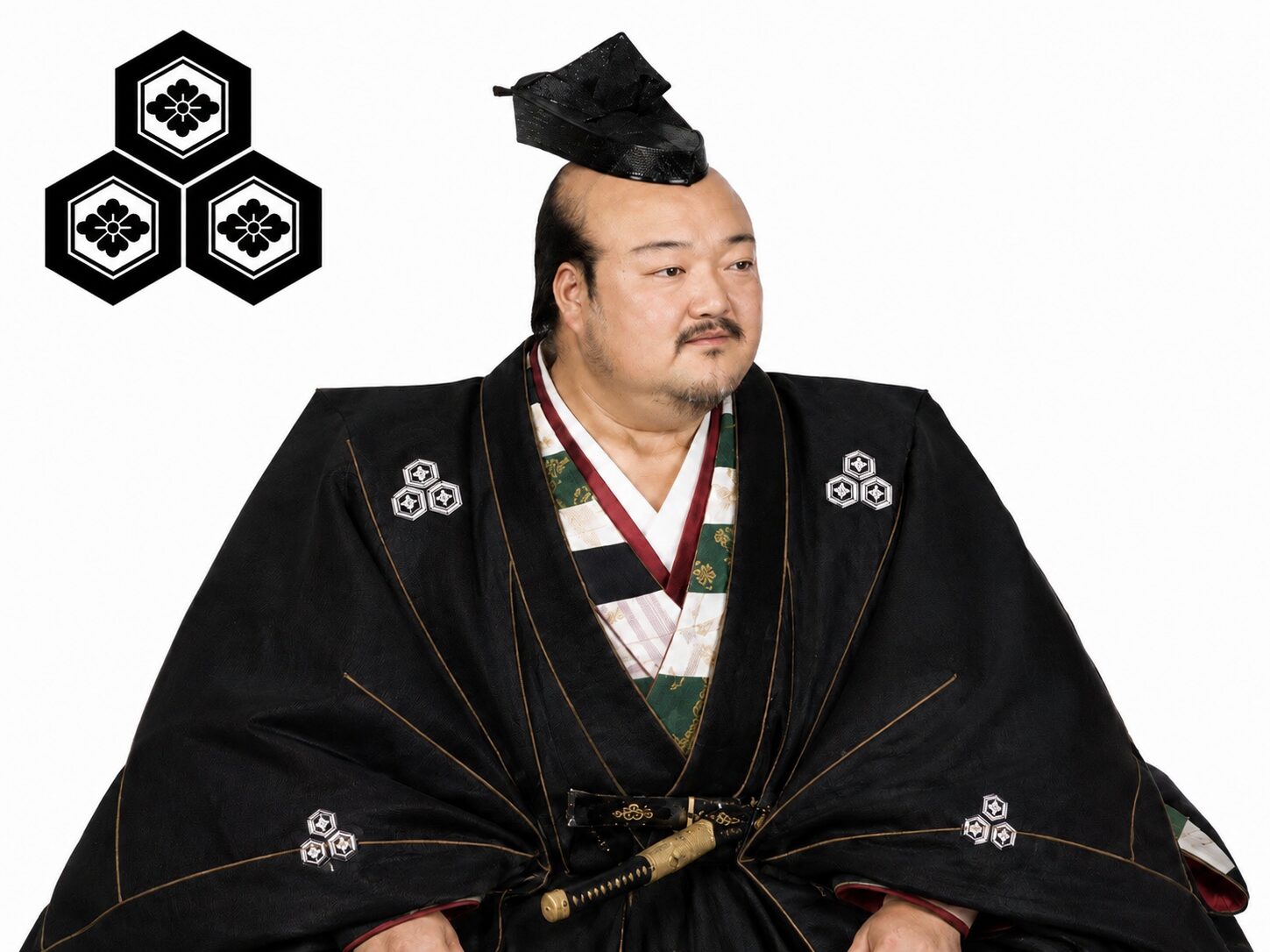
Azai Nagamasa — The Young, Valiant General of Northern Ōmi Who Upheld His Honor and Turned Against Nobunaga
Tenbun 14 (1545) – the 1st day of the 9th month, Tenshō 1 (1573) | Odani Castle, Ōmi Province (present-day Nagahama City, Shiga Prefecture)
Contents
- The Warlord in Three Lines
- The Mainstream Account — The Standard Story Found in Textbooks
- The Theories — Exploring the Possibilities from Various Angles
- A Strategic View
- Famous Words and Sayings of This Warlord
- Anecdotes and Episodes of Azai Nagamasa
- Azai Nagamasa Timeline
- Azai Nagamasa — Family and Personal Relationships
- Related Historic-Site Map
- Related Articles
- Reference Information
- The Warlord in Three Lines
- The Mainstream Account — The Standard Story Found in Textbooks
- The Theories — Exploring the Possibilities from Various Angles
- A Strategic View
- Famous Words and Sayings of This Warlord
- Anecdotes and Episodes of Azai Nagamasa
- Azai Nagamasa Timeline
- Azai Nagamasa — Family and Personal Relationships
- Related Historic-Site Map
- Related Articles
- Reference Information
The Warlord in Three Lines
- The third-generation head of the Azai clan, the warlord house that ruled Northern Ōmi. He took Oda Nobunaga’s younger sister, Lady Oichi, as his wife and formed an alliance with the Oda house.
- He broke with Nobunaga over his ties to the Asakura clan. At the Battle of Kanegasaki in Genki 1 (1570), he betrayed Nobunaga, and through the Battle of Anegawa he fought fiercely against the combined Oda–Tokugawa armies.
- In Tenshō 1 (1573), his home castle of Odani fell to Nobunaga’s assault and he took his own life. He died at age 29. His three daughters would later become figures who shaped the histories of the Toyotomi and Tokugawa houses.
The Mainstream Account — The Standard Story Found in Textbooks
Birth and Succession to the Headship
Azai Nagamasa was born in Tenbun 14 (1545) as the heir of Azai Hisamasa, a warlord of Northern Ōmi. His childhood name was Saruyashamaru. According to the conventional account, his birthplace was below Kannonji Castle in Southern Ōmi. This was because the Azai clan of that time was subordinate to the Rokkaku clan of Southern Ōmi, and his mother, Lady Ono, was made to live below Kannonji Castle as a hostage.
His grandfather, Azai Sukemasa, was a local lord serving the Kyōgoku clan, the military governors of Northern Ōmi. Seizing on a succession dispute within the Kyōgoku, he achieved a gekokujō rise from below, built Odani Castle, and established an independent power base in Northern Ōmi. By the generation of his father, Hisamasa, however, the clan was defeated by Rokkaku Sadayori and his son Yoshikata of Southern Ōmi, and the Azai fell into a position of vassalage under the Rokkaku. Nagamasa’s boyhood coincided with this period of humiliation for the Azai house.
In Eiroku 2 (1559) he came of age and, receiving a character from the name of Rokkaku Yoshikata, took the name “Katamasa.” He married the daughter of Hirai Sadatake, a vassal of Yoshikata — also a symbolic measure of the Azai clan’s submission to the Rokkaku. The Azai house of that time was under Rokkaku control and could not be called an independent warlord domain.
The War of Independence — The Battle of Norada
In the 8th month of Eiroku 3 (1560), the situation shifted. A faction of retainers opposed to Hisamasa’s policy of submission to the Rokkaku rose up, rallying around the young Nagamasa. Nagamasa divorced the wife given to him by the Rokkaku and forced his father Hisamasa into retirement in the Komaru enclosure of Odani Castle. It was, in effect, a coup d’état.
In the 8th month of that year, Rokkaku Yoshikata marched on Norada (present-day Hikone City, Shiga Prefecture) to subjugate the Azai. The two armies clashed at Norada. With a mere 11,000 men, the Azai army crushed the Rokkaku force of 25,000, and the young Nagamasa made a brilliant debut. This was the “Battle of Norada.”
Through this victory the Azai house achieved independence from the Rokkaku. Nagamasa cast off the character “Kata,” granted by Rokkaku Yoshikata, and in Eiroku 4 (1561) inherited his grandfather Sukemasa’s court title of Bizen-no-kami. Then, in Eiroku 6 (1563), he changed his name and came to call himself “Nagamasa.” There was an old theory that the character “Naga” came from Oda Nobunaga’s name, but at that time no relationship with the Oda house had yet been formed, and this view is now rejected.
In Eiroku 6 (1563), the Kannonji Disturbance (the killing of Gotō Katatoyo) broke out within the Rokkaku house. Taking this as an opportunity, a succession of retainers left the Rokkaku to serve the Azai, and Nagamasa’s power expanded rapidly into Inukami and Echi districts.
The Alliance with Oda Nobunaga — Taking Lady Oichi as Wife
Wishing to break the stalemate with the Saitō clan of Mino, Oda Nobunaga sought an alliance with Nagamasa of Northern Ōmi. Nobunaga dispatched Fuwa Mitsuharu as an envoy and proposed both an alliance and a marriage tie. In Eiroku 6 (1563), Wada Koremasa, acting on the orders of Rokkaku Jōtei, worked to arrange a marriage between the Oda and Azai houses, but the effort collapsed at first. In the end, in the 9th month of Eiroku 10 (1567) or early Eiroku 11 (1568), Nobunaga’s younger sister, Lady Oichi, was married to Nagamasa, and the Oda–Azai alliance was established.
At the time of this marriage, it is widely related that, out of regard for his clan’s generations-long friendship with the Asakura house, Nagamasa demanded a pledge of non-aggression from the Oda — that they would “never make war on the Asakura clan.” However, this “pledge of non-aggression” has two competing interpretations: one holds it to be a later invention, while the other holds that, given the relationship between the Azai and Asakura of that time, it was close to reality. This will be examined in detail in the theories below.
Though it was a political marriage, the relationship between Nagamasa and Oichi was a good one. In Eiroku 12 (1569) their eldest daughter, Chacha (the later Yodo-dono), was born; in Genki 1 (1570), their second daughter, Hatsu (the later Jōkō-in); and in Tenshō 1 (1573), their third daughter, Gō (the later Sūgen-in). After the alliance was formed, Nobunaga relied on Nagamasa during his march on the capital in Eiroku 11 (1568), even entertaining Ashikaga Yoshiaki within Azai territory, and the two houses built an intimate relationship.
The Betrayal at Kanegasaki
The honeymoon ended after three years. In the 4th month of Genki 1 (1570), Nobunaga led a great army into Echizen to attack Asakura Yoshikage, who had refused to answer the summons of Shogun Ashikaga Yoshiaki to come to the capital. Tokugawa Ieyasu also took part. After capturing Tezutsuyama Castle and Kanegasaki Castle one after another, just as Nobunaga was about to press on toward the Asakura home base of Ichijōdani, a shocking report arrived: his brother-in-law Azai Nagamasa was about to strike the Oda army from the rear.
At first Nobunaga refused to believe it, calling it “surely a false rumor” (Shinchō Kōki). Why would the brother-in-law to whom he had given his sister betray him? But as report after report confirmed the news, Nobunaga immediately resolved to retreat. Leaving Akechi Mitsuhide, Kinoshita Hideyoshi, Ikeda Katsumasa, and others as a rear guard, he raced back to Kyoto. This is the famous “Retreat from Kanegasaki.” Some accounts say Tokugawa Ieyasu also joined the rear guard, and it was a crisis of the highest order for both the Oda and Tokugawa houses.
Had Nagamasa not acted, Nobunaga might have destroyed the Asakura then and there, and the subsequent course of history might have changed greatly. Conversely, had Nagamasa only decided sooner, there was even a possibility of catching Nobunaga in a pincer and killing him. Nagamasa’s decision became a historic one that drove Nobunaga into a corner.
The Battle of Anegawa
Having fled back to the capital, Nobunaga invaded Northern Ōmi again in the 6th month of the same year, determined to avenge himself. Judging that a direct assault on the Azai home base of Odani Castle would be difficult, he laid siege to nearby Yokoyama Castle. Nagamasa, marching out to relieve it, joined forces with Asakura Kagetake (a great-nephew of Yoshikage) and faced the combined Oda–Tokugawa armies across the Ane River.
On the 28th day of the 6th month, Genki 1 (1570), the two armies clashed on the riverbed of the Ane. This was the renowned “Battle of Anegawa.” Estimates of troop strength vary, but the combined Oda–Tokugawa armies are put at 20,000 to 25,000, and the combined Azai–Asakura armies at around 13,000 to 14,000.
The dazzling course of battle depicted in the Edo-period war chronicle Asai Sandaiki — such as Isono Kazumasa of the Azai side breaking through eleven of the Oda army’s thirteen ranks and closing in on Nobunaga’s headquarters, the “Isono Kazumasa’s Breaking of Eleven Ranks,” and the single combat between Honda Tadakatsu of the Tokugawa side and Magara Naotaka of the Asakura side — are regarded in recent scholarship as heavily embellished by later generations. In the primary source Shinchō Kōki, the course of the fighting is described with extreme brevity as “here and there, each fought as he saw fit,” and it can be confirmed only that the combined Oda–Tokugawa armies ultimately won.
Among the slain on the Azai side were many senior retainers, including Endō Naotsune, Azai Masazumi, Yuge Iezumi, and Imamura Ujinao. On the Asakura side, Magara Naotaka and others were killed. The fiercely contested ground survives today in the place-names “Chihara” (Field of Blood) and “Chigawa” (River of Blood). Anegawa was a bitter defeat for the Azai, but their fighting strength was not destroyed, and they would go on to fight Nobunaga for three more years.
The Battle of Shiga and the Anti-Nobunaga Encirclement
Though defeated at Anegawa, the Azai and Asakura seized the opening while Nobunaga was engaged with the Miyoshi Triumvirate in Settsu and rose up again in the 9th month of that year. Joining with the warrior-monks of Enryaku-ji on Mount Hiei, they advanced to Sakamoto in Ōmi. This was the “Battle of Shiga.”
The Azai–Asakura army achieved considerable results, killing Nobunaga’s brother Oda Nobuharu and his senior retainer Mori Yoshinari, among others. Struggling with a war on two fronts, Nobunaga was finally brought to terms through the mediation of Emperor Ōgimachi and Shogun Ashikaga Yoshiaki. For Nagamasa, it was a battle that recovered, to a degree, the loss suffered at Anegawa.
Afterward, at the call of Ashikaga Yoshiaki, the “First Anti-Nobunaga Encirclement” was formed. A configuration took shape in which Takeda Shingen, Hongan-ji’s Kennyo, Azai Nagamasa, Asakura Yoshikage, the Miyoshi Triumvirate, and others surrounded Nobunaga. In Genki 3 (1572), Takeda Shingen launched his westward campaign, and Nobunaga faced his greatest crisis. Nagamasa too, in coordination with the Asakura, continued to resist the Nobunaga forces that had advanced to fortifications such as the Toragozeyama stockade south of Odani Castle.
The Collapse of the Encirclement and the Fall of Odani Castle
In the 4th month of Genki 4 (1573), Takeda Shingen, Nobunaga’s greatest threat, died of illness in the midst of his westward campaign. The encirclement began to collapse all at once. In the 7th month of that year, Nobunaga expelled Ashikaga Yoshiaki, who had raised arms at Makishima Castle (the Battle of Makishima Castle), and at last became able to devote his full strength to subjugating the Azai and Asakura. In the same month, he had the era name changed from “Genki” to “Tenshō.”
In the 8th month of Tenshō 1 (1573), Nobunaga advanced into Northern Ōmi at the head of an army of 30,000. On the 8th day of the 8th month, beginning with the defection of the Azai senior retainer Atsuji Sadayuki to the Oda side, unease spread through the Azai house. Asakura Yoshikage set out to the rescue with an army of 20,000, but Nobunaga immediately gave chase. On the 20th day of the 8th month, Asakura Yoshikage took his own life at Ichijōdani, and the Asakura clan was destroyed.
The news of the Asakura’s destruction was fatal for the isolated Azai house at Odani Castle. On the 26th day of the 8th month, Nobunaga entered the Toragozeyama stockade and began the all-out assault on Odani Castle. Hashiba Hideyoshi carried out covert overtures to Azai retainers within the castle and seized the Kyōgoku enclosure at the castle’s core, succeeding in cutting off the Komaru where the father Hisamasa was holed up from the main keep where Nagamasa was holed up.
On the 27th day of the 8th month, the isolated Hisamasa took his own life in the Komaru. Nagamasa, in the main keep, also resolved on his end. Entrusting his wife Lady Oichi and his three daughters to Fujikake Nagakatsu to be handed over to the Oda army, he assigned retainers to his heir, Manpukumaru, and had the boy escape outside the castle. Having fulfilled his final duties, on the 1st day of the 9th month Nagamasa took his own life at the Akao residence to the southeast of the main keep, together with his senior retainer Akao Kiyotsuna and his younger brother Azai Masamoto. He died at age 29.
The Azai clan of Northern Ōmi, which had continued from his grandfather Sukemasa, was destroyed in only three generations. The heir Manpukumaru, who had fled, was captured by Hideyoshi’s army and crucified at Sekigahara. He is said to have been only about ten years old.
The Theories — Exploring the Possibilities from Various Angles
【Theory 1】What Was the True Reason for the “Betrayal”?
As to why Nagamasa betrayed Nobunaga at Kanegasaki, there is still no definitive accepted theory. Several explanations stand side by side.
The First Theory: Violation of the Non-Aggression Pledge with the Asakura (the conventional view)
The most widely known theory. At the time of taking Lady Oichi as his wife, there was a pledge of non-aggression between Nobunaga and Nagamasa that “no war would be made on the Asakura,” and because Nobunaga broke this, Nagamasa flew into a rage and defected. This was widely adopted in Edo-period war chronicles, and it is the mainstream view in modern historical novels and dramas as well.
However, no primary source directly attesting to this “non-aggression pledge” exists. There is circumstantial evidence that Nagamasa harbored dissatisfaction at being “treated like a vassal” by Nobunaga (in a memorandum Nobunaga sent to Mōri Motonari on the 10th day of the 7th month of Genki 1, Nagamasa is depicted as a vassal-like figure), but this cannot be called firm grounds for the pledge-violation theory.
The Second Theory: A Relationship of Subordination to the Asakura (recent scholarship)
The theory most strongly favored in recent years. Among the documents held by the Shimogō Kyōsaikai (collected in the Compilation of Documents of Three Azai Generations), there exists a document in which the Azai clan addresses the Asakura clan as “Oyakata-sama” (lord). Also, in Ichijōdani in Echizen there remain place-names such as “Asai-dono” and “Asai-mae,” suggesting that the Azai clan had been granted a residence in Ichijōdani.
What these sources show is that the Azai and Asakura clans were not in an equal “alliance” relationship but in one of “vassalage,” with the Azai subordinate to the Asakura. It was not uncommon for kokujin (local lords) of that period to be subordinate simultaneously to multiple, non-conflicting daimyō. So long as the Asakura and Oda did not clash, there was no problem in Nagamasa, who was subordinate to the Asakura, forming a new subordinate tie by taking Oda Nobunaga’s sister. But the moment Nobunaga attacked the Asakura, Nagamasa had no choice but to move to protect his “master house,” the Asakura — such is this theory.
If this is correct, Nagamasa’s “betrayal” was not an emotional decision but natural conduct for a kokujin of the Warring States period. Indeed, it could be said that the moment Nobunaga resolved on the Asakura campaign, Nagamasa’s options were all but closed off.
The Third Theory: Led by the Father, Hisamasa
The theory that the one who led the betrayal was not Nagamasa but his retired father, Hisamasa. Hisamasa is said to have valued the clan’s long relationship with the Asakura and to have strongly pressed Nagamasa to break with the Oda. It is also handed down that Nagamasa’s mother, Lady Ono, had received the Asakura’s care during her time as a hostage because of a tie with the Asakura house.
The historian Ōta Hiroshi and others point to a generational conflict within the Azai house — a Hisamasa faction emphasizing the Asakura and a Nagamasa faction emphasizing the Oda — and hold that the defection was decided in the end when the Hisamasa faction forced the issue. That said, while it can be confirmed from several joint-signature documents that Hisamasa retained a degree of voice even after his retirement, it cannot be asserted that Nagamasa acted entirely according to his father’s intentions.
The Fourth Theory: The Heir-Hostage Problem
The theory that at the conclusion of the alliance Nobunaga demanded Nagamasa’s heir Manpukumaru as a hostage, and that Nagamasa flew into a rage over this. However, contemporary sources supporting this are scant.
Which of these multiple theories is the truth has still not been settled. It is most reasonable to consider that the result arose from a complex interplay of several factors. At the very least, the latest scholarship’s assessment is that it was not the simple beautiful tale of “an honor-bound Nagamasa keeping his promise with the Asakura.”
【Theory 2】Is Oichi’s “Bean-Sack Legend” Historical Fact?
As an anecdote in which Oichi saved Nobunaga at the Battle of Kanegasaki, the “bean-sack legend” is widely known. Learning of Nagamasa’s betrayal, Lady Oichi is said to have sent Nobunaga a sack of beans tied at both ends as an encampment gift, hinting that he was a “rat in a bag” (caught in a pincer). Seeing this, Nobunaga is said to have immediately resolved to retreat.
This dramatic anecdote has appeared again and again in dramas and novels, becoming an episode symbolizing Lady Oichi’s wit and the love between brother and sister. In today’s historical scholarship, however, it is regarded as very largely a later invention.
First, this story is recorded only in the Asakura Kaki (also called the Asakura Yoshikage-ki), composed in the mid-Edo period, and appears in no other contemporary source. Neither the contemporary Shinchō Kōki nor the Asakura Shimatsuki contains any account of Oichi sending a sack of beans.
Second, there are doubts about the content itself. To perceive a “pincer attack” in an instant from a sack tied at both ends is, as a code, far too abstract. The historian Watanabe Daimon points out that while it is fact that Nobunaga sensed Nagamasa’s betrayal in advance and succeeded in retreating, it is extremely doubtful whether there was a symbolic “bean-sack” event behind it.
Third, there is Lady Oichi’s position at the time. Having already borne two daughters with Nagamasa and being on good terms with her husband, Oichi had little motive to betray him and inform her brother. This is also inconsistent with the fact that Oichi remained with the Azai house and ultimately shared Nagamasa’s fate to the fall of Odani Castle.
That said, it is true that women in political marriages between warlords did have an aspect of being “spies for their birth house.” The possibility that Oichi conveyed changes in the two houses’ circumstances to her birth family cannot itself be denied. But the specific anecdote of the “bean sack” is best seen as a tale nurtured from the Edo period onward by people who sought a “drama of the loyal subject and wise wife.”
【Theory 3】Was the Battle of Anegawa an “Overwhelming Oda Victory”?
As for the outcome of the Battle of Anegawa, it has long been held to be an “overwhelming victory for the combined Oda–Tokugawa armies.” Edo-period war chronicles such as the Asai Sandaiki and the Hoan Nobunaga-ki emphasized this picture, depicting in particular the great exploits of the Tokugawa army. The conventional view holds that Tokugawa Ieyasu broke the Asakura army and, riding that momentum, shattered from the flank the Azai army that had been closing in on Nobunaga’s headquarters.
In recent years, however, serious doubt has been cast on this conventional view.
The “Not an Overwhelming Victory” Theory
The historian Ōta Hiroshi points out that the Battle of Anegawa was not an overwhelming victory for the combined Oda–Tokugawa armies but was in reality closer to a draw with losses on both sides. The decisive grounds are the fact that the very next year a formal reconciliation was concluded between the Azai and Oda. Had it truly been an overwhelming victory, Nobunaga would not have made peace but would have stormed Odani Castle at once — such is Ōta’s argument. In fact, after Anegawa the Azai continued to fight Nobunaga on even terms for three years, and at the Battle of Shiga they struck back.
The Problem of War-Chronicle Invention
The dazzling episodes of the Battle of Anegawa — Isono Kazumasa’s “Breaking of Eleven Ranks,” the single combat between Honda Tadakatsu and Magara Naotaka, the reversal of fortunes by Tokugawa Ieyasu’s flank attack — all first appear in Edo-period war chronicles. There is no account of them in the primary source Shinchō Kōki, where even Tokugawa Ieyasu’s exploits are noted only briefly as “Lord Ieyasu charged forth.” It is highly likely that, through the Tokugawa historical view of the Edo period, Ieyasu’s battle merits were depicted with great exaggeration.
The Surprise-Attack Theory
The researcher Takasawa Hitoshi advances a theory that the Battle of Anegawa was a “surprise attack” by the Azai–Asakura army. The Shinchō Kōki records that, just after the Oda army mistakenly believed the Azai–Asakura army had once withdrawn from Mount Ōyori on the early morning of the 27th day of the 6th month, the enemy suddenly reappeared at extreme close range — a distance of thirty chō (about 3.3 km) — at dawn on the 28th. The surprise-attack theory holds that the Oda army had no time to set its formation and was forced into combat at once.
It is highly likely that the true picture of the Battle of Anegawa differed considerably from the dazzling depictions of later war chronicles. The textbook image of a “come-from-behind victory through Tokugawa Ieyasu’s exploits” may have been a “tale” created by the early-modern Tokugawa historical view.
【Theory 4】Was the “Betrayal” Led by Nagamasa or by His Father, Hisamasa?
As touched on in Theory 1, who led the Azai house’s defection from the Oda? Nagamasa, or his father Hisamasa, who continued to wield influence despite being in retirement? This is one of the important points of debate in current Azai-clan scholarship.
Grounds for the Hisamasa-Led Theory
Hisamasa was a man who valued the Azai house’s traditional policy — maintaining a close relationship with the Asakura clan. He had inherited the strategy from his grandfather Sukemasa’s generation of “using the powerful Asakura clan of Echizen as a backer to counter the Rokkaku to the south and the Oda to the east.” Even after his retirement he resided in the Komaru of Odani Castle, and many joint-signature documents with Nagamasa survive; he had not lost his political voice.
If one adopts the theory of a split within the house — Nagamasa the reformist leading the Oda alliance, Hisamasa the conservative emphasizing the Asakura — then the Kanegasaki decision can be interpreted as having been realized in the end when the Hisamasa faction forced the issue. In historical novels, scenes are often depicted in which Hisamasa persuades an agonized Nagamasa to make the decision.
The Nagamasa-Led Theory
On the other hand, there is a theory that Nagamasa himself made the decision. Nagamasa succeeded to the headship young, but ever since his victory at the Battle of Norada in Eiroku 3 he had accumulated ten years’ experience as an independent warlord, and there is no doubt he was the supreme leader of the house. Even granting that he respected his father’s opinion, the natural view is that the final decision was made by Nagamasa himself.
The House-Council Theory
To begin with, the decision-making of a warlord was often carried out not by the lord’s sole judgment but by council with senior retainers. The Kōnōki records that even at the time of his succession to the headship, Nagamasa retired his father through a “council” with retainers such as the Akao, Yōno, Dodo, Endō, and Anyōji. It is highly likely that the Kanegasaki decision, too, was made through a council between Nagamasa and his senior-retainer corps. It may be closer to reality that, in the setting of that council, Hisamasa’s opinion carried great weight.
In any case, simple character judgments such as “Nagamasa was his father’s puppet” or “Hisamasa was a dullard who destroyed the house” are being reexamined in recent scholarship. Hisamasa’s Asakura-emphasizing policy, too, has come to be evaluated as having a certain rationality as the Azai house’s strategy for survival since Sukemasa’s time.
【Theory 5】Is the “Skull-Cup Legend” Historical Fact?
One of the most famous anecdotes concerning Azai Nagamasa is the “skull-cup legend.” It is the brutal episode in which Nobunaga is said to have covered the skulls of Nagamasa, his father Hisamasa, and Asakura Yoshikage with gold leaf, made them into drinking cups, and drunk sake from them. There is even a theory that this became a remote cause of the Honnō-ji Incident. Vividly depicted in Shiba Ryōtarō’s Kunitori Monogatari, it has been reenacted in many dramas.
However, the greater part of this anecdote is highly likely a later invention.
The Original Text of the Shinchō Kōki
The primary source Shinchō Kōki records the scene of a banquet on the 1st day of the 1st month of Tenshō 2 (1574). What is plainly stated in the original text is that the skulls of the three men — Asakura Yoshikage, Azai Shimotsuke (Hisamasa), and Azai Bizen (Nagamasa) — were given a “hakudami” finish (a decoration of lacquer coated with gold dust and gold leaf) and displayed at the banquet, set upon a stand. There is nowhere any account that he “made them into cups and drank sake.”
The Origin of the “Cup” Episode
The specific account that “the skulls were made into cups” first appears in the Asai Sandaiki, a war chronicle composed in the mid-Edo period. Even there, strictly speaking, it is not written that they were “made into cups,” but that they were “brought out as a relish upon the cups.” This was further embellished by later generations, growing into the brutal image of “drinking sake from skulls.” Its spread through such works as Shiba Ryōtarō’s novels is a comparatively recent thing.
The Meaning of “Hakudami“
The act of applying hakudami to a skull was itself a custom carried out in ancient China, Central Eurasia, and elsewhere as “an expression of respect for a defeated enemy general.” There is virtually no precedent for it in Japan, but considering that Nobunaga was well versed in Confucianism and Chinese lore, it has been suggested that rather than “an insult” it may have been “an act of respect for the defeated generals and a prayer for the repose of their souls.” A reappraisal has also been made in recent years that, at the New Year of a new era (the change from Genki to Tenshō having come in the 7th month of the previous year) — a setting of purification — he prayed for the repose of the three generals and looked toward a fresh start.
That said, the very act of pasting gold leaf onto a brother-in-law’s skull and displaying it at a banquet is, by modern sensibilities, shocking enough. Whether or not he “made them into cups,” the fact that Nagamasa received such treatment after his death can be called historical.
【Theory 6】Nagamasa’s Character — Is the “Honor-Bound General” Image Correct?
Azai Nagamasa’s character has long been spoken of through the image of an “honor-bound, virtuous lord” and a “handsome-man, beautiful-woman couple.” In recent years, however, this image too is being reexamined.
The True Figure Seen from the Portrait
The most famous portrait of Nagamasa is an Important Cultural Property held by Jimyō-in on Mount Kōya. It is said to have been commissioned in Tenshō 17 (1589) by his eldest daughter Chacha (Yodo-dono) as a memorial offering for her parents. He is depicted with a plump build, differing from the modern image of a “handsome man.” The “handsome man, beautiful woman” image was highly likely nurtured by the daughters who had lost their fathers and by the wishes of later generations.
The Origin of the “Man of Honor” Image
The image of Nagamasa as “a man of honor who kept faith with the Asakura and betrayed Nobunaga” is a later image reflecting Edo-period Confucian ethics. In the bushidō of the Edo period, “the honor between lord and vassal” was held to be the highest virtue, and Nagamasa’s keeping of honor with the Asakura clan was emphasized as a virtue. But as seen in Theory 1, the latest scholarship holds it highly likely that Nagamasa’s decision was based on more realistic factors — a “relationship of subordination to the Asakura,” the “conservative faction within the house forcing the issue” — rather than on “honor.”
Evaluation as a Domain Administrator
On the other hand, Nagamasa also had an aspect as an “excellent domain administrator.” According to the Kokushi Daijiten, in Nagamasa’s generation the Azai clan advanced new reorganizations of the retainer corps, such as the branch-castle garrison system, direct grants of stipends to the same-surname vassal class, and the conversion of retainers into auxiliary forces. He also continued the irrigation arbitrations from his father Hisamasa’s time (such as the two weirs of Mochi-no-i and Matsuda-i) and strengthened control of the plains of Northern Ōmi. The bonds with his retainers were firm as well, and the fact that many senior retainers did not betray him but died with him at the destruction tells of Nagamasa’s popular esteem.
His Use of the “Genki” Era Name at the End
There is a noteworthy source. Nagamasa’s date of death was conventionally held, following the Shinchō Kōki, to be the 28th day of the 8th month, but a recently discovered letter of commendation dated the 29th day of the 8th month, addressed to Katagiri Naosada, confirmed that the date of death was the 1st day of the 9th month. In this letter, Nagamasa still uses the era name “Genki,” even though that year the era had been changed from “Genki” to “Tenshō” at Nobunaga’s initiative in the 7th month. There is a theory that interprets this as a declaration of his will to resist Nobunaga.
It is highly likely that, in political judgment, Nagamasa moved within a strategy of subordination. But the strength of will with which he refused to submit to Nobunaga to his final moment deserves to be remembered as the true figure of a young warlord of 29. It is not the simple beautiful tale of an “honor-bound general,” but the fact that he fought through with conviction and resolve does not change.
A Strategic View
When considering Azai Nagamasa’s strategic standing, the greatest point is the fact that he was the ruler of “the geopolitical crossroads that was Northern Ōmi.”
Northern Ōmi was a strategic point of vital importance in the central part of Japan, where the Hokkoku Road linking Kyoto and the eastern provinces crossed the Nakasendō linking Kyoto and the Tōkai region. For Nobunaga to aim for Kyoto from Mino, holding Northern Ōmi was an essential condition. Conversely, if Northern Ōmi were held by an enemy, Nobunaga’s westward strategy would collapse from its foundations. The reason Nobunaga carried out the highest order of political marriage — wedding his sister Lady Oichi — to conclude an alliance with Nagamasa, who was not so great a power, was precisely this geopolitical value.
At the same time, Northern Ōmi was both the southward path of the Asakura clan of Echizen and the northward path of the Rokkaku clan of Southern Ōmi. The Azai clan was a “buffer zone” caught between two great powers, and since Sukemasa and Hisamasa they had adopted the survival strategy of “using the Asakura clan as a backer to counter the threat from the south.” If Nagamasa could add the alliance with the Oda on top of this structure without altering it, he should have been able to secure an ideal position. Indeed, so long as there was no conflict between Nobunaga and the Asakura, it is highly likely the Azai could have continued to prosper as a “most important partner” valued by both the Oda and the Asakura.
But Nobunaga’s Asakura campaign shattered this balance in an instant. Nagamasa’s options were as follows.
Option A: Side with the Oda — abandon the Asakura and cooperate with Nobunaga’s unification of the realm. The most rational in the short term, but a betrayal of the Asakura clan, his generations-long master house. The conservative faction within the house would fiercely oppose it.
Option B: Side with the Asakura — keep the generations-long pact and break with Nobunaga. This accorded with the house’s tradition, but his own strength was insufficient to oppose Nobunaga’s military power.
Option C: Neutrality — side with neither and look on. Seemingly wise, but in reality the worst option, since he would be regarded as an “enemy” by both camps.
Nagamasa chose Option B. In hindsight, had he chosen Option A and cooperated with Nobunaga’s unification of the realm, it is highly likely the Azai clan could have survived as Oda vassals and, after the Honnō-ji Incident, retained daimyō status under the Toyotomi regime. The price of not betraying the brother of his wife Oichi was great, and in the end it drove himself, his wife, and his children to tragedy.
Yet to brand Option B a “foolish decision” is hindsight. At the time it was difficult for Nagamasa to foresee Nobunaga’s rapid growth. A mighty anti-Nobunaga encirclement existed — Takeda Shingen, Asakura Yoshikage, the Hongan-ji, the Miyoshi Triumvirate, Ashikaga Yoshiaki — and at the point when Shingen launched his westward campaign, it was rather Nobunaga who was in danger of destruction. For the several months from the end of Genki 3 (1572) to the 4th month of Genki 4 (1573), there was indeed a moment when Nagamasa’s choice appeared to be the “correct answer.”
What moved history was the chance occurrence of Shingen’s death by illness. Had Shingen not died, the destruction of the Oda house and the survival of the Azai house might have been reversed. Nagamasa’s tragedy can be called less a misjudgment on his part than a symbol of the “unreadable fate” of the Warring States age.
Famous Words and Sayings of This Warlord
“I will not deceive Nobunaga.”
Said to be Nagamasa’s words as transmitted by the Edo-period war chronicle Asai Sandaiki. They are handed down as spoken in a scene where he admonished retainers opposed to the Asakura campaign, saying that for the time being the alliance with Nobunaga should be kept. Though heavily colored by later invention, they have been passed down as words symbolizing the good relationship between Nobunaga and Nagamasa in the early days of their alliance. In the end Nagamasa chose his tie with the Asakura and made a decision contrary to these very words.
— Source: Asai Sandaiki (composed in the mid-Edo period)
“Send Oichi back, and I shall cut my belly.”
Words said to have been spoken by Nagamasa in the scene of handing over Lady Oichi and his daughters to the Oda army just before the fall of Odani Castle. Though an embellishment by later war chronicles, they are known as words conveying Nagamasa’s resolve in saving his wife’s and children’s lives at the last as a husband. Lady Oichi at first refused this and tried to share Nagamasa’s fate, but at Nagamasa’s persuasion she left the castle with the three daughters. They are words symbolizing the climax of the fall of Odani Castle, where Lady Oichi’s resolve and Nagamasa’s decision as head of the household intersect.
— Source: Asai Sandaiki and other war chronicles
Death Poem (attributed)
Gist: “Even in perishing there is, perhaps, a worth to be wished for. For if one does not perish, there is no worth of being spoken of through the ages.”
A waka transmitted as Nagamasa’s death poem. It is a poem meaning “There is surely meaning even in perishing. If one does not perish, there is no worth of being handed down to later generations.” However, there is no reliable primary source holding that Nagamasa himself composed it, and it is highly likely it was made by later generations in mourning for Nagamasa’s tragic end.
— Source: Asai Sandaiki and others
Anecdotes and Episodes of Azai Nagamasa
Oichi as the Mother of Three Sisters
Between Nagamasa and Oichi were born three daughters — Chacha, Hatsu, and Gō. After Nagamasa’s death they were taken in by the Oda house, and each became a figure who moved Japanese history. The eldest, Chacha, became a concubine of Toyotomi Hideyoshi, was called Yodo-dono, and bore Toyotomi Hideyori. The second, Hatsu, married Kyōgoku Takatsugu of the Ōmi Kyōgoku house and later, as Jōkō-in, devoted herself to the peace negotiations at the Siege of Osaka. The third, Gō, after many twists and turns became the principal wife of Tokugawa Hidetada and the birth mother of the third shogun, Tokugawa Iemitsu. Gō’s daughter Masako became the consort of Emperor Go-Mizunoo, and her daughter became Empress Meishō. Nagamasa’s bloodline came to connect even to the imperial house.
The Tragedy of the Heir, Manpukumaru
At the fall of Odani Castle, Nagamasa had his heir Manpukumaru escape outside the castle. While in hiding at Tsuruga in Echizen, accompanied by retainers, the boy was discovered and seized by Hashiba Hideyoshi’s army. On Nobunaga’s orders, Hideyoshi crucified Manpukumaru at Sekigahara. He is said to have been only about ten years old. It was a measure to extinguish the male line of the Azai house. While handed down as an anecdote showing Hideyoshi’s cold-bloodedness, it is also a tale that makes one feel the deep karma of the Warring States age, for Hideyoshi himself would in later years take Nagamasa’s daughter Chacha as a concubine.
The Character Granted by Yoshikata, Not Yoshitatsu
At his coming of age, Nagamasa received the character “Kata” from his master Rokkaku Yoshikata and named himself “Katamasa,” but after independence he cast it off. At the time, returning a granted character was a clear declaration of severing the lord-vassal relationship. Nagamasa used the very act of naming as a political message. As for his later renaming to “Nagamasa,” his independent spirit is also evident in the point that he chose an original designation rather than the “Yoshi” of Ashikaga Yoshiaki, his lord at the time.
The Solidarity of the Retainer Corps — His End with Akao Kiyotsuna
At the fall of Odani Castle, the place of Nagamasa’s suicide was not the main keep but the residence of the senior retainer Akao Kiyotsuna, southeast of the main keep. At the Akao residence, Nagamasa met his end together with Kiyotsuna and his younger brother Azai Masamoto. The fact that senior retainers did not abandon Nagamasa until just before the castle fell tells of the firm solidarity of the retainer corps. On the other hand, there were also those, such as Atsuji Sadayuki and Asami Dōsai, who defected and ran to the Oda side, but Nobunaga later executed them. Nobunaga’s stance of “no mercy for traitors” appeared, but as a result the loyalty of the senior retainers like Akao who died with their lord came to raise the Azai house’s reputation.
The Legend of the Handsome Man and Beautiful Woman
Nagamasa is handed down as a “handsome man” and Oichi as “the most beautiful woman of the Warring States period.” Much of this couple’s image is colored by the imagination of later generations. Looking at the portrait at Jimyō-in on Mount Kōya, Nagamasa was in fact of a plump countenance, differing from a handsome man in the modern sense. That Oichi was a beauty, however, is conveyed by several contemporary sources; she was likely, as in the reminiscence of her daughter Hatsu (that at 37 she looked 22 or 23), a possessor of beauty who retained her youthfulness. Later generations probably layered the “handsome man, beautiful woman” image onto the tragic couple.
Standing Beside His Father Hisamasa as a Skull
The Shinchō Kōki records that the “hakudami heads” Nobunaga displayed at the New Year’s banquet of Tenshō 2 were noted in the order Asakura Yoshikage, Azai Shimotsuke-no-kami (Hisamasa), Azai Bizen-no-kami (Nagamasa). Nagamasa and Hisamasa, side by side, were served before Nobunaga as “relish.” Father and son had at times parted ways, but in the end they took their own lives within the same castle at nearly the same time, and even after death they were thus placed side by side. It has been handed down both as an anecdote emphasizing “the bond of father and son” and as one emphasizing “Nobunaga’s severity.”
Nagamasa’s Grave — Tokushō-ji
Nagamasa’s grave is now at Tokushō-ji in Nagahama City, Shiga Prefecture. It was originally a temple called Iō-ji below Odani Castle, the family temple of the Azai house. After the fall of Odani Castle, when Hideyoshi moved his residence from Odani to Nagahama Castle, he changed the temple’s name from the Azai Sukemasa’s Buddhist name “Tokushō-in” to “Tokushō-ji,” relocated it below Nagahama Castle, granted it a temple stipend of 30 koku, and protected it. Within its grounds stand the graves of three Azai generations (Sukemasa, Hisamasa, Nagamasa) side by side. Hideyoshi, having been granted the Azai’s former domain and having taken their daughter Chacha as a concubine, also generously protected the family temple. A complicated bond indeed.
Azai Nagamasa Timeline
| Year | Age | Event |
|---|---|---|
| 1545 | 1 | Born as the heir of Azai Hisamasa. His mother was Lady Ono (of the Iguchi clan). Childhood name Saruyashamaru. His birthplace is held to be below the Rokkaku’s Kannonji Castle. |
| 1559 | 15 | Comes of age. Receiving a character from Rokkaku Yoshikata, names himself “Katamasa.” Marries the daughter of Yoshikata’s vassal Hirai Sadatake. |
| 1560 | 16 | Succeeds to the headship. Retires his father Hisamasa and divorces Hirai’s daughter. Crushes Rokkaku Yoshikata at the Battle of Norada and gains independence. |
| 1561 | 17 | Inherits his grandfather Sukemasa’s court title and calls himself “Bizen-no-kami.” Casts off “Katamasa” and later renames himself “Nagamasa.” |
| 1563 | 19 | The Kannonji Disturbance within the Rokkaku house. Many retainers enter Azai service, and Nagamasa’s power expands. |
| 1567 or 1568 | 23–24 | Takes Oda Nobunaga’s younger sister, Lady Oichi, as his second wife. The Oda–Azai alliance is established. |
| 1568 | 24 | Cooperates with Nobunaga’s army marching on the capital. Supports Nobunaga’s installation of Ashikaga Yoshiaki. |
| 1569 | 25 | Eldest daughter Chacha (Yodo-dono) is born. |
| 1570 (4th month) | 26 | Battle of Kanegasaki. Betrays Nobunaga and, joining with the Asakura, tries to catch the Oda army in a pincer (Nobunaga succeeds in retreating). |
| 1570 (6th month) | 26 | Battle of Anegawa. Together with Asakura Kagetake, clashes with the combined Oda–Tokugawa armies. Defeated. |
| 1570 (6th month) | 26 | Second daughter Hatsu (Jōkō-in) is born. |
| 1570 (9th–12th months) | 26 | The Battle of Shiga. Joining with the Asakura, advances to Sakamoto and kills Nobunaga’s brother Oda Nobuharu and Mori Yoshinari. Makes peace. |
| 1571 (9th month) | 27 | Nobunaga’s burning of Mount Hiei (retaliation against the warrior-monks who had supported the Azai and Asakura). |
| 1572 | 28 | Takeda Shingen launches his westward campaign. The period when the anti-Nobunaga encirclement functioned most powerfully. Nobunaga builds a stockade at Toragozeyama and presses Odani Castle. |
| 1573 (4th month) | 29 | Takeda Shingen dies. The anti-Nobunaga encirclement begins to collapse. |
| 1573 (7th month) | 29 | Nobunaga expels Ashikaga Yoshiaki. The era is changed from “Genki” to “Tenshō.” |
| Around the 5th month of 1573 | 29 | Third daughter Gō (Sūgen-in) is born. |
| 1573, 8th day of the 8th month | 29 | The Azai senior retainer Atsuji Sadayuki defects to the Oda side. Nobunaga begins the invasion of Northern Ōmi with an army of 30,000. |
| 1573, 20th day of the 8th month | 29 | Asakura Yoshikage takes his own life at Ichijōdani. The Asakura clan is destroyed. |
| 1573, 27th day of the 8th month | 29 | The Kyōgoku enclosure falls; the main keep and the Komaru are cut off. The father Hisamasa takes his own life in the Komaru. |
| 1573, 1st day of the 9th month | 29 | Odani Castle falls. Nagamasa takes his own life at the Akao residence. He died at age 29. The Azai clan is destroyed. |
| 1573 (10th month) | — | The heir Manpukumaru is crucified at Sekigahara. |
| New Year of 1574 | — | At a banquet at Gifu Castle, the hakudami-finished skulls of Nagamasa, Hisamasa, and Yoshikage are displayed (Shinchō Kōki). |
※ Ages are by the traditional count. Background color: red = events related to his end.
Azai Nagamasa — Family and Personal Relationships
Family
| Relation | Person | Summary |
|---|---|---|
| Grandfather | Azai Sukemasa | First-generation head of the Azai house. Drove out the Kyōgoku, military governors of Northern Ōmi, built Odani Castle, and became a warlord. |
| Father | Azai Hisamasa | Second-generation head of the Azai house. Vassal to the Rokkaku. Forced into retirement by Nagamasa but retained influence thereafter. Took his own life in the Komaru at the fall of Odani Castle. |
| Mother | Lady Ono | Daughter of the Iguchi clan. Principal wife of Hisamasa. Had a past of being made to live below Kannonji Castle as a hostage. |
| First wife | Daughter of Hirai Sadatake | Daughter of a vassal of Rokkaku Yoshikata. Divorced upon Nagamasa’s independence. |
| Second wife | Lady Oichi | Younger sister of Oda Nobunaga. Handed down as “the most beautiful woman of the Warring States period.” Her relationship with Nagamasa was good. Later remarried Shibata Katsuie and took her own life with Katsuie after the Battle of Shizugatake. |
| Heir (by first wife) | Azai Manpukumaru | After the fall of Odani Castle, seized at Tsuruga and crucified at Sekigahara (about ten years old). |
| Second son | Azai Manjumaru | Said to have taken the tonsure and survived. |
| Eldest daughter (by Lady Oichi) | Chacha (Yodo-dono) | Became a concubine of Toyotomi Hideyoshi and bore Toyotomi Hideyori. Took her own life at the Siege of Osaka. |
| Second daughter (by Lady Oichi) | Hatsu (Jōkō-in) | Married Kyōgoku Takatsugu. Devoted herself to the Toyotomi–Tokugawa peace negotiations at the Siege of Osaka. |
| Third daughter (by Lady Oichi) | Gō (Sūgen-in) | Became the principal wife of Tokugawa Hidetada and the birth mother of the third shogun, Tokugawa Iemitsu. Her daughter Masako became consort to Emperor Go-Mizunoo. |
| Younger brothers | Azai Masamoto, Azai Masayuki | Masamoto took his own life with Nagamasa at the fall of Odani Castle; Masayuki was killed at the Battle of Anegawa. |
Principal Retainers, Allies, and Adversaries
| Relationship | Person | Summary |
|---|---|---|
| Ally → enemy | Oda Nobunaga | Brother of his wife Oichi. An ally at first, but the tie broke over the Asakura campaign. Destroyed Nagamasa. |
| Ally | Asakura Yoshikage | Warlord of Echizen. The Azai clan’s generations-long sworn friend (in reality their master house). Destroyed together. |
| Ally | Takeda Shingen | Center of the anti-Nobunaga encirclement. Died of illness during his westward campaign. |
| Ally | Kennyo | Abbot of Ishiyama Hongan-ji. A pillar of the anti-Nobunaga encirclement. |
| Ally | Ashikaga Yoshiaki | Fifteenth shogun of the Muromachi shogunate. The leader of the anti-Nobunaga encirclement. |
| Retainer (senior) | Akao Kiyotsuna | Of chief-elder rank in the Azai house. Master of the Akao residence, the site of Nagamasa’s suicide. Shared Nagamasa’s fate. |
| Retainer (senior) | Endō Naotsune | Killed at the Battle of Anegawa. A senior retainer who supported Nagamasa’s independence. |
| Retainer → defector | Isono Kazumasa | The strongest warrior of the Azai house. Defended Sawayama Castle but, isolated by Hideyoshi’s stratagems, surrendered to the Oda side. |
| Retainer → defector | Atsuji Sadayuki | Azai senior retainer and lord of Yamamotoyama Castle. Defected to the Oda side in 1573, triggering the fall of Odani Castle. Later executed. |
| Former lord → enemy | Rokkaku Yoshikata (Jōtei) | Warlord of Southern Ōmi. Nagamasa’s master at the time of his coming of age. Defeated by Nagamasa at the Battle of Norada and forced to allow his independence. |
| Enemy | Tokugawa Ieyasu | Nobunaga’s ally. Fought the Asakura army at the Battle of Anegawa and contributed to the Oda army’s victory. |
| Enemy | Hashiba Hideyoshi | Nobunaga’s vassal. As lord of Yokoyama Castle he watched the Azai house and directed the covert overtures at the assault on Odani Castle. After the castle fell he was granted the Azai’s former domain and built Nagahama Castle. Ironically, in later years he took Nagamasa’s daughter Chacha as a concubine. |
Related Historic-Site Map
Historic sites associated with Azai Nagamasa (the Odani Castle ruins, the Anegawa old battlefield, Tokushō-ji, Toragozeyama, the Akao residence ruins, and others) are plotted on the map.
Principal Historic Sites
- Odani Castle Ruins (Nagahama City, Shiga Prefecture) — The residence of three Azai generations. One of Japan’s five great mountain castles. The site of Nagamasa’s suicide.
- Anegawa Old Battlefield (Nagahama City, Shiga Prefecture) — The old battlefield where, in 1570, the combined Oda–Tokugawa armies clashed with the combined Azai–Asakura armies.
- Tokushō-ji (Nagahama City, Shiga Prefecture) — The Azai family temple. The graves of three generations.
- Toragozeyama (Nagahama City, Shiga Prefecture) — The mountain where Nobunaga placed his headquarters for the assault on Odani Castle.
- Yokoyama Castle Ruins (Nagahama City, Shiga Prefecture) — The castle that was the direct trigger of the Battle of Anegawa. After it fell, Hideyoshi served as its castle warden.
- Odani Castle Sengoku History Museum (Nagahama City, Shiga Prefecture) — Exhibits materials concerning the Azai clan and Odani Castle.
- Jissai-in (Nagahama City, Shiga Prefecture) — The temple where Nagamasa’s elder sister, the nun Shōan Kenkyū-ni, served as head priest and is said to have sheltered Oichi and the three sisters.
- Kanegasaki Castle Ruins (Tsuruga City, Fukui Prefecture) — The site of the “Retreat from Kanegasaki,” the stage of the decision to betray Nobunaga.
- Kannonji Castle Ruins (Ōmihachiman City, Shiga Prefecture) — The Rokkaku residence, held to be Nagamasa’s birthplace.
Related Articles
Related Battle Articles
- The Battle of Anegawa (1570) — The fateful battle where Nagamasa faced Nobunaga and Ieyasu directly.
- The Battle of Odani Castle (1573) — The final decisive battle of the Azai clan’s destruction.
- The Battle of Kanegasaki (1570) — Nobunaga’s greatest crisis, brought on by Nagamasa’s betrayal.
- The Battle of Okehazama (1560) — In the same year, Nobunaga struck down Imagawa Yoshimoto and began his rise.
- The Battle of Inabayama Castle (1567) — Nobunaga’s conquest of Mino. By this, Nobunaga came into a position to ally with the Azai.
Related Warlord Articles
- Oda Nobunaga — Nagamasa’s brother-in-law. His greatest ally and greatest enemy.
- Asakura Yoshikage — His sworn friend of Echizen. They fought Nobunaga together and were destroyed together.
- Tokugawa Ieyasu — Nobunaga’s ally, who fought the Azai–Asakura army at Anegawa.
- Takeda Shingen — The central figure of the anti-Nobunaga encirclement.
- Toyotomi Hideyoshi — After the fall of Odani Castle, granted the Azai’s former domain and built Nagahama Castle.
- Rokkaku Yoshikata (Jōtei) — Nagamasa’s former lord. Defeated at the Battle of Norada.
Reference Information
Primary Sources
- Ōta Gyūichi, Shinchō Kōki — The most reliable record, by a vassal of Nobunaga. The courses of Anegawa and Odani Castle, the description of the hakudami banquet, and so on.
- Compilation of Documents of Three Azai Generations — A collection of documents issued by the Azai house. Includes the document addressing the Asakura clan as “Oyakata-sama.”
- Documents Held by the Shimogō Kyōsaikai — An important source showing the relationship between the Azai and Asakura clans.
- Kōnōki — Conveys the course of the retainers’ council at the time of the Azai house’s succession.
Later War Chronicles
- Asai Sandaiki (composed in the mid-Edo period) — The tale of three Azai generations. The source of many anecdotes, but of low reliability.
- Asakura Kaki (Asakura Yoshikage-ki) — The sole source of the bean-sack legend.
- Hoan Nobunaga-ki (early Edo period) — A novelistic war chronicle embellishing the Shinchō Kōki.
- Mikawa Monogatari — A record from the Tokugawa side by Ōkubo Tadataka.
Academic Works
- Ōta Hiroshi, Azai Nagamasa and the Battle of Anegawa: The Trajectory of Its Prosperity and Destruction (Sunrise Publishing, Tankai Bunko series, 2011) — The definitive work of Azai-clan scholarship.
- Miyajima Keiichi, Three Generations of the Azai Clan (Yoshikawa Kōbunkan, Jinbutsu Sōsho series, 2008) — A general history of the three Azai generations.
- Owada Tetsuo, The Azai Clan of Ōmi and the Warring States Period of Kohoku (Sunrise Publishing, 2008).
- Watanabe Daimon (ed.), A Battle History of Nobunaga’s Army, 1560–1582 (Yoshikawa Kōbunkan, 2016).
- Kanda Chisato, Oda Nobunaga (Chikuma Shinsho, 2014) — A reexamination of the Nobunaga image.
- Kaneko Hiraku, Oda Nobunaga: The True Figure of the “Ruler of the Realm” (Kōdansha Gendai Shinsho, 2014).
Public Articles and Papers
- Watanabe Daimon, “Was Lady Oichi’s Tip-Off a Fact? The Truth of the ‘Bean-Sack Legend’ That Warned of Her Husband Azai Nagamasa’s Betrayal” (Yahoo! News).
- Nagahama City, History of Nagahama City — A regional history of the Azai clan and Odani Castle.
Public-Institution Materials and Museums
- Odani Castle Sengoku History Museum (Nagahama City, Shiga Prefecture) official website.
- Nagahama Tourism Association official website.
- Fukui Prefectural Ichijōdani Asakura Clan Ruins Museum.
※ This article is composed on the basis of the above sources, research works, papers, and multiple sources on the web. Historical interpretation includes points on which views differ even among researchers, and accepted theories may change with the future discovery of new sources or the advance of research.
コメント