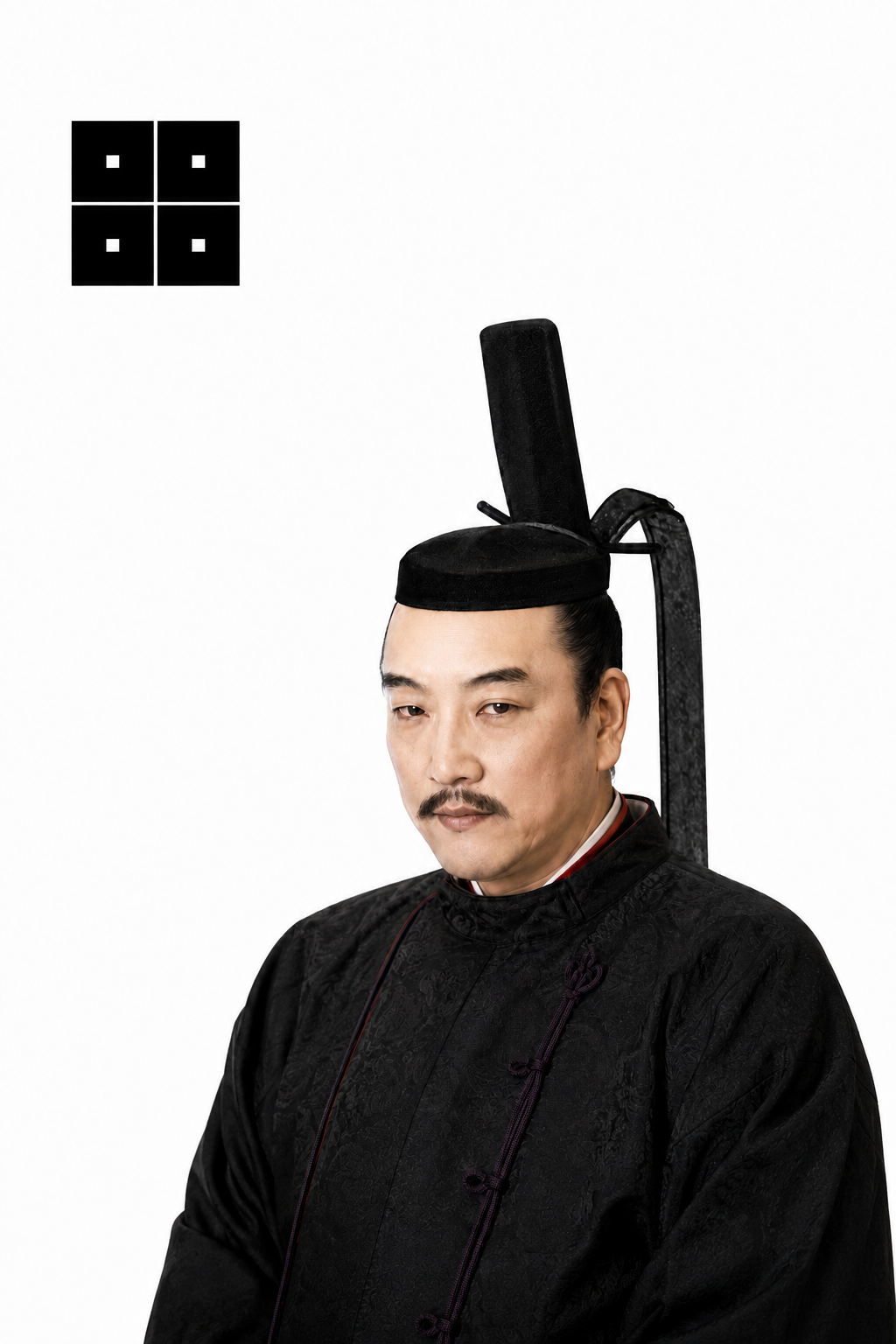
Amago Tsunehisa — The Restorer of the Izumo Amago Clan, the “Schemer Sage”: How Did He Reclaim Gassan-Toda Castle? Theories and a Life
- Three Points to Understand Amago Tsunehisa
- The Mainstream View — A Standard Account Based on the Established Theory
- The Multiple Theories — Exploring Possibilities from Various Angles
- Viewed Strategically — The Essence of the “Schemer Sage,” Marriage and Adoption, and the Difficult Pass of Generational Transition
- Famous Words and Sayings Associated with Amago Tsunehisa
- A Collection of Anecdotes and Episodes
- Timeline
- Related Figures
- Related Historic Site Map and Model Travel Courses
- Related Articles
- References
Three Points to Understand Amago Tsunehisa
- The restorer of the Izumo Amago clan, and one of the foremost schemers of the Sengoku period, hailed as the “Schemer Sage” (Bōsei). Born in 1458 (Chōroku 2) as the heir of Amago Kiyosada, deputy military governor (shugodai) of Izumo, he ended his 84-year life at Gassan-Toda Castle in Nogi District, Izumo Province. Dismissed from the office of deputy governor in 1484 (Bunmei 16) and driven out of Gassan-Toda Castle, he recaptured the fortress in a surprise attack on New Year’s Day of 1486 (Bunmei 18), using the Hachiya-shū. This dramatic comeback was passed down for generations as a textbook example of gekokujō (“the low overthrowing the high”).
- During the Daiei era (1521–1528) he built the Amago clan to its zenith, and is said to have held the governorship of eleven provinces across the San’in and San’yō regions. While skillfully managing relations with his nominal overlords, the Kyōgoku clan, he is described as a great lord ruling Izumo, Oki, Hōki, Inaba, Bizen, Bitchū, Bingo, Mimasaka, Iwami, Harima, and Aki (these figures derive from military chronicles and include later exaggeration). Sharing the political stage in Kyoto with Ōuchi Yoshioki—the father of Ōuchi Yoshitaka—he was a cunning strategist who expanded his domain into the Chūgoku region while Yoshioki was absent in the capital.
- He endured two family tragedies: the death in battle of his heir Amago Masahisa, and the rebellion of his third son Enya Okihisa. In his later years, while serving as guardian for his grandson Amago Akihisa (later Haruhisa), he urged caution against the young Akihisa’s invasion of Aki. In the first month of 1541 (Tenbun 10), at the Battle of Yoshida-Kōriyama Castle, Akihisa suffered a crushing defeat; that same year, on the thirteenth day of the eleventh month, Tsunehisa died at Gassan-Toda Castle at the age of 84. The domain the “Schemer Sage” had built began its road to collapse under his grandson’s generation, and about twenty-five years later the clan was destroyed by Mōri Motonari at the Second Battle of Gassan-Toda Castle.
The Mainstream View — A Standard Account Based on the Established Theory
Birth and Youth — Heir of the Izumo Deputy Governor’s House
Amago Tsunehisa was born on the twentieth day of the eleventh month of 1458 (Chōroku 2), in Nogi District, Izumo Province (present-day Hirose-chō, Yasugi City, Shimane Prefecture). His father was Amago Kiyosada, deputy military governor of Izumo; his mother is said to have been a daughter of Maki Kōzuke-no-suke. His wife was a daughter of Kikkawa Tsunemoto, a powerful provincial lord of Aki. His childhood name was Matashirō; his court titles were Minbu-no-shō and Iyo-no-kami; and in old age he took the religious name Gessō Shōshin.
The Amago clan descended from the Sasaki of the Ōmi Minamoto line and held the office of Izumo deputy governor as hereditary retainers of the Kyōgoku clan. As a branch of the distinguished Sasaki family, in continuous office since the Kamakura period, they had inherited the positions of land steward and deputy governor of Izumo Province. At the time of Tsunehisa’s birth, the Amago were caught up in the Ōnin War (1467–1477), a period when the authority of the Muromachi shogunate was severely shaken.
In 1474 (Bunmei 6), the sixteen-year-old Tsunehisa traveled to Kyoto as his father Kiyosada’s envoy and there negotiated with the Izumo military governor Kyōgoku Masatsune (also known as Masataka) over the Mihonoseki transit-toll revenue (a passage tax). This is the first appearance of Tsunehisa in the historical record. Around 1478 (Bunmei 10), he received the headship of the house from his father Kiyosada and was appointed deputy governor of Izumo. Tsunehisa was then around twenty years old.
Dismissal and Expulsion from Gassan-Toda Castle — The Setback of 1484
After inheriting the headship, Tsunehisa began openly resisting the rule of the Kyōgoku governors: seizing temple and shrine estates, neglecting the collection of the tansen land levy, and withholding the Mihonoseki toll revenue. This reflected the Amago clan’s aspiration to move beyond its subordinate position as deputy governor and toward independence as the effective ruler of Izumo Province. It was the typical behavior of a Muromachi-era deputy governor’s house in the transitional period of becoming a Sengoku daimyō.
On the seventeenth day of the third month of 1484 (Bunmei 16), the Muromachi shogunate issued an order for Tsunehisa’s subjugation. According to a jointly signed directive of the shogunate’s administrators preserved in the Kikkawa-ke Monjo (Documents of the Kikkawa House), the stated reasons were “refusal to collect the tansen levy and usurpation of the temple and shrine estates of the Kyōgoku clan.” Tsunehisa was stripped of the office of deputy governor, and in the eleventh month of that year he was driven out of Gassan-Toda Castle by provincial lords of central and western Izumo. A man named Enya Kamon-no-suke was installed as the new deputy governor. At the height of his powers—twenty-six or twenty-seven years old—Tsunehisa was reduced to a mere masterless wanderer.
After his expulsion, Tsunehisa relied on the Maki clan, his mother’s family, to hide within Izumo Province and await an opportunity to retake Gassan-Toda Castle. This roughly two-year period of patient endurance became, for Tsunehisa, not merely preparation for “restoration” but preparation to overturn the existing authority itself. During this time he is said to have built ties with the Hachiya-shū (the Kama party), an underground performing-arts collective, and to have devised his plan for a surprise attack.
The Recapture of Gassan-Toda Castle — The Surprise Attack on New Year’s Day, 1486
On New Year’s Day of 1486 (Bunmei 18), Tsunehisa carried out a daring surprise operation using roughly seventy to one hundred thirty members of the Hachiya Kama party. The Kama party entered Gassan-Toda Castle as a performing troupe come to present the New Year’s “manzairaku” dance of celebration, beating drums and playing flutes. Beneath their costumes they concealed weapons, and they entered the castle one after another while its guard was relaxed.
As the castle’s soldiers were absorbed in the dance, Tsunehisa and the Kama party simultaneously set fires and launched a surprise attack with their hidden weapons. The castellan, Enya Kamon-no-suke, unable to respond amid the confusion, killed his wife and children and then took his own life. More than four hundred fifty defenders are said to have been cut down (the figures vary among sources). Thus, with a force of only a little over a hundred men, Tsunehisa achieved one of the most remarkable surprise victories of the Sengoku period in recapturing Gassan-Toda Castle.
This recapture was widely transmitted in later ages as a classic example of gekokujō. Alongside Hōjō Sōun (Ise Sōzui), Amago Tsunehisa is ranked among the early Sengoku daimyō who rose through gekokujō, placing his name at the very dawn of Sengoku history.
The Consolidation of Power — Reconciliation with the Governor and the Completion of Independence
Having retaken Gassan-Toda Castle, Tsunehisa nonetheless did not choose a complete break with his master’s house and also sought reconciliation. In 1500 (Meiō 9), he mended relations with Kyōgoku Masatsune—who had been defeated in a succession dispute in Ōmi—and formally regained the position of deputy governor. When Kyōgoku Masatsune died in 1508 (Eishō 5), Tsunehisa was entrusted with the guardianship of Masatsune’s grandson Kitchōjimaru. Formally a retainer of the Kyōgoku clan, yet in substance the ruler of Izumo Province, he skillfully exploited this dual structure.
At the same time, he gradually brought the neighboring provincial lords of Izumo into vassalage. He subdued and absorbed powerful houses such as the Misawa, Mitoya, and Akana. Into the Enya clan—the senior line of the Izumo Minamoto—he placed his third son Okihisa as an adopted heir, bringing them under effective control through kinship. He also expanded his influence toward Aki by forming a marriage alliance with the Shishido clan.
The reason Tsunehisa is called the “Schemer Sage” (Bōsei) lies in this multilayered construction of control, combining kinship, adoption, stratagem, and military force. Rather than simple military conquest, the true mark of Tsunehisa as a Sengoku daimyō lay in building a structure through which his influence permeated the households of each provincial lord.
Relations with Ōuchi Yoshioki — The March on Kyoto and Territorial Expansion
In 1508 (Eishō 5), Ōuchi Yoshioki of Suō—the father of Ōuchi Yoshitaka—launched a campaign to enter Kyoto in support of the former shogun Ashikaga Yoshitane. Tsunehisa joined this march to the capital and raised his political profile in Kyoto. In 1511 (Eishō 8), his second son Amago Kunihisa received a character of his name (the character “Kuni”) from the deputy shogun Hosokawa Takakuni, while his third son Enya Okihisa received a character (“Oki”) from Ōuchi Yoshioki. Tsunehisa was seeking to deepen ties with both Yoshioki and Takakuni, who supported the shogun Yoshitane.
Yoshioki remained in Kyoto for about ten years after marching there, leaving his home province of Suō unattended. Tsunehisa exploited this gap to advance his territorial expansion into the Chūgoku region. In 1512 (Eishō 9), he supported the revolt of the Bingo provincial lord Koshi Tamenobu against the Ōuchi. In 1517 (Eishō 14), dissatisfied that Ōuchi Yoshioki had been appointed military governor of Iwami, he allied with the former Iwami governor, the Yamana clan, and attacked Ōuchi-aligned castles within Iwami Province. However, this conflict with the Ōuchi amounted to little more than skirmishing, and the view that Tsunehisa conducted a large-scale invasion of Ōuchi territory during Yoshioki’s absence in the capital is regarded by recent research as inaccurate.
Even after Ōuchi Yoshioki returned to his home province of Suō in 1518 (Eishō 15), tensions between the two houses continued to smolder. But Tsunehisa, rather than relying solely on armed confrontation, maintained and expanded his domain through a clever strategy combining diplomacy, marriage alliances, and stratagem.
The Death of His Heir Masahisa — The Tragedy of 1517
The greatest tragedy of Tsunehisa’s life was the death in battle of his heir Amago Masahisa in 1517 (Eishō 14). That year, while Tsunehisa had his younger brother Hisayuki attack Nanjō Munekatsu in Hōki Province, he dispatched his heir Masahisa to Ayō Castle within Izumo Province, because Sakurai Nyūdō Sōteki, who held Ayō Castle, had raised a banner of revolt against him.
While attacking Ayō Castle, Masahisa was playing the flute to raise morale when a single arrow loosed by the enemy struck him in the throat, killing him instantly. His age at death is unknown, but for Tsunehisa—then in the prime of his forties—losing the heir designated to succeed him was a bitter blow. Enraged, Tsunehisa is said to have refused the enemy’s surrender and massacred the Sakurai clan of Ayō Castle.
Having lost his heir, Tsunehisa adopted a policy of raising Masahisa’s surviving son, Saburōshirō (later Amago Akihisa, then Haruhisa), as the next successor. Masahisa had an elder brother, but he had already died young, so the path was set for Saburōshirō to become the fifth head of the Amago house.
The Daiei Era — The Amago Clan’s Zenith
During the Daiei era (1521–1528), the Amago clan reached its peak through Tsunehisa’s skill. Military chronicles record that Tsunehisa was “the great lord of eleven provinces: Izumo, Oki, Hōki, Inaba, Bizen, Bitchū, Bingo, Mimasaka, Iwami, Harima, and Aki” (there is scholarly debate over the actual extent of his rule, and the figures in the chronicles likely contain exaggeration).
At the Battle of Kanayama Castle in 1523 (Daiei 3), he highly valued the service of Mōri Motonari (then twenty-seven) and respected him as a powerful Amago-aligned provincial lord. When Motonari succeeded to the headship of the Mōri house, Tsunehisa is said to have granted his approval.
In 1526 (Daiei 6), the revolt of the Yamana clan—governors of Hōki and Bingo provinces—came to light, and Tsunehisa found himself caught between the Ōuchi to the west and the Yamana to the east. He weathered this too through clever diplomacy, but maintaining his domain was attended by constant tension.
The Revolt of Enya Okihisa — The Rebellion of the Third Son
In 1530 (Kyōroku 3), Enya Okihisa—Tsunehisa’s third son, who had been adopted into the Enya clan—rose in revolt against his father Tsunehisa. Having inherited the headship of the Enya, the senior line of the Izumo Minamoto, Okihisa grew increasingly resentful as the interests of the Enya clan were taken away by his father Tsunehisa, and he allied with provincial lords of Izumo to raise a rebellion. With some of the Izumo provincial lords joining Okihisa, the situation came close to breaking down Tsunehisa’s stronghold.
The conflict continued intermittently for four years. Tsunehisa pressed the suppression with persistence, and in 1534 (Tenbun 3) the rebellion was finally put down. Okihisa is said to have fled to Bingo and then taken his own life. Okihisa’s former lands passed to Tsunehisa’s second son, Amago Kunihisa, who came to lead an elite unit newly called the “Shingū-tō.” This would later set the stage for the purge of the Shingū-tō at the Battle of Gassan-Toda Castle.
Being betrayed by his own son was a wound as deep, for Tsunehisa, as the death of his heir Masahisa. Yet Tsunehisa did not let himself be carried away by emotion, and made the judgment to prioritize restoring order within the household above all.
Old Age and Retirement — Transferring the Headship to Akihisa
In 1537 (Tenbun 6), the seventy-nine-year-old Tsunehisa passed the headship to his grandson and heir Saburōshirō (Amago Akihisa, later Haruhisa) and went into retirement. Mindful of Masahisa’s death, Tsunehisa had taken a daughter of his second son Amago Kunihisa as the principal wife of his grandson Akihisa. This was a marriage policy intended to prevent discord between the Shingū-tō and the main house, but in later years this wife’s early death severed the bond with Kunihisa and became a remote cause that drove Haruhisa toward the merciless act of purging the Shingū-tō.
Even after retiring, Tsunehisa continued to live at Gassan-Toda Castle and watched over the household as his grandson’s guardian. Whereas the young Akihisa (Haruhisa) inclined toward aggressive external warfare, the aged Tsunehisa took the position of urging caution. The Intoku Taiheiki records that, with regard to the Battle of Yoshida-Kōriyama Castle in 1540 (Tenbun 9), Tsunehisa opposed the campaign but Akihisa, hot-blooded, forced it through. This contains the narrative embellishment of the chronicles, but the contrast between Tsunehisa’s caution and Akihisa’s aggressiveness within the household has corroboration as historical fact.
Death — The Thirteenth Day of the Eleventh Month, 1541
In the first month of 1541 (Tenbun 10), Akihisa (Haruhisa) suffered a crushing defeat against the combined Mōri–Ōuchi army at the Battle of Yoshida-Kōriyama Castle. The Amago army, said to have numbered thirty thousand, lost its will to fight and withdrew to Izumo, and many provincial lords of Aki and Bingo defected to the Ōuchi and Mōri side. The domain in the Chūgoku region that Tsunehisa had built up over many years was greatly set back in a single battle of his grandson’s generation.
Bearing the psychological shock of this defeat, Tsunehisa died within Gassan-Toda Castle on the thirteenth day of the eleventh month of 1541 (Tenbun 10), at the age of 84. His was a life born as the heir of the Izumo deputy governor’s house, who lost Gassan-Toda Castle, retook it, and came to be called the great lord of eleven provinces.
Tsunehisa’s death meant the loss of the Amago clan’s spiritual pillar. That same month, a jointly signed petition demanding the “subjugation of the Amago” was submitted to the Ōuchi by the principal provincial lords of Aki, Bingo, Izumo, and Iwami, and the following year, 1542 (Tenbun 11), Ōuchi Yoshitaka’s expedition into Izumo—the First Battle of Gassan-Toda Castle—began. Tsunehisa’s death marked the turning point at which the Amago clan went over to the side of being attacked.
About twenty-five years after Tsunehisa’s death, in 1566 (Eiroku 9), the Amago clan was destroyed at Mōri Motonari’s Second Battle of Gassan-Toda Castle. The domain Tsunehisa had built collapsed under the generations of his grandson and great-grandson, and hegemony over the western Sengoku passed entirely to the Mōri. Yet the name of Amago Tsunehisa would be transmitted for ages, as the “Schemer Sage” and as a “classic example of gekokujō,” counted among the archetypal Sengoku daimyō. In later years, when Yamanaka Shikanosuke Yukimori launched the movement to restore the Amago, its spiritual pillar was the glory of the Amago clan that Tsunehisa had built.
The Multiple Theories — Exploring Possibilities from Various Angles
Theory 1: On the Validity of Calling Him a Classic Example of “Gekokujō”
The point at issue: Amago Tsunehisa is widely known, alongside Hōjō Sōun, as a classic example of Sengoku-period gekokujō, but this assessment is subject to debate.
The view that he is a classic example of gekokujō. The most common interpretation. His career—rising from the subordinate status of deputy governor to a Sengoku daimyō and being called the great lord of eleven provinces at his peak—is positioned as a classic case of gekokujō, in which the authority order of the Muromachi period was overturned by force. The episode of recapturing Gassan-Toda Castle by surprise attack adds a dramatic character to this story.
The view of lawful succession through reconciliation with the master’s house. A view proposed in recent years. After recapturing Gassan-Toda Castle, Tsunehisa reconciled with his lord Kyōgoku Masatsune and formally regained the position of deputy governor in 1500 (Meiō 9). After Masatsune’s death, he was also entrusted with the guardianship of the grandson Kitchōjimaru, and formally maintained a relationship as a retainer of the Kyōgoku clan. On this basis, the position holds that he “cannot be flatly called a case of gekokujō.”
The theory of gradual gekokujō. A middle position between the two. At the moment of recapturing Gassan-Toda Castle, it was rebellion against the shogunate and the governor; but through the subsequent reconciliation and the continuation of the retainer relationship, he gradually established substantive control. This view understands the process of becoming a Sengoku daimyō not as a one-time “gekokujō” but as a long-term transformation of the power structure.
Whichever interpretation one adopts, it remains the case that Tsunehisa’s life is an important case study in Sengoku history as a typical example of a Muromachi-era deputy governor’s house transforming into a Sengoku daimyō.
Theory 2: The Means of Recapturing Gassan-Toda Castle — Who Were the Hachiya-shū?
The point at issue: There are various theories about the true identity of the “Hachiya-shū (Hachiya Kama party)” who aided Tsunehisa in the recapture of Gassan-Toda Castle in 1486 (Bunmei 18).
The theory of a performing-arts collective. The most common interpretation. The Hachiya-shū were an underground collective of performing artists who existed in medieval Japan, a professional group that traveled the castle towns of various provinces presenting celebratory dances such as “manzairaku” and “senshū manzai” at the New Year and other occasions. The theory holds that Tsunehisa exploited the standing and freedom of movement of these performers to infiltrate them into the castle.
The theory of ninja, similar to the Iga and Kōga. An interpretation widely circulated in later military chronicles and popular books. This view regards the Hachiya-shū as a kind of ninja, depicting them as a group of special skills similar to the Iga and Kōga shinobi. It includes embellishment from the Edo period onward, but amid the “ninja boom” the relationship between Tsunehisa and the Hachiya-shū was frequently portrayed in this way.
The theory of a religious and sacred people’s collective. A view proposed in recent medieval-history research. It situates the Hachiya-shū as a group of religious professionals active on the margins of shrines and temples. According to this interpretation, Tsunehisa skillfully exploited the special standing of these underground religious and performing people—their freedom of movement and quasi-extraterritorial character.
The number of the Kama party also differs among sources, given variously as “seventy” or “one hundred thirty,” so the boundary between historical fact and legend is blurred. Still, it is certain that the surprise attack succeeded through some method of relaxing the castle’s guard, and it left a strong impression for ages to come as an example of the flexibility of Tsunehisa’s strategic thinking.
Theory 3: Was the Lordship of Eleven Provinces Reality or Exaggeration?
The point at issue: The chronicle account that “Tsunehisa was the great lord of eleven provinces” has received various assessments among researchers.
The theory of an eleven-province maximum domain. The figure transmitted by chronicles such as the Intoku Taiheiki. The tradition holds that during the Daiei era (1521–28), Tsunehisa brought eleven provinces under his control: Izumo, Oki, Hōki, Inaba, Bizen, Bitchū, Bingo, Mimasaka, Iwami, Harima, and Aki. It was widely transmitted as a figure symbolizing the Amago clan’s zenith.
The theory of effective control over four or five provinces. A view widely supported in recent research. It holds that the area over which Tsunehisa exercised direct, effective control was only about four or five provinces of San’in centered on his home province of Izumo, and that his relationship with other regions amounted to no more than “alliance” or “sphere of influence.” It is a realistic assessment that strips away the exaggeration of the chronicles.
The theory that holding governorships and effective control are separate matters. A view holding that the formal accumulation of governorships and effective territorial control are distinct issues, and that the chronicle expression “great lord of eleven provinces,” which conflates the two, does not accurately convey the reality. According to this position, the essence of Tsunehisa’s strategy lay in gathering formal authority while carefully managing the scope of effective control.
Whichever assessment one adopts, it is certain that the Amago clan of Tsunehisa’s time was a leading Sengoku power that exerted strong influence across the San’in and San’yō regions. And it is also true that the symbolic figure of “eleven provinces” has served to convey the Amago clan’s presence in later ages.
Theory 4: The Cause of Enya Okihisa’s Revolt
The point at issue: There are various theories about the cause of the revolt that the third son Enya Okihisa raised against his father Tsunehisa (1530–34).
The theory of the infringement of Enya clan interests. The most common interpretation. The theory holds that Okihisa, adopted into the Enya clan, harbored strong dissatisfaction at the situation in which the traditional interests of the Enya were being taken away by his father Tsunehisa. The position sees the gap between the pride of the Enya clan in its standing as the senior line of the Izumo Minamoto and the reality of being forced into subordination to the Amago main house as the motive for the revolt.
The theory of a gathering of Izumo provincial lords’ discontent. A view holding that the Izumo provincial lords, dissatisfied with Tsunehisa’s heavy-handed territorial control, rallied around Okihisa as a symbolic leader and raised a revolt. According to this interpretation, Okihisa was not an isolated rebel but acted as the representative of a coalition of provincial lords.
The theory of a succession rivalry among brothers. A view holding that the instability within the Amago household over the next succession after the death of the heir Masahisa stimulated Okihisa’s ambition. The position holds that the revolt arose as Okihisa raised objections to Tsunehisa’s policy of designating his grandson-heir Saburōshirō (Akihisa) as successor.
The theory of inducement from the Ōuchi side. A view holding that, after the death of Ōuchi Yoshioki, a stratagem to weaken Tsunehisa reached Okihisa from within the disordered Ōuchi house. From the relationship with the forces that received Okihisa in the Bingo region during the revolt, the theory suggests the involvement of external factors.
The suppression of the four-year revolt became a deep psychological burden for Tsunehisa. To restore stability within the household, Tsunehisa, in his later years, took a marriage policy of bringing Kunihisa’s daughter as the principal wife of his grandson Akihisa, but this too left a long-term destabilizing factor that would later lead to the purge of the Shingū-tō.
Theory 5: The Circumstances of His Heir Masahisa’s Death
The point at issue: There are several traditions about the circumstances of the death in battle of his heir Amago Masahisa in 1517 (Eishō 14).
The theory that the sound of the flute revealed his location. The most famous tradition. As Masahisa was attacking Ayō Castle, he was playing the flute in camp to raise morale. Guided by the beautiful sound of that flute, an arrow loosed by Sakurai Nyūdō Sōteki struck Masahisa in the throat, killing him instantly. As the tragedy of a noble youth who loved the arts, this scene is often depicted in military chronicles and popular books.
The theory of a stray arrow. A view holding that, amid the confusion of battle, Masahisa was not specifically targeted but was struck by a chance stray arrow. It is an interpretation of an accidental death in battle, as is common on the battlefield.
The theory of Tsunehisa’s remorse over his decision to dispatch him. Tsunehisa chose a division of labor in which he sent his younger brother Hisayuki toward Hōki and his heir Masahisa toward Ayō Castle. The view holds that Tsunehisa’s self-reproach over having made the decision to dispatch Masahisa himself is strongly reflected in later traditions. The tradition that Tsunehisa refused even surrender and massacred the Sakurai clan of Ayō Castle is understood as an expression of a father’s lament at losing his heir.
Masahisa’s death was one of the greatest tragedies of Tsunehisa’s life, and it had a decisive influence on the later succession (the designation of the grandson Saburōshirō). The image of Masahisa as a cultured man with an appreciation for the arts is consistent across later chronicles, and he was remembered as a symbolic case of the tragic end of a Sengoku daimyō’s heir.
Theory 6: Did Tsunehisa Oppose Haruhisa’s Invasion of Aki?
The point at issue: Regarding Haruhisa’s (Akihisa’s) decision to invade Aki, which preceded the Battle of Yoshida-Kōriyama Castle in 1540 (Tenbun 9), there is debate over whether Tsunehisa opposed it.
The theory that Tsunehisa opposed it. The theory transmitted by the Intoku Taiheiki. The account holds that the eighty-two-year-old Tsunehisa opposed the invasion of Aki to attack Mōri Motonari, but that the hot-blooded Akihisa forced the campaign through. As a narrative composition contrasting the cunning Tsunehisa with the impetuous Akihisa, it was widely circulated for ages.
The theory that Tsunehisa also approved or tacitly consented. A view proposed in recent research. At the time, the Amago clan had won over numerous powerful provincial lords—the Ogasawara and Fukuya of Iwami, the Kikkawa and Takeda of Aki, the Miyoshi of Bingo, and others—and the situation was developing in the Amago’s favor. Moreover, pro-Amago forces in southern Aki, such as Hiraga Okisada of Kabusasa Castle and the Itsukushima high-priest house, were under attack from the Ōuchi army, and relief of these forces was needed. In other words, the view holds that Haruhisa’s deployment into Aki was not a reckless forced advance but an action responding to strategic necessity. From this position, there was no reason for Tsunehisa to oppose it forcibly.
The theory of Tsunehisa’s limited involvement. A view holding that, after his retirement, Tsunehisa was only minimally involved in the household’s decision-making. Given his advanced age of eighty-two, there was limited room for his judgment to influence strategy, and the position holds that the tradition that he “opposed” it is closer to chronicle embellishment.
Whichever interpretation one adopts, it is a fact that the crushing defeat at the Battle of Yoshida-Kōriyama Castle weighed heavily on Tsunehisa’s final years. His death in the eleventh month of that same year is often understood as the convergence of the psychological shock of defeat and his advanced age. The narrative quality of a veteran called the “Schemer Sage,” who died having witnessed the strategic failure of his grandson’s generation, is remembered as a typical case illustrating the difficulty of generational transition in the Sengoku period.
Viewed Strategically — The Essence of the “Schemer Sage,” Marriage and Adoption, and the Difficult Pass of Generational Transition
The essence of the “Schemer Sage” — building a structure of control, not military force. The reason Amago Tsunehisa is called the “Schemer Sage” lies not so much in his skill at stratagem as in his construction of a structure of control that did not depend on military conquest. The recapture of Gassan-Toda Castle was indeed a brilliant surprise attack, but the consolidation of power that followed was carried out by combining means other than military force—reconciliation with Kyōgoku Masatsune, the vassalization of provincial lords, and the strategic use of marriage and adoption.
Even in vassalizing the Izumo provincial lords such as the Misawa, Mitoya, and Akana, Tsunehisa basically preserved each house’s headship and did not force vassalization upon them. He built a structure in which his influence permeated the personnel and diplomacy of each provincial lord’s house while leaving the autonomy of those houses intact. Sending his third son Okihisa as an adopted heir into the Enya clan, and forming a marriage alliance with the Shishido clan—control through kinship was the core of Tsunehisa’s methodology as a Sengoku daimyō.
As a result, the Amago clan of Tsunehisa’s time, while outwardly called the “lord of eleven provinces,” was in reality a loose confederation of spheres of influence. This was in some respects less durable than rule by military force, but because Tsunehisa was long-lived, the structure of control remained stable for a single generation. The problem was how to maintain this structure after Tsunehisa’s death, in his grandson’s generation—and that was the greatest difficult pass of the succession.
Marriage and adoption — a kinship strategy beyond political marriage. Political marriage was not unusual in the Sengoku period, but Tsunehisa’s kinship strategy stood out in scale and intricacy. He sent his third son Okihisa as an adopted heir into the Enya, the senior line of the Izumo Minamoto, and built a system in which his second son Kunihisa newly led the “Shingū-tō.” Through the marriage alliance with the Shishido and by taking Kunihisa’s daughter as the principal wife of his grandson Akihisa (Haruhisa), he wove a multilayered web of kinship within the household.
This strategy aimed to prevent internal division by binding each faction of the household into a kinship network centered on Tsunehisa. But the result was somewhat ironic. The third son Okihisa rose in revolt against his father, claiming that the interests of the Enya had been taken away (Kyōroku 3 to Tenbun 3); and the early death of Haruhisa’s principal wife (Kunihisa’s daughter) severed the bond with Kunihisa, leading to the later purge of the Shingū-tō.
Tsunehisa’s kinship strategy functioned during his lifetime, but it had a character whereby its contradictions surfaced after his death. This is a typical case of a universal problem in household control during the Sengoku period—how to restrain the independence of powerful clans within the household and how to maintain their loyalty to the main house.
The difficult pass of generational transition — the veteran’s caution and the young lord’s aggressiveness. The final difficult pass of Tsunehisa’s life was the generational transition to his grandson Akihisa (Haruhisa). Even after his retirement in 1537 (Tenbun 6), Tsunehisa lived at Gassan-Toda Castle and continued to guard Akihisa, but between the octogenarian veteran and the young lord in his twenties there was a fundamental difference in strategic outlook.
Tsunehisa’s strategy was a cautious one of minimizing armed confrontation and maintaining the domain through stratagem, marriage, and diplomacy. Akihisa (Haruhisa), by contrast, inclined toward more aggressive external warfare. The Battle of Yoshida-Kōriyama Castle in Tenbun 9 was precisely a case in which this difference came to the surface. The Intoku Taiheiki records that Tsunehisa opposed it, but recent research points out that Haruhisa’s strategy also had its rationality. Yet whichever interpretation one adopts, the invasion of Aki ended in crushing defeat, and the Amago clan’s domain was set back.
The loose confederation of spheres of influence that Tsunehisa had built required constant maintenance through diplomacy and stratagem, and this continuous effort may have been hard for the young Haruhisa to see. That a young lord relying on martial valor loses, in a short time, the domain that a “Schemer Sage” veteran had built, is a difficult pass of generational transition repeated throughout the Sengoku period. Tsunehisa’s death became an ending that symbolized this difficult pass.
Famous Words and Sayings Associated with Amago Tsunehisa
“The Schemer Sage” — A Later Assessment of Amago Tsunehisa
“The Schemer Sage” (Bōsei)
— A later epithet for Amago Tsunehisa
An assessment given to Amago Tsunehisa by military chronicles and popular books. Together with Hōjō Sōun, he was transmitted under the epithet “Schemer Sage” as a classic example of Sengoku-period gekokujō and as a strategic genius who combined military force and stratagem. His methods of building power without relying on force—the surprise attack of New Year’s Day, 1486, that recaptured Gassan-Toda Castle in a single night; the vassalization of neighboring provincial lords; the construction of a kinship network through marriage and adoption; and the management of relations with the Kyōgoku clan—were referenced for ages as the archetype of a Sengoku daimyō. The epithet “Schemer Sage” itself is a later expression rather than a contemporary one, but it has become established as an assessment expressing Tsunehisa’s life in a single phrase.
The Death of Masahisa — A Tradition
Outside Ayō Castle, an enemy arrow struck Masahisa in the throat, killing him instantly
— The scene of the death in battle of his heir Amago Masahisa (Intoku Taiheiki and others)
The scene of a tradition in which, in 1517 (Eishō 14), the heir Amago Masahisa—dispatched to quell the revolt of Sakurai Nyūdō Sōteki at Ayō Castle in Izumo Province—was playing the flute in camp when an enemy arrow pierced his throat and killed him instantly. One of the greatest tragedies of Tsunehisa’s life, it became the occasion for a fundamental change in his succession policy. Enraged, Tsunehisa is said to have refused even surrender and massacred the Sakurai clan of Ayō Castle. The tragic end of an arts-loving noble youth, and the lament of a father who lost his heir, were remembered as a scene symbolically expressing the difficult pass of succession in the Sengoku period.
“A Classic Example of Gekokujō” — A Later Historical Assessment
“A classic example of gekokujō, alongside Hōjō Sōun”
— Amago Tsunehisa in later historical assessment
A later historical assessment that situates Amago Tsunehisa as a classic example of gekokujō in the Chūgoku region, alongside Hōjō Sōun (Ise Sōzui), who is regarded as a classic example of gekokujō in the Kantō. Both are taken as representative cases of men who overturned the authority order of the Muromachi period by force and transformed themselves into Sengoku daimyō. However, recent research also points out that, from the fact that Tsunehisa reconciled with his master’s house, the Kyōgoku, after recapturing Gassan-Toda Castle and maintained a formal retainer relationship, there is a complexity that cannot be fully captured by the simple framework of “gekokujō.” Even so, he is a figure repeatedly cited in Sengoku history education as a typical example of a career that transformed from deputy governor into Sengoku daimyō.
A Collection of Anecdotes and Episodes
The manzairaku dance — the recapture of Gassan-Toda Castle on New Year’s Day, 1486. On New Year’s Day of 1486 (Bunmei 18), Tsunehisa infiltrated roughly seventy to one hundred thirty members of the Hachiya Kama party into Gassan-Toda Castle disguised as performers come to present the “manzairaku” dance. Beneath their costumes they concealed weapons and entered the castle one after another while its guard was relaxed. As the soldiers were absorbed in the dance, they simultaneously set fires, drew their weapons, and launched a surprise attack. The castellan, Enya Kamon-no-suke, unable to respond amid the confusion, is said to have killed his wife and children and then taken his own life. The episode in which a force of only a little over a hundred men cut down more than four hundred fifty defenders was widely transmitted for ages as a representative example of a Sengoku surprise battle. While there are various theories about the true identity of the Hachiya-shū, Tsunehisa’s idea of cleverly exploiting the standing of performers through the “New Year’s celebratory dance” is an anecdote symbolizing the tactical flexibility of a Sengoku daimyō.
Lamenting the death of his heir Masahisa. In 1517 (Eishō 14), the heir Amago Masahisa, attacking Sakurai Nyūdō Sōteki at Ayō Castle, was playing the flute in camp when an enemy arrow pierced his throat and killed him instantly. Tsunehisa’s grief was deep, and he is said to have refused even surrender and massacred the Sakurai clan of Ayō Castle. Losing the heir designated to succeed him was the most bitter blow of Tsunehisa’s life. In later years he adopted a policy of raising Masahisa’s surviving son, Saburōshirō (Akihisa, later Haruhisa), as his grandson and designating him the next head, but the difference in strategic outlook between the young Akihisa and the veteran Tsunehisa left a subtle tension in the household of his final years.
The revolt of the third son Okihisa — a four-year struggle between father and son. In 1530 (Kyōroku 3), the third son Enya Okihisa, who had been adopted into the Enya clan, raised a banner of revolt against his father Tsunehisa. Dissatisfaction at the Enya clan’s interests being taken away by his father is given as the motive. Some of the Izumo provincial lords joined Okihisa, and a four-year war of rebellion continued. Tsunehisa pressed the suppression with persistence and finally put it down in 1534 (Tenbun 3). Okihisa fled to Bingo and then took his own life. The two tragedies—first losing his heir, and then being betrayed by his third son—tell of the difficulty of Tsunehisa’s household control as a Sengoku daimyō. In later years, Tsunehisa took a marriage policy of bringing his second son Kunihisa’s daughter as the principal wife of Akihisa (Haruhisa), but this too left a long-term destabilizing factor in the relationship between the Shingū-tō and the main house.
An anecdote of his frugal and compassionate character. There is a tradition that Tsunehisa was known within the household for his frugality and compassionate character. When a retainer wished for something Tsunehisa possessed, he is said to have generously given it away. When a retainer remonstrated, “A great lord must not be careless with his possessions,” Tsunehisa is recorded by the chronicles to have replied, “To give a retainer what he desires is the duty of a great lord.” This is an anecdote that tells of the typical “virtue of governing retainers” of a Sengoku daimyō, and it was remembered as a record complementing the image of Tsunehisa as a man not given solely to force and stratagem. The complex image of a man possessing both the side called the “Schemer Sage” and a compassionate side lends depth to later assessments of Tsunehisa.
The march to Kyoto with Ōuchi Yoshioki — his experience in the capital. In 1508 (Eishō 5), when Ōuchi Yoshioki (the father of Ōuchi Yoshitaka) launched a campaign to enter Kyoto in support of Ashikaga Yoshitane, Tsunehisa joined the march and raised his political profile in Kyoto. For Tsunehisa, it was a precious opportunity to experience the politics of the capital firsthand. While Yoshioki remained in Kyoto for about ten years, Tsunehisa exploited the gap left by the vacancy in his home province of Suō to advance his territorial expansion into the Chūgoku region. The thorough preparedness of putting the connections in Kyoto to use down to the next generation—with his second son Amago Kunihisa receiving a character of his name from Hosokawa Takakuni and his third son Enya Okihisa from Ōuchi Yoshioki—was a strategy characteristic of Tsunehisa. His broad strategy, reading the political situation of Kyoto rather than relying solely on force, tells of a wide vision worthy of the name “Schemer Sage.”
Taking Kunihisa’s daughter as the principal wife of his grandson Haruhisa (Akihisa). Mindful of the two household tragedies—the death of his heir Masahisa and the revolt of his third son Okihisa—Tsunehisa adopted an important marriage policy in his later years. He took a daughter of his second son Amago Kunihisa as the principal wife of his grandson Saburōshirō (Akihisa, later Haruhisa). Kunihisa was the head of the elite unit known as the Shingū-tō and a figure with independent power within the household. This marriage aimed, by binding the main house and the Shingū-tō through kinship, to prevent division within the household. But ironically, the early death of this wife weakened the bond between Haruhisa and Kunihisa, leading to the later purge of the Shingū-tō (in 1554). Tsunehisa’s kinship strategy functioned during his lifetime, but it had a character whereby its contradictions surfaced after his death.
The glory of Tsunehisa, passed down to Yamanaka Shikanosuke. About twenty-five years after Tsunehisa’s death, the Amago clan was destroyed at Mōri Motonari’s Second Battle of Gassan-Toda Castle. But for Yamanaka Shikanosuke Yukimori, who aspired to restore the Amago, the spiritual pillar was the glory of the Amago clan that Tsunehisa had built. Shikanosuke championed Amago Katsuhisa, who descended from the line of Tsunehisa’s younger brother Amago Hisayuki, and launched the movement to restore the Amago. Behind the resolve of Shikanosuke—who is said to have prayed to the crescent moon, “Grant me the seven hardships and eight sufferings”—lay the strong will to recover the glory of the Amago clan that the “Schemer Sage” Tsunehisa had built. Tsunehisa’s legacy lived on, even after the destruction of the Amago as a house, as an ideal within the last loyal retainer of the Sengoku period.
Timeline
| Japanese Era (Western Year) | Event |
|---|---|
| Chōroku 2 (1458), 11th month, 20th day | Born as the heir of Amago Kiyosada, deputy governor of Izumo. His mother was a daughter of Maki Kōzuke-no-suke. |
| Bunmei 6 (1474) | At sixteen, travels to Kyoto as his father Kiyosada’s envoy. In the capital, negotiates with the Izumo governor Kyōgoku Masatsune over the Mihonoseki toll revenue. The first appearance of Tsunehisa in the historical record. |
| Bunmei 10–11 (1478–79) | Inherits the headship upon his father Kiyosada’s retirement. Appointed deputy governor of Izumo. |
| Bunmei 16 (1484), 3rd month, 17th day | The Muromachi shogunate issues an order for Tsunehisa’s subjugation. The reasons: “refusal to collect the tansen levy and usurpation of Kyōgoku temple and shrine estates.” He is dismissed from the office of deputy governor. In the 11th month, driven out of Gassan-Toda Castle, he goes into hiding with the Maki, his mother’s family. |
| Bunmei 18 (1486), New Year’s Day | Recaptures Gassan-Toda Castle in a surprise attack using roughly 70 to 130 members of the Hachiya Kama party. Drives Enya Kamon-no-suke to suicide and returns as castellan. Transmitted for ages as a classic example of gekokujō. |
| Meiō 9 (1500) | Mends relations with Kyōgoku Masatsune, defeated in a succession dispute in Ōmi. Formally regains the position of deputy governor. |
| Eishō 5 (1508) | Joins the march to Kyoto of Ōuchi Yoshioki (the father of Ōuchi Yoshitaka). Kyōgoku Masatsune dies in Eishō 5, and Tsunehisa is entrusted with the guardianship of the grandson Kitchōjimaru. |
| Eishō 8 (1511) | His second son Amago Kunihisa receives a character of his name (“Kuni”) from the deputy shogun Hosokawa Takakuni. His third son Enya Okihisa receives a character (“Oki”) from Ōuchi Yoshioki. He takes a stance closely linked to the political situation in Kyoto. |
| Eishō 9 (1512) | Supports the revolt against the Ōuchi of Koshi Tamenobu, lord of Ōbayama Castle in Bingo. Becomes involved in the balance of power in the Chūgoku region. |
| Eishō 14 (1517) | Dispatches his heir Amago Masahisa to Ayō Castle. Masahisa is struck in the throat by an arrow loosed by Sakurai Nyūdō Sōteki and dies instantly. The greatest tragedy of Tsunehisa’s life. |
| Eishō 14–15 (1517–18) | Allies with the Yamana, dissatisfied with Ōuchi Yoshioki’s appointment as governor of Iwami, and attacks Ōuchi-aligned castles within Iwami. The scale of fighting, however, amounts to mere skirmishing. |
| Daiei 3 (1523) | The Battle of Kanayama Castle. Highly values Mōri Motonari as a powerful Amago-aligned provincial lord. |
| Daiei era (1521–28) | The Amago clan’s zenith. Chronicles record Tsunehisa as the “great lord of eleven provinces” (including later exaggeration). |
| Daiei 6 (1526) | The revolt of the Yamana, governors of Hōki and Bingo, comes to light. He is caught between the Ōuchi to the west and the Yamana to the east. |
| Kyōroku 3 (1530) | The third son Enya Okihisa raises a banner of revolt against his father Tsunehisa. The infringement of the Enya clan’s interests is given as the motive. |
| Tenbun 3 (1534) | The revolt of Enya Okihisa is finally suppressed. Okihisa flees to Bingo and then takes his own life. His former lands pass to the second son Amago Kunihisa (the origin of the Shingū-tō). |
| Tenbun 6 (1537) | Retires at seventy-nine. Passes the headship to his grandson-heir Saburōshirō (Amago Akihisa, later Haruhisa). Takes a marriage policy of bringing Kunihisa’s daughter as Akihisa’s principal wife. |
| Tenbun 9–10 (1540–41) | The Battle of Yoshida-Kōriyama Castle, in which his grandson Akihisa attacks Mōri Motonari of Aki. A tradition holds that Tsunehisa opposed it (Intoku Taiheiki). In the first month of 1541, the Amago army suffers a crushing defeat and withdraws to Izumo. |
| Tenbun 10 (1541), 11th month, 13th day | Dies within Gassan-Toda Castle at the age of 84. A jointly signed petition demanding the “subjugation of the Amago” is submitted to the Ōuchi by the principal provincial lords of Aki, Bingo, Izumo, and Iwami. Tsunehisa’s death means the loss of the Amago clan’s spiritual pillar. |
| Tenbun 11 (1542)– | The following year, Ōuchi Yoshitaka’s expedition into Izumo (the First Battle of Gassan-Toda Castle) begins. The domain Tsunehisa had built begins its road to collapse. |
| Eiroku 9 (1566) | At the Second Battle of Gassan-Toda Castle, Amago Yoshihisa surrenders. The history of the Izumo Amago clan as a Sengoku daimyō ends—twenty-five years after Tsunehisa’s death. |
| Eiroku 12–Tenshō 6 (1569–78) | Yamanaka Shikanosuke Yukimori’s Amago restoration movement. He champions Amago Katsuhisa, descended from the line of Tsunehisa’s younger brother Hisayuki. In 1578, Katsuhisa takes his own life at Kōzuki Castle and Shikanosuke is killed, ending the Amago restoration movement. |
Related Figures
Family
| Person | Relationship | Notes |
|---|---|---|
| Amago Kiyosada | Father, deputy governor of Izumo | Around Bunmei 10–11, passes the headship to Tsunehisa and retires. |
| Daughter of Maki Kōzuke-no-suke | Mother | Her family, the Maki, was Tsunehisa’s place of hiding at the time of his expulsion in Bunmei 16. |
| Daughter of Kikkawa Tsunemoto | Wife | A marriage with the Kikkawa, powerful provincial lords of Aki. The origin of the later relationship with the Aki Kikkawa. |
| Amago Masahisa | Heir | In 1517 (Eishō 14), struck in the throat by an arrow outside Ayō Castle and killed instantly. The greatest tragedy of Tsunehisa’s life. |
| Amago Kunihisa | Second son, head of the Shingū-tō | Receives a character of his name from Hosokawa Takakuni. After suppressing Okihisa’s revolt, inherits Okihisa’s lands and leads the Shingū-tō. Later (1554), purged by Haruhisa. |
| Enya Okihisa | Third son | Receives a character of his name from Ōuchi Yoshioki and is adopted into the Enya clan. After the revolt of Kyōroku 3 to Tenbun 3, takes his own life. |
| Amago Saburōshirō (later Akihisa / Haruhisa) | Grandson-heir, fifth head | The surviving son of Masahisa. Inherits the headship in Tenbun 6. Suffers a crushing defeat at the Battle of Yoshida-Kōriyama Castle. In the position of succeeding Tsunehisa’s strategy, but differs in military stance. |
Retainers and Clan
| Person | Relationship | Notes |
|---|---|---|
| Amago Hisayuki | Younger brother | A pillar who supported Tsunehisa. In later years, scorned by Haruhisa as the “coward of Yashū,” he died in a desperate fight at the Battle of Yoshida-Kōriyama Castle. |
| Amago Sanehisa | Shingū-tō, son of Kunihisa | Leads the Shingū-tō together with his father Kunihisa. |
| The Hachiya Kama party | Collaborators | The core of the recapture of Gassan-Toda Castle on New Year’s Day, Bunmei 18. A performing-arts collective. |
| The Misawa, Mitoya, and Akana | Vassalized Izumo provincial lords | The core of Tsunehisa’s structure of control. In later years, at the First Battle of Gassan-Toda Castle, they temporarily went over to the Ōuchi but returned to the Amago. |
Lords and the Master’s House
| Person | Relationship | Notes |
|---|---|---|
| Kyōgoku Masatsune | Lord, governor of Izumo | Expels Tsunehisa in Bunmei 16 but reconciles in later years. In Meiō 9, approves Tsunehisa’s return as deputy governor. Dies in Eishō 5. |
| Kyōgoku Kitchōjimaru | Grandson of Kyōgoku Masatsune | Entrusted to Tsunehisa’s guardianship. |
Opposing Forces
| Person | Relationship | Notes |
|---|---|---|
| Ōuchi Yoshioki | A contemporary Sengoku daimyō | The father of Ōuchi Yoshitaka. Launched the march to Kyoto in Eishō 5, which Tsunehisa joined. During Yoshioki’s stay in the capital, Tsunehisa gained the opportunity to expand his domain. |
| Ōuchi Yoshitaka | Son of Yoshioki, a contemporary Sengoku daimyō | An opposing force in Tsunehisa’s later years. The year after Tsunehisa’s death, attacks the Amago at the First Battle of Gassan-Toda Castle. |
| Mōri Motonari | An Aki provincial lord, later hegemon of the Chūgoku region | Highly valued by Tsunehisa at the Battle of Kanayama Castle in Daiei 3. In later years, destroys the Amago at the Second Battle of Gassan-Toda Castle. |
| Sakurai Nyūdō Sōteki | Castellan of Ayō Castle, rebel | In Eishō 14, rebels against Tsunehisa and causes Masahisa’s death by arrow. Massacred by Tsunehisa. |
Those Who Passed Down Tsunehisa’s Memory in Later Ages
| Person | Relationship | Notes |
|---|---|---|
| Yamanaka Shikanosuke | Central figure of the Amago restoration movement | Championed Amago Katsuhisa, descended from the line of Tsunehisa’s younger brother Hisayuki. The last loyal retainer of the Sengoku period, who sought to restore the glory of the Amago clan built by the “Schemer Sage” Tsunehisa. |
Related Historic Site Map and Model Travel Courses
The sites connected with Amago Tsunehisa are concentrated within Izumo Province, centered on Gassan-Toda Castle (Hirose-chō, Yasugi City, Shimane Prefecture), which was his base. At the foot of Gassan-Toda Castle, the graves of Tsunehisa and his father Kiyosada survive, and in recent years their development as a nationally designated historic site has progressed. To experience Tsunehisa’s life firsthand, it is best to tour Gassan-Toda Castle together with the related sites nearby.
Model Course 1: The Gassan-Toda Castle and Tsunehisa Grave Tour (one day)
A course concentrating on Tsunehisa’s base and grave.
- JR Yasugi Station → about 30 minutes by bus → Gassan-Toda Castle Ruins (Hirose-chō, Yasugi City, Shimane Prefecture) (the base Tsunehisa recaptured in Bunmei 18; climb to the main keep) → The graves of Amago Kiyosada and Tsunehisa (at the foot of Gassan, relocated from the original Tōkō-ji temple site) → Yasugi City History Museum (a comprehensive exhibit on Tsunehisa and the Amago clan) → return
Model Course 2: The Ayō Castle and Masahisa Death-Site Course (half day to one day)
A course visiting the stage of the death in battle of his heir Amago Masahisa.
- JR Matsue Station → bus → Ayō Castle Ruins (Ayō, Daitō-chō, Matsue City, Shimane Prefecture) (the place where Masahisa died in battle in Eishō 14) → nearby historic sites → return
Model Course 3: The Course Traversing Tsunehisa’s Life (two nights, three days or more)
A wide-ranging course visiting the main sites connected with Tsunehisa across the whole of Izumo Province.
- Day 1: JR Yasugi Station → Gassan-Toda Castle Ruins (climb to the main keep and view the principal enclosures) → the graves of Tsunehisa and Kiyosada → Yasugi City History Museum → overnight in Yasugi City
- Day 2: JR Matsue Station → Ayō Castle Ruins (Masahisa’s death site) → Shimane Museum of Ancient Izumo (Izumo City) (the history of Izumo Province overall and the place of the Amago clan within it) → overnight in Izumo City
- Day 3: JR Hiroshima Station → Yoshida-Kōriyama Castle Ruins (Akitakata City, Hiroshima Prefecture) (the place where Tsunehisa’s grandson Akihisa suffered a crushing defeat) → return
Arrangements by Visitor Type
- History beginners: Model Course 1, the Gassan-Toda Castle and grave tour. Studying in advance at the Yasugi City History Museum before climbing deepens understanding.
- Fans of Sengoku mountain castles: Confirm firsthand the structure of Gassan-Toda Castle (the main keep, second and third enclosures, the Sanchū Goten, the Senjō-daira, and the three approaches). You can experience the defensive strength of the castle Tsunehisa recaptured.
- Amago clan fans: Touring as far as Ayō Castle and Yoshida-Kōriyama Castle in Model Courses 2 and 3 lets you experience the whole picture of Tsunehisa’s life and the rise and fall of the Amago clan.
- Fans of the taiga drama: You can look back, in the actual landscape, on Tsunehisa’s life as depicted in NHK’s taiga drama Mōri Motonari (1997).
- For hot-spring lovers: Combining Tamatsukuri Onsen, Matsue Shinjiko Onsen, and others lets you enjoy both historic-site touring and the hot springs.
Choose a Base for Exploring Sites Connected with Amago Tsunehisa
Select accommodation and a rental car for three major stages in Tsunehisa’s story: his stronghold and family graves at Gassan Toda Castle, the death of his heir and the wider history of Izumo, and the defeat of his grandson at Yoshida-Kōriyama Castle.
Stay near Gassan Toda Castle and Yasugi
Use Yasugi as the main base for the mountain castle Tsunehisa recaptured and ruled from, the relocated graves of Tsunehisa and his father Kiyosada, and the local history museum.
Key historic sites
- Gassan Toda Castle ruins
- Graves of Amago Kiyosada and Tsunehisa
- Yasugi City Historical Museum
- Yamanaka Palace, the honmaru, and major enclosures
Stay in Matsue or Tamatsukuri Onsen
Travel from Matsue to Ayo Castle, where Tsunehisa’s heir Masahisa was killed, then continue to museums covering the history of Matsue and ancient Izumo.
Key historic sites
- Ayo Castle ruins and Masahisa’s death site
- Matsue History Museum
- Shimane Museum of Ancient Izumo
- Tamatsukuri Onsen
Stay near Yoshida-Kōriyama Castle and Akitakata
Explore the castle where Tsunehisa’s grandson Akihisa suffered a major defeat, marking the transition from the Amago clan’s greatest expansion toward its later decline.
Key historic sites
- Yoshida-Kōriyama Castle ruins
- Akitakata Municipal Museum of History and Folklore
- Graves of Mōri Motonari and his family
- Yoshida castle town
Gassan Toda Castle, the Matsue–Izumo area, and Akitakata cover a wide region. The article’s three-day route is the most practical structure, with a separate overnight base in each area. Gassan Toda Castle and Yoshida-Kōriyama Castle require climbing, so allow sufficient time and wear suitable footwear. Check current accommodation prices, availability, rental-car rates, and conditions on the linked Rakuten Travel pages.
Related Articles
Related Warlord Articles
- Mōri Motonari — The Aki provincial lord whom Tsunehisa highly valued. Later becomes the hegemon of the Chūgoku region who destroys the Amago clan.
- Ōuchi Yoshitaka — An opposing force in Tsunehisa’s later years. The year after Tsunehisa’s death, launches the First Battle of Gassan-Toda Castle.
- Sue Harukata (Takafusa) — A senior retainer of Ōuchi Yoshitaka. Took part in the First Battle of Gassan-Toda Castle.
- Yamanaka Shikanosuke — The central figure of the Amago restoration movement, who carried on the glory of Tsunehisa.
Related Battle Articles
- The Battle of Yoshida-Kōriyama Castle (1540–41) — A battle of Tsunehisa’s final years. His grandson Akihisa suffers a crushing defeat, and Tsunehisa’s spiritual pillar collapses.
- The Battle of Gassan-Toda Castle (1542–43, 1565–66) — A series of battles after Tsunehisa’s death, in which the Amago clan went over to the side of being attacked.
- The Tainei-ji Incident (1551) — The internal collapse of the Ōuchi, an opposing force of Tsunehisa’s time.
References
Primary and Quasi-Primary Sources
- Kikkawa-ke Monjo (Documents of the Kikkawa House) — A body of contemporary sources including the jointly signed directive of the shogunate’s administrators. Conveys the reasons for the order to subjugate Tsunehisa in Bunmei 16. A family record showing the kinship of Tsunehisa’s wife, the daughter of Kikkawa Tsunemoto.
- Documents issued by the Amago clan — A body of contemporary documents issued in Tsunehisa’s name. Conveys the structure of control within Izumo Province and relations with the provincial lords.
- Documents related to the Kyōgoku clan — Contemporary sources conveying Tsunehisa’s movements from the side of his master’s house, the Kyōgoku.
- Documents issued by the Ōuchi clan — Contemporary sources from the era of Tsunehisa’s opposing forces, Ōuchi Yoshioki and Yoshitaka. Complement the relationship between the two houses.
Compiled Historical Sources
- Intoku Taiheiki — A military chronicle compiled in the mid-Edo period, edited by Kagawa Sen’a. Conveys the representative traditions of Amago Tsunehisa’s life and various episodes (the recapture of Gassan-Toda Castle, Masahisa’s death, opposition to the Battle of Yoshida-Kōriyama Castle, and so on).
- Un’yō Gunjikki — An early-modern compilation centered on the deeds of the Amago clan. A collection of traditions connected with Tsunehisa.
- Dai Nihon Shiryō (compiled by the Historiographical Institute of the University of Tokyo) — Collects the various sources related to Amago Tsunehisa in chronological order.
- Mōri-ke Monjo (Documents of the Mōri House) — A body of documents of the later opposing force, the Mōri. Includes points of contact with Tsunehisa, such as the Battle of Kanayama Castle.
Academic and Research Works
- Yonehara Masayoshi, Sengoku Bushi to Bungei no Kenkyū (A Study of Sengoku Warriors and the Literary Arts), Ōfūsha — A basic work of Amago clan research. Treats the activities of the three generations of Tsunehisa, Haruhisa, and Yoshihisa.
- Honda Hiroyuki, Sengoku Daimyō Amago-shi Kenkyū no Saizensen (The Cutting Edge of Research on the Sengoku Daimyō Amago Clan), Ebisu Kōshō Publication — The latest results of Amago clan research. Presents new views on the structure of control in Tsunehisa’s time and the assessment of the clan’s zenith.
- Hasegawa Hiroshi, Ōuchi-shi no Kōbō to Nishi-Nihon Shakai (The Rise and Fall of the Ōuchi Clan and Western Japanese Society), Rettō no Sengoku-shi 3, Yoshikawa Kōbunkan — Discusses the relationship between Tsunehisa and the Ōuchi from the structure of western Japan.
- Kawai Masaharu, Aki Mōri Ichizoku (The Aki Mōri Clan), Shin Jinbutsu Ōraisha — A basic work of Mōri clan research. Includes relations with the Aki provincial lords in Tsunehisa’s time.
- Various essays in the Sengoku daimyō research series — Research on the provincial-lord coalitions of Izumo, Hōki, and Bingo in Tsunehisa’s time.
Public Institutions and Museums
- Gassan-Toda Castle Ruins (Hirose-chō, Yasugi City, Shimane Prefecture) — A nationally designated historic site. Tsunehisa’s base. A climbing path to the main keep is maintained.
- The graves of Amago Kiyosada and Tsunehisa (at the foot of Gassan) — The graves of Tsunehisa and his father Kiyosada. Relocated from the original Tōkō-ji temple site.
- Yasugi City History Museum (Yasugi City, Shimane Prefecture) — A comprehensive exhibit related to Gassan-Toda Castle and the Amago clan. The central facility for learning about Tsunehisa’s life.
- Shimane Museum of Ancient Izumo (Izumo City, Shimane Prefecture) — An exhibit on the history of Izumo Province overall. Holds materials related to the Amago clan.
- Ayō Castle Ruins (Ayō, Daitō-chō, Matsue City, Shimane Prefecture) — The death site of his heir Masahisa. A city-designated historic site.
- Matsue History Museum (Matsue City, Shimane Prefecture) — An exhibit on the history of the Izumo and Matsue region in the Sengoku period.
Other References
- The entries for “Amago Tsunehisa,” “the Amago clan,” and “Gassan-Toda Castle” in various dictionaries and databases (the Kokushi Daijiten, the Nihonshi Kōjiten, and others).
- Nihon Rekishi Chimei Taikei, the Shimane Prefecture volumes — Commentary on the place names and historic sites connected with Gassan-Toda Castle, Ayō Castle, and Tsunehisa.
- NHK taiga drama Mōri Motonari (1997) — A representative visual work depicting Tsunehisa’s life and his points of contact with Mōri Motonari.
- Historical reading materials and feature articles on Amago Tsunehisa and the Amago clan.
This article is based on the state of research as of May 2026. For Amago Tsunehisa, recent advances in Amago clan research by Honda Hiroyuki and others are a field in which traditional assessments such as “great lord of eleven provinces” and “classic example of gekokujō” are being reexamined. On the finer details of Tsunehisa’s life (the true identity of the Hachiya-shū, the motive for Enya Okihisa’s revolt, his attitude toward the Battle of Yoshida-Kōriyama Castle, and so on), the limits of the primary sources mean that multiple interpretations stand side by side. Assessments may change with the discovery of new sources and the progress of scholarship.
コメント