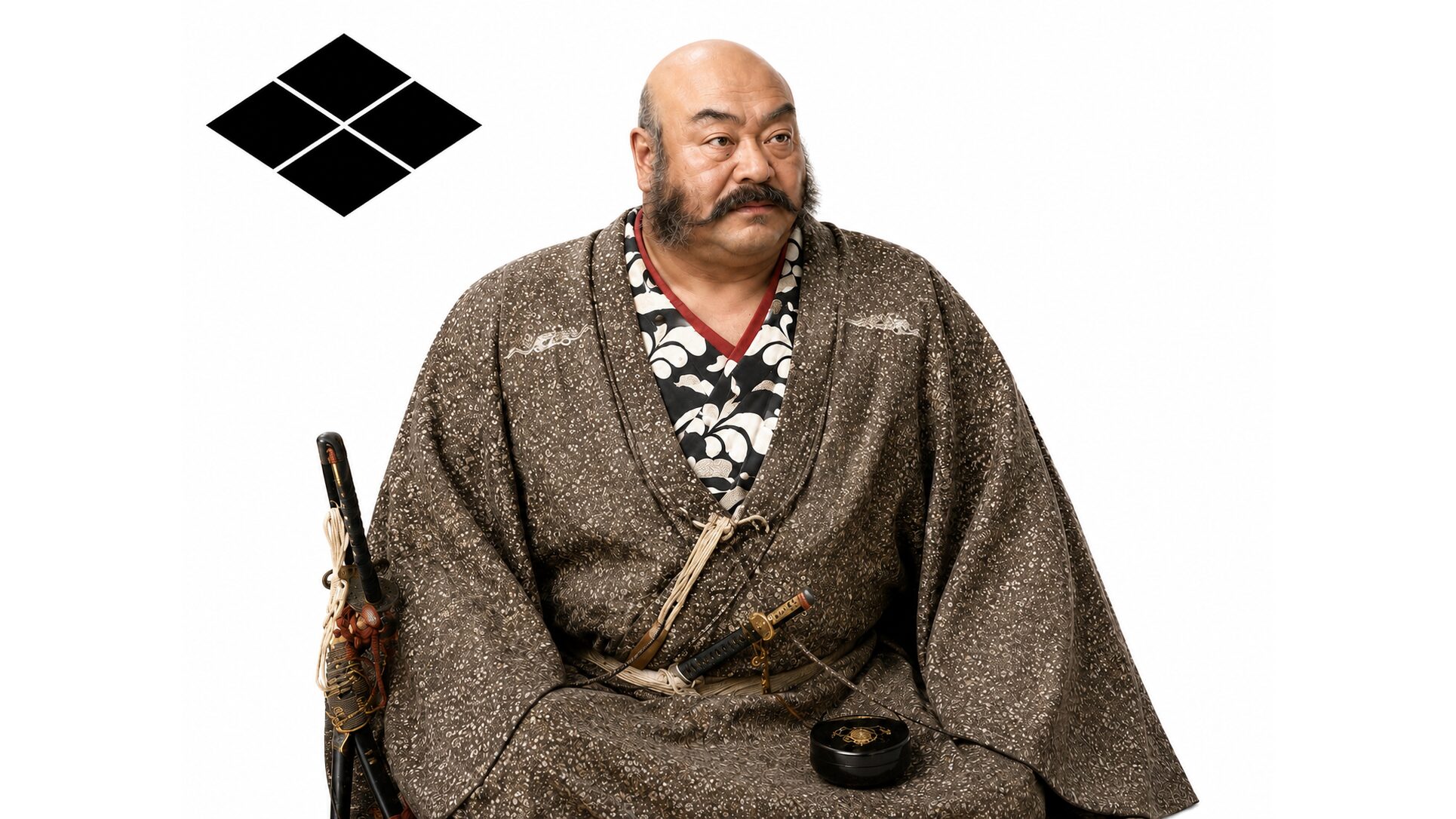
Takeda Shingen — The “Tiger of Kai,” the Strongest Warlord of the Sengoku Age
3rd day, 11th month of Daiei 1 (1521) – 12th day, 4th month of Genki 4 / Tenshō 1 (1573) | Died aged 53
- This Figure in 3 Points
- The Mainstream Account — The Standard Story Found in Textbooks
- The Theories — Exploring the Possibilities from Various Angles
- A Strategic View
- Takeda Shingen — Notable Sayings and Death Poem
- Anecdotes and Episodes
- Takeda Shingen — Life Timeline
- Takeda Shingen — Family and Relationships
- Related Historic-Site Map and Travel Model Course
- Related Articles
- Reference Information
This Figure in 3 Points
- One of the foremost commanders of the Sengoku period, called the “Tiger of Kai.” He subdued Shinano and brought even Suruga under his control.
- His five Battles of Kawanakajima against Uesugi Kenshin became famous scenes handed down through Sengoku history.
- In his westward campaign he drove Oda Nobunaga into a corner, but died of illness on the march. The realm slipped from his grasp on its very threshold.
The Mainstream Account — The Standard Story Found in Textbooks
Birth and the “Fool” Years (1521–1541)
Takeda Shingen (before taking vows he was Harunobu; “Shingen” is used throughout here) was born on the 3rd day of the 11th month of Daiei 1 (1521), the heir of the Kai warlord Takeda Nobutora. His childhood name was Tarō, later Katsuchiyo. His mother was Nobutora’s principal wife Ōi-no-kata (daughter of the Ōi, a powerful Kai clan).
The Takeda were the head house of the Kai Genji, descended from the Seiwa Genji, a distinguished family that had inherited the post of shugo of Kai throughout the Muromachi period. His father Nobutora had unified Kai amid the chaos of the Sengoku age and begun advancing toward Shinano. But Nobutora was rough in temperament, and his harsh oppression of retainers and people, his tyranny, is recorded in various works.
In Tenbun 5 (1536), Shingen came of age and took the name “Harunobu,” receiving the character “Haru” from the 12th Ashikaga shogun Yoshiharu. That same year, when Imagawa Yoshimoto inherited the headship in the Hanagura Rebellion, relations between the Takeda and Imagawa deepened.
In Tenbun 6 (1537), Shingen experienced his first battle at 16. The Kōyō Gunkan relates that he took part in his father Nobutora’s attack on Unnokuchi Castle in Saku District and captured it. This, however, carries strong embellishment from the Kōyō Gunkan, compiled in the Edo period, and recent research holds that much about Shingen’s youthful military record is unclear. That same year Shingen took Yoshimoto’s daughter Reikan’in as his principal wife, but she died in Tenbun 7 (1538). He later took as continuation wife Sanjō-fujin, daughter of Sanjō Kinyori.
The Banishment of Nobutora — A Bloodless Coup (1541)
In the 6th month of Tenbun 10 (1541), when Shingen was 21, an incident occurred in which his father Nobutora was banished to Suruga. While Nobutora was visiting his son-in-law Imagawa Yoshimoto, Shingen sealed off the Kai-Suruga border, shut his father out of the province, and seized the headship.
This was an extremely unusual “bloodless coup” for the Sengoku period. No blood was shed between father and son, and the retainer band followed Shingen. Yoshimoto too was aware of the plan, and Nobutora would live a life little better than a hostage in Sunpu. The course the Kōyō Gunkan relates is that, because his father Nobutora ruled tyrannically and made the people suffer, Shingen rose up with the support of the retainer band and the local warriors (jizamurai).
Recent research, however, points out that this banishment was not a simple “heroic revolution that banished a tyrannical father.” Historians such as Hirayama Yū argue that it was the result of a complex interplay of conflicts of interest between the Takeda retainers and local warriors and Nobutora, and the political judgment of retainers who sought to protect their own interests by installing Shingen. The cooperation with Yoshimoto, too, was by design. The fine tale that “the hero Shingen drove out his tyrant father” is very likely an interpretation strengthened in the Edo period.
In any case, Shingen became lord of Kai at 21 and opened a new era in the history of the Takeda house.
The Invasion of Shinano and Setbacks — The Great Defeats at Uedahara and Toishi (1542–1551)
Having inherited the headship, Shingen immediately began the invasion of Shinano. This carried on his father Nobutora’s policy, and advance into Shinano was a long-cherished aim for the Takeda.
In Tenbun 11 (1542), Shingen attacked Suwa Yorishige and forced him to take his own life, subduing the Suwa region. He took Yorishige’s daughter (the Lady of Suwa) as a concubine, who later bore his fourth son, Katsuyori. He then went on to conquer one part of Shinano after another — Ina, Saku and Chiisagata.
But Shingen’s advance into Shinano was not always smooth. In the 2nd month of Tenbun 17 (1548), he suffered a great defeat at the Battle of Uedahara at the hands of the northern Shinano magnate Murakami Yoshikiyo. In this battle the senior retainers Itagaki Nobukata and Amari Torayasu were killed, and Shingen himself is said to have been wounded.
Furthermore, in the 9th month of Tenbun 19 (1550), Shingen again attacked Murakami Yoshikiyo but was badly defeated at Toishi Castle. In this battle, known to the world as the “Toishi Collapse,” many commanders, including Yokota Takatoshi, were killed. That he was badly defeated twice by Murakami Yoshikiyo shows a real Shingen different from the image of “the strongest of the Sengoku age.”
The turning point came in Tenbun 20 (1551). The Shinano magnate Sanada Yukitaka brought down Toishi Castle by stratagem. The Sanada had originally been magnates of this region but, driven out by Murakami Yoshikiyo, had taken service with Shingen. Yukitaka’s stratagem gave great momentum to the invasion of Shinano, and Murakami Yoshikiyo abandoned his stronghold Katsurao Castle and fled to Nagao Kagetora (the future Uesugi Kenshin) in Echigo.
The Battles of Kawanakajima — The Fated Confrontation with Uesugi Kenshin (1553–1564)
Receiving the exiled Murakami Yoshikiyo, Nagao Kagetora resolved to confront Shingen. This became the start of five Battles of Kawanakajima spanning twelve years.
The First Battle of Kawanakajima (1553)
In Tenbun 22, Nagao Kagetora sent troops into Shinano on the pretext of relieving Murakami Yoshikiyo. Shingen responded, and they clashed around Kawanakajima. It did not reach a decisive engagement, and both sides withdrew.
The Second Battle of Kawanakajima (1555)
In Kōji 1, Shingen and Kagetora faced off across the Sai River at Kawanakajima. After a standoff of 200 days, a settlement was reached through the mediation of Imagawa Yoshimoto.
The Third Battle of Kawanakajima (1557)
In Kōji 3, Shingen advanced into northern Shinano and Kagetora sent troops. There was a skirmish at Uenohara, but they reached a settlement through the mediation of Ashikaga Yoshiteru. During this time Shingen won appointment as shugo of Shinano, gaining a great political result.
The Fourth Battle of Kawanakajima (1561) — The Greatest Pitched Battle
In Eiroku 4, great armies — Shingen’s 20,000 and Nagao Masatora’s (Kenshin’s) 13,000 — clashed at Kawanakajima. This battle is held to be one of the most famous in Sengoku history, and the Kōyō Gunkan records many dramatic episodes.
According to the Kōyō Gunkan, Shingen, on the advice of Yamamoto Kansuke and Baba Nobuharu, deployed his main force of 8,000 at Hachimanbara while sending a detached force of 12,000 toward Saijoyama — the “woodpecker stratagem.” It was a surprise plan likened to the movement of a woodpecker, which pecks the tree to catch the insects that come out. But Kenshin, it is said, saw through the Takeda plan from the amount of cooking smoke from Kaizu Castle, came down from Saijoyama during the night and advanced to Hachimanbara. When the thick fog of the next morning lifted, the Uesugi army appeared right before Shingen’s headquarters.
After fierce fighting, many commanders were killed — Shingen’s younger brother Takeda Nobushige, Yamamoto Kansuke, Morozumi Toradada and others. The famous “single combat,” in which Shingen himself was struck at by the mounted Kenshin and parried with his war fan, is also said to be a scene of this battle. In the end the Takeda detached force, rushing in from Saijoyama, reached Hachimanbara, and the fighting ended. It was a grisly battle producing over 8,000 dead between the two armies. Judgments of victory and defeat differ, but tactically it was a draw, while strategically Shingen secured the ground of Kawanakajima.
Recent research, however, has grown more skeptical of the Kōyō Gunkan‘s account. Neither the woodpecker stratagem nor the single combat appears in reliable primary sources. The “unexpected-encounter theory” — that the two armies met by chance in the thick fog — is also regarded as strong. This is explained in the Theories section.
The Fifth Battle of Kawanakajima (1564)
In Eiroku 7, Shingen and Uesugi Terutora (Kenshin) again faced off but ended without a decisive engagement. With this, the Takeda consolidated control of northern Shinano while the Uesugi secured part of the territory centered on Iiyama Castle, and the struggle for Kawanakajima effectively reached a settlement.
The Triple Alliance and the Yoshinobu Incident (1554–1567)
To secure safety at his rear, Shingen made repeated diplomatic efforts. In Tenbun 23 (1554), the “Kō-Sō-Sun Triple Alliance” among the Takeda, Hōjō and Imagawa was formed:
- Tenbun 21 (1552): Imagawa Yoshimoto’s daughter Reishōin married Shingen’s heir Takeda Yoshinobu.
- Tenbun 22 (1553): Shingen’s daughter Ōbaiin married Hōjō Ujiyasu‘s heir Ujimasa.
- Tenbun 23 (1554): Ujiyasu’s daughter Hayakawa-dono married Yoshimoto’s heir Ujizane.
Through this Triple Alliance, Shingen removed the threats to the south and east and could devote his full strength to the Shinano and Echigo fronts. Functioning for more than ten years, the Triple Alliance was an extremely firm one even among the alliances of the Sengoku period.
In Eiroku 3 (1560), however, when Imagawa Yoshimoto was struck down by Oda Nobunaga at the Battle of Okehazama, the situation changed entirely. The Imagawa house declined rapidly, and Shingen began to consider advancing toward Suruga. But because this meant breaking the Triple Alliance, opinion was divided even within the Takeda house.
In Eiroku 8 (1565), an incident occurred in which Shingen’s heir Yoshinobu was confined on suspicion of rebellion. Yoshinobu had Yoshimoto’s daughter as principal wife and strongly opposed the invasion of Suruga. Senior retainers of the Yoshinobu faction, such as Obu Toramasa, were executed, and Yoshinobu himself took his own life at Tōkō-ji in the 10th month of Eiroku 10 (1567). He was 30. After Yoshinobu’s death, Reishōin was sent back to the Imagawa.
The Yoshinobu Incident is described in the Kōyō Gunkan as “rebellion came to light and was punished,” but in reality it was very likely the result of a complex interplay of Yoshinobu’s opposition to Shingen’s line of invading Suruga and a power struggle within the retainer band. The Shingen who had banished his father Nobutora now drove his own heir to suicide. It was a bloodline tragedy of the Takeda house.
The Invasion of Suruga and the Collapse of the Triple Alliance (1568–1571)
After the Yoshinobu Incident, Shingen designated his fourth son Katsuyori as successor. Because Katsuyori carried Suwa blood, however, for the time being Katsuyori’s heir Nobukatsu was made the future head, with Katsuyori positioned as his “jindai” (guardian).
In the 12th month of Eiroku 11 (1568), Shingen at last invaded Suruga. The Triple Alliance completely collapsed. Imagawa Ujizane fled to Kakegawa Castle in Tōtōmi, and the Imagawa as a Sengoku warlord house effectively fell. On the other hand, Hōjō Ujiyasu, owing to his alliance with the Imagawa, turned hostile to the Takeda, and a Takeda-Hōjō war began.
In the 10th month of Eiroku 12 (1569), Shingen besieged the Hōjō stronghold Odawara Castle. When the Hōjō chose a defensive siege, Shingen turned to withdrawal. During the retreat, he crushed the pursuing Hōjō army at the Battle of Mimasetōge. This battle is known as a tactical victory for Shingen.
In the 10th month of Genki 2 (1571), Hōjō Ujiyasu died. In Ujimasa’s generation the Hōjō chose reconciliation with the Takeda, and the Kai-Sagami alliance was revived. With this, Shingen removed the threat to the east and secured possession of Suruga. He gained the long-cherished outlet to the sea.
The Westward Campaign — A Challenge to Nobunaga (1572)
Having reconciled with the Hōjō, Shingen at last began to consider advancing westward. At the time, Oda Nobunaga had installed Ashikaga Yoshiaki, brought Kyoto under his control, and was rapidly expanding his power. But in the central region an anti-Nobunaga encirclement was forming, with the Azai-Asakura, the Hongan-ji, Mount Hiei and Ashikaga Yoshiaki all opposing Nobunaga.
In the 10th month of Genki 3 (1572), Shingen set out from Kōfu at the head of a great army of about 30,000. This large-scale expedition, called the “westward campaign,” is held to be one of the greatest mysteries of Sengoku history.
Shingen’s army advanced in three divisions. The main force invaded toward Tōtōmi, while a detached force of 5,000 under Yamagata Masakage went to Mikawa and 5,000 under Akiyama Toranari went to eastern Mino. Tokugawa Ieyasu holed up in Hamamatsu Castle, and Oda Nobunaga sent reinforcements of about 3,000 — overwhelmingly few against the great Takeda army.
On the 22nd day of the 12th month, Shingen passed by Hamamatsu Castle and advanced to Mikatagahara. Seeing this, Ieyasu came out of the castle to pursue the Takeda army but fell into a trap Shingen had laid. At the Battle of Mikatagahara, Ieyasu suffered the only great defeat of his life. The Tokugawa army produced over 1,000 dead, and Ieyasu himself barely escaped back to Hamamatsu Castle with his life.
→ For details, see the battle article “The Battle of Mikatagahara.”
The victory at Mikatagahara showed the sharpness of Shingen’s strategic eye, but ironically, around this time Shingen’s health was rapidly worsening.
Death by Illness — The Dream of Marching on Kyoto Vanishes (1573)
In the 1st month of Genki 4 (1573), Shingen captured Noda Castle in Mikawa. But his condition worsened in camp, and further advance became impossible. The Takeda army called off the westward campaign and began its return to Kai.
On the 12th day of the 4th month, Shingen died of illness at Komaba in Ina District, Shinano Province. He was 53. As to the cause of death, there is a tuberculosis theory and a stomach-cancer theory, given symptoms involving the coughing of blood, but it is not settled. There is also a tradition that gun fire at Noda Castle was the cause, but this is hard to consider historical fact.
Just before his death, Shingen is said to have summoned his successor Katsuyori to his bedside and left these instructions:
- “Conceal my death for three years.”
- “For three years, refrain from foreign war and build up the strength of the province.”
- “Sink my remains into Lake Suwa” (or bury them at the same place).
The Takeda house, following Shingen’s will, strove to conceal his death for a time. But Nobunaga and Ieyasu sensed his death early and began a counterattack into Takeda territory. At the Battle of Nagashino in Tenshō 3 (1575), Katsuyori was badly defeated by the allied Oda-Tokugawa army, and the Takeda house rapidly walked the road of decline.
→ For details, see the battle article “The Battle of Nagashino.”
Nine years after Shingen’s death, in the 3rd month of Tenshō 10 (1582), through Nobunaga’s Kōshū campaign, Takeda Katsuyori took his own life at Tenmokuzan, and the Takeda house fell. The domain Shingen had built collapsed, ironically, just nine years after his death.
The Theories — Exploring the Possibilities from Various Angles
[Theory 1] Was the Banishment of Nobutora Really a “Heroic Revolution”?
In later records, beginning with the Kōyō Gunkan, Nobutora is portrayed as a “tyrannical despot” and Shingen as a “hero who rose up for his retainers and people.” This framing has been mainstream in historical fiction from the Edo period onward, and this interpretation is also common in modern Taiga dramas.
Recent research, however, has cast doubt on this simple “evil father vs. righteous son” framing:
- Nobutora was certainly fierce in character, but he also had the aspect of a wise ruler — unifying Kai, advancing into Shinano.
- The banishment was the result of a complex interplay of the interests of the retainer band and local warriors and the political judgment to install Shingen.
- The cooperation with Yoshimoto was by design, premised on a convergence of interests between Shingen and Yoshimoto.
- Nobutora lived more than 30 years in Suruga and spent his last years with a retainer even after Nobunaga’s Kōshū campaign.
In other words, the banishment was not “a revolution to set the world right” but “a reorganization of the power structure” — that is the figure shown by recent research such as Hirayama Yū’s. The image of a “heroic revolution” is very likely a retelling meant to glorify Shingen, a later power-holder.
That said, in Sengoku-period inheritance the very form of banishment was rare, and the political power by which Shingen, in his youth (21), rallied the retainer band and carried it out can still be rated as extraordinary.
[Theory 2] Are the “Woodpecker Stratagem” and “Single Combat” at Kawanakajima Historical Fact?
The Fourth Battle of Kawanakajima is one of the most famous battles in Sengoku history, yet its actual nature is astonishingly unclear. The main “mystery” episodes appear only in the Kōyō Gunkan, and skepticism has grown in recent research.
The woodpecker stratagem
A plan to split into main force and detached force for a pincer attack, but there are several doubts:
- The slope of the Saijoyama ridge is steep, places horses can pass are limited, and whether a pincer was actually possible is doubtful.
- The story that Kenshin saw through the plan from the cooking smoke carries strong later embellishment.
- As a tactic of the time, a plan in which main force and detached force coordinated completely was technically difficult.
The single combat
The famous scene in which the mounted Kenshin struck at Shingen and Shingen parried with his war fan does not appear in reliable sources either. In Sengoku-period battles, a scene of commanders facing off one-on-one was virtually impossible. This is very likely an image invented and glorified by Edo-period war chronicles and paintings.
The unexpected-encounter theory
The theory that the two armies met by chance in the thick fog and fell into fighting not originally planned. It also explains the unusually high mortality for a battle of the time (over 8,000 dead), and is regarded with a degree of credibility in recent years. Indeed, the explanation that a great melee occurred in the fog, and both armies, unable to withdraw, saw their dead swell, is reasonable.
Of course, it is not that the Kōyō Gunkan is all later invention. That Takeda Nobushige, Yamamoto Kansuke and others were killed, and that the Fourth Battle of Kawanakajima was one of the foremost pitched battles of the Sengoku period, are certain. The problem is that nothing certain is known about the details of the fighting. “The most famous battle in Sengoku history, yet the one whose reality is least known” — that is the true face of the Battles of Kawanakajima.
[Theory 3] Was Fūrinkazan Shingen’s Own Invention?
“Swift as the wind, quiet as the forest, fierce as fire, immovable as the mountain.”
“Fūrinkazan,” the most famous of Takeda Shingen’s banners, was not Shingen’s own invention. Its source is the “Maneuvering of an Army” chapter of the ancient Chinese military treatise The Art of War (Sunzi). Shingen studied Sunzi deeply and drew out a passage to raise on his war banner.
Many Sengoku-period commanders studied Sunzi and applied its tactical thought in practice. Tokugawa Ieyasu too loved reading Sunzi and had Hayashi Razan make annotations. In short, Sunzi was the “common cultivation” of Sengoku warlords. Shingen’s originality lies in raising a passage of Sunzi as a symbol on his banner, expressing his army’s strategic thought visually.
The four-character compound “Fūrinkazan” itself was not yet established in the Sengoku period; it is a name that took hold from the Edo period to the Meiji era. Shingen’s banner was more precisely called the “Sunzi banner,” with the above four lines written on it. The word “Fūrinkazan” spread widely only after Inoue Yasushi’s novel Fūrinkazan (1955).
The view that deifies “Fūrinkazan” as Shingen’s own strategic thought was formed in conjunction with the early-modern-and-later image of Shingen as “the strongest of the Sengoku age.” In reality, Shingen was one of the excellent practitioners among the Sengoku warlords who studied Sunzi.
[Theory 4] The Truth of the Yoshinobu Incident — Was Opposition to the Suruga Invasion the Only Cause?
The “Yoshinobu Incident,” in which the heir Yoshinobu was confined in Eiroku 8 (1565) and took his own life in Eiroku 10 (1567), is held to be the greatest tragedy of the Takeda house. The received view has been “because Yoshinobu opposed the invasion of Suruga and plotted rebellion,” but recent research points to multiple factors.
First theory: opposition to the line of invading Suruga
Yoshinobu had Yoshimoto’s daughter Reishōin as principal wife, and invading Suruga — subjugating the Imagawa — meant destroying his wife’s family. It was natural feeling for Yoshinobu to oppose it, but Shingen forced it through “for the sake of the house” — that is the received view.
Second theory: a power struggle within the retainer band
The theory that there was a power struggle between senior retainers of the Yoshinobu faction (such as Obu Toramasa) and the retainers backing Katsuyori. Obu Toramasa, executed in the Yoshinobu Incident, was a senior retainer long trusted as Shingen’s close aide. Internal conflict within the retainer band may have decided Yoshinobu’s fate.
Third theory: personal conflict between Shingen and Yoshinobu
The theory that the Shingen who banished his father Nobutora was unable, this time, to build a good relationship with his own heir. It is held that Shingen hesitated to delegate excessive authority to Yoshinobu, and that Yoshinobu’s mounting dissatisfaction deepened the conflict.
Each of these theories has some grounds. In reality, it is appropriate to think of it as the result of a complex working of opposition to the Suruga invasion, the retainer-band struggle and father-son distrust. The Yoshinobu Incident was not a simple “discovery and punishment of rebellion” but a complex affair in which the internal contradictions of the Takeda house erupted all at once.
Ironically, just as in the method by which he banished his father Nobutora, Shingen advanced the inheritance by removing his own heir. Yoshinobu’s death was a bloodline tragedy of the Takeda house and at the same time made the later position of Katsuyori unstable, becoming an indirect cause of the fall of the Takeda.
[Theory 5] Was the Invasion of Suruga Shingen’s “Betrayal”?
Shingen’s act of breaking the Triple Alliance and invading Suruga is often criticized as “betrayal” or “violation of the alliance.” Indeed, the Hōjō entered into hostility with the Takeda, treating Shingen’s invasion of Suruga as a “violation of the alliance.”
But Sengoku-period alliances were basically of the nature “maintained as long as there is a convergence of interests,” differing in meaning from a modern “breach of treaty.” Behind Shingen’s invasion of Suruga the following Sengoku-period logic was at work:
- The decline of the Imagawa after Okehazama: after Yoshimoto’s death, the Imagawa rapidly weakened. In Ujizane’s generation, governing ability declined and the retainer band defected.
- The Takeda’s strategic need: though Shingen had subdued Shinano, he remained an inland state with no outlet to the sea. Gaining Suruga would open prospects toward both the Sea of Japan and the Pacific.
- The collapse of the balance of power: if the weakened Imagawa were left as they were, other forces (especially the Uesugi or Tokugawa) might seize Suruga.
- Conflict of interest with the Hōjō: the Hōjō too eyed Imagawa territory toward eastern Suruga and Izu; the framing was that if the Takeda did not move, the Hōjō would.
On the basis of these strategic judgments, Shingen carried out the invasion of Suruga. It is appropriate to rate it less as “betrayal” than as “a commonsense act of territorial expansion of the Sengoku period.” Contemporary Sengoku warlords accepted attacking a former ally when the chance arose as a matter of course.
That said, forcing through the invasion of Suruga even to the point of the Yoshinobu Incident left a great wound within the Takeda house as well. Some retainers are said to have inwardly opposed Shingen’s judgment. The conclusion of recent research is that rating it as “betrayal” is understandable as a modern sensibility, but that as Sengoku-period logic it was an inevitable choice.
[Theory 6] Did the Westward Campaign Really Aim at Marching on Kyoto?
As for the aim of the westward campaign of Genki 3 (1572), the march-on-Kyoto theory — entering the capital to command the realm — was long held to be the established view. The romantic interpretation that “if only Shingen had lived a few more years, Nobunaga would have been destroyed and the realm would have been the Takeda’s” has been told repeatedly in storytelling and novels.
Recent research, however, has seen lively debate over whether Shingen truly aimed at marching on Kyoto.
The march-on-Kyoto theory (the old received view)
A grand plan in which, as the center of the anti-Nobunaga encirclement, Shingen coordinated with the Azai-Asakura, the Hongan-ji and Ashikaga Yoshiaki to topple Nobunaga and enter the capital. That Shingen led an army of 30,000, defeated Ieyasu and continued westward, and that there was a request to march on the capital from Ashikaga Yoshiaki, are taken as grounds.
The territorial-expansion theory (a strong recent view)
Historians such as Marushima Kazuhiro propose the theory that the main aim of Shingen’s westward campaign was not “marching on Kyoto” but “the acquisition of Tokugawa Ieyasu’s domain (Mikawa and Tōtōmi).” The grounds are as follows:
- That Shingen led 30,000 troops is fact, but this is close to a total mobilization of the Takeda domain — insufficient endurance for an expedition all the way to Kyoto.
- The advance route was in the direction of subduing Tokugawa territory along the Tōkaidō, not a hurried movement aimed at the capital.
- After the fighting at Mikatagahara, Shingen did not pass by Hamamatsu Castle but showed a posture of capturing it.
- There is little trace of his hurrying toward a direct showdown with Nobunaga.
In other words, the new interpretation is that Shingen’s true aim was “to destroy the Tokugawa and acquire Mikawa and Tōtōmi,” and that marching on Kyoto was no more than a long-term possibility thereafter.
Of course, this does not mean “Shingen gave no thought at all to marching on Kyoto.” A moderate view would be that the first objective was to seize Tokugawa territory and stand in a strategic position from which a showdown with Nobunaga was possible, with the possibility of then aiming at the capital left open. The traditional interpretation, which has inflated “marching on Kyoto” as romance, was very likely a strategic overestimation.
A Strategic View
When Shingen is compared with other fine commanders of the Sengoku period, three points stand out: “domestic government,” “the retainer band,” and “adaptability.”
First, domestic government. Shingen was known not only for combat but as a master of domain administration. The flood-control works of the Kamanashi and Fuefuki river basins, the “Shingen-zutsumi” (Shingen Embankment), were large-scale construction that remains partly to this day, advancing flood defense and irrigation in Kai all at once. He carried out progressive policies in every aspect of domain administration — gold-mine development such as the Kurokawa mine, the building of military roads (bōmichi), the enactment of the Kōshū Hatto no Shidai (provincial law code). This is why he is called “Shingen of domestic government.”
Second, the retainer band. The cohesion of the retainer band known as the “Twenty-Four Generals of Takeda” was among the foremost of the Sengoku period. Led by the “Four Great Retainers of Takeda” — Yamagata Masakage, Baba Nobuharu, Naitō Masatoyo and Kasuga Toratsuna — and including Hara Toratane, Atobe Katsusuke, Sanada Yukitaka and Takeda Nobushige (his brother), the talent supporting Shingen was deep. Shingen promoted able men regardless of birth and placed them where they fit. It is also distinctive that many of the Twenty-Four Generals were not “hereditary retainers” but “talent promoted in Shingen’s generation.” The cohesion of the retainer band became an important force supporting the Takeda house even after Shingen’s death.
Third, adaptability. Shingen was badly defeated twice by Murakami Yoshikiyo at Uedahara and the Toishi Collapse, but he learned from these defeats and greatly reformed his tactics. From combat centered on heavy cavalry, to a multi-arm formation combining foot soldiers, guns and local warriors. From single-breakthrough operations, to a comprehensive strategy combining stratagem, intelligence and economic warfare. Contrary to the image of “the strongest of the Sengoku age,” it may be said that Shingen’s true strength lay in “the ability to learn from defeat.” That he discovered and made use of a master of stratagem like Sanada Yukitaka is also an expression of Shingen’s flexibility.
On the other hand, Shingen’s limits are also noted. The greatest problem was the “succession question.” As a result of disinheriting his heir Yoshinobu and driving him to suicide, the successor Takeda Katsuyori was in the position of carrying Suwa blood and was placed for the time being in the unstable status of “jindai” for his son Nobukatsu. In his relations with the retainer band after Shingen’s death, too, Katsuyori could not hold sufficient authority. This connected to the misjudgment at Nagashino and the distrust with the retainer band, becoming one cause that finally invited the fall of the Takeda. The “complexity of inheritance” — the Shingen who banished his father Nobutora trying to remove his own heir and make his grandson the successor — threw the fate of the Takeda house off course.
To rate Shingen as “the strongest, undefeated commander of the Sengoku age” is an overestimation. He was badly defeated by Murakami Yoshikiyo, could not gain a decisive victory at Kawanakajima, and could not achieve a march on Kyoto. But seen in terms of the three points of domestic government, the retainer band and adaptability, there is no doubt he was one of the foremost wise rulers of the Sengoku period. The image of Shingen’s realm spoken of under the assumption “if only Shingen had lived” is attractive as romance, but considering realistic political and military dynamics, it cannot be said it would necessarily have been achievable. Shingen’s true greatness lies not in “harboring the possibility of taking the realm” but in “developing the Takeda house from an inland state into a great warlord with an outlet to the sea.”
Takeda Shingen — Notable Sayings and Death Poem
“Swift as the wind, quiet as the forest, fierce as fire, immovable as the mountain.”
— Commonly called “Fūrinkazan”
The most famous four lines, as Takeda Shingen’s banner. A quotation from the “Maneuvering of an Army” chapter of the ancient Chinese military treatise The Art of War, succinctly showing four postures in battle. Swift as the wind, quiet as the forest, fierce as fire, unshaken as the mountain — Shingen raised this passage, expressing the ideal form of an army, on his banner as his army’s strategic thought. The name “Fūrinkazan” took hold from the modern era onward, but it is deeply engraved in Sengoku history as a symbol of Shingen.
— Source: The Art of War, “Maneuvering of an Army”
“People are the castle, people are the stone walls, people are the moat; compassion is an ally, enmity an enemy.”
The most famous of Shingen’s sayings. It means that more than physical defensive works — castle, stone walls and moat — it is the hearts of retainers and people that become the force protecting the province. It is widely known as words expressing Shingen’s stance of valuing “the cohesion of the retainer band” above all. That said, it is not certainly recorded as Shingen’s own utterance, and there is a view that it is a later invention or embellishment. Even so, it remains beloved to this day as words symbolizing the strength of the cohesion of the Takeda retainer band.
— Source: various works (the Kōyō Gunkan and others)
“A person well spoken of by 90 of 100 is not a good person.”
Words said to show Shingen’s view of people. It means that a person liked by everyone is, in the end, merely a mediocre person of use to no one. An excellent person inevitably makes enemies, and Shingen disliked those who, fearing this, behaved inoffensively. It is a saying characteristic of Shingen, who promoted retainers on ability and built a firmly cohesive retainer band.
— Source: Kōyō Gunkan and others
“In matters of great importance, do not confer with others; resolve them in your own mind first, then speak of them to others.”
It means that an important decision should first be thought through alone, then put to the retainers. Words showing Shingen’s frame of mind in deciding as the leader of an organization. They call to mind that Shingen’s life held many “solitary decisions” — the banishment of Nobutora, the invasion of Suruga, the disposal of Yoshinobu, the westward campaign.
— Source: Kōyō Gunkan
Anecdotes and Episodes
The Banishment of Nobutora — Shutting His Father Out into Suruga at 21
In the 6th month of Tenbun 10 (1541), when Shingen was 21, his father Nobutora went down to Suruga to visit his son-in-law Imagawa Yoshimoto. Seizing this chance, Shingen sealed off the Kai-Suruga border and blocked Nobutora’s return to Kai. Nobutora was kept in Suruga — an effective banishment.
No blood was shed between father and son, and the retainer band followed Shingen. Yoshimoto too was aware of the plan, and Nobutora lived a life little better than a hostage in Sunpu. Nobutora went on to live more than 30 years, spending his last years with a retainer even after Nobunaga’s Kōshū campaign. That he banished his father without killing him and kept him alive long afterward can be called an expression of Shingen’s cold-bloodedness and realism.
Ironically, Shingen himself would in later years come to disinherit and drive his own heir Yoshinobu to suicide. “Conflict between parent and child” was a fate repeated in the Takeda bloodline.
— Source: Kōyō Gunkan; Hirayama Yū, Takeda Shingen
→ For details, see the warlord article “Takeda Nobutora.”
Uedahara and the Toishi Collapse — Learning from Two Great Defeats
At the Battle of Uedahara in the 2nd month of Tenbun 17 (1548) and the Toishi Collapse in the 9th month of Tenbun 19 (1550), Shingen suffered two great defeats at the hands of the Shinano magnate Murakami Yoshikiyo. The senior retainers Itagaki Nobukata, Amari Torayasu, Yokota Takatoshi and others were killed. This is a fact greatly at odds with the image of Shingen as “the strongest of the Sengoku age.”
But Shingen learned much from these defeats. He greatly reformed his tactics and developed a comprehensive strategy combining stratagem, intelligence and economic warfare. That he discovered and made use of a master of stratagem like Sanada Yukitaka was also because of the lessons of defeat. In Tenbun 20 (1551), Yukitaka brought down Toishi Castle by stratagem, giving great momentum to Shingen’s invasion of Shinano.
Many researchers rate “the ability to learn from defeat” as Shingen’s true strength.
— Source: Kōhakusai-ki; Hirayama Yū, Takeda Shingen
The Single Combat at Kawanakajima — The Greatest Famous Scene in Sengoku History
There is a famous anecdote that at the Fourth Battle of Kawanakajima in the 9th month of Eiroku 4 (1561), Shingen and Uesugi Kenshin fought single combat. In the fog, the mounted Kenshin, charging into Shingen’s headquarters, brought down his sword on Shingen seated on his camp stool, and Shingen parried it on the instant with his war fan — a dramatic scene.
This scene is recorded in the Kōyō Gunkan and has been depicted repeatedly in later war chronicles, ukiyo-e, novels and Taiga dramas. In Hachimanbara Historic Park in Nagano City stands a bronze statue reenacting the single combat of Shingen and Kenshin.
That said, this single combat does not appear in reliable primary sources and is very likely a later invention. In a battle of the time, a scene of commanders facing off one-on-one was virtually impossible. Even so, this most famous scene in Sengoku history is deeply engraved in people’s hearts as a “famous scene of history” symbolizing the relationship of the two genius commanders Shingen and Kenshin.
— Source: Kōyō Gunkan
Sending Salt to the Enemy — Kenshin’s Chivalry
Around Eiroku 10 (1567) or Eiroku 11 (1568), the Imagawa of Suruga and the Hōjō of Sagami joined to stop the supply of salt to Takeda territory — a “salt embargo.” Because Takeda territory, with no sea, imported salt, a daily necessity, from Suruga and the Tōkaidō, the embargo was a great blow.
Learning of this, Uesugi Kenshin, despite being in a hostile relationship, is said to have had Echigo salt sent to Takeda territory. It is held to have been from a chivalrous spirit: “war is waged with bow and arrow; to torment with salt is not the way of the warrior.” Known as the origin of the proverb “send salt to the enemy,” this anecdote has been handed down as a symbol of the bushidō spirit of the Sengoku period.
That said, this too is a tradition that does not appear in reliable primary sources and is very likely an invention. In reality, the distribution of salt continued by the hands of merchants, and rather than Kenshin sending salt as a political judgment, it is more likely merchants were moving salt for profit. Even so, the fine tale of “sending salt to the enemy” continues to resonate in people’s hearts as an anecdote symbolizing the rivalry of Shingen and Kenshin.
— Source: Kakujō Sōdan; Matsumoto Kyōdo Kunwashū; and others
The Yoshinobu Incident — Tragedy with the Heir
In Eiroku 8 (1565), Shingen’s heir Takeda Yoshinobu was confined on suspicion of rebellion. Senior retainers of the Yoshinobu faction, such as Obu Toramasa, were executed, and in the 10th month of Eiroku 10 (1567) Yoshinobu himself took his own life at Tōkō-ji. He was 30.
Yoshinobu had Yoshimoto’s daughter as principal wife and is said to have strongly opposed Shingen’s line of invading Suruga. At the same time, there was very likely a power struggle between the Yoshinobu faction and the retainers backing Katsuyori. It was a bloodline tragedy of the Takeda house — the Shingen who banished his father Nobutora now driving his own heir to suicide.
After Yoshinobu’s death, Shingen designated his fourth son Katsuyori as successor. But Katsuyori was in the position of carrying Suwa blood, and properly Katsuyori’s heir Nobukatsu would become the future head, with Katsuyori in the unstable position of his “jindai” (guardian). This complex inheritance became an indirect cause of the later fall of the Takeda.
Shingen’s coldly removing Yoshinobu was a judgment based on rationality as a Sengoku warlord, but it left a deep wound for the Takeda house.
— Source: Kōyō Gunkan; various studies
Mimasetōge — The Art of the Withdrawal Battle
In the 10th month of Eiroku 12 (1569), Shingen besieged the Hōjō stronghold Odawara Castle. But when Hōjō Ujiyasu chose a defensive siege, Shingen decided to withdraw. At Mimasetōge during the retreat, he lay in wait for the pursuing Hōjō army and crushed it splendidly. This is the Battle of Mimasetōge.
The tactic of turning on its head the common wisdom of battle that “an army is weak during withdrawal,” feigning retreat and then turning to ambush, symbolizes the sharpness of Shingen’s tactical eye. The skill with which he used the terrain of Mimasetōge, surprised the Hōjō pursuit force and inflicted great losses is known as one of the foremost withdrawal battles of the Sengoku period.
— Source: Kōyō Gunkan; Hōjō-ki
The Shingen Embankment — His Figure as a Wise Ruler of Domestic Government
Shingen was known not only for combat but as a master of domestic government. Most famous is the flood-control work of the Kamanashi and Fuefuki river basins, the “Shingen Embankment.” Kai was a basin surrounded by mountains, terrain where river flooding was frequent. Shingen carried out large-scale embankment construction, preventing floods and expanding cultivated land. Part of the “Shingen Embankment” remains partly to this day, conveying the great scale of the work.
Besides this, he carried out progressive policies in every aspect of domestic government — gold-mine development such as the Kurokawa mine, the building of military roads (bōmichi), the enactment of the Kōshū Hatto no Shidai (provincial law code). To rate Shingen only as a “fine commander of combat” is one-sided; his aspect as a wise ruler of domain administration must not be forgotten.
— Source: History of Yamanashi Prefecture; various studies
The Deathbed Will — Concealing His Death for Three Years
On the 12th day of the 4th month of Genki 4 (1573), Shingen died of illness at Komaba in Ina District, Shinano Province. He was 53. Just before his death, the Kōyō Gunkan relates, Shingen summoned his successor Katsuyori to his bedside and left this will:
“Conceal my death for three years. Refrain from foreign war, build up the strength of the province and bide your time. Enduring until the situation improves will decide the fate of the Takeda house.”
The Takeda house, following Shingen’s will, strove to conceal his death for a time, but Nobunaga and Ieyasu soon sensed it and began a counterattack. Katsuyori, who could not fully keep Shingen’s will, was badly defeated at the Battle of Nagashino in Tenshō 3 (1575), and the Takeda house rapidly walked the road of decline.
The image of “the Katsuyori who could not keep his father’s will” also includes later embellishment. But considering that the Takeda house fell nine years after Shingen’s death, the weight of the will to conceal his death for three years comes through. Shingen’s death was a fatal blow for the Takeda house.
— Source: Kōyō Gunkan
Takeda Shingen — Life Timeline
| Year | Age | Event |
|---|---|---|
| 1521 | 0 | Born in Kai Province as the heir of Takeda Nobutora. Childhood name Tarō. |
| 1536 | 15 | Comes of age. Receives the character “Haru” from Ashikaga Yoshiharu and takes the name “Harunobu.” |
| 1537 | 16 | First battle (attack on Unnokuchi Castle). Marries Imagawa Yoshimoto’s daughter Reikan’in. |
| 1541 (6th mo.) | 20 | Banishes his father Nobutora to Suruga. Inherits the headship in a bloodless coup. |
| 1542 | 21 | Attacks Suwa Yorishige and forces his suicide, subduing the Suwa region. Begins the invasion of Shinano. |
| 1548 (2nd mo.) | 27 | Badly defeated by Murakami Yoshikiyo at the Battle of Uedahara. Itagaki Nobukata and Amari Torayasu killed. |
| 1550 (9th mo.) | 29 | Badly defeated again by Murakami Yoshikiyo at the Toishi Collapse. Yokota Takatoshi and others killed. |
| 1551 | 30 | Sanada Yukitaka brings down Toishi Castle by stratagem. Drives Murakami Yoshikiyo into northern Shinano. |
| 1553 | 32 | First Battle of Kawanakajima. The fated confrontation with Nagao Kagetora (Uesugi Kenshin) begins. |
| 1554 | 33 | The Kō-Sō-Sun Triple Alliance is formed. The marriage alliance of Takeda, Hōjō and Imagawa. |
| 1555 | 34 | Second Battle of Kawanakajima. Settled through Imagawa Yoshimoto’s mediation. |
| 1557 | 36 | Third Battle of Kawanakajima. Settled through Ashikaga Yoshiteru’s mediation. Appointed shugo of Shinano. |
| 1561 (9th mo.) | 40 | Fourth Battle of Kawanakajima. The greatest pitched battle. Takeda Nobushige, Yamamoto Kansuke and others killed. |
| 1564 | 43 | Fifth Battle of Kawanakajima. Control of northern Shinano effectively confirmed. |
| 1565 | 44 | Confines his heir Takeda Yoshinobu (the Yoshinobu Incident). Obu Toramasa and others executed. |
| 1567 (10th mo.) | 46 | Takeda Yoshinobu takes his own life at Tōkō-ji, aged 30. Reishōin sent back to the Imagawa. |
| 1568 (12th mo.) | 47 | Invasion of Suruga. Banishes Imagawa Ujizane; the Triple Alliance collapses. |
| 1569 (10th mo.) | 48 | Besieges Odawara Castle; crushes the Hōjō army at the Battle of Mimasetōge during the withdrawal. |
| 1571 | 50 | Hōjō Ujiyasu dies. Reconciliation with Ujimasa revives the Kai-Sagami alliance. |
| 1572 (10th mo.) | 51 | The westward campaign begins. Sets out from Kōfu with a great army of 30,000. |
| 1572 (12th mo., 22nd) | 51 | Defeats Tokugawa Ieyasu at the Battle of Mikatagahara. |
| 1573 (1st mo.) | 52 | Captures Noda Castle in Mikawa. His condition worsens in camp. |
| 1573 (4th mo., 12th) | 53 | Dies of illness at Komaba in Ina District, Shinano Province. Aged 53. |
| 1575 | — | Takeda Katsuyori badly defeated at the Battle of Nagashino. The decisive turn toward the Takeda’s decline. |
| 1582 (3rd mo.) | — | Takeda Katsuyori takes his own life at Tenmokuzan. The Takeda house falls (nine years after Shingen’s death). |
※ Ages are reckoned by the traditional count (kazoe-doshi). Cell shading: yellow = major turning point; red = events relating to his end.
Takeda Shingen — Family and Relationships
Family
| Relation | Person | Summary |
|---|---|---|
| Father | Takeda Nobutora | The reviver of the Takeda house who achieved the unification of Kai. Banished by Shingen, spent his last years in Suruga. |
| Mother | Ōi-no-kata | Principal wife of the Ōi clan. Said to have raised Shingen gently. |
| Brother | Takeda Nobushige | Shingen’s greatest collaborator. Killed at the Fourth Battle of Kawanakajima. |
| First principal wife | Reikan’in | Daughter of Imagawa Yoshimoto. Died in 1538. |
| Continuation wife | Sanjō-fujin | Daughter of the court noble Sanjō Kinyori. Mother of Yoshinobu, Ōbaiin and others. |
| Concubine | Lady of Suwa | Daughter of Suwa Yorishige. Mother of Katsuyori. The heroine of Inoue Yasushi’s Fūrinkazan. |
| Heir | Takeda Yoshinobu | Shingen’s heir. Opposed the invasion of Suruga, was disinherited, took his own life in 1567 at 30. |
| Fourth son | Takeda Katsuyori | Son of the Lady of Suwa. Became successor after Yoshinobu’s disinheritance. The last head of the Takeda house. |
| Daughter | Ōbaiin | Daughter of Sanjō-fujin. Principal wife of Hōjō Ujimasa. Symbol of the Triple Alliance. |
Principal Retainers, Allies and Adversaries
| Relation | Person | Summary |
|---|---|---|
| Four Great Retainers | Yamagata Masakage | The foremost fierce general of the Takeda, known for the “red-armor corps.” Killed at Nagashino. |
| Four Great Retainers | Baba Nobuharu (Nobufusa) | A veteran called “the undying Baba Mino-no-kami.” Killed as rearguard at Nagashino. |
| Four Great Retainers | Naitō Masatoyo | Active in both diplomacy and the military. Killed at Nagashino. |
| Four Great Retainers | Kōsaka Masanobu (Kasuga Toratsuna) | Lord of Kaizu Castle at Kawanakajima. Said to be the narrator of the Kōyō Gunkan. |
| Strategist | Yamamoto Kansuke | Strategist of the Takeda. Killed at Kawanakajima. A central figure of the Kōyō Gunkan. |
| Retainer | Sanada Yukitaka | Founder of the Sanada house. Created the turning point of the Shinano invasion with the Toishi stratagem. |
| Retainer → executed | Obu Toramasa | Shingen’s close aide, a senior retainer of the Yoshinobu faction. Executed in the Yoshinobu Incident. |
| Triple Alliance | Imagawa Yoshimoto | Father of Shingen’s first wife. Supported the banishment of Nobutora. A pillar of the Triple Alliance. |
| Triple Alliance | Hōjō Ujiyasu | A pillar of the Triple Alliance. Later hostile over the invasion of Suruga; reconciled in 1571. |
| Fated enemy | Uesugi Kenshin | Clashed in five Battles of Kawanakajima. The rival of “sending salt to the enemy.” |
| Enemy | Murakami Yoshikiyo | A northern Shinano magnate. Twice defeated Shingen greatly at Uedahara and the Toishi Collapse. |
| Enemy of the westward campaign | Tokugawa Ieyasu | Suffered the only great defeat of his life against Shingen at Mikatagahara. |
| Greatest enemy | Oda Nobunaga | The true objective of the westward campaign. Destroyed the Takeda house after Shingen’s death. |
Related Historic-Site Map and Travel Model Course
Related Historic-Site Map — Takeda Shingen
Spots on the map:
- Takeda Shrine (Site of the Tsutsujigasaki Residence) (residence site) — Shingen’s base.
- Erin-ji (family temple) — Shingen’s family temple.
- Shingen Embankment Park (flood-control relic) — The flood-control embankment Shingen built.
- Kawanakajima Old Battlefield / Hachimanbara Historic Park (old battlefield) — Where Shingen and Kenshin clashed.
- Kaizu Castle (Site of Matsushiro Castle) (castle) — The front-line base of the Fourth Battle of Kawanakajima.
- Mikatagahara Old Battlefield (old battlefield) — Where he defeated Ieyasu.
- Suwa Taisha (shrine) — The site of the conquest of Suwa.
- Chōkoku-ji (Ina) (place of Shingen’s death in camp) — Near Komaba, where Shingen died of illness.
※ The map is a reference display based on modern roads. It differs from the roads and terrain of the Sengoku period.
Travel Model Course — A Two-Day Trail of Shingen’s Footsteps
Conditions
- Duration: 2 days (by car)
- Day 1: Kōfu (Shingen’s base)
- Day 2: Kawanakajima (the pitched-battle site with Kenshin)
Day 1: Kōfu — Shingen’s Base
① Takeda Shrine (Site of the Tsutsujigasaki Residence) (stay: approx. 90 min)
The site of Shingen’s residence. Historic sites connected to the Takeda house dot the shrine grounds.
– By car: about 20 min from Kōfu-Shōwa IC on the Chūō Expressway
② Shingen Embankment Park (stay: approx. 40 min)
A relic of Shingen’s flood-control work. Still functions as an embankment of the Kamanashi River.
– By car: about 30 min from Takeda Shrine
③ Erin-ji (stay: approx. 60 min)
Shingen’s family temple. A famous temple known for the saying “if you extinguish the mind, even fire is cool.”
– By car: about 40 min from Takeda Shrine
Day 2: Kawanakajima — The Pitched-Battle Site of Shingen and Kenshin
④ Kawanakajima Old Battlefield / Hachimanbara Historic Park (stay: approx. 90 min)
Many highlights: the bronze statue of Shingen and Kenshin’s single combat, the “Stone of Tenacity,” the monument of the three-and-seven sword strokes, and more.
– By car: about 3 hours from Kōfu
⑤ Kaizu Castle (Site of Matsushiro Castle) (stay: approx. 60 min)
The front-line base of the Fourth Battle of Kawanakajima. The strategic point Kōsaka Masanobu guarded.
– By car: about 20 min from the Kawanakajima Old Battlefield
⑥ Saijoyama (stay: approx. 40 min)
The mountain where Kenshin is said to have deployed. A scenic point taking in all of Kawanakajima.
– By car: about 20 min from Kaizu Castle
Arrangements by Visitor Type
- For the strong of leg: A 3-day course also visiting the Mikatagahara Old Battlefield (Hamamatsu).
- For a relaxed pace: A half-day course of Takeda Shrine plus Erin-ji.
- For history enthusiasts: Also add Suwa Taisha, the grave of Suwa Yorishige, the Uedahara Old Battlefield and the site of Toishi Castle.
※ This plan is a reference model based on general travel speeds and stay times. Opening hours, transport schedules and crowding vary by season and day of the week. Please check the latest information on the official websites of each facility and transport operator before setting out.
※ Admission and entry fees are reference prices at the time of writing and may have changed.
※ For mountain-castle sites, please plan within your limits according to the weather and your physical condition.
Related Articles
Battle Articles
- The Battles of Kawanakajima — Five clashes with Uesugi Kenshin
- The Battle of Mikatagahara (1572) — The summit of the westward campaign, where he defeated Ieyasu
- The Battle of Nagashino (1575) — The battle of destiny where Katsuyori was badly defeated after Shingen’s death
Warlord Articles
- Takeda Nobutora — Shingen’s father, the banished former lord of Kai
- Takeda Yoshinobu — Shingen’s heir, who took his own life in the Yoshinobu Incident
- Takeda Katsuyori — Shingen’s successor, the last head of the Takeda house
- Uesugi Kenshin — The fated rival who clashed at Kawanakajima
- Yamagata Masakage — One of the Four Great Retainers, the fierce general of the red-armor corps
- Yamamoto Kansuke — Strategist of the Takeda, killed at Kawanakajima
- Sanada Yukitaka — Founder of the Sanada house, Shingen’s master of stratagem
- Imagawa Yoshimoto — A pillar of the Triple Alliance, Shingen’s father-in-law
- Hōjō Ujiyasu — A pillar of the Triple Alliance, later an enemy
- Tokugawa Ieyasu — Badly defeated by Shingen at Mikatagahara
- Oda Nobunaga — The true target of the westward campaign
Reference Information
Primary and Quasi-Primary Sources
- Kōyō Gunkan — A compendium of Takeda strategy and tactics (compiled in the early Edo period; requires source criticism)
- Kōhakusai-ki (Kōyō Nikki) — Diary of a Takeda retainer, a valuable contemporary record
- Myōhō-ji Ki — A record of the situation in Shinano Province
- Ōta Gyūichi, Shinchō Kōki — On the relations between the Takeda and Oda
Academic Works
- Hirayama Yū, Takeda Shingen (Jinbutsu Sōsho), Yoshikawa Kōbunkan, 2006 — The definitive work of the latest research
- Hirayama Yū, A New Theory: Ieyasu and the Battle of Mikatahara, NHK Publishing (NHK Publishing Shinsho 688), 2020
- Hirayama Yū, Tokugawa Ieyasu and Takeda Shingen, KADOKAWA (Kadokawa Sensho 664), 2022
- Shibatsuji Shunroku, Record of Takeda Shingen’s Battles, Kadokawa Sensho, 2006
- Shibatsuji Shunroku, The Formation of the Sengoku-Period Takeda Domain, Azekura Shobō, 2007
- Shibatsuji Shunroku, Hirayama Yū, Kuroda Motoki and others, eds., Biographical Dictionary of the Takeda Retainer Band, Tōkyōdō Shuppan, 2015
- Kamogawa Tatsuo, Takeda Shingen and Katsuyori, Iwanami Shinsho, 2007
- Sasamoto Shōji, There Were Two Battles of Kawanakajima, Shinano Mainichi Shimbun
Public Materials
- Yamanashi Prefectural Museum, exhibition catalog “The Battle of Kawanakajima: 450 Years After”
- Nagano City, “Shinshū Fūrinkazan” special website
- Tokugawa Reimeikai, Kinshachi Sōsho
- History of Yamanashi Prefecture
※ This article is composed on the basis of the above sources, research works, papers and multiple sources on the web. Interpretations of history differ even among researchers, and the established view may change with the discovery of new sources or the advance of research.
コメント