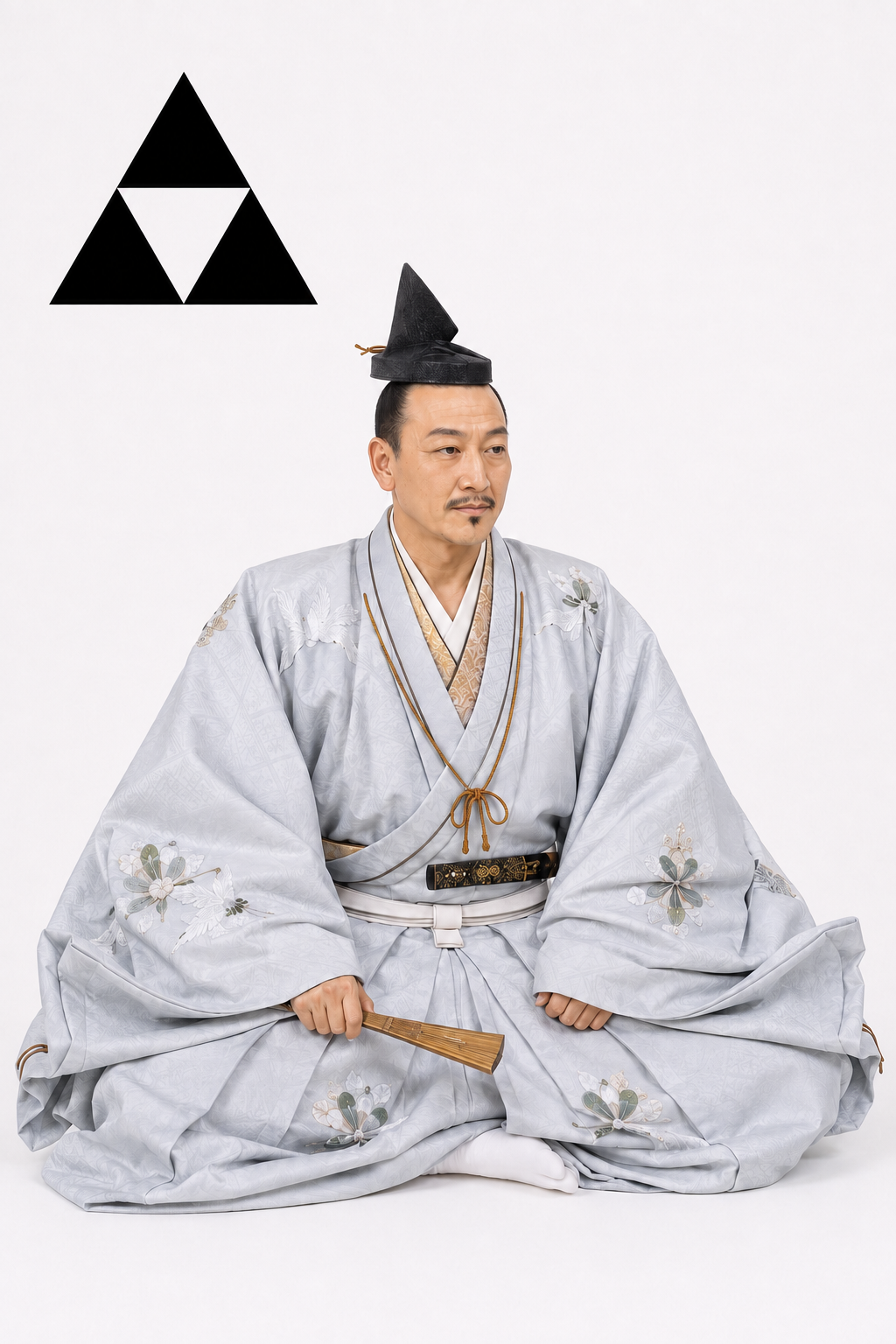
Hōjō Ujiyasu — The “Lion of Sagami,” Conqueror of the Kantō: The Night Battle of Kawagoe, the Land-Service Register, and the Sengoku’s Finest Ruler
- Hōjō Ujiyasu in 3 Points
- The Mainstream View — The Established Account Found in Textbooks
- Multiple Theories — Exploring Possibilities from Various Angles
- Viewed Strategically — Ujiyasu's Politics, Military, and Diplomacy
- Famous Words and Sayings of This Warlord
- Anecdotes and Episodes
- Timeline
- Family and Personal Relationships
- Related Historic Site Map / Model Travel Courses
- Related Articles
- References
Hōjō Ujiyasu in 3 Points
- The 3rd head of the Later Hōjō clan and the conqueror of the Kantō. Styled the “Lion of Sagami,” a famed general who boasted of being undefeated his whole life. Inheriting the foundation built by his grandfather Hōjō Sōun and his father Hōjō Ujitsuna, he expanded his power across the whole Kantō.
- In the Night Battle of Kawagoe of Tenbun 15 (1546), he crushed an allied army ten times his number with a small force, forcing into submission at a stroke the three powers of Uesugi Norimasa, Ashikaga Haruuji, and Uesugi Tomosada. Known as a Sengoku hero ranking with Takeda Shingen, Uesugi Kenshin, and Imagawa Yoshimoto.
- Excelling not only in valor but as a man of civil government, he carried out the most advanced tax reforms in Sengoku-period Japan — the “Land-Service Register” and the “Kuji Remission Edict.” He died of illness in Genki 2 (1571) at age 57. The control of the Kantō he left to his son Hōjō Ujimasa lasted until the Odawara campaign of Toyotomi Hideyoshi in Tenshō 18 (1590).
The Mainstream View — The Established Account Found in Textbooks
Born to a Distinguished House of the Later Hōjō
Hōjō Ujiyasu was born in Eishō 12 (1515) as the heir of Hōjō Ujitsuna at Odawara Castle in Sagami Province. His mother is conjectured to be Yōju-in (Sōei), Ujitsuna’s legal wife. His childhood name was Izuchiyomaru, and his common name was Shinkurō. He later styled himself Sakyō-no-daibu and Sagami-no-kami. He is the 3rd head of the Later Hōjō clan.
The Later Hōjō (the Odawara Hōjō) were a Sengoku-daimyō house founded when, in Meiō 4 (1495), the grandfather Hōjō Sōun (Ise Sōzui) entered Odawara Castle; they have no connection to the Kamakura Hōjō of the Muromachi period. In Ujitsuna’s generation the house came to take the surname “Hōjō” from the Ise surname. At first only Ujitsuna took the Hōjō surname, and there is a document recording even Ujiyasu as “Ise Izuchiyomaru” at the stage of Daiei 5 (1525).
In the 2nd month of Eishō 15 (1518), at age 3, he was granted a protective talisman, a sword, and a written testament by his grandfather Sōun, positioning him as the future successor. This shows that Sōun placed extraordinary expectations on his grandson Ujiyasu. When he was four, his grandfather Sōun died. His coming of age is thought to have been at the end of Kyōroku 2 (1529), around age 15. It was roughly the same time as Ujitsuna’s appointment as Sakyō-no-daibu.
First Battle, the Battle of Ozawahara — A Famed General’s Debut at 16
In the 6th month of Kyōroku 3 (1530), the 16-year-old Ujiyasu had his first battle. The place was Ozawahara in Musashi Province (present-day Tama Ward, Kawasaki, Kanagawa Prefecture). The enemy was the army led by Ōgigayatsu Uesugi Tomooki. Ujiyasu defeated Tomooki’s army in this battle, showing a glimpse of a famed general in his very first battle.
His father Ujitsuna did not teach Ujiyasu only matters of battle. He had him apprentice in politics from a young age, and on a certified document for Tsurugaoka Hachimangū in the 7th month of Tenbun 6 (1537) there is a joint signature of father and son, Ujitsuna and Ujiyasu. Ujitsuna heightened his heir Ujiyasu’s self-awareness by sharing responsibility with him. Behind the Later Hōjō’s ability to produce excellent heads for three generations in a row lies such planned successor education.
Succession to the Headship and the “Anti-Hōjō Encirclement”
In the 7th month of Tenbun 10 (1541), his father Ujitsuna died at 55. Ujiyasu became the 3rd head of the Later Hōjō at 27. Receiving Hōjō Ujitsuna’s dying instructions, Ujiyasu solidified the framework of domain governance immediately after succeeding the headship, carrying out a “succession land survey” and the like.
But against the young head Ujiyasu, the various Kantō powers formed an anti-Hōjō encirclement. Three powers gathered: the Kantō Kanrei Uesugi Norimasa (the Yamanouchi Uesugi house), Uesugi Tomosada of the Ōgigayatsu Uesugi house, and the Koga Kubō Ashikaga Haruuji. Further, Takeda Shingen (then Harunobu) of Kai and Imagawa Yoshimoto of Suruga also showed moves toward cooperation.
Especially serious was the conflict with Imagawa Yoshimoto. In Tenbun 14 (1545), Ujiyasu and Yoshimoto clashed over the Suruga east of the Fuji River (the Katō region). The long conflict between the two resulted in inviting a simultaneous invasion by the various Kantō powers.
The Night Battle of Kawagoe — One of the Three Great Surprise-Attack Battles of the Sengoku
In Tenbun 15 (1546), the allied army of Uesugi Norimasa, Ashikaga Haruuji, and Uesugi Tomosada, leading a great army of about 80,000, besieged Kawagoe Castle in Musashi Province. Defending Kawagoe Castle was Ujiyasu’s brother-in-law, the fierce general feared as the “Jikihachiman,” Hōjō Tsunashige. The troops in the castle were only 3,000. With the overwhelming difference in strength against the 80,000-strong allied army, the Later Hōjō faced their greatest crisis.
To rescue Tsunashige, Ujiyasu sortied at the head of about 8,000 elite troops. But the difference in strength against the allied army was 10 to 1. In a frontal decisive battle there was no way to win. Ujiyasu feigned peace negotiations to induce the allied army’s carelessness, and from late at night on the 20th day of the 4th month to the early morning of the next day, the 21st, he carried out a night raid. It was a pincer operation in which Tsunashige in the castle also came out in concert.
The allied army, having lost organized command in the darkness, fell into great confusion. Ōgigayatsu Uesugi Tomosada was killed in action, Ashikaga Haruuji fled to Koga, and Uesugi Norimasa retreated to Hirai Castle. In a single night the allied army collapsed, and the Hōjō army crushed an enemy ten times its size. This battle, called the “Night Battle of Kawagoe” (or the Kawagoe Engagement), is counted as one of Japan’s three great surprise-attack battles, alongside the “Battle of Okehazama” and the “Battle of Itsukushima.”
With this victory, the two Uesugi houses, at the center of the Kantō powers, suffered a devastating blow, and the Ōgigayatsu Uesugi house was effectively destroyed. The Later Hōjō came to advance surely on the road to conqueror of the Kantō. Ujiyasu was 32, and it was the opening of the peak of his life.
The Full-Scale Advance into the Kantō — The Expulsion of Uesugi Norimasa
Riding the momentum of the Night Battle of Kawagoe, Ujiyasu began a full-scale advance toward northern Musashi and the Kōzuke direction. In Tenbun 21 (1552), he attacked Uesugi Norimasa at Hirai Castle (Fujioka, Gunma Prefecture). Norimasa went north and relied on Nagao Kagetora of Echigo (later Uesugi Kenshin). This flight of Uesugi Norimasa to Echigo became the foreshadowing of the later “Kenshin’s Kantō expeditions.” In Eiroku 4 (1561), Norimasa handed over the office of Kantō Kanrei and the Uesugi house to Kagetora; Kagetora renamed himself “Uesugi Masatora,” and later became “Uesugi Kenshin.”
The same year, Ujiyasu also took a hard line against the Koga Kubō Ashikaga Haruuji. Haruuji’s legal wife was Ujiyasu’s younger sister Hōshun-in; to have the Umechiyo-ōmaru (later Ashikaga Yoshiuji) born between the two recognized as successor, Ujiyasu confined Haruuji at Hadano in Sagami. The Koga Kubō house was effectively incorporated under the umbrella of the Later Hōjō.
Thus Ujiyasu, by expelling the Kantō Kanrei (Yamanouchi Uesugi) and reducing the Koga Kubō (Ashikaga) to a puppet, completely dismantled the old Kantō order that had continued since the Muromachi period. The Later Hōjō became, in name and in fact, the lord of the Kantō.
The Kai–Sagami–Suruga Triple Alliance — Cooperation with the Takeda and the Imagawa
In Tenbun 23 (1554), the three parties — Ujiyasu, Takeda Shingen, and Imagawa Yoshimoto — concluded the “Kai–Sagami–Suruga Triple Alliance,” forming mutual marriage ties. Specifically:
- Ujiyasu’s eldest daughter married Shingen’s heir Takeda Yoshinobu.
- Shingen’s daughter married Yoshimoto’s heir Imagawa Ujizane.
- Yoshimoto’s daughter married Ujiyasu’s heir Hōjō Ujimasa.
By this the three provinces secured their rear safety and could concentrate their strength on their respective fronts. Ujiyasu devoted himself to battles with the various Kantō powers such as the Satomi, the Satake, and the Utsunomiya; Shingen concentrated on the Battles of Kawanakajima against Uesugi Kenshin in Shinano; and Yoshimoto pursued a full-scale advance against Oda Nobunaga of Owari.
This triple alliance was one of the most successful diplomatic agreements in the Sengoku-period Japan of the time and became the foundation of each of the three parties’ territorial expansion. It is a symbolic achievement of Ujiyasu’s diplomatic skill.
The Land-Service Register and Tax Reform — His Face as a Man of Civil Government
Ujiyasu, who made his name by valor, had his true worth also in his skill at domestic and civil government. Ujiyasu carried out civil reforms extremely advanced even for Sengoku-period Japan.
[Succession land survey]: From immediately after the succession of Tenbun 10 (1541), he carried out succession land surveys in Sagami, southern Musashi, Izu, and elsewhere. By grasping the land and harvest within the domain, he sought to stabilize tax revenue. It was a systematic land survey more than 40 years earlier than Toyotomi Hideyoshi’s Taikō land survey (from 1582).
[Tax reform and the Kuji Remission Edict]: In Tenbun 19 (1550), Ujiyasu fundamentally reformed the tax system. He issued the “Kuji Remission Edict,” organizing the many and varied miscellaneous taxes that had been a burden on the peasants. By developing the “meyasu system” and recognizing peasants’ direct appeals, he restrained unjust collection by intermediate administrators. This was an extremely epoch-making civil reform even among Sengoku daimyō.
[Land-Service Register]: In Eiroku 2 (1559), Ujiyasu created the “Land-Service Register of the Odawara Retainers.” He set in detail the standard of military service (the number of men and equipment at the time of a sortie) according to the retainers’ holdings. It was to prevent retainers eager for merit from mobilizing large numbers of peasants and imposing a burden on them. The Land-Service Register survives and is a precious source for knowing the organization of the body of retainers and the military-service system of the Sengoku period.
Through these reforms, Ujiyasu’s domain realized the most stable governing system even in Sengoku-period Japan. When Tokugawa Ieyasu entered the Kantō, the former territory of the Later Hōjō had a strong yearning of the domain’s people for their former lord, and Ieyasu too is said to have had to partly follow the Later Hōjō’s systems.
The Second Battle of Kōnodai and the Maintenance of the Kantō Front
In Eiroku 7 (1564), Satomi Yoshitaka and his son Satomi Yoshihiro of Bōsō, together with the lord of Iwatsuki Castle Ōta Sukemasa, allied and sortied to Kōnodai in Kazusa (present-day Ichikawa, Chiba Prefecture). Against this, Ujiyasu sortied leading Hōjō Ujiteru (his second son), Ujikuni (his third son), and others, and defeated the Satomi–Ōta allied army at the Second Battle of Kōnodai. Ōta Kajiwara Masakage, son of the Satomi army’s main commander Ōta Sukemasa, was captured.
With this victory, Ujiyasu made his control of the central Kantō certain. On the other hand, Satomi Yoshitaka continued resistance making use of the terrain of Bōsō, and the conflict with the Later Hōjō would continue even after Ujiyasu’s death.
Abdication of the Headship and Activity After Retirement
At the end of Eiroku 2 (1559), Ujiyasu passed the headship to his heir Hōjō Ujimasa at age 45 and retired. After retirement he was called “Sagami-no-kami” and “Lord of the Main Castle,” and while maintaining the real authority of government, served as the guardian of the young Ujimasa. Around the same time he styled himself “Taisei-ken.”
The abdication of the headship looks like an early retirement for Ujiyasu, but there was a strategic intent in it. There was the aim of training Ujimasa as head early and stabilizing the Later Hōjō’s succession of the headship. It was the same method by which Ujitsuna had planned to raise Ujiyasu. One of the factors that the Later Hōjō continued for five generations and a hundred years lies in this planned system of generational succession.
Uesugi Kenshin’s Kantō Expedition and the Odawara Siege
In Eiroku 3 (1560), Imagawa Yoshimoto was struck down by Oda Nobunaga at Okehazama. The rapid weakening of the Imagawa house broke the premise of the Kai–Sagami–Suruga Triple Alliance.
In Eiroku 4 (1561), Uesugi Kenshin (then Nagao Kagetora), bearing Uesugi Norimasa, crossed the Mikuni Pass at the head of an army of 8,000 and invaded the Kantō. Mobilizing the various powers across the whole Kantō, a great army exceeding 100,000 at its largest besieged Odawara Castle. This is what is called the “Battle of Odawara Castle (the Eiroku Kantō expedition).”
Ujiyasu, together with Ujimasa, held Odawara Castle in a siege. The impregnable Odawara Castle withstood Kenshin’s encirclement, and in about a month Kenshin lifted the siege and withdrew. Kenshin would repeatedly invade the Kantō again after this with each Kantō expedition, but the Later Hōjō continued to face off tenaciously.
The Battle of Mimase Pass and the Echigo–Sagami Alliance
At the end of Eiroku 11 (1568), Takeda Shingen invaded Imagawa Ujizane’s Suruga and broke off the Kai–Sagami–Suruga Triple Alliance. Ujiyasu was enraged at this and chose the road of becoming hostile to the Takeda clan.
In the 10th month of Eiroku 12 (1569), Shingen closed in on Odawara Castle and set fire to the castle town and provoked, but father and son Ujiyasu and Ujimasa held the castle and did not move. The Takeda army, considering the disadvantage of a prolonged battle, withdrew. The Hōjō army, with Ujiteru, Ujikuni, and others pursuing, struck a blow at the Takeda army at Mimase Pass in Sagami, but with Shingen’s skillful command the Takeda army returned home without great losses. This “Battle of Mimase Pass” is one of the representative battles of the Hōjō vs. the Takeda.
In the intercalary 5th month of the same year, Ujiyasu concluded the “Echigo–Sagami Alliance” with Uesugi Kenshin. It was an alliance for the two — long-standing arch-enemies — to counter their common enemy, Takeda Shingen. Ujiyasu’s sixth son Hōjō Saburō (later Uesugi Kagetora) was sent to Echigo as Kenshin’s adopted son, and the alliance was formally completed. But after Ujiyasu’s death, the alliance would break down.
Late Years and Death
On the 3rd day of the 10th month of Genki 2 (1571), Ujiyasu died of illness at Odawara Castle. He was 57. His religious name was Daishōji-den Tōyō Sōtai. There are several theories about the cause of death, such as a stroke, but Ujiyasu in his late years is said to have suffered from illness over several years.
Ujiyasu is handed down to have left his heir Hōjō Ujimasa the dying instruction, “break with Kenshin and form an alliance with Shingen.” Receiving this instruction, Ujimasa broke off the Echigo–Sagami Alliance and once again formed an alliance with Takeda Shingen. By this Uesugi Kagetora was isolated in Echigo, connecting to the tragedy of his taking his own life in the later “Otate Disturbance” (1578–79). Ujiyasu’s dying instruction was an important decision that greatly swayed the fate of the Later Hōjō.
After Ujiyasu’s death, the Later Hōjō, through the two generations of Ujimasa and Ujinao, were destroyed by Toyotomi Hideyoshi’s Odawara campaign of Tenshō 18 (1590). The control of the Kantō Ujiyasu built lasted to his son’s generation. Ujiyasu himself did not harbor an ambition to take the realm, but the achievement of unifying the Kantō — an independent economic and cultural sphere — is extremely great in Sengoku-period Japan.
Multiple Theories — Exploring Possibilities from Various Angles
Theory 1: The Strength Difference and Surprise Attack at the Night Battle of Kawagoe
The Night Battle of Kawagoe of Tenbun 15 (1546) is known as one of the “three great surprise-attack battles of Japan,” in which a tenfold strength difference of the Hōjō army’s 8,000 vs. the allied army’s 80,000 was overturned by surprise attack. But there are several views in recent research on this strength difference and the circumstances of the surprise attack.
[Possibility of exaggerated troop numbers]: The strength difference of “8,000 vs. 80,000” conveyed by Edo-period war chronicles likely includes later embellishment. Accurate troop numbers are not recorded in contemporary sources, and the figures may have been exaggerated for the war-chronicle-typical narrative structure of “a great victory from a disadvantage.” Historians such as Kuroda Motoki point out the possibility that the actual allied army was about 30,000–50,000 and the Hōjō army about 8,000–10,000. Even so the strength difference was 3 to 6 times, and the Hōjō army’s disadvantage does not change.
[Debate over a night battle or an early-morning battle]: Though called the “Night Battle of Kawagoe,” there are also several theories over whether the actual fighting was a complete night battle, or moved from a night raid to an early-morning battle. As the reality of battles of the time, organized fighting in complete darkness was difficult, and the flow was likely an attack beginning in the dead of night → a decisive battle toward early morning. The dramatic image of a “night battle” is said to include Edo-period war-chronicle embellishment.
[Causes of the allied army’s collapse]: Several factors are pointed out as the reason the allied army collapsed despite great strength:
- The command systems of the three powers — Uesugi Norimasa, Ashikaga Haruuji, Uesugi Tomosada — were not unified.
- The troops were exhausted from the long siege battle and were careless.
- Ujiyasu’s peace negotiations loosened the allied army’s vigilance.
- Hōjō Tsunashige’s pincer from within Kawagoe Castle played a decisive role.
- There may have been informers to the Hōjō side within the allied army.
[Strategic significance for the Later Hōjō]: The victory of the Night Battle of Kawagoe held a significance beyond a mere military victory. It dismantled at a stroke the old Kantō order continuing since the Muromachi period (the Kantō Kanrei, the Koga Kubō, the two Uesugi houses) and became the turning point at which the Later Hōjō became the lord of the Kantō. Without this battle, the Later Hōjō’s control of the Kantō is held to have been impossible.
[Evaluation as one of the “three great surprise-attack battles of Japan”]: The traditional evaluation taking the “Night Battle of Kawagoe,” the “Battle of Okehazama,” and the “Battle of Itsukushima” as the “three great surprise attacks” was formed in the Edo period. The three have common points (a great victory from a disadvantage, surprise-attack tactics, the killing of the enemy general), but their respective battle situations, strength differences, and historical significance differ. Ujiyasu’s Night Battle of Kawagoe resembles Okehazama in the point of killing the enemy general (Uesugi Tomosada), but in the scale of its postwar impact (the dismantling of the old Kantō order) it also has an aspect exceeding Okehazama and Itsukushima.
The historian Kuroda Motoki evaluates the Night Battle of Kawagoe as “the figures of the troop numbers are embellished, but the strategic significance of the battle is historical fact itself, and it is the most important battle that determined the Later Hōjō’s Kantō hegemony.” It is the greatest turning point in Ujiyasu’s life and an indispensable battle in speaking of Sengoku history.
Theory 2: The Duality of the “Lion of Sagami” and Emphasis on Domestic Government
Hōjō Ujiyasu’s historical evaluation has two sides: the image as a warlord of the “Lion of Sagami” and “undefeated for life,” and the image as a man of civil government, a “tax reformer” and “master of domestic government.” There are several views on the evaluation of this duality.
[Examination of the “undefeated for life” evaluation]: Ujiyasu is said not to have lost in battles in which he himself sortied. The Night Battle of Kawagoe, the Second Battle of Kōnodai, the Odawara siege, the Battle of Mimase Pass — all the major battles were victories or draws. This is an extremely rare record for a Sengoku daimyō. However, including strategic retreats — the circumstances of the Katō region being taken by Imagawa Yoshimoto (Tenbun 14), the loss of part of his territory in Uesugi Kenshin’s Kantō expedition, and the like — there is also an aspect in which it cannot be called “completely undefeated.”
[Grounds for the “man of civil government” evaluation]: Ujiyasu’s skill in civil government stands out even among Sengoku daimyō. He developed governing systems extremely advanced even for Sengoku-period Japan — the succession land survey, the Kuji Remission Edict, the Land-Service Register, the meyasu system. These were epoch-making, preceding Hideyoshi’s Taikō land survey and the Tokugawa shogunate’s tax system by 40–50 years. Ujiyasu’s thought that “a starving populace is lazy; a satisfied populace works” is rational even from a modern economic viewpoint.
[The balance of “martial” and “civil”]: Ujiyasu was a rare Sengoku daimyō excellent in both valor and domestic government. Takeda Shingen too excelled in domestic government with the Shingen Dike, the Kōshū Code, and the like, but whereas Shingen took an active expansionist policy, Ujiyasu had a strong defensive, governance-oriented stance. It is the form in which the “benevolent-rule” and “four-to-the-lord, six-to-the-people” thought inherited from the equally domestic-government-oriented Hōjō Sōun developed further in Ujiyasu’s generation.
[Impact on later evaluation]: The Tokugawa shogunate’s tax system (four-to-the-lord six-to-the-people, five-five), the town magistrate system, the petition box, and the like are held to be partly modeled on the Later Hōjō’s governing systems. This shows that the Edo shogunate rated the Later Hōjō’s domain governance highly. There are circumstances in which Tokugawa Ieyasu himself, at the time of his entry into the Kantō, had to follow the old systems in the former Later-Hōjō territory.
[Origin of the “Lion of Sagami” epithet]: The epithet “Lion of Sagami” spread in war chronicles and historical novels from the Edo period onward. Confirmation in contemporary sources is difficult, but it has settled as an epithet symbolizing Ujiyasu’s valor down to the present. On the other hand, the image of “an enlightened ruler of civil government” is an evaluation backed by objective sources such as the Land-Service Register.
The historian Owada Tetsuo gives the comprehensive evaluation that “Ujiyasu can be called the ideal form of the Sengoku daimyō. He excelled in all of valor, domestic government, and diplomacy, and moreover realized the clan’s stability and generational succession in a planned way.” The image of the “Lion of Sagami” certainly symbolizes valor, but the view of modern research is that Ujiyasu’s true worth lies in the “comprehensive power of martial and civil.”
Theory 3: Strategic Evaluation of the Kai–Sagami–Suruga and Echigo–Sagami Alliances
The “Kai–Sagami–Suruga Triple Alliance” (1554) and the “Echigo–Sagami Alliance” (1569), symbols of Ujiyasu’s diplomatic policy, are known as representative inter-daimyō alliances of the Sengoku period. There are several views on their strategic evaluation.
[The strategic success of the Kai–Sagami–Suruga Triple Alliance]: The triple alliance of Ujiyasu, Takeda Shingen, and Imagawa Yoshimoto is an especially successful example even among inter-daimyō alliances of the Sengoku period. Maintained for about 15 years (1554–1568), it greatly contributed to each of the three parties’ territorial expansion. In this interval Ujiyasu accelerated his advance into the Kantō, Shingen concentrated on the Battles of Kawanakajima in Shinano, and Yoshimoto pursued a full-scale advance into Owari.
[Theories on the responsibility for the triple alliance’s collapse]: The main cause of the triple alliance’s breakdown was Shingen’s invasion of Suruga in Eiroku 11 (1568). This was Shingen’s strategy, foreseeing the weakening of Imagawa Ujizane after Imagawa Yoshimoto was struck down at Okehazama. Ujiyasu, partly because Imagawa Ujizane’s wife was his daughter, was enraged at Shingen. The general view is that the responsibility for the alliance’s breakdown lies with Shingen, but there is also a view of it as compound factors — the problem of Ujizane’s governing ability, the slowness of Ujiyasu and Ujimasa’s response, and the like.
[Strategic evaluation of the Echigo–Sagami Alliance]: Receiving the conflict with Shingen, Ujiyasu made the bold strategic shift of forming the Echigo–Sagami Alliance with his long-standing arch-enemy Uesugi Kenshin. This shows Ujiyasu’s flexible diplomatic sense and was at the same time a realistic judgment in response to the sudden change in the Kantō situation. The alliance was formally completed in the form of Ujiyasu’s sixth son Hōjō Saburō (Uesugi Kagetora) becoming Kenshin’s adopted son.
[Circumstances of the Echigo–Sagami Alliance’s breakdown]: The Echigo–Sagami Alliance broke down soon after Ujiyasu’s death (1571). The causes are several:
- Kenshin did not dispatch the relief force he had promised.
- Kenshin prioritized advance toward the Hokuriku over the Kantō.
- Takeda Shingen’s stratagems hindered the cooperation of the Hōjō and the Uesugi.
- With Ujiyasu’s death, the man who led the alliance was lost.
After Ujiyasu’s death, Ujimasa rebuilt the alliance with Shingen, and Uesugi Kagetora was isolated in Echigo. In the Otate Disturbance (1578–79) it became the tragedy of Kagetora taking his own life.
[Comprehensive evaluation of Ujiyasu’s diplomatic skill]: Ujiyasu’s diplomacy was a realism that flexibly shifted policy according to the situation. Both the triple alliance and the Echigo–Sagami Alliance were chosen as the optimal solution for their respective periods. The attitude of rebuilding in response to changes in the strategic environment, rather than aiming at the permanent maintenance of an alliance, is rated as an extremely sophisticated diplomatic sense for a Sengoku daimyō.
The historian Kuroda Motoki evaluates that “Ujiyasu’s diplomacy was by no means ‘naive’ but a coolly calculating one that always prioritized the interests of the Later Hōjō. Both the triple alliance and the Echigo–Sagami Alliance were the best choices under the circumstances of the time.” The direction of modern research is that Ujiyasu should be reappraised not only as a “famed general of battle” but also as a “master of diplomacy.”
Theory 4: The Historical Significance of the “Land-Service Register” and Tax Reform
Ujiyasu’s civil reforms — especially the “Land-Service Register of the Odawara Retainers” and the tax reform of Eiroku 2 (1559) — are rated as governing systems extremely advanced even for Sengoku-period Japan. There are several views on their historical significance.
[The innovativeness of the “Land-Service Register”]: The “Land-Service Register of the Odawara Retainers” is a document that regulated in detail the holdings (territory and income) and military service (the number of soldiers and equipment at the time of a sortie) of the Later Hōjō retainers. It obliged retainers to bear appropriate military service according to their holdings, preventing the burden on peasants from excessive mobilization. It was extremely advanced as a systematic military-service system even for Sengoku-period Japan and is held to have become a model for the later Tokugawa shogunate’s military-service system.
[The social significance of the “Kuji Remission Edict”]: The “Kuji Remission Edict,” issued in Tenbun 19 (1550), was an epoch-making policy that organized and abolished the many and varied miscellaneous taxes on peasants. Based on the thought that “a starving populace is lazy; a satisfied populace works,” Ujiyasu sought to raise productivity by lightening the peasants’ burden. This is a rational policy even from a modern economic viewpoint.
[The “meyasu system” and a mechanism to hear the people’s voice]: Ujiyasu developed the “meyasu system,” creating a mechanism by which peasants could appeal directly to the lord, leaping over the intermediate administrators. This is an epoch-making system preceding the Edo-period “petition box” (set up by Tokugawa Yoshimune in Kyōhō 6 / 1721) by nearly 200 years. By restraining intermediate exploitation and securing a direct relationship between lord and peasants, it heightened the transparency of governance of the whole domain.
[The “four-to-the-lord, six-to-the-people” tax rate]: The Later Hōjō are said to have adopted the relatively light tax rate of “four-to-the-lord, six-to-the-people (lord 4 : peasants 6).” This was an exceptionally peasant-favorable tax rate for a Sengoku daimyō and contributed to the improvement of the domain’s people’s lives. The thought of “not squeezing the people with heavy taxes, but enriching the people with appropriate taxation and as a result stabilizing tax revenue” was a traditional thought of the Later Hōjō inherited from Ujiyasu’s grandfather Hōjō Sōun.
[Impact on the Tokugawa shogunate]: When Tokugawa Ieyasu entered the Kantō in Tenshō 18 (1590), the former Later-Hōjō territory had a strong yearning of the people for their former lord, and Ieyasu too struggled with governance. Ieyasu finally stabilized the governance of the Kantō by partly following the Later Hōjō’s systems. Specifically:
- The four-to-the-lord, six-to-the-people tax rate (later developing into the shogunate tax rate).
- The town magistrate system (the model for the Edo town magistrate).
- The petition box (Yoshimune re-established it with reference to the Later Hōjō’s meyasu system).
- The military-service system (the military-service provisions of the Laws for the Military Houses).
These are systems that became the foundation of the 260 years of stable governance of the Edo period.
[The limits of “benevolent rule”]: On the other hand, the Later Hōjō’s domestic-government-oriented policy also had limits. “Light tax rates” and “protection of the peasants” gathered the people’s support but became a disadvantage in military expansion power. When besieged by an army of about 180,000 in Toyotomi Hideyoshi’s Odawara campaign, the Later Hōjō had to rely on a siege defense and as a result were destroyed. It is a case showing the difficulty of the balance of “benevolent rule” and “martial authority.”
The historian Ikegami Yūko evaluates that “the Later Hōjō’s civil government was extremely advanced as a governing model of Sengoku-period Japan. By the unified regimes of Hideyoshi and Ieyasu partly inheriting it, the foundation of the governing system of early-modern Japan was built.” Ujiyasu’s Land-Service Register and tax reform are an important legacy that, beyond a mere Sengoku daimyō’s domain governance, contributed to the development of the governing systems of Japanese history as a whole.
Theory 5: The Anecdote of the Facial Scars, the “Forward Wounds”
There is a famous anecdote that Ujiyasu’s face had two sword scars, and because both were on the front of the face (the side facing the enemy), they were praised as “the pride of the forward wounds.” There are several theories about the authenticity and meaning of this anecdote.
[The anecdote of the “forward wounds”]: Ujiyasu’s face had two large sword scars, both on the front of the face (the forehead and cheek). For a warrior, a “forward wound” (a wound received facing the enemy) was an honor, and a “back wound” (a wound on the back) a disgrace. Ujiyasu is said to have taken the “forward wounds” as a pride, as proof of having fought bravely at the front. In Edo-period war chronicles, Ujiyasu is recorded as saying, “my forward wounds are a warrior’s medals.”
[Circumstances of the wounds]: There are several theories about the specific battle in which Ujiyasu received the facial wounds, said to be the first battle at Ozawahara (1530) or fighting in various places in the Kantō in his youth. The specific date and time of the fighting is not settled.
[The significance of the anecdote]: The anecdote of the “forward wounds” has been repeatedly quoted as symbolizing Ujiyasu’s dignity as a warlord. The attitude of fighting at the front as a warrior, the aesthetic of taking wounds as a pride rather than a shame, action as a model for the retainers — these overlap with the ideal image of a Sengoku daimyō.
[Possibility of later embellishment]: In Edo-period war chronicles and military treatises, many stories praising warlords’ “forward wounds” appear. These were formed under the influence of Confucian bushidō and are not necessarily historical fact itself. The anecdote of Ujiyasu’s “forward wounds” too includes the possibility of having been emphasized in later ages. Still, that Ujiyasu was a general who fought at the front can be confirmed in several sources, and it is certain that he had some battle wound.
[Treatment in the game Nobunaga’s Ambition]: In the historical simulation game series Nobunaga’s Ambition, Ujiyasu’s ability rating is always in the upper rank (especially leadership and valor), and “the pride of the forward wounds” is a standard part of his flavor text. Through modern game culture too, this anecdote is widely known.
The historian Kuroda Motoki evaluates that “the anecdote of the ‘forward wounds’ includes Edo-period embellishment, but it is a fact that Ujiyasu was a warrior who fought at the front.” It can be understood as an anecdote that, as an episode symbolizing Ujiyasu’s character, has a cultural value beyond its historicity.
Theory 6: The Truth of “Ujiyasu’s Dying Instruction” and the Abrogation of the Echigo–Sagami Alliance
At Ujiyasu’s death in Genki 2 (1571), he is said to have left his heir Hōjō Ujimasa the dying instruction, “break with Kenshin and form an alliance with Shingen.” There are several views on the authenticity of this instruction and the truth of the subsequent abrogation of the Echigo–Sagami Alliance.
[Source and credibility of the instruction]: “Ujiyasu’s dying instruction” is recorded in Edo-period compilations such as the Hōjō-ki. Direct confirmation in contemporary sources is difficult, and it may include later embellishment. On the other hand, the fact that Ujimasa abrogated the Echigo–Sagami Alliance and rebuilt the alliance with Takeda Shingen immediately after Ujiyasu’s death is documentarily certain, and is also seen as evidence backing the existence of the instruction.
[Strategic rationality of the instruction]: Several strategic rationales can be considered for Ujiyasu’s instruction to “ally with Shingen”:
- Uesugi Kenshin did not dispatch the relief force he had promised, and the Echigo–Sagami Alliance was dysfunctional.
- Kenshin’s advance into the Kantō was taking the form of eroding the Later Hōjō’s territory.
- Takeda Shingen was struggling with the governance of Suruga and was in a situation of wanting reconciliation with the Later Hōjō.
- To continue the governance of the Kantō, cooperation with the west (Shingen) was more realistic than with the north (Kenshin).
From this circumstantial evidence, Ujiyasu’s dying instruction can be seen not as a mere emotional judgment but as the result of a calm strategic judgment.
[The tragedy of Uesugi Kagetora]: With the abrogation of the Echigo–Sagami Alliance, Ujiyasu’s sixth son Hōjō Saburō (Uesugi Kagetora), who was in Echigo as an adopted son, was isolated. After Kenshin’s death (1578), Kagetora was caught up in the “Otate Disturbance” (1578–79), in which he disputed the headship with Kenshin’s other adopted son Uesugi Kagekatsu, and, defeated, took his own life. It is a tragedy of becoming a sacrifice of his father Ujiyasu’s strategic shift.
[The strategy of the Ujimasa and Ujinao eras]: The Takeda–Hōjō alliance, rebuilt in receipt of Ujiyasu’s instruction, lasted until the Takeda clan was destroyed by Oda Nobunaga in Tenshō 10 (1582). Afterward the Later Hōjō, while seeking cooperation with the Oda and Tokugawa, maintained control of the Kantō. In the end they would be destroyed in Toyotomi Hideyoshi’s Odawara campaign of Tenshō 18 (1590).
[Examination of the “after Ujiyasu’s death, the Later Hōjō declined” theory]: After Ujiyasu’s death, the Later Hōjō were destroyed through the two generations of Ujimasa and Ujinao. There is a view evaluating this as “with Ujiyasu’s death the Later Hōjō declined,” but in fact the control of the Kantō was maintained and expanded even in the generations of Ujimasa and Ujinao. It was within the great current of history that was Hideyoshi’s unification of the realm that the Later Hōjō perished, and it is not necessarily the case that “the legacy of Ujiyasu’s era was lost.” The systems and domain Ujiyasu left were partly inherited by the Tokugawa shogunate even after the Later Hōjō’s destruction.
The historian Kuroda Motoki evaluates that “Ujiyasu’s dying instruction may be regarded as historical fact without trouble. The abrogation of the Echigo–Sagami Alliance was less Ujimasa’s judgment than the continuation of Ujiyasu’s strategic conception.” Ujiyasu’s death was certainly a turning point for the Later Hōjō, but the systems and thought he left continued to exert a long influence on the governance of early-modern Japan.
Viewed Strategically — Ujiyasu’s Politics, Military, and Diplomacy
The Trinity of “Martial,” “Civil,” and “Diplomatic” Comprehensive Power
Hōjō Ujiyasu’s greatest characteristic lies in the “comprehensive power” of combining at a high level the three abilities of valor as a warlord, administrative skill as a man of civil government, and negotiating power as a diplomat. There are many Sengoku daimyō excellent in valor, and not a few excellent in domestic government, but there is little other example than Ujiyasu of a man combining all three of martial, civil, and diplomatic at a high standard.
This is also the fruit of the traditional cultivation of talent of the Later Hōjō, inherited from grandfather Hōjō Sōun and father Ujitsuna. The Later Hōjō took “uniting wisdom, benevolence, and valor” as their ideal, and are a rare example of three successive heads producing men excellent in comprehensive power. This is the fundamental reason the Later Hōjō could maintain control of the Kantō over five generations and a hundred years.
Defensive Expansionism — “Spreading” by “Defending”
The characteristic of Ujiyasu’s strategy lies not in active invasion and expansion but in a defensive expansionism of “gradually spreading the sphere of power while defending.” This is a traditional strategy of the Later Hōjō inherited from grandfather Sōun and father Ujitsuna.
Specifically:
- Strengthening the base, Odawara Castle, as an impregnable fortress.
- Developing branch castles within the domain, covering the whole domain with a defensive net.
- Gradually expanding the sphere of power by pushing and pulling the boundary line.
- Avoiding unreasonable expeditions, not shrinking from strategic retreat.
- Securing rear safety through diplomacy and concentrating strength.
This is a strategy contrasting with the active expansionism of Oda Nobunaga, but in a complex distribution of powers like the Sengoku-period Kantō it was extremely rational. The achievement of bringing nearly the whole Kantō under control over the three generations of Ujiyasu, Ujimasa, and Ujinao proves the correctness of this defensive expansionism.
Flexible Diplomatic Sense — The Power to Rebuild Alliances
Ujiyasu’s diplomacy was a realism that flexibly shifted policy according to the situation. Forming the Echigo–Sagami Alliance with his long-standing arch-enemy Uesugi Kenshin, becoming hostile to his ally Takeda Shingen — such bold diplomatic shifts show Ujiyasu’s flexible diplomatic sense.
Ujiyasu’s realism, grasping an alliance not as a “permanent friendly relationship” but as “strategic cooperation according to the situation,” is an extremely sophisticated diplomatic sense for a Sengoku daimyō. Tokugawa Ieyasu too was a man with this kind of flexible diplomatic sense, but Ujiyasu practiced it in a form half a generation ahead of Ieyasu.
The Planning of Generational Succession — The Secret of the Later Hōjō’s Hundred Years
One of the factors that the Later Hōjō continued for five generations and a hundred years is the planned generational succession of the successive heads, including Ujiyasu. Ujitsuna shared responsibility with Ujiyasu from a young age, and Ujiyasu passed the headship to Ujimasa at 45 and became his guardian. By this they minimized the confusion at the time of the head’s change and could surely raise the next generation’s leader.
Examples of contemporary Sengoku daimyō who succeeded at generational succession are unexpectedly few. Takeda Shingen had his heir Yoshinobu take his own life, and the Takeda house was destroyed in Katsuyori’s generation after Shingen’s death. Uesugi Kenshin did not clearly name a successor and invited the Otate Disturbance. That the Later Hōjō produced excellent heads for three generations in a row and were destroyed in the fifth generation was an event within the great current of history that was Hideyoshi’s unification of the realm, and not a failure of generational succession.
Strategic Limits — Why He Could Not Take the Realm
Despite possessing such talent, Ujiyasu did not harbor an ambition to take the realm. Analyzing the reasons:
- Priority on unifying the Kantō: Ujiyasu’s life was spent on unifying the Kantō, with no leisure to go up to the capital.
- Geographical constraint: his base Odawara was at the edge of the Kantō, and advance to Kyoto was difficult.
- Defensive strategy: Ujiyasu’s strategy was defensive expansionism, not suited to taking the realm through expedition.
- The presence of strong enemies: there were too many strong enemies around the Kantō — Shingen, Kenshin, the Satomi, the Satake, and so on.
- The traditional thought of the Later Hōjō: a house ethos emphasizing “security suited to one’s station” since grandfather Sōun.
Ujiyasu did not take the realm, but the achievement of unifying and governing the Kantō — an independent economic and cultural sphere — has a scale rivaling the achievements of Nobunaga, Hideyoshi, and Ieyasu. As the “conqueror of the Kantō” and “the establisher of an independent eastern-provinces regime,” Ujiyasu is an important figure in Sengoku history.
Famous Words and Sayings of This Warlord
“A Starving Populace Is Lazy; a Satisfied Populace Works” (gist)
Handed down as words expressing Ujiyasu’s thought of civil government. The thought of not squeezing the people with heavy taxes, but enriching the people with light tax rates and as a result raising the productivity of the whole domain. It is the thought at the root of the “Kuji Remission Edict” and the “four-to-the-lord, six-to-the-people,” and is rational even from a modern economic viewpoint. The direct source is an Edo-period compilation, but it is widely quoted as words expressing the essence of Ujiyasu’s policy.
“Forward Wounds Are the Very Pride of a Warrior” (gist)
Words praising the sword scars on Ujiyasu’s face, the “forward wounds.” They symbolize the Sengoku-period bushidō that a wound received facing the enemy is a warrior’s honor and a wound on the back a disgrace. They are handed down as a famous saying showing that Ujiyasu was a general who fought at the front. Words appearing in Edo-period war chronicles, but widely known as symbolizing the ideal image of a Sengoku daimyō.
“Lion of Sagami” (nickname)
Ujiyasu’s epithet. An appellation likening a fierce general excellent in valor to a lion, which spread in war chronicles and historical novels from the Edo period onward. Confirmation in contemporary sources is difficult, but it has settled as an epithet symbolizing Ujiyasu in modern historical entertainment (games, novels, manga).
“Break with Kenshin and Form an Alliance with Shingen” (dying instruction)
The dying instruction said to have been left to his heir Hōjō Ujimasa by Ujiyasu on his deathbed in Genki 2 (1571). Direct confirmation in contemporary sources is difficult, but from the fact that Ujimasa abrogated the Echigo–Sagami Alliance and formed an alliance with Takeda Shingen immediately after Ujiyasu’s death, the existence of the instruction is seen as highly credible. It is engraved in history as words showing Ujiyasu’s calm strategic judgment.
“If There Be One Who Starves Within My Domain, It Is My Responsibility” (gist)
Handed down as words showing Ujiyasu’s love for the domain’s people. The way of thinking that the people’s starvation is the lord’s responsibility, and that the lord has the duty to guarantee the people’s livelihood, was extremely advanced for a Sengoku daimyō. It is a symbolic word of the Later Hōjō’s “benevolent rule” thought.
Anecdotes and Episodes
The Talisman from His Grandfather Sōun
In the 2nd month of Eishō 15 (1518), at age 3, Ujiyasu was granted a protective talisman, a sword, and a written testament by his grandfather Hōjō Sōun. This shows that Sōun placed extraordinary expectations on his grandson Ujiyasu and positioned him as the future successor. Because Sōun died the next year at 85, this was effectively the last meeting of the 3-year-old Ujiyasu with his grandfather. The Later Hōjō’s ideal of “uniting wisdom, benevolence, and valor” was surely inherited from Sōun to Ujitsuna, and then to Ujiyasu.
His Face as a Cultured Man of Renga and Kemari
Ujiyasu was not only a warlord but a cultivated man versed in culture such as waka, renga, and kemari (court football). In the 8th month of Daiei 5 (1525), he was granted a kemari transmission text by the Kyoto court noble Asukai Masatsuna. The Later Hōjō emphasized cultural exchange with Kyoto and were also a base for bringing Kamigata culture into the Kantō. Ujiyasu’s cultural cultivation was also an element supporting the legitimacy of the Later Hōjō’s governance.
The Peace Negotiations on the Eve of the Night Battle of Kawagoe
Just before the Night Battle of Kawagoe, Ujiyasu proposed peace to the allied army. He presented the condition that “if you withdraw your troops, I will cede part of my territory,” making the allied army careless. The allied army, convinced of victory by Ujiyasu’s weak-kneed attitude, loosened its vigilance. Seizing that opening, late at night on the 20th day of the 4th month, Ujiyasu carried out a night raid at the head of 8,000 elite troops — such is the traditional war-chronicle depiction. The circumstances of the actual peace negotiations require source criticism, but the fact that Ujiyasu made the enemy careless through diplomatic maneuvering is held to be certain.
Hōjō Tsunashige’s “Jikihachiman” Banner
Ujiyasu’s brother-in-law (his sister’s husband) Hōjō Tsunashige stood against the 80,000-strong allied army as the castle commander of Kawagoe Castle. Tsunashige raised a yellow banner inscribed “Jikihachiman” and raced about the battlefield, feared by the enemy. Without the hard fighting of Tsunashige, who withstood the allied army in the castle for more than half a year, the victory of the Night Battle of Kawagoe would have been impossible. Tsunashige was an ally of the same age as Ujiyasu who supported him throughout his life. As the true hero of the Night Battle of Kawagoe, the presence of Tsunashige is indispensable.
The Marriage Rites at the Formation of the Triple Alliance
At the formation of the Kai–Sagami–Suruga Triple Alliance of Tenbun 23 (1554), the marriage rites among the three parties were extremely grand for the time. The bridal procession when Ujiyasu’s eldest daughter married Takeda Yoshinobu is said to have formed a long procession from Sagami to Kai, astonishing the domain’s people along the roadside. This diplomatic event was handed down to later ages as a symbolic ceremony of inter-daimyō alliances in Sengoku-period Japan.
The Development of the Odawara Castle Town
In Ujiyasu’s generation, the Odawara castle town was developed in full scale. He arranged the merchant quarter and craftsmen’s quarter in a planned way below the castle and invited Kamigata merchants of Kyoto to activate the market economy. Odawara prospered as the center of politics, economy, industry, and culture in the Kantō, growing into one of the leading castle towns of Sengoku-period Japan. The foundation of the urban structure of present-day Odawara City was formed in Ujiyasu’s time.
Renga Gatherings and Exchange with Court Nobles
Ujiyasu actively held exchanges with Kyoto court nobles and renga masters. Exchanges with Sanjōnishi Sanetaka and renga masters of Sōgi’s school brought the refined culture of the Kamigata into the Kantō. Ujiyasu himself composed renga and had a side as a cultured man. This also had the policy meaning of advancing the centralization of the regional culture of the Kantō.
The Second Battle of Kōnodai and Satomi Yoshitaka
In the Second Battle of Kōnodai of Eiroku 7 (1564), Ujiyasu defeated the allied army of Satomi Yoshitaka and his son Satomi Yoshihiro and Ōta Sukemasa. The Satomi army, taken by surprise, was crushed, and Ōta Sukemasa’s son Kajiwara Masakage was captured. But Satomi Yoshitaka continued resistance afterward making use of the terrain of Bōsō, and the conflict between the Later Hōjō and the Satomi clan continued even after Ujiyasu’s death. Yoshitaka, as Ujiyasu’s worthy rival, is an important figure coloring the Kantō Sengoku history.
The Formation of the Echigo–Sagami Alliance and Uesugi Kagetora
In the intercalary 5th month of Eiroku 12 (1569), Ujiyasu formed the Echigo–Sagami Alliance with his long-standing arch-enemy Uesugi Kenshin. As proof of the alliance, Ujiyasu’s sixth son Hōjō Saburō (later Uesugi Kagetora) was sent to Echigo as Kenshin’s adopted son. The decision to send out his beloved son as an adopted son is said to have been an agonizing one for Ujiyasu. As a result Kagetora met the tragedy of taking his own life in the Otate Disturbance (1578–79), becoming a sacrifice of Ujiyasu’s strategic shift.
The Pursuit at the Battle of Mimase Pass
In the 10th month of Eiroku 12 (1569), when Takeda Shingen threatened Odawara and withdrew, Ujiyasu’s second son Ujiteru and third son Ujikuni pursued the Takeda army at Mimase Pass in Sagami. This battle, called the “Battle of Mimase Pass,” is known as one of the finest mountain-terrain battles of the Sengoku period. The Takeda army returned home without great losses through Shingen’s skillful command, but the Hōjō army too achieved a certain result. That Ujiyasu himself did not sortie and entrusted it to his sons shows Ujiyasu’s advancing age and his trust in the next generation.
The Skill of Ujiyasu’s Organization of the Body of Retainers
Ujiyasu applied distinctive devices to the organization of the body of retainers as well. He placed members of the direct Hōjō family (Ujiteru, Ujikuni, Ujinori, Ujitada, and others) at branch castles across the Kantō, strengthening regional control. He also skillfully used hereditary retainers, newcomer retainers, and surrendered retainers, keeping the harmony of the clan. The clarification of military service through the “Land-Service Register” was also an important means of clan control. That the Later Hōjō’s body of retainers was stable over three generations owes much to Ujiyasu’s power of clan control.
Timeline
| Japanese Era (Western Year) | Age | Event |
|---|---|---|
| Eishō 12 (1515) | 1 | Born at Odawara Castle in Sagami Province. Father Hōjō Ujitsuna, mother Yōju-in (conjectured). Childhood name Izuchiyomaru. |
| Eishō 15 (1518) | 3 | In the 2nd month, granted a talisman, a sword, and a written testament by his grandfather Hōjō Sōun, positioned as successor. |
| Kyōroku 2 (1529) | 15 | Comes of age. Around the same time as Ujitsuna’s appointment as Sakyō-no-daibu. Takes the name “Hōjō Ujiyasu.” |
| Kyōroku 3 (1530) | 16 | In the 6th month, first battle at Ozawahara in Musashi. Defeats the army of Ōgigayatsu Uesugi Tomooki, showing a glimpse of a famed general. |
| Tenbun 10 (1541) | 27 | In the 7th month, his father Ujitsuna dies. Becomes the 3rd head of the Later Hōjō. Carries out a succession land survey. |
| Tenbun 14 (1545) | 31 | Conflicts with Imagawa Yoshimoto over the Katō region. An anti-Hōjō encirclement of the Kantō powers (Uesugi Norimasa, Ashikaga Haruuji, Uesugi Tomosada) is formed. |
| Tenbun 15 (1546) | 32 | On the 20th–21st days of the 4th month, the Night Battle of Kawagoe. With 8,000 elite troops, crushes the 80,000-strong allied army and kills Ōgigayatsu Uesugi Tomosada. A turning point of the Later Hōjō’s Kantō hegemony. |
| Tenbun 19 (1550) | 36 | Tax reform. Issues the “Kuji Remission Edict.” Develops the meyasu system. Organizes miscellaneous taxes and lightens the peasants’ burden. |
| Tenbun 21 (1552) | 38 | Attacks Uesugi Norimasa at Hirai Castle in Kōzuke. Norimasa flees, relying on Nagao Kagetora of Echigo. The Later Hōjō become the largest Sengoku daimyō in the Kantō. |
| Tenbun 23 (1554) | 40 | Concludes the Kai–Sagami–Suruga Triple Alliance with Takeda Shingen and Imagawa Yoshimoto. The three parties are bound by marriage ties, accelerating the advance into the Kantō. |
| Kōji 1 (1555) | 41 | Confines the Koga Kubō Ashikaga Haruuji at Hadano in Sagami. Carries out a land survey and tax development in northern Musashi. |
| Eiroku 2 (1559) | 45 | Creates the “Land-Service Register of the Odawara Retainers.” At year’s end, passes the headship to his heir Hōjō Ujimasa and retires (maintaining real authority). |
| Eiroku 3 (1560) | 46 | In the 5th month, Imagawa Yoshimoto is struck down by Oda Nobunaga at Okehazama. The premise of the Kai–Sagami–Suruga Triple Alliance begins to break. |
| Eiroku 4 (1561) | 47 | Uesugi Kenshin’s (Nagao Kagetora’s) Kantō expedition. An allied army of over 100,000 besieges Odawara Castle, but a siege defense forces Kenshin to withdraw. |
| Eiroku 7 (1564) | 50 | In the first month, the Second Battle of Kōnodai. Defeats the allied army of Satomi Yoshitaka and his son Satomi Yoshihiro and Ōta Sukemasa. |
| Eiroku 11 (1568) | 54 | Takeda Shingen invades Imagawa Ujizane’s Suruga; the Kai–Sagami–Suruga Triple Alliance breaks down. Ujiyasu turns to hostility with Shingen. |
| Eiroku 12 (1569) | 55 | In the intercalary 5th month, concludes the Echigo–Sagami Alliance with Uesugi Kenshin. Sends his sixth son Hōjō Saburō as Kenshin’s adopted son. In the 10th month, pursues the Takeda Shingen army at the Battle of Mimase Pass. |
| Genki 2 (1571) | 57 | On the 3rd day of the 10th month, dies of illness at Odawara Castle at 57. Religious name Daishōji-den Tōyō Sōtai. Leaves Ujimasa the instruction “break with Kenshin and form an alliance with Shingen.” Grave at Sōun-ji, Hakone-Yumoto. |
| Tenshō 18 (1590) | — | The Later Hōjō are destroyed in Toyotomi Hideyoshi’s Odawara campaign. 19 years after Ujiyasu’s death. |
Family and Personal Relationships
The Later Hōjō and Family
| Person | Relation | Connection |
|---|---|---|
| Hōjō Sōun | Grandfather | The founder of the Later Hōjō. Granted Ujiyasu a talisman, sword, and testament at age 3, positioning him as successor. Died the next year at 85. |
| Hōjō Ujitsuna | Father | 2nd head of the Later Hōjō. First used the “Hōjō” surname. Had Ujiyasu apprentice in politics in a planned way, raising him as successor. Died in 1541 at 55. |
| Yōju-in (conjectured) | Mother | Ujitsuna’s legal wife. Conjectured from her religious name. |
| Zuikei-in | Legal wife | Daughter of Imagawa Ujichika, sister of Imagawa Yoshimoto. An important bond of the triple alliance. Mother of the legitimate successors of the Hōjō house (Ujimasa and others). |
| Hōjō Ujimasa | Heir | 4th head of the Later Hōjō. After Ujiyasu’s death, abrogated the Echigo–Sagami Alliance as instructed and re-allied with Takeda Shingen. Committed seppuku in the Odawara campaign of Tenshō 18 (1590). |
| Hōjō Ujiteru | Second son | Lord of Takiyama and Hachiōji castles. In charge of external strategy in the northern and eastern Kantō. Active at the Second Battle of Kōnodai and Mimase. Committed seppuku with his brother Ujimasa in the Odawara campaign. |
| Hōjō Ujikuni | Third son | Lord of Hachigata Castle. In charge of the defense of northern Musashi and the Kōzuke direction. Active at Mimase. Surrendered in the Odawara campaign and was placed in the charge of Maeda Toshiie. |
| Hōjō Ujinori | Fourth son | Lord of Nirayama Castle. Close to Tokugawa Ieyasu; after the Odawara campaign, escaped punishment through Ieyasu’s intercession and survived as a daimyō of Kawachi Sayama, 10,000 koku. |
| Hōjō Saburō (Uesugi Kagetora) | Sixth son | Made Uesugi Kenshin’s adopted son as proof of the Echigo–Sagami Alliance. Defeated by Uesugi Kagekatsu in the Otate Disturbance (1578–79) and took his own life. |
| Hōjō Tsunashige | Brother-in-law (sister’s husband) | A fierce general feared as the “Jikihachiman.” Held Kawagoe Castle in the Night Battle of Kawagoe and, with the pincer, was the leading figure in crushing the allied army. An ally of the same age as Ujiyasu. |
| Hōshun-in | Sister | Legal wife of the Koga Kubō Ashikaga Haruuji. Her son Umechiyo-ōmaru (Ashikaga Yoshiuji) was set up as the Koga Kubō puppet of the Later Hōjō. |
Alliance and Hostility Relations
| Person | Position | Connection |
|---|---|---|
| Takeda Shingen | Sengoku daimyō of Kai | Ally of the Kai–Sagami–Suruga Triple Alliance. The alliance broke down with Shingen’s invasion of Suruga in 1568, turning to hostility. Clashed at Mimase in 1569. Re-allied with Ujimasa after Ujiyasu’s death. |
| Imagawa Yoshimoto | Sengoku daimyō of Suruga | Ally of the triple alliance. Brother of Ujiyasu’s wife Zuikei-in. Killed at Okehazama in 1560. The weakening of the Imagawa was a remote cause of the triple alliance’s breakdown. |
| Uesugi Kenshin | Sengoku daimyō of Echigo | In long conflict with Ujiyasu in the Kantō expeditions. Formed the Echigo–Sagami Alliance in 1569, but it broke down after Ujiyasu’s death. Took Ujiyasu’s sixth son Saburō (Kagetora) as an adopted son. |
| Uesugi Norimasa | Kantō Kanrei | Head of the Yamanouchi Uesugi house and Kantō Kanrei. Defeated by Ujiyasu in the Night Battle of Kawagoe; in 1552, fled relying on Nagao Kagetora of Echigo. Later handed over the office of Kantō Kanrei and the Uesugi house to Kagetora. |
| Ashikaga Haruuji | Koga Kubō | Ujiyasu’s brother-in-law (husband of his sister Hōshun-in). Defeated in the Night Battle of Kawagoe. Confined by Ujiyasu at Hadano in Sagami in 1555. |
| Uesugi Tomosada | Head of the Ōgigayatsu Uesugi house | Killed in the Night Battle of Kawagoe. The Ōgigayatsu Uesugi house was effectively destroyed. |
| Satomi Yoshitaka | Sengoku daimyō of Bōsō | Ujiyasu’s lifelong worthy rival. Defeated at the Second Battle of Kōnodai, but continued resistance in Bōsō. The conflict with the Later Hōjō continued after Ujiyasu’s death. |
| Ōta Sukemasa | Lord of Iwatsuki Castle in Musashi | A powerful local lord of the Kantō. In long conflict with Ujiyasu; defeated at the Second Battle of Kōnodai, his son Kajiwara Masakage was captured. |
Figures Connected to the Later Hōjō’s Destruction
| Person | Position | Connection |
|---|---|---|
| Oda Nobunaga | Ruler of the realm | Rose in Ujiyasu’s late years. The year after Ujiyasu’s death, advanced unification of the realm through the destruction of the Muromachi shogunate. Faced off against the Later Hōjō in Ujimasa’s generation. |
| Toyotomi Hideyoshi | Ruler of the realm | 19 years after Ujiyasu’s death, launched the Odawara campaign in Tenshō 18 (1590). Destroyed the Later Hōjō. |
| Tokugawa Ieyasu | Ruler of the realm | After the Later Hōjō’s destruction, Ieyasu entered the Kantō and Odawara Castle too became Ieyasu’s territory. Interceded for and saved Ujiyasu’s fourth son Ujinori. Partly followed Ujiyasu’s domain systems. |
Related Historic Site Map / Model Travel Courses
A journey tracing the footsteps of Hōjō Ujiyasu is a wide-area course, centered on his base Odawara, touring the battlefield ruins across the whole Kantō. Ujiyasu-related historic sites are concentrated within Kanagawa Prefecture — Odawara Castle, Sōun-ji, the ruins of the Mimase battlefield, and the like. The ruins of Kawagoe Castle (Kawagoe, Saitama Prefecture) and the ruins of the Kōnodai old battlefield (Matsudo, Chiba Prefecture) cannot be left out as the greatest battlefields of Ujiyasu’s life.
Model Course 1: Odawara “Ujiyasu’s Base” Course (1 day)
The most basic course, touring the base of the Later Hōjō, Odawara.
- JR Odawara Station → Odawara Castle (the keep, the SAMURAI Hall, the NINJA Hall) → a stroll through the castle town (streets connected to the Hōjō clan) → the place of the Odawara campaign war council → from Hayakawa Station toward Hakone → Sōun-ji (the graves of the five Hōjō generations) → return
Model Course 2: The Night Battle of Kawagoe “Three Great Surprise-Attack Battles of Japan” Course (half day)
A course visiting the site of the greatest battle of Ujiyasu’s life, the Night Battle of Kawagoe.
- JR Kawagoe Station → ruins of Kawagoe Castle (the Honmaru Goten of Kawagoe Castle, a prefecturally designated tangible cultural property) → Kawagoe History Museum → a stroll through the warehouse-style townscape → return
Model Course 3: Sagami and Mimase Pass “The Fierce Battle with Takeda Shingen” Course (1 day)
A course for mountain-battle enthusiasts touring the Battle of Mimase Pass of 1569.
- Hon-Atsugi Station → by bus to Aikawa, Aikō District → ruins of the Mimase battlefield (the site of one of Japan’s three great mountain battles) → a tour of the nearby memorial pagodas for the war dead → return
Model Course 4: The Whole Kantō “Ujiyasu’s Battlefield Pilgrimage” Course (3 days, 2 nights)
A wide-area course for history enthusiasts tracing the footsteps of Ujiyasu’s control of the Kantō.
- Day 1: the Odawara course (Model 1) + Sōun-ji in Hakone
- Day 2: Kawagoe, Saitama Prefecture (ruins of Kawagoe Castle) → Fujioka, Gunma Prefecture (ruins of Hirai Castle, Uesugi Norimasa’s castle) → overnight in Takasaki
- Day 3: Matsudo, Chiba Prefecture (ruins of the Kōnodai old battlefield, the site of the Second Battle of Kōnodai) → return
Arrangements by Type of Visitor
- History beginners: the Odawara course (Model 1) is the most accessible. About an hour by Shinkansen or limited express, possible as a day trip from Tokyo. The exhibits in the Odawara Castle keep introduce the history of the five Hōjō generations, including Ujiyasu, in an easy-to-understand way.
- Intermediate history fans: combining Odawara and Kawagoe lets you experience both Ujiyasu’s base and the greatest battlefield of his life.
- Castle fans: Odawara Castle (Top 100 Castles), Kawagoe Castle (prefecturally designated tangible cultural property), Hirai Castle ruins, Takiyama Castle ruins, and the like — Later-Hōjō-related castles are varied and worth seeing.
- For enthusiasts: touring places that are plain as tourist sites but historically important — the ruins of the Ozawahara old battlefield (the site of Ujiyasu’s first battle), the ruins of the Mimase battlefield (one of Japan’s three great mountain battles) — is also a delight.
- Taiga drama fans: visiting Odawara as a pilgrimage for works in which the Later Hōjō appeared in past Taiga dramas — Hōjō Tokimune, Sanada Maru, and the like — is also recommended.
Related Articles
Related Warlord Articles
- Hōjō Sōun — Ujiyasu’s grandfather, the founder of the Later Hōjō
- Hōjō Ujimasa — Ujiyasu’s heir, the 4th head of the Later Hōjō, committed seppuku in the Odawara campaign
- Takeda Shingen — ally of the Kai–Sagami–Suruga Triple Alliance, later a worthy rival turned hostile
- Uesugi Kenshin — in long conflict in the Kantō expeditions, formed the Echigo–Sagami Alliance in his late years
- Imagawa Yoshimoto — ally of the triple alliance, brother of Ujiyasu’s wife
- Satomi Yoshitaka — a worthy rival of Bōsō, enemy general of the Second Battle of Kōnodai
- Oda Nobunaga — the ruler of the realm who rose in Ujiyasu’s late years
- Toyotomi Hideyoshi — the ruler of the realm who destroyed the Later Hōjō after Ujiyasu’s death
- Tokugawa Ieyasu — the ruler of the realm who entered the Kantō after the Later Hōjō’s destruction
Related Battle Articles
- Night Battle of Kawagoe (1546) — the greatest battle of Ujiyasu’s life, one of Japan’s three great surprise-attack battles
- Second Battle of Kōnodai (1564) — the confrontation with Satomi Yoshitaka
- Battle of Mimase Pass (1569) — the mountain battle with Takeda Shingen
- Odawara Campaign (1590) — the battle of the Later Hōjō’s destruction after Ujiyasu’s death
References
Primary Sources
- Land-Service Register of the Odawara Retainers (Eiroku 2 / 1559) — Ujiyasu’s regulation of retainer holdings and military service. One of the most important sources of Sengoku-daimyō research. Held by the Kanagawa Prefectural Museum of Cultural History.
- Hōjō Godai-ki (compiled in the early Edo period) — a basic source conveying the deeds of the five Later-Hōjō generations.
- Hōjō-ki (compiled in the Edo period) — a representative war chronicle related to the Later Hōjō.
- Kamakura Kudai Goki — a compilation conveying the Sengoku history of the Kantō.
- Kanhasshū Kosenroku — a compilation recording the battles in various places in the Kantō.
- Kōyō Gunkan (compiled by the Takeda-house retainer Obata Kagenori) — records of Ujiyasu, the triple alliance, and Mimase seen from the Takeda side.
- Uesugi-ke Monjo — records of the Echigo–Sagami Alliance and the Kantō expeditions seen from the Uesugi side.
- The body of documents issued by the Hōjō house (held in parts at the Kanagawa Prefectural Museum of Cultural History, the Odawara Castle keep, and elsewhere) — Ujiyasu’s autograph letters, certified documents, tiger-seal documents, and the like.
Compiled Sources
- Dai Nihon Shiryō (compiled by the Historiographical Institute, University of Tokyo) — covers the various sources related to Ujiyasu.
- Sengoku Ibun, Later Hōjō Volume (Tōkyōdō Shuppan) — a collection of documents related to the Later Hōjō.
- Kanagawa Prefectural History, Odawara City History, Kawagoe City History — collections of regional sources.
Academic and Research Books
- Kuroda Motoki, Hōjō Ujiyasu: The Sengoku Daimyō Who Conquered the Kantō (Heibonsha, shinsho) — a representative work of recent Ujiyasu research.
- Kuroda Motoki, Encyclopedia of the Sengoku Hōjō Family (Ebisu Kōshō Shuppan) — a comprehensive study of the Later Hōjō clan.
- Kuroda Motoki, Ujiyasu’s Wife, Zuikei-in (Heibonsha) — an analysis of the relationship between Ujiyasu’s wife and the triple alliance.
- Shimoyama Haruhisa, Sengoku Hōjō-ki (PHP Institute; later retitled True Record: Sengoku Hōjō-ki) — a comprehensive history of the Later Hōjō.
- Sawaki Eichi, Studies of the Later Hōjō (Yoshikawa Kōbunkan) — a classic work of Later-Hōjō research.
- Ikegami Yūko, The Society of the Sengoku Period (Yoshikawa Kōbunkan) — an analysis of the Later Hōjō’s civil-government system.
- Owada Tetsuo, Hōjō Sōun and Hōjō Ujiyasu (Minerva Shobō) — biographies of the Later-Hōjō heads.
Public-Institution Materials and Museums
- Odawara Castle keep (Odawara, Kanagawa Prefecture) — a comprehensive museum of the five Later-Hōjō generations. Holds many Ujiyasu-related sources.
- Kanagawa Prefectural Museum of Cultural History (Yokohama) — holds the Land-Service Register of the Odawara Retainers and other Later-Hōjō-related sources.
- Sōun-ji (Hakone, Kanagawa Prefecture) — the graves of the five Hōjō generations, the family temple of the successive Later Hōjō.
- Kawagoe City Museum (Kawagoe, Saitama Prefecture) — holds sources related to the Night Battle of Kawagoe.
- Matsudo City Museum (Matsudo, Chiba Prefecture) — holds sources related to the Battle of Kōnodai.
- Hakone Town Local Museum — materials related to Sōun-ji and the Later Hōjō.
Other Reference Materials
- NHK Taiga dramas Sanada Maru, Onna Jōshu Naotora, and others — recent Taiga dramas in which the Later Hōjō appeared.
- Nobunaga’s Ambition series (Koei / Koei Tecmo Games) — Ujiyasu is always rated in the upper rank for leadership and valor, with flavor text such as “the pride of the forward wounds” as a standard.
- Hisaka Masashi, Tenchi Raidō, Hōjō Sōun, and other novels — historical novels depicting the Later Hōjō.
- Shiba Ryōtarō, Sekigahara, Hakone no Saka — Shiba’s novels related to the Later Hōjō.
- Rekishijin, Rekishi Dokuhon, various issues — features on the Later Hōjō and Ujiyasu.
- The Odawara Hōjō Godai Festival (held every year on May 3) — Odawara City’s largest annual historical event.
* This article is based on research findings as of May 2026. Hōjō Ujiyasu is a field in which research continues actively even now — “the troop numbers of the Night Battle of Kawagoe,” “the historical significance of the Land-Service Register,” “the authenticity of Ujiyasu’s dying instruction,” and more. Evaluations may change with the discovery of new sources and the progress of interpretation.
コメント