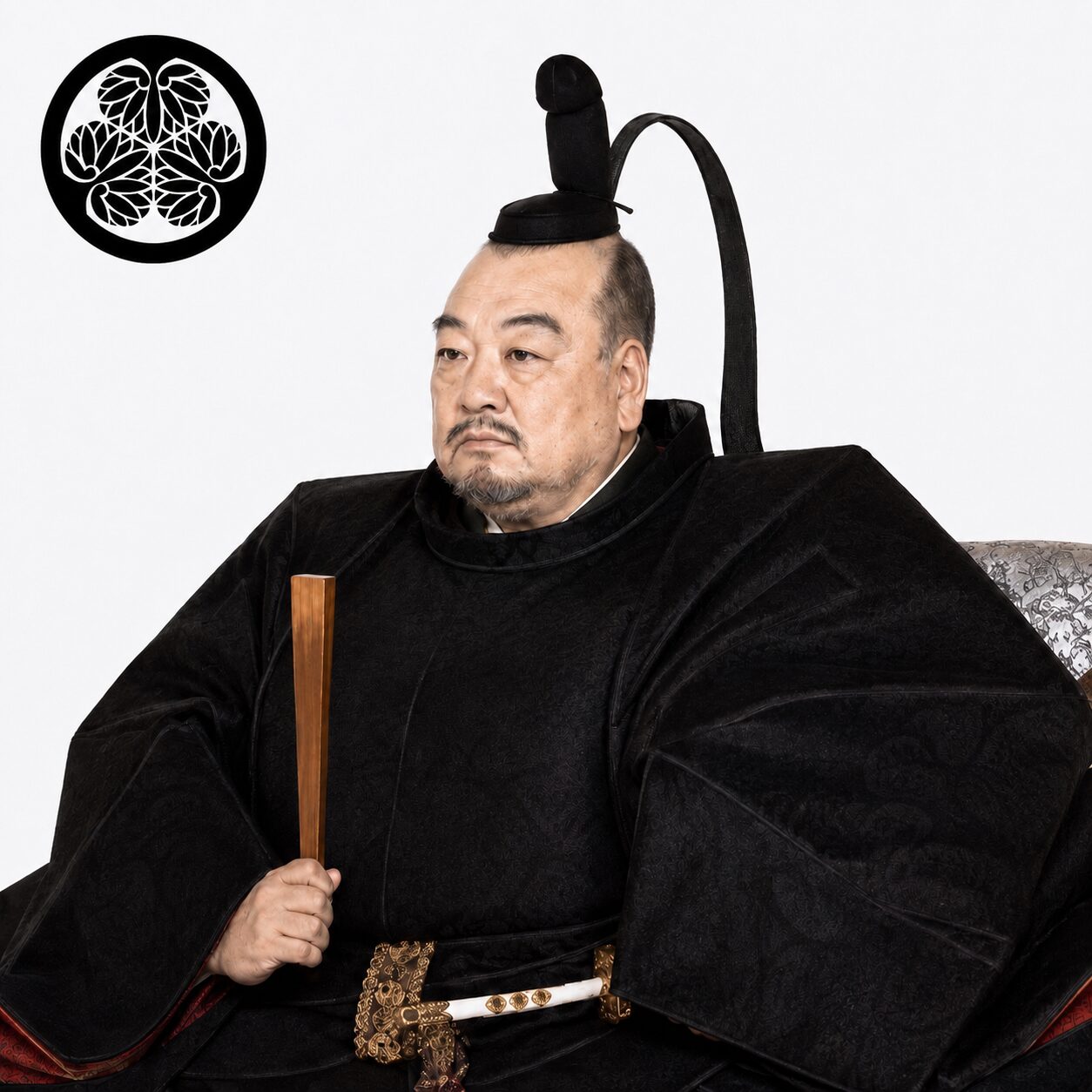
Tokugawa Ieyasu — From Hostage to Ruler of the Realm: 75 Years of Endurance
The 26th day, 12th month of Tenbun 11 (1542) – the 17th day, 4th month of Genna 2 (1616) | Died at age 75
- This Figure in 3 Lines
- The Mainstream Account — The Standard Story Found in Textbooks
- The Theories — Exploring the Possibilities from Various Angles
- A Strategic View
- Tokugawa Ieyasu — Notable Sayings and Death Poem
- Anecdotes and Episodes
- Tokugawa Ieyasu — Life Timeline
- Tokugawa Ieyasu — Family and Personal Relationships
- Related Historic-Site Map and Travel Model Course
- Related Articles
- Reference Information
This Figure in 3 Lines
- The last ruler of the realm, who rose from a minor lord of Mikawa and survived the turmoil of the Sengoku period.
- Through being a hostage of the Imagawa, an ally of Oda Nobunaga and a retainer of Toyotomi Hideyoshi, he seized the realm at Sekigahara.
- He opened the Edo shogunate and laid the foundation of the 260-year Tokugawa age. After his death he was deified as Tōshō Daigongen.
The Mainstream Account — The Standard Story Found in Textbooks
Birth and the Hostage Years (1542–1560)
Tokugawa Ieyasu was born on the 26th day of the 12th month of Tenbun 11 (1542) at Okazaki Castle in Mikawa Province. His father was Matsudaira Hirotada, lord of Okazaki Castle; his mother was Odai-no-kata (Denzūin), a daughter of Mizuno Tadamasa, lord of Ogawa Castle. His childhood name was Takechiyo.
The Matsudaira were a minor lordly house of Mikawa, at the time in a hard position squeezed between two great powers — Oda Nobuhide to the west and Imagawa Yoshimoto to the east. In Tenbun 13 (1544), when Takechiyo was three, the maternal Mizuno house sided with the Oda, so his mother Odai was divorced, and Takechiyo, at three, was parted from his birth mother.
In Tenbun 16 (1547), the six-year-old Takechiyo was to be sent to Sunpu as a hostage to Imagawa Yoshimoto, by the decision of his father Hirotada. But he met with betrayal on the way and was seized by the Oda side. Takechiyo lived two years as a hostage in Owari. A later-transmitted anecdote says he came face to face with the fourteen-year-old Oda Nobunaga at the time, but the source basis is thin.
In Tenbun 18 (1549), his father Hirotada was killed by a retainer. That same year, Taigen Sessai took the Oda-held Anjō Castle and captured Nobuhide’s natural son Oda Nobuhiro alive. A hostage exchange of him for Takechiyo was arranged, and Takechiyo was at last sent to Sunpu. From then he lived twelve years as a hostage of the Imagawa house.
At Sunpu, under Yoshimoto’s generous protection, Takechiyo is said to have received direct instruction from Taigen Sessai, one of the foremost intellectuals of the age. He acquired cultivation of the same level Yoshimoto himself had received — the Four Books and Five Classics, military science, waka and the like. He came of age in Kōji 1 (1555), and receiving the character “moto” from Yoshimoto, took the name “Matsudaira Motonobu,” later “Matsudaira Motoyasu.” In Eiroku 1 (1558) he fought his first battle as an Imagawa retainer and began to come to the fore as a warrior as well.
Okehazama and Independence (1560–1565)
In the 5th month of Eiroku 3 (1560), Imagawa Yoshimoto invaded Owari at the head of a great army. Motoyasu, as vanguard, succeeded in delivering provisions into Ōdaka Castle. He was 19 at the time. The delivery, breaking through an encircled enemy line, was an extremely dangerous task, but he accomplished it splendidly and raised his martial fame.
On the 19th day of the 5th month, Yoshimoto was struck down by Oda Nobunaga at Okehazama-yama. When Motoyasu received word of Yoshimoto’s death from his uncle Mizuno Nobumoto, he did not move at once but carefully confirmed the information. In time he entered his home castle of Okazaki, after about eleven years. His life as an Imagawa hostage ended here, but Motoyasu did not at once declare independence. Maintaining nominally the standing of an Imagawa retainer, he gradually consolidated his control of Mikawa.
→ For details, see the battle article “The Battle of Okehazama.”
From Eiroku 4 (1561), Motoyasu made his defection from the Imagawa clear, and the next year, Eiroku 5 (1562), concluded the Kiyosu Alliance with Nobunaga. This alliance became an exceptional long-term alliance, continuing for the next twenty years without being broken even once.
In Eiroku 6 (1563), Motoyasu changed his name to “Ieyasu.” Since the character “moto” was a character bestowed by Imagawa Yoshimoto, he discarded it and showed his complete independence from the Imagawa house to all within and without.
The Mikawa Ikkō Rebellion — The First Trial (1563–1564)
At the end of Eiroku 6 (1563), an Ikkō rebellion broke out in Mikawa. It became one of the greatest crises for Ieyasu. Because retainers who were adherents of the Ikkō sect sided with the rebels, the retainer band split in two. Even hereditary senior retainers — nearly half — turned against Ieyasu. Honda Masanobu, Natsume Yoshinobu and others sided with the rebels at this time.
Ieyasu stood at the front himself and fought, and suppressed it in Eiroku 7 (1564). After the suppression, while harshly cracking down on the Ikkō sect, Ieyasu pardoned many of the surrendered retainers and took them back into service. Honda Masanobu later became one of Ieyasu’s most important close advisors. From this experience, Ieyasu is said to have acquired his distinctive personnel method — “trust retainers to the last” and “leave even those who betrayed a path of return.”
Having pacified the Mikawa Ikkō rebellion, Ieyasu achieved the unification of Mikawa. In Eiroku 9 (1566), he was appointed Jugoi-no-ge Mikawa-no-kami by the court and changed his surname from “Matsudaira” to “Tokugawa.” By this, “Tokugawa Ieyasu” was formally born.
The Struggle with Takeda Shingen — The Nightmare of Mikatagahara (1568–1573)
In Eiroku 11 (1568), Takeda Shingen invaded Suruga and destroyed the Imagawa. Ieyasu concluded a secret pact with Shingen, subdued Tōtōmi and expanded his domain to the two provinces of Suruga and Mikawa. But the honeymoon of the Takeda and the Tokugawa was short, and over the boundary of Suruga and Tōtōmi the conflict between the two surfaced.
In the 10th month of Genki 3 (1572), Takeda Shingen began a large-scale expedition called the “Westward Campaign.” A Takeda army of about 30,000 invaded Tōtōmi and Mikawa, trampling Ieyasu’s domain. Ieyasu could obtain only 3,000 reinforcements from Nobunaga and came to face the Takeda’s 30,000 with a Tokugawa-Oda combined army of about 11,000.
On the 22nd day of the 12th month of that year, Ieyasu sallied out from Hamamatsu Castle and clashed with the Takeda army at Mikatagahara. It became the one great defeat of his life. The Tokugawa army produced over 1,000 dead, and Ieyasu himself fled back to Hamamatsu Castle barely with his life. There is an anecdote that, in flight, Ieyasu soiled himself on horseback out of terror (some point out that this is later embellishment, in the Mikawa Monogatari and the like). It is also transmitted that, having returned to the castle, Ieyasu had his fleeing figure painted as a self-admonition (the “Shikami portrait”).
→ For details, see the battle article “The Battle of Mikatagahara.”
The next year, in the 4th month of Genki 4 (1573), Shingen died of illness in the midst of the Westward Campaign. Ieyasu was freed from his greatest threat. In the following Battle of Nagashino of Tenshō 3 (1575), the Oda-Tokugawa combined army crushed Takeda Katsuyori. Ieyasu recovered Takatenjin Castle in Tōtōmi and others and restored his domain.
→ For details, see the battle article “The Battle of Nagashino.”
The Nobuyasu Incident — The Tragedy of Losing His Wife and Son (1579)
In Tenshō 7 (1579), an event occurred in which Ieyasu lost his heir Matsudaira Nobuyasu and his principal wife Tsukiyama-dono (Sena). It has been held that Nobuyasu’s wife Tokuhime (Nobunaga’s daughter) appealed to her father Nobunaga that “Nobuyasu and Tsukiyama-dono are in secret communication with the Takeda,” and that Nobunaga ordered Nobuyasu’s seppuku.
Ieyasu obeyed Nobunaga’s order, had Tsukiyama-dono cut down, and ordered Nobuyasu to commit seppuku. Nobuyasu took his own life at just 21. Ieyasu is said to have regretted this event all his life.
In recent research, however, doubt has been cast on this common view. The historian Hirayama Yū points out the possibility that the conflict between Nobuyasu and Ieyasu and the internal strife within the Tokugawa house were the true causes, and that Nobunaga’s order was not the decisive factor. There are indeed sources holding that Nobunaga entrusted the judgment of Nobuyasu’s punishment to Ieyasu. The likelihood is rising that the Nobuyasu incident was not “a tragedy forced by Nobunaga” but “Ieyasu’s own bitter decision.”
The Honnō-ji Incident and the Sacred Lord’s Crossing of Iga (1582)
In the 3rd month of Tenshō 10 (1582), Ieyasu, together with Nobunaga, destroyed Takeda Katsuyori at Tenmokuzan and brought down the Takeda house. For that merit he was given Suruga, and his domain became the three provinces of Mikawa, Tōtōmi and Suruga.
In the 5th month of that year, Ieyasu was invited by Nobunaga and visited Azuchi Castle. He received a grand reception, and then the hospitality of Akechi Mitsuhide. After that, Ieyasu was sightseeing in the commercial center of Sakai.
Early on the morning of the 2nd day of the 6th month, the Honnō-ji Incident occurred. Ieyasu’s party, staying in the Kyoto area, had only about 30 attendants and fell into a desperate crisis. The road to the nearest province of Mikawa was one where the threats of Akechi-controlled lands and rebel forces swarmed.
It is transmitted that Ieyasu at first tried to take his own life at Chion-in, but, admonished by his retainers, resolved on a forced breakthrough across Iga. Hattori Hanzō (Masanari) secured the route in concert with the local lords of Iga, and Ieyasu’s party went from Iga through Ise and returned by sea from Shiroko in Mikawa to Okazaki Castle on the 4th day of the 6th month. In his later years, Ieyasu looked back on this “Sacred Lord’s Crossing of Iga” as “a great peril.”
→ For details, see the battle article “The Honnō-ji Incident.”
The Tenshō-Jingo Conflict and the Holding of Five Provinces (1582–1583)
With Nobunaga’s death in the Honnō-ji Incident, the former Takeda territories (Kai and Shinano) lost their ruler and became a vacuum. Ieyasu did not let the chance slip and sent troops into Kai and Shinano. While contending with Hōjō Ujinao, he ultimately made peace with the Hōjō and acquired Kai and Shinano (the Tenshō-Jingo Conflict). By this, Ieyasu became a great daimyō holding five provinces — Mikawa, Tōtōmi, Suruga, Kai and Shinano.
Ieyasu took many former Takeda retainers into service and incorporated them into the Tokugawa army. The corps later known as the “Ii Red Regiment” was also organized centering on the former subordinates of the former Takeda retainer Yamagata Masakage. Absorbing the Takeda’s advanced military know-how and organization produced the later strength of the Tokugawa army.
The Battle of Komaki and Nagakute and Submission to Hideyoshi (1584–1586)
In Tenshō 12 (1584), Ieyasu confronted Hashiba Hideyoshi. The occasion was that Nobunaga’s second son Oda Nobukatsu came into conflict with Hideyoshi and asked Ieyasu for help. Ieyasu allied with Nobukatsu and fought Hideyoshi, and at the Battle of Nagakute crushed a detachment of Hideyoshi’s army. In the local battle, it ended in Ieyasu’s victory.
But in the overall strategy, Hideyoshi held the advantage. Hideyoshi won over Nobukatsu and concluded a separate peace, isolating Ieyasu alone. Ieyasu had no choice but to make peace with Hideyoshi and sent his second son Ogimaru (the future Yūki Hideyasu, elder brother of Tokugawa Hidetada) to Hideyoshi as a hostage.
→ For details, see the battle article “The Battle of Komaki and Nagakute.”
In Tenshō 14 (1586), Ieyasu at last went up to the capital and formally submitted to Hideyoshi. Hideyoshi treated Ieyasu generously, sending his own sister Asahi-hime as Ieyasu’s principal wife and, in an exceptional measure, even sending his birth mother Ōmandokoro to Ieyasu as a hostage. Ieyasu accepted this generous treatment and thereafter acted as a powerful daimyō of the Toyotomi regime.
The Transfer to the Kantō and the Tokugawa under the Toyotomi Regime (1590–1598)
In Tenshō 18 (1590), Hideyoshi attacked and destroyed the Hōjō of Odawara. In the postwar settlement, Ieyasu had his home five provinces (Mikawa, Tōtōmi, Suruga, Kai and Shinano) confiscated and was given the former Hōjō territories (the eight provinces of the Kantō) in their place. Ostensibly an increase, it was in substance a measure to remove Ieyasu from his home base.
Ieyasu made Edo his new base and set about governing the Kantō. Edo was at the time an undeveloped land with much marsh, but Ieyasu advanced road maintenance, the building of a waterworks and the creation of a castle town, consolidating his system as a great daimyō of 2.5 million koku in the Kantō. In Hideyoshi’s invasions of Korea (the Bunroku and Keichō Campaigns), beginning in Bunroku 1 (1592), Ieyasu was stationed at Nagoya in Hizen but did not actually cross over and concentrated on governing his home country.
In Keichō 3 (1598), Hideyoshi died. To support his heir Hideyori, a system of consultation was established by the Five Elders — Tokugawa Ieyasu, Maeda Toshiie, Mōri Terumoto, Ukita Hideie and Uesugi Kagekatsu — and the Five Magistrates, including Ishida Mitsunari and Asano Nagamasa. Ieyasu, as head of the Five Elders, stood in the position of the effective supreme power of the Toyotomi regime.
The Battle of Sekigahara — The Decisive Division of the Realm (1600)
After Hideyoshi’s death, within the Toyotomi regime the conflict between Ieyasu and the Five Magistrates intensified. In Keichō 4 (1599), Maeda Toshiie died, and Ieyasu’s influence expanded further. Ieyasu built his own base of power step by step, advancing marriages among daimyō — forbidden — on his own authority and so on.
In Keichō 5 (1600), Ieyasu set out toward Aizu to subjugate Uesugi Kagekatsu on “suspicion of revolt.” Seeing this as a chance, Ishida Mitsunari raised an army at Osaka and installed Mōri Terumoto as the supreme commander of the Western Army. Ieyasu canceled the Aizu expedition and resolved to advance westward.
Before the Battle of Sekigahara, Ieyasu stayed in Edo for about a month and is said to have sent more than 150 letters to the generals of the Western Army with the content that “if you turn coat, you will be rewarded.” His secret pacts with Kobayakawa Hideaki, Kikkawa Hiroie and others were concluded in this period.
On the 15th day of the 9th month, the Eastern and Western Armies clashed at Sekigahara in Mino Province. The battle was decided in about six hours, and with Kobayakawa Hideaki’s defection as the occasion, the Western Army was destroyed. Ishida Mitsunari was captured and executed in Kyoto. The Western Army’s supreme commander, Mōri Terumoto, had his domain reduced to the two provinces of Suō and Nagato, and Toyotomi Hideyori fell to a single daimyō of 650,000 koku in Settsu, Kawachi and Izumi.
→ For details, see the battle article “The Battle of Sekigahara.”
The Founding of the Edo Shogunate and Hereditary Succession of the Shogunate (1603–1614)
On the 12th day of the 2nd month of Keichō 8 (1603), Ieyasu was appointed Seii Taishōgun by the court. He was 62. He opened the shogunate at Edo, and the governance of the realm by the Tokugawa began.
Just two years later, in Keichō 10 (1605), Ieyasu ceded the office of shogun to his son Tokugawa Hidetada. This was an epoch-making action that clearly showed all within and without the “hereditary succession of the shogunate by the Tokugawa.” Ieyasu himself retired to Sunpu Castle and continued to hold real power as “Ōgosho” (retired shogun) — the Ōgosho government.
Ieyasu consolidated the foundation of the Tokugawa shogunate through the large-scale expansion of Edo Castle, road maintenance, the ordering of the currency system, the control of the outer-lord daimyō and so on. Meanwhile, Toyotomi Hideyori was still alive at Osaka Castle, and there existed many daimyō and masterless warriors who held loyalty to the Toyotomi house. Ieyasu’s final task was the resolution of this Toyotomi-house problem.
The Siege of Osaka — The Fall of the Toyotomi House (1614–1615)
In Keichō 19 (1614), Ieyasu worsened relations with the Toyotomi house, using the Hōkō-ji Bell-Inscription Incident as a pretext. He fastened a grievance onto the bell’s inscription, “Kokka Ankō” and “Kunshin Hōraku,” claiming it “cursed Ieyasu and prayed for the prosperity of the Toyotomi.” The interpretation was led mainly by Ieyasu’s brain trust Konchiin Sūden, and, seen with modern eyes, it was close to a false accusation, but Ieyasu took it as a just cause and resolved on the attack on Osaka.
In the winter of that year, the Winter Siege of Osaka broke out. The Tokugawa army led by Ieyasu encircled Osaka Castle, but unable to take the impregnable castle by direct assault, brought it to a peace. As a condition of the peace, the filling-in of the moats of Osaka Castle was stipulated, and by this Osaka Castle lost its defensive power.
The next year, Keichō 20 (1615), the Summer Siege of Osaka began. This time the Tokugawa army stormed Osaka Castle, which had lost its moats, and on the 7th day of the 5th month Osaka Castle fell. Toyotomi Hideyori and his mother Yodo-dono took their own lives, and the Toyotomi house perished. Hideyori’s young son Kunimatsu was also executed, and the bloodline of the Toyotomi house effectively ended.
→ For details, see the battle article “The Summer Siege of Osaka.”
His Final Years and Death (1615–1616)
Having destroyed the Toyotomi house in the Siege of Osaka, Ieyasu enacted the Laws for the Military Houses (Buke Shohatto) and the Laws for the Imperial Court and Nobility (Kinchū narabini Kuge Shohatto), completing the framework of nationwide rule by the Tokugawa shogunate.
On the 17th day of the 4th month of Genna 2 (1616), Ieyasu died at Sunpu Castle. He was 75. Stomach cancer is held to be the likely cause of death. Ieyasu was such a health enthusiast that he compounded his own medicines, and he enjoyed falconry into his later years. He attended to government as the active supreme power until just before his death.
By his will, his body was buried at Kunōzan and later reinterred at Nikkō. He received the divine title “Tōshō Daigongen” from Emperor Go-Mizunoo and came to be enshrined at Tōshō shrines across the country, centered on Nikkō Tōshō-gū. Ieyasu’s deification was advanced, through a dispute between his brain trusts Nankōbō Tenkai and Konchiin Sūden, in a form led by Tenkai. The image of Ieyasu deified as the “Sacred Lord” became the ground of the legitimacy of the 260-year Edo shogunate.
The Theories — Exploring the Possibilities from Various Angles
[Theory 1] Is the “Cunning Old Tanuki” Image Correct?
When it comes to Ieyasu, the image of a “cunning old tanuki (raccoon dog)” or “sly schemer” has widely taken hold. But as to when and how this image was formed, re-examination has advanced in recent research.
In the Edo period, Ieyasu was an object of absolute worship as the “Sacred Lord.” Mocking appellations like “cunning old tanuki” scarcely appear in the official literature of the time. Expressions likening Ieyasu to a “tanuki” begin to appear in some literature only from the late Edo period, and after the Meiji Restoration, the “cunning old tanuki” image took hold in the context of “criticism of the Tokugawa” from the standpoint of the anti-shogunate party centered on Satsuma and Chōshū. This image spread further in postwar historical novels such as those of Shiba Ryōtarō and forms the root of the modern image of Ieyasu.
But looking at Ieyasu’s actual conduct, it is more apt to evaluate him as a “patient realist” than as “cunning.” He pardoned and re-employed retainers who betrayed him in the Mikawa Ikkō rebellion, kept his alliance with Nobunaga for twenty years, and submitted to Hideyoshi and accepted the transfer to the Kantō. These were, rather than “cunning,” “realistic judgments responsive to the situation.” The current mainstream view is that the essence of Ieyasu was not a “tanuki” but a “man of patience and realism.”
Of course, in the late Ieyasu there are scenes where cold calculation can be seen — the subversion before Sekigahara, the Hōkō-ji Bell-Inscription Incident and so on. But that can also be said to be not so much “cunning” as “thoroughness in a scene where he absolutely must not fail.” It is necessary to carefully distinguish the “story” of Ieyasu, made from the late Edo to the Meiji period, from the real figure that emerges from the sources.
[Theory 2] The Truth of the Nobuyasu Incident — Nobunaga’s Order, or House Conflict?
The Nobuyasu incident of Tenshō 7 (1579) has long been spoken of in the framework of “Nobunaga, receiving the appeal of his daughter Tokuhime, forced Ieyasu to have Nobuyasu commit seppuku.” Ieyasu is depicted as a tragic father who obeyed Nobunaga’s order in tears and lost his heir. The official records of the Tokugawa house in the Edo period also took this interpretation, highlighting Ieyasu’s victimhood in a form that emphasized Nobunaga’s arbitrary action.
In recent years, however, research by Hirayama Yū and others has cast doubt on this common view. The new interpretation is as follows:
- Nobuyasu was taking independent action against Ieyasu’s will, and the conflict within the Tokugawa house was deepening.
- There was an appeal from Nobuyasu’s wife Tokuhime, but Nobunaga entrusted the judgment of the punishment to Ieyasu.
- Ieyasu himself felt the need to remove Nobuyasu, and Nobunaga’s intention was, to the end, no more than a reference.
- The punishment of Tsukiyama-dono too was very likely by Ieyasu’s judgment.
That is, the Nobuyasu incident was not “a tragedy forced by Nobunaga” but “Ieyasu’s own bitter decision.” The framework of “Nobunaga the villain, Ieyasu the victim,” established in the Edo period, was very likely a later interpretation to protect the legitimacy of the Tokugawa house.
That said, decisive primary sources are scarce, and the debate continues. The transmitted fact that Ieyasu regretted this event all his life shows that, whatever the cause, it was an extremely heavy decision for him.
[Theory 3] Does the “Ieyasu Mastermind” Theory of the Honnō-ji Incident Hold?
Over the mystery of the Honnō-ji Incident, a theory making Ieyasu the mastermind has been persistently advanced in some quarters. It is a theory that Ieyasu and Akechi Mitsuhide conspired to strike down Nobunaga, with the following as grounds:
- The tradition that Nobunaga was planning to assassinate Ieyasu (as an extension of the Nobuyasu incident).
- That, while Ieyasu was subordinate to Nobunaga, there was a subtle tension in the relationship.
- That just before Honnō-ji, Ieyasu was urged by Nobunaga to sightsee in Sakai (a trap to isolate Ieyasu?).
- A conspiracy with Mitsuhide, who sympathized with Ieyasu over the Nobuyasu incident.
But these grounds are all no more than circumstantial, and there is no decisive source. On the other hand, there is far more material denying the Ieyasu-mastermind theory:
- Immediately after the Honnō-ji Incident, Ieyasu was on the brink of death with only about 30 attendants.
- The “Sacred Lord’s Crossing of Iga” was not a planned escape but a clear emergency evacuation.
- Ieyasu, for a while after the incident, had no leeway to advance into Kyoto or Osaka and concentrated on acquiring the vacuum lands of Kai and Shinano.
- Had Ieyasu been the mastermind, he should have been able to take advantageous action immediately after Honnō-ji.
The mainstream of the historical world holds the Ieyasu-mastermind theory difficult to sustain. The current common view is that the Honnō-ji Incident was very likely Mitsuhide’s sole revolt. The Ieyasu-mastermind theory should be understood as an “attractive story” born within later novels and conspiracy-tinged interpretations.
[Theory 4] Was the Battle of Mikatagahara a Misjudgment by Ieyasu?
At the Battle of Mikatagahara of Genki 3 (1572), Ieyasu was crushingly defeated by Takeda Shingen. The questions “why did he recklessly sally out when he should have held the siege at Hamamatsu Castle?” and “considering the disparity in forces, isn’t a siege the common sense?” have long been raised.
The misjudgment theory (the old common view)
Out of youth, Ieyasu made light of Shingen, recklessly sallied out where he should have held the siege, and was crushingly defeated. That in later years he had his fleeing figure painted as a self-admonition is proof that he recognized his own misjudgment — so this view holds.
The best-judgment-at-the-time theory (the prevailing recent view)
Hirayama Yū argued in A New Theory: Ieyasu and the Battle of Mikatahara (2020) that Ieyasu’s judgment was the best under the circumstances of the time. The reasons are as follows:
- If the Takeda army advanced westward as it was, there was a danger that the joint front with Nobunaga would collapse.
- If he held the siege, it would invite agitation among the retainers and risk a revolt within the house.
- Had the Takeda army passed by Hamamatsu Castle, Ieyasu would have been judged a “coward who did not sally out in fear of the Takeda” and would have lost political cohesion.
- Because Shingen’s strategic eye was too advanced, he was utterly defeated beyond Ieyasu’s intentions.
By this theory, Mikatagahara was not “Ieyasu’s failure” but “Shingen’s strategic victory.” For Ieyasu at the time, there was effectively no choice but to sally out. The anecdote that in later years Ieyasu had the “Shikami portrait” painted as a self-admonition is also, in recent years, prominently held to be a later Edo-period invention, and the actual portrait is very likely one of a different scene.
[Theory 5] Did Ieyasu Win Sekigahara by “Luck,” or by Meticulous Strategy?
The Battle of Sekigahara is called the “decisive division of the realm,” but there is debate over the cause of its victory.
The luck-favored-victory theory
The view that it was the result of fortunate coincidences overlapping on Ieyasu’s side — Kobayakawa Hideaki’s defection, Mōri Terumoto’s non-engagement, Kikkawa Hiroie’s blocking action, the agitation of Yodo-dono and others. The famous comic verse — “Oda pounded it, Hashiba kneaded it, the realm-rice cake; sitting still, it is the Tokugawa who eats it” — plainly expresses this view.
The meticulous-strategy-victory theory (the prevailing current view)
In recent research, Ieyasu’s victory at Sekigahara is held to be the result of thorough preparation:
- On the way back from the Aizu expedition, Ieyasu stayed in Edo for a month and sent more than 150 letters to the various daimyō.
- The Eastern Army’s Fukushima Masanori, Ikeda Terumasa, Kuroda Nagamasa and others had been made to defect from the Western Army by Ieyasu’s groundwork.
- The secret pacts with Kobayakawa Hideaki and Kikkawa Hiroie were completed in advance.
- The “gunfire urging defection” at Sekigahara was to forcibly make Hideaki betray.
- Ieyasu advanced westward faster than expected and outpaced the preparations of the Western Army.
The battle of Sekigahara itself was decided in about six hours, but the current mainstream view is that what decided its outcome was not the battlefield tactics but Ieyasu’s political maneuvering in the months before the battle. Ieyasu won not by “luck” but “after creating a posture in which he absolutely could win, then facing the decisive battle.”
[Theory 6] The Siege of Osaka — Was Ieyasu Really Cold-Hearted?
Having destroyed the Toyotomi house in the Siege of Osaka, Ieyasu is often criticized with the image of a “cold-hearted man who betrayed his main house” and a “cruel autocrat who executed even the Toyotomi’s young child Kunimatsu.”
It is true that, by modern sensibilities, the Hōkō-ji Bell-Inscription Incident is close to a false accusation. And the method of skillfully incorporating, as a condition of the peace of the Winter Siege, the filling-in of the moats outside the main keep, and turning Osaka Castle into a naked castle in the Summer Siege, was a thoroughly calculated, cold strategy.
But there is also a view that there were certain circumstances on Ieyasu’s side:
- Ieyasu had a policy of leaving the Toyotomi house as a single daimyō, but Yodo-dono and Hideyori refused.
- Masterless warriors from across the country (Sanada Nobushige, Gotō Mototsugu, Chōsokabe Morichika and others) gathered at Osaka Castle and became an anti-Tokugawa military force.
- To leave the Toyotomi house alone risked it becoming the core of a revolt against the Tokugawa shogunate after Ieyasu’s death.
- Ieyasu was in his seventies and, for the stability of the Tokugawa system after his own death, needed to resolve the Toyotomi problem while he was alive.
In the research of Kasaya Kazuhiko and others, a view is presented that understands the Siege of Osaka not one-sidedly as “Ieyasu’s cold-hearted scheme” but as the “last great operation” to bring the turmoil of the Sengoku period completely to an end. The execution of the Toyotomi infant Kunimatsu is indeed grievous, but by the conventions of the Sengoku period, leaving the heir of the enemy side alive was a taboo. Ieyasu’s judgment can also be said to have been faithful to the logic of the Sengoku period.
That said, considering that loyalty to Toyotomi Hideyori remained even among some Tokugawa retainers, Ieyasu’s decision was an extremely heavy one even for the time. To dismiss it in a word as “cold-hearted” is an oversimplification, but it cannot be denied that Ieyasu’s choice was severe.
A Strategic View
When Ieyasu is compared with Nobunaga and Hideyoshi, what stands out are three points — “endurance,” “the use of talent” and “the long-term view.”
First, endurance. Ieyasu’s life was a succession of “patience.” At three he was parted from his mother; at six he became a hostage; he spent twelve years at Sunpu. Even after independence, he continued to accept humiliating positions — subordination to Nobunaga, submission to Hideyoshi. Other Sengoku daimyō of the same age would have been unable to endure such humiliation and would have been ruined. Ieyasu had the rare mental strength to turn humiliation into “an opportunity to learn.” The cultivation and view of governance he learned from Taigen Sessai during his hostage years with the Imagawa became the foundation of the later Edo shogunate. During his period of submission to Hideyoshi too, Ieyasu concentrated on governing the Kantō, strengthening his domain base and readying the preparation for the final reversal.
Second, the use of talent. Unlike Nobunaga and Hideyoshi, Ieyasu did not use retainers as “disposable.” As he later gave heavy responsibility to Honda Masanobu, who had betrayed him in the Mikawa Ikkō rebellion, he gave able men the chance of return any number of times. Beginning with the “Four Guardian Kings of the Tokugawa” — Honda Tadakatsu, Ii Naomasa, Sakai Tadatsugu and Sakakibara Yasumasa — Ieyasu’s retainer band was astonishingly tightly bound. After the fall of the Takeda, he incorporated former Takeda retainers into the Tokugawa army as the “Red Regiment,” and after Sekigahara he placed the outer-lord daimyō at key points to build a system of nationwide rule. Whereas Hideyoshi’s retainer band split after his death, Ieyasu’s retainer band continued to support the Tokugawa shogunate for 260 years. This can be called the victory of Ieyasu’s art of using talent.
Third, the long-term view. Ieyasu prioritized long-term system-building over short-term victory. That he ceded the office of shogun to Hidetada in just two years, in 1605, was to clearly show all within and without the hereditary succession of the shogunate by the Tokugawa. The Siege of Osaka of 1614–15 too was to settle the Toyotomi problem while he was alive and make the post-death Tokugawa system rock-solid. The frameworks of many of the basic institutions of the Edo shogunate — the Laws for the Military Houses, the Laws for the Imperial Court and Nobility, the alternate-attendance system — were arranged in Ieyasu’s time. Policy design with “the hundred years after his own death” in view was Ieyasu’s true forte.
Of course, Ieyasu too had limits. In his life, “sacrifices” by cold-hearted decisions are scattered — the Nobuyasu incident, the punishment of Tsukiyama-dono, the destruction of the Toyotomi house. Ieyasu himself is said to have regretted these decisions all his life. The essence of Ieyasu’s achievement is that, as a result of repeatedly choosing to cast off personal feeling for the great cause of “peace under heaven,” the 260 years of peace that followed were brought about.
Nobunaga is often evaluated as the “destroyer,” Hideyoshi as the “upstart,” and Ieyasu as the “completer.” Without the three, the Sengoku period would not have ended, but without Ieyasu’s “long-term view and endurance,” the hegemony built by Nobunaga and Hideyoshi would very likely not have been maintained and would have invited another turmoil. Ieyasu’s true greatness lies in having made permanent, as “institutions,” the achievements built by the conquerors of the Sengoku age.
Tokugawa Ieyasu — Notable Sayings and Death Poem
“A person’s life is like going a long road bearing a heavy load. One must not hurry.”
— From the Tōshōkō Igun (Testament of Lord Tōshō)
Words said to symbolize Ieyasu’s view of life. The meaning is that, since it is like walking a long road bearing a heavy load, one should advance without haste. Widely known as a fine saying expressing Ieyasu’s patience and long-term view, it was in fact collected in the Tōshōkō Igun, made in the late Edo period, and whether it is Ieyasu’s own words is a matter of several theories. Even so, it is loved as words that plainly express Ieyasu’s spirit.
“If one knows only how to win and does not know how to lose, harm will come to one’s own person.”
The meaning is that if one knows only how to win and does not know how to lose, calamity will fall upon oneself. It is a saying that only Ieyasu, who experienced the great defeat at Mikatagahara, could speak — words that deeply understand the meaning of defeat. The philosophy of Ieyasu that supported the later stable governance of the Tokugawa shogunate is condensed in it.
— Source: Tōshōkō Go-Igun
“If the cuckoo will not sing, let us wait until it sings.”
A passage from the famous set of verses likening the three great heroes — Nobunaga, Hideyoshi and Ieyasu — to a cuckoo. It is a late-Edo invention and not Ieyasu’s own words, but it is widely known as a phrase symbolizing Ieyasu’s patience. Alongside “if the cuckoo will not sing, kill it” (Nobunaga) and “if the cuckoo will not sing, I will make it sing” (Hideyoshi), it plainly expresses the difference in character of the three men.
— Source: a late-Edo invention
“The one who goes ahead and the one who remains behind — it is the same thing; that I cannot take you with me, that alone, I think, is parting.”
Transmitted as Ieyasu’s death poem. The meaning is that the one who dies first and the one who remains behind are the same, and only being unable to go together is what is called parting. A detached view of life and death, fitting for Ieyasu, who closed his life at 75, can be felt in it.
— Source: various works
Anecdotes and Episodes
Parted from His Birth Mother at Three
Ieyasu was parted from his birth mother Odai-no-kata at three. Because the maternal Mizuno house sided with the Oda, his father Matsudaira Hirotada, a retainer of the Imagawa side, had no choice but to divorce Odai for reasons of strategy. Odai later married into another house and could not be reunited with Ieyasu for a long time.
In later years, Ieyasu held a yearning for his mother all his life. After the Battle of Sekigahara, Ieyasu, having consolidated the power base of the Tokugawa shogunate, called his mother Odai to Edo and spent her final years with her. The figure of Ieyasu cherishing his mother conveys a humane side different from the cold image of a Sengoku warrior. Odai’s grave is at Denzūin in Edo, and the temple’s name is taken from her Buddhist name.
— Source: Tōshōgū Go-Jikki; various biographies
Learning with Taigen Sessai during the Hostage Years
Ieyasu spent twelve years, from age 8 to 19, as a hostage of Imagawa Yoshimoto at Sunpu. Yoshimoto did not treat Ieyasu shabbily, but had him receive direct instruction from Taigen Sessai, one of the foremost intellectuals of the age.
Sessai is said to have imparted to Ieyasu the highest cultivation of the day — the Four Books and Five Classics, military science, waka. In later years, Ieyasu is said to have been grateful all his life for Yoshimoto’s generous protection and Sessai’s teaching. Ironically, Ieyasu, who became an ally of Nobunaga — the man who struck down Yoshimoto at Okehazama — achieved the unification of the realm thanks to Yoshimoto’s education. It can be said that Yoshimoto’s hostage education laid the foundation of the later 260 years of the Tokugawa shogunate.
— Source: Shiba Hiroyuki, Tokugawa Ieyasu: From Borderland Lord to Realm-Taker
The Mikatagahara Soiling Legend
Crushingly defeated by Takeda Shingen at the Battle of Mikatagahara of Genki 3 (1572), Ieyasu fled back to Hamamatsu Castle barely with his life. There is a famous anecdote that at this time, out of terror, he soiled himself on horseback. There is even an episode that, pointed out by a retainer — “My lord, you have soiled yourself” — Ieyasu retorted, “This is roasted miso!”
The source reliability of this anecdote, however, is low. There is no direct description even in Edo-period literature that exalts the Tokugawa house, such as the Mikawa Monogatari, and it is very likely a later embellishment. Rather than to belittle the “Sacred Lord Ieyasu,” it is reasonable to regard it as an invention made with affection, as “the Ieyasu who experienced failure.”
Relatedly, the anecdote of the “Shikami portrait” — that the defeated Ieyasu had his bitter expression painted and carried it all his life as a self-admonition — is also famous, but in recent years the evidence that the “Shikami portrait” is a work made after the Battle of Mikatagahara is scarce, and it is held very likely to be a portrait of a different scene.
— Source: various works; recent research
The Sacred Lord’s Crossing of Iga — The Greatest Crisis of His Life
When the Honnō-ji Incident occurred on the 2nd day of the 6th month of Tenshō 10 (1582), Ieyasu was sightseeing in Sakai with only about 30 attendants. The road to the nearest province of Mikawa was one where the threats of Akechi-controlled lands and rebel forces swarmed.
It is transmitted that Ieyasu at first tried to take his own life at Chion-in, but, admonished by his retainers, resolved on a forced breakthrough across Iga. Hattori Hanzō (Masanari) secured the route in concert with the local lords of Iga, and Ieyasu’s party went from Iga through Ise and returned by sea from Shiroko in Mikawa to Okazaki Castle on the 4th day of the 6th month.
In his later years, Ieyasu looked back on this “Sacred Lord’s Crossing of Iga” as “a great peril” and positioned it as one of the three great crises of his life (the Mikawa Ikkō rebellion, Mikatagahara and the Crossing of Iga). The greatest reason the Ieyasu-mastermind theory of the Honnō-ji Incident is difficult to sustain is that this desperate crisis was clearly an emergency evacuation for Ieyasu.
— Source: Tōshōgū Go-Jikki; various studies
A Health Enthusiast Who Compounded His Own Medicine
Ieyasu attained an exceptional longevity for the time (75 years), and behind it was thorough health management. Ieyasu was a “Chinese-medicine maniac” who compounded his own medicines. He had a medicinal-herb garden made at Sunpu Castle, gathered rare medicinal herbs from various regions, and tried out and took medicines himself. He preferred barley rice and bean miso and avoided luxurious meals — his diet too was frugal.
That he never missed falconry into his later years and continued moderate exercise is also held to be a secret of his longevity. He continued to attend to government as the active supreme power until just before his death, engaged in the governance of the realm to the very end. Ieyasu’s health-enthusiast nature does not contradict his image as a long-term-view realist. He recognized that “my own body is my greatest political capital.”
Ironically, however, Ieyasu’s cause of death is held to be stomach cancer (or, by the traditional theory, food poisoning from tempura), and even the medicine he compounded himself did not work on his final illness.
— Source: Tōshōgū Go-Jikki; various studies
Complex Feelings toward His Heir Nobuyasu
In Tenshō 7 (1579), Ieyasu ordered his heir Matsudaira Nobuyasu to commit seppuku. Toward Nobuyasu, who took his own life at just 21, Ieyasu held complex feelings all his life.
Ieyasu evaluated Nobuyasu as “one who should have become an heir excelling in martial valor” and mourned his death. There is an anecdote that later, when his second son Tokugawa Hidetada arrived late at Sekigahara, Ieyasu, while enraged, let slip, “Had Nobuyasu been alive, it would not have come to this” (it may be a later invention).
The punishment of Nobuyasu’s mother Tsukiyama-dono (Sena) too was very likely largely by Ieyasu’s own judgment. Ieyasu accepted these decisions as “for the sake of the Tokugawa house,” but the inner sorrow is said never to have vanished in his lifetime.
— Source: Matsudaira-ki; various studies
The “Gunfire Urging Defection” at Sekigahara
The greatest crisis point of the Battle of Sekigahara was Kobayakawa Hideaki’s defection. Hideaki had concluded a secret pact of defection with Ieyasu in advance, but when the battle began, he did not move from his headquarters on Matsuoyama. He decided on fence-sitting, trying to discern which side — Eastern or Western — would gain the advantage.
Losing patience, Ieyasu is transmitted to have had gunfire directed at Hideaki’s headquarters. Hideaki was startled and, “shown Lord Ieyasu’s resolve,” decided on betrayal. He began the attack on the Ōtani Yoshitsugu corps, and this became the trigger for the collapse of the Western Army.
This “gunfire urging defection” is known as an episode symbolizing Ieyasu’s cold tactical eye. In recent research, however, there is also a view that this gunfire is not historical fact but a later embellishment. Hideaki’s betrayal was very likely not prompted by Ieyasu’s gunfire but by his own calculation.
— Source: various works; recent research
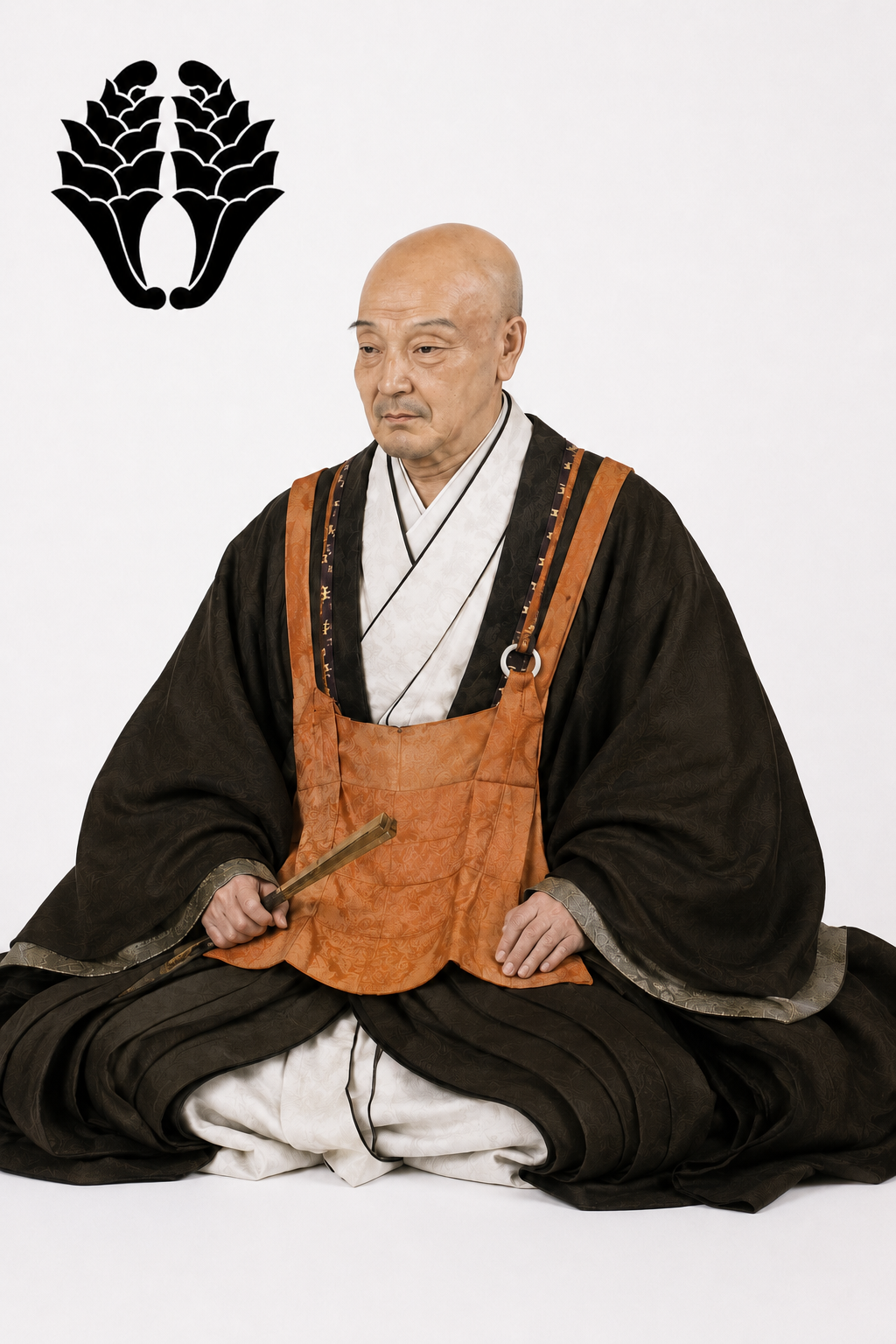
The Monk Tenkai and Tōshō Daigongen
After Ieyasu’s death, the one who led the deification was Nankōbō Tenkai. A monk of the Tendai sect who was given heavy responsibility as Ieyasu’s brain trust in his later years, he received the divine title “Gongen” from the court in accordance with Ieyasu’s will.
At the time, another brain trust, Konchiin Sūden, argued for the divine title “Daimyōjin.” But Tenkai, who thought “Myōjin is inauspicious” from the example of Hōkoku Daimyōjin (Toyotomi Hideyoshi), strongly recommended “Daigongen,” and in the end Tenkai’s argument prevailed. The divine title was decided as “Tōshō Daigongen,” and Ieyasu came to be enshrined at Tōshō shrines across the country, centered on Nikkō Tōshō-gū.
Tenkai thereafter advanced the systematization of the worship of Ieyasu, and in the time of the third shogun Tokugawa Iemitsu, Nikkō Tōshō-gū was grandly rebuilt. Ieyasu’s deification continued to function for 260 years as the ground of the legitimacy of the Tokugawa shogunate.
— Source: Tōshōsha Engi; various studies
Tokugawa Ieyasu — Life Timeline
| Year | Age | Event |
|---|---|---|
| 1542 | 0 | Born at Okazaki Castle in Mikawa Province. Childhood name Takechiyo. |
| 1544 | 3 | Parted from his mother Odai-no-kata. |
| 1547 | 6 | Seized on the way to becoming an Imagawa hostage and made a hostage of the Oda house. |
| 1549 | 8 | His father Matsudaira Hirotada dies. Sent to the Imagawa at Sunpu in a hostage exchange. |
| 1555 | 14 | Comes of age. Receiving a character from Imagawa Yoshimoto, takes the name “Matsudaira Motonobu.” |
| 1560 (5th mo., 19th day) | 19 | The Battle of Okehazama. Succeeds in delivering provisions into Ōdaka Castle. After Yoshimoto’s death, returns to Okazaki Castle. |
| 1562 | 21 | Concludes the Kiyosu Alliance with Oda Nobunaga. |
| 1563 | 22 | Changes his name to “Ieyasu.” The Mikawa Ikkō rebellion breaks out (the first crisis). |
| 1566 | 25 | Appointed Mikawa-no-kami by the court; changes his surname to “Tokugawa.” |
| 1572 (12th mo.) | 31 | Crushingly defeated by Takeda Shingen at the Battle of Mikatagahara (the greatest defeat of his life). |
| 1575 | 34 | The Oda-Tokugawa combined army crushes Takeda Katsuyori at the Battle of Nagashino. |
| 1579 | 38 | The Nobuyasu incident. His principal wife Tsukiyama-dono is killed, and his heir Nobuyasu is made to commit seppuku. |
| 1582 (6th mo.) | 41 | The Honnō-ji Incident. Returns home barely with his life in the Sacred Lord’s Crossing of Iga. |
| 1582– | 41 | The Tenshō-Jingo Conflict. Acquires Kai and Shinano, becoming a great daimyō of five provinces. |
| 1584 | 43 | The Battle of Komaki and Nagakute. Wins the local battle against Hideyoshi, later makes peace. |
| 1586 | 45 | Goes up to the capital and submits to Toyotomi Hideyoshi. |
| 1590 | 49 | After Hideyoshi’s Siege of Odawara, transferred to the Kantō. Makes Edo his base. |
| 1598 | 57 | Hideyoshi dies. Seizes power as head of the Five Elders. |
| 1600 (9th mo., 15th day) | 59 | Defeats Ishida Mitsunari at the Battle of Sekigahara. The decisive battle for the realm. |
| 1603 | 62 | Appointed Seii Taishōgun. The Edo shogunate is founded. |
| 1605 | 64 | Cedes the office of shogun to his son Hidetada. Retires to Sunpu as Ōgosho. |
| 1614–1615 | 73–74 | Destroys the Toyotomi house in the Winter and Summer Sieges of Osaka. |
| 1616 (4th mo., 17th day) | 75 | Dies at Sunpu Castle. Later deified as Tōshō Daigongen. |
※ Ages are reckoned by the traditional count. Cell shading: yellow = major turning point; red = events relating to his end.
Tokugawa Ieyasu — Family and Personal Relationships
Family
| Relation | Person | Summary |
|---|---|---|
| Father | Matsudaira Hirotada | Lord of Okazaki Castle. Killed by a retainer when Ieyasu was 8. |
| Mother | Odai-no-kata (Denzūin) | Divorced when Ieyasu was 3. In later years called to Edo by Ieyasu and spent her final years there. |
| Uncle | Mizuno Nobumoto | Odai’s elder brother. After Okehazama, conveyed Yoshimoto’s death to Ieyasu. |
| Principal wife | Tsukiyama-dono (Sena) | Daughter of the Imagawa retainer Sekiguchi Chikanaga. Killed by Ieyasu in the Nobuyasu incident. |
| Second wife | Asahi-hime | Sister of Toyotomi Hideyoshi. Married Ieyasu as a token of the peace with Hideyoshi. |
| Heir | Matsudaira Nobuyasu | Ieyasu’s heir. Committed seppuku in 1579 by Nobunaga’s order (theories vary), at 21. |
| Second son | Yūki Hideyasu | After the Battle of Komaki and Nagakute, made Hideyoshi’s adopted son. Later succeeded to the Yūki house. |
| Third son | Tokugawa Hidetada | The second shogun. Though he arrived late at Sekigahara, he supported the later Tokugawa system. |
| Grandson | Tokugawa Iemitsu | The third shogun. Favored by Ieyasu, he grandly rebuilt Nikkō Tōshō-gū. |
Principal Retainers, Allies and Adversaries
| Relation | Person | Summary |
|---|---|---|
| Four Guardian Kings of the Tokugawa | Honda Tadakatsu | A fierce general called “a thing too good for Ieyasu.” Bore no wound in his life. |
| Four Guardian Kings of the Tokugawa | Ii Naomasa | A fierce general who led the “Ii Red Regiment.” Organized it by taking in former Takeda retainers. |
| Four Guardian Kings of the Tokugawa | Sakai Tadatsugu | A veteran senior retainer since Ieyasu’s hostage years. Head of the retainer band. |
| Four Guardian Kings of the Tokugawa | Sakakibara Yasumasa | A retainer combining wisdom and valor. Active at Komaki and Nagakute and elsewhere. |
| Retainer | Hattori Hanzō (Masanari) | Led the Crossing of Iga. Head of the Tokugawa house’s ninja corps. |
| Brain trust | Nankōbō Tenkai | A monk of the Tendai sect. Led Ieyasu’s deification and realized the divine title Tōshō Daigongen. |
| Brain trust | Konchiin Sūden | A diplomatic monk. Active in the Hōkō-ji Bell-Inscription Incident and the drafting of the various laws. |
| Ally (early period) | Oda Nobunaga | A sworn friend of 20 years through the Kiyosu Alliance. Died at Honnō-ji. |
| Lord (middle period) | Toyotomi Hideyoshi | Ieyasu submitted to him. After his death, Ieyasu inherited the realm. |
| Enemy → defector | Kobayakawa Hideaki | Defected from the Western to the Eastern Army at Sekigahara, the key to Ieyasu’s victory. |
| Lord during his hostage years | Imagawa Yoshimoto | Ieyasu was his hostage for 12 years; he fell at Okehazama. The occasion of Ieyasu’s independence. |
| Greatest threat | Takeda Shingen | Gave Ieyasu the one great defeat of his life at Mikatagahara. |
| Enemy at Sekigahara | Ishida Mitsunari | The effective leader of the Western Army. Defeated at Sekigahara and executed. |
| Enemy at the Siege of Osaka | Toyotomi Hideyori | Hideyoshi’s heir. Took his own life at the Summer Siege of Osaka; the Toyotomi house perished. |
Related Historic-Site Map and Travel Model Course
Related Historic-Site Map — Tokugawa Ieyasu
Spots on the map:
- Okazaki Castle (birthplace) — the place of Ieyasu’s birth.
- Daiju-ji (family temple) — the Matsudaira family temple Ieyasu visited after Okehazama.
- Sunpu Castle Park (residence) — the place where he spent his hostage years and his Ōgosho years.
- Hamamatsu Castle (castle) — his base in the Mikatagahara era.
- Edo Castle (the Imperial Palace) (castle) — his base after the transfer to the Kantō.
- Sekigahara Old Battlefield (old battlefield) — the place of the decisive division of the realm.
- Osaka Castle (castle) — the stage of the Siege of Osaka.
- Kunōzan Tōshō-gū (grave site) — Ieyasu’s first place of burial.
- Nikkō Tōshō-gū (shrine) — the place where he is enshrined as “Tōshō Daigongen.”
※ The map is a reference display based on modern roads. It differs from the roads and terrain of the Sengoku period.
Travel Model Course — Three Days Tracing Ieyasu’s Footsteps
Conditions
- Duration: 3 days (by car)
- Day 1: Mikawa and Tōtōmi (Ieyasu’s starting point)
- Day 2: Sunpu and Sekigahara (Ieyasu’s summit)
- Day 3: Edo and Nikkō (Ieyasu’s end and deification)
Day 1: Mikawa and Tōtōmi — Ieyasu’s Starting Point
① Okazaki Castle (stay: approx. 90 min)
The place of Ieyasu’s birth. The base of the unification of Mikawa.
– By car: about 10 min from Okazaki IC on the Tōmei Expressway
② Daiju-ji (stay: approx. 30 min)
The Matsudaira family temple. The place Ieyasu visited after Okehazama.
– By car: about 15 min from Okazaki Castle
③ Hamamatsu Castle (stay: approx. 60 min)
His base in the Mikatagahara era. The “castle of advancement” where Ieyasu spent 17 years from age 29.
– By car: about 60 min from Okazaki Castle
Day 2: Sunpu and Sekigahara — Ieyasu’s Summit
④ Sunpu Castle Park (stay: approx. 120 min)
The place where he spent his hostage years and his Ōgosho years. There is also the keep-base ruin, where excavation is advancing.
– By car: about 60 min from Hamamatsu Castle
⑤ Kunōzan Tōshō-gū (stay: approx. 90 min)
Ieyasu’s first place of burial. A superb view commanding Mount Fuji.
– By car: about 30 min from Sunpu Castle
⑥ Sekigahara Old Battlefield (Gifu Sekigahara Battlefield Memorial Museum) (stay: approx. 120 min)
The decisive battlefield for the realm. Tour Ieyasu’s final headquarters and the camp sites of the various commanders.
– By car: about 3 hours from Sunpu
Day 3: Edo and Nikkō — Ieyasu’s End and Deification
⑦ Edo Castle (the East Gardens of the Imperial Palace) (stay: approx. 120 min)
His base after the transfer to the Kantō. The Edo-period main-keep and keep-base ruins remain.
– By public transport: on foot from JR Tokyo Station
⑧ Nikkō Tōshō-gū (stay: approx. 180 min)
The shrine where Ieyasu is enshrined as “Tōshō Daigongen.” The gorgeous decorations of the Yōmeimon and the Three Monkeys.
– By car: about 2 hours from Tokyo
Arrangements by Visitor Type
- For the strong of leg: also add Osaka Castle (the stage of the Summer Siege) and the Mikatagahara Old Battlefield.
- For a relaxed pace: shorten to a one-day course of just Okazaki Castle and Nikkō Tōshō-gū.
- For those focusing on Kyoto: a half-day course touring Chion-in (where he tried to take his own life just before the Crossing of Iga) and Nijō Castle (built by Ieyasu).
※ This plan is a reference model based on general travel speeds and stay times. Opening hours, transport schedules and crowding vary by season and day of the week. Please check the latest information on the official websites of each facility and transport operator before setting out.
※ Admission and entry fees are reference prices at the time of writing and may have changed.
※ For mountain-castle sites, please plan within your limits according to the weather and your physical condition.
Choose a Base for Exploring Sites Connected with Tokugawa Ieyasu
Select accommodation and a rental car for three defining stages of Ieyasu’s life: his birth and rise in Mikawa and Tōtōmi, his rule from Sunpu, and his deification at Nikkō Tōshō-gū.
Stay near Okazaki Castle and Mikawa
Use Okazaki as the base for Ieyasu’s birthplace and the Matsudaira family temple, then continue west to Hamamatsu Castle and the Mikatagahara battlefield.
Key historic sites
- Okazaki Castle
- Daiju-ji
- Hamamatsu Castle
- Mikatagahara battlefield
Stay near Sunpu Castle in Shizuoka
Explore the castle where Ieyasu spent both his hostage years and his final period as Ōgosho, then continue to Kunōzan Tōshō-gū, his first burial place.
Key historic sites
- Sunpu Castle Park
- Sunpu Castle keep-base ruins
- Kunōzan Tōshō-gū
- Historic central Shizuoka
Stay near Nikkō Tōshō-gū
Stay in Nikkō to explore the shrine complex where Ieyasu is worshipped as Tōshō Daigongen, including the Yōmeimon, the Three Monkeys, and his final grave at the Inner Shrine.
Key historic sites
- Nikkō Tōshō-gū
- Yōmeimon Gate and the Three Monkeys
- Inner Shrine and Ieyasu’s grave
- Rinnō-ji and Futarasan Shrine
Okazaki and Hamamatsu, Shizuoka, Sekigahara, Tokyo, and Nikkō are spread across a very wide area. For a realistic itinerary, divide them into separate regional trips rather than attempting the article’s full route in a single short journey. Sekigahara and Edo Castle can be added as independent extensions between the three main bases above. Check current accommodation prices, availability, rental-car rates, and conditions on the linked Rakuten Travel pages.
Related Articles
Battle Articles
- The Battle of Okehazama (1560) — the occasion of Ieyasu’s independence
- The Battle of Mikatagahara (1572) — the one great defeat of his life
- The Battle of Nagashino (1575) — crushed Takeda Katsuyori
- The Honnō-ji Incident (1582) — the trigger for the Sacred Lord’s Crossing of Iga
- The Battle of Komaki and Nagakute (1584) — the confrontation with Hideyoshi
- The Battle of Sekigahara (1600) — the decisive battle for the realm
- The Summer Siege of Osaka (1615) — the final battle that destroyed the Toyotomi house
Warlord Articles
- Imagawa Yoshimoto — the lord of Ieyasu’s 12-year hostage years
- Oda Nobunaga — a sworn friend of 20 years
- Takeda Shingen — the greatest threat, who crushed Ieyasu at Mikatagahara
- Toyotomi Hideyoshi — his lord in the middle period
- Taigen Sessai — his teacher during the Sunpu hostage years
- Honda Tadakatsu — the head of the Four Guardian Kings of the Tokugawa
- Ii Naomasa — a Tokugawa Guardian King, of the Red Regiment
- Ishida Mitsunari — his greatest enemy at Sekigahara
Reference Information
Primary Sources
- Ōta Gyūichi, Shinchō Kōki — Ieyasu’s movements in the Okehazama period.
- Ōkubo Hikozaemon Tadataka, Mikawa Monogatari — a precious record of the Tokugawa founding period.
- Tōshōgū Go-Jikki — the official record of Ieyasu by the Edo shogunate.
- Ietada Nikki — the diary of Matsudaira Ietada, from the viewpoint of an Ieyasu retainer.
- Tōdaiki — a contemporary record of Sekigahara and the Siege of Osaka.
Academic Works
- Shiba Hiroyuki, Tokugawa Ieyasu, Heibonsha, 2023 — the definitive volume of the latest comprehensive research.
- Shiba Hiroyuki, Tokugawa Ieyasu: From Borderland Lord to Realm-Taker, Heibonsha (From the Medieval to the Early Modern), 2017.
- Honda Takashige, The Decisions of Tokugawa Ieyasu, Chūō Kōron Shinsha (Chūkō Shinsho), 2022.
- Honda Takashige, Tokugawa Ieyasu: The Standard Text, Yoshikawa Kōbunkan, 2010.
- Honda Takashige, Tokugawa Ieyasu and the Battle of Sekigahara, Yoshikawa Kōbunkan, 2013.
- Hirayama Yū, Tokugawa Ieyasu and Takeda Shingen, KADOKAWA (Kadokawa Sensho 664), 2022.
- Hirayama Yū, A New Theory: Ieyasu and the Battle of Mikatahara, NHK Publishing (NHK Publishing Shinsho 688), 2020.
- Kasaya Kazuhiko, The Battle of Sekigahara and the Siege of Osaka, Yoshikawa Kōbunkan, 2007.
- Watanabe Daimon, Tokugawa Ieyasu, Full of Misunderstandings, Gentosha Shinsho, 2022.
Public Materials
- The National Archives of Japan, “Tokugawa Ieyasu: His Life Seen through the Shogunal Family Collection.”
- Shizuoka City Tourism, “The Life of Lord Ieyasu.”
- The Gifu Sekigahara Battlefield Memorial Museum, official materials.
- Nikkō Tōshō-gū, official materials.
※ This article is composed on the basis of the above sources, research works, papers and multiple sources on the web. Interpretations of history differ even among researchers, and the established view may change with the discovery of new sources or the advance of research.
コメント